Aug 21, 2018 | News
The ICJ and its Polish Section (ICJ Poland) today expressed their support for the actions of the Supreme Court to defend the rule of law and the independence of the judiciary in Poland, including by recourse to the European Court of Justice (CJEU).
This happened in the face of repeated attack by political figures and authorities.
Preserving and safeguarding the independence of the courts is essential for the protection of human rights in Poland, the organizations said.
The ICJ and ICJ Poland urged the Polish executive and legislative authorities to cease all interference with the conduct of the Supreme Court in the carrying out of its legitimate functions.
The law on the Supreme Court that has led to the forced “retirement” of one third of the Supreme Court, including the President of the Court, Małgorzata Gersdorf, must be repealed and the judges reinstated in office, the ICJ and ICJ Poland stressed.
On 2 August, the Supreme Court of Poland took the welcome step, in accordance with European Union law, of submitting a preliminary ruling request to the Court of Justice of the European Union (CJEU) seeking its interpretation on the compliance of the recent legislation on retirement ages of judges with EU law.
Specifically, the Supreme Court enquired as to the legislation’s compliance with the principle of irremovability of judges and the prohibition of discrimination on grounds of age under Directive 2000/78. The Supreme Court has suspended the implementation of the law during the proceedings before the CJEU.
The ICJ and ICJ Poland condemn the attacks against the Supreme Court by political authorities, including President Andrzej Duda, who claimed that the suspension of the law’s implementation has no legal basis.
On the contrary, the Supreme Court of Poland acted in compliance with its duties under article 267 of Treaty of the Functioning of the European Union to raise a question concerning the interpretation of the Treaties and, in conformity with the case-law of the CJEU, to suspend the application of such measures which may violate the law of the European Union, pending resolution of the question.
The legislation raises serious issues of EU law, both in regard to protection of the rule of law under Article 2 of the TFEU, and in regard to discrimination on grounds of age.
This attack against the actions of the Supreme Court occurs amid a systematic undermining of the independence of the judiciary in Poland by the Polish executive and legislative authorities, which the ICJ, ICJ Poland, and judges of the global ICJ network have repeatedly condemned.
The organizations emphasize that irremovability of judges is one of the main pillars of judicial independence and therefore of the rule of law. An ICJ letter of 11 July 2018, signed by 22 senior judges from all regions of the world, urged the Polish government to act immediately to reinstate the forcibly retired judges in office.
Aug 15, 2018
Today, the ICJ submitted recommendations to Thailand’s Council of the State concerning the Draft Criminal Inquiry Act and the Draft National Police Act, which were scheduled for public consultation between 2 and 16 August 2018.
The ICJ welcomed the Committee Considering Draft National Police Act’s efforts to enhance the effectiveness and fairness of the criminal justice system in Thailand through the draft laws.
The ICJ noted, however, that modifications would be necessary to some amendments to ensure they optimally served the ends of justice and were in conformity with international standards.
In particular, the ICJ made recommendations as to how these provisions could be further strengthened:
With respect to the Draft Criminal Inquiry Act
- Section 7. Receipt of complaints and/or allegations by inquiry officers
- Section 16. Prohibitions against violation of the presumption of innocence; and Duty to conduct prompt, continuous and fair investigations
- Section 17. Prohibition against entry into a search area and audio and/or visual recordings of the operations of officers by unauthorized personnel
With respect to the Draft National Police Act
- Section 105. Use of firearms and/or force against a police officer in a situation of dereliction of duty, in strictly unavoidable circumstances
Contact
Kingsley Abbott, ICJ Senior Legal Adviser, e: kingsley.abbott(a)icj.org
Full letter in English (PDF): Thailand-Draft-Police-Code-Advocacy-Open letters-2018-ENG
Full letter in Thai (PDF): Thailand-Draft-Police-Code-Advocacy-Open letters-2018-THA
Read also
Thailand: ICJ submits recommendations on criminal justice reform amendments
Aug 13, 2018 | News
From 9-12 August, the ICJ-supported trainings on human rights and the law for lawyers, youths and activists from Kachin and Shan states in Myanmar’s north.
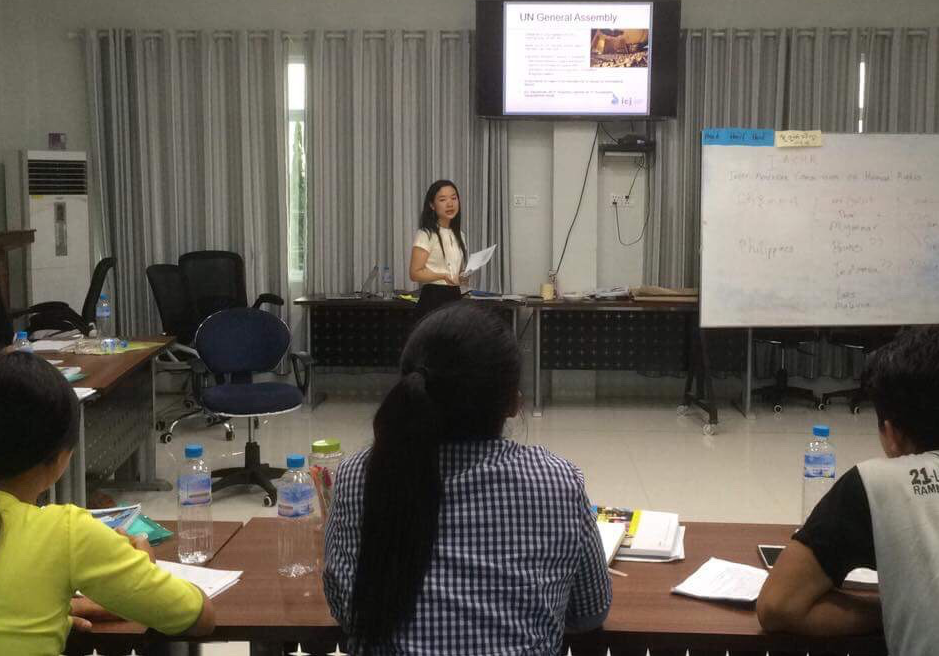
On 9 and 10 August, the ICJ joined a “training of trainers” organized by the Humanity Institute, a civil society organization based in Myitkyina.
This aims to improve the capacity of local youths and activists from Kachin and Northern Shan State on basic human rights concepts and measures to engage with Regional and UN Human Rights mechanisms.
The ICJ’s national legal researcher, Ja Seng Ing, shared information about the advantages and limitations of regional human rights mechanisms, including the Europe Commission of Human Rights and the ASEAN Commission of Human Rights. She provided an overview of the UN human rights framework and human rights mechanisms.
In addition to explaining how these work, she also focused on how human rights defenders can communicate with and participate in UN human rights mechanisms by reporting on human rights violations.
Then on 10 and 11 August, the ICJ facilitated a legal training for senior law students, and junior lawyers hosted by the Kachin Legal Clinic, an independent lawyers network.
The Kachin Legal Clinic seeks to develop a pool of young lawyers and with knowledge on the role of lawyers in the field of domestic and international human rights setting and the independence of the lawyers.
On the first day, a national legal adviser from the ICJ shared experiences of litigating for human rights in Myanmar. She also noted the critical role of independent lawyers in protecting human rights, by representing clients from all communities in different parts of Myanmar.
On the second day, Ja Seng Ing gave an overview of global and local law and standards and issues related to accountability and redress for gross human rights violations.
The ICJ’s international legal adviser, Sean Bain, gave an overview of international laws and standards related to the protection of human rights in times of conflict or crises, sourced from international human rights law as well as international humanitarian law and international criminal law.
These activities are part of the ICJ’s ongoing support to civil society actors in Myanmar, from community to national level.
Aug 2, 2018 | Articles, Nouvelles
La CIJ condamne avec la plus grande fermeté les violences qui ont éclaté au Zimbabwe après les élections et appelle au rétablissement de l’état de droit et au respect des droits de l’Homme.
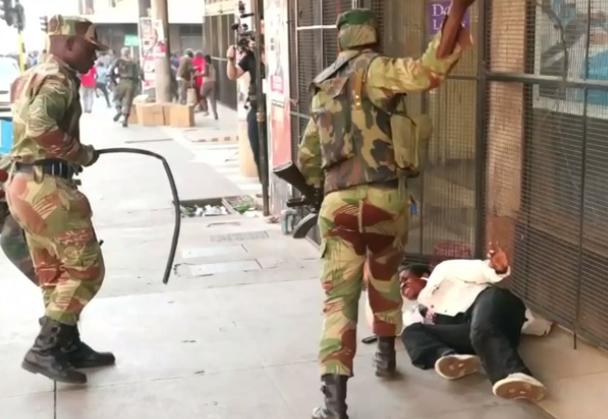
Au moins trois personnes seraient mortes à Harare le 1er août suite à l’utilisation de balles réelles par les Forces de défense du Zimbabwe (ZDF) «pour disperser» des manifestants non armés dans le quartier central des affaires de Harare.
Des membres de la ZDF auraient tiré à balles réelles sur la foule en fuite et auraient agressé des personnes sans distinction, causant des blessures et des pertes en vies humaines.
Bien que la CIJ ne pardonne pas les actes de violence commis par les manifestants et les partisans du parti au pouvoir, elle condamne fermement l’utilisation intentionnelle d’armes mortelles et d’autres actes de la ZDF qui étaient disproportionnés et inutiles dans les circonstances.
Selon la CIJ, les troubles auraient pu être maîtrisés d’une manière compatible avec les obligations internationales du Zimbabwe en matière de droits de l’Homme, ce qui aurait pu éviter des pertes en vies humaines et des blessures aux manifestants et aux passants.
«Le recours à la force létale contre des manifestants non armés ne doit jamais être toléré», a déclaré Sam Zarifi, secrétaire général de la CIJ.
“L’utilisation mortelle et intentionnelle d’armes à feu ne peut être effectuée que lorsqu’elle est absolument inévitable pour protéger la vie”, a-t-il ajouté.
La CIJ rappelle aux autorités zimbabwéennes leur engagement vis-à-vis de l’état de droit, du constitutionnalisme et de la protection des droits de l’Homme prévus par la Constitution et le droit international relatif aux droits de l’Homme.
La CIJ les appelle à respecter l’état de droit et à protéger les droits de l’Homme pendant cette période postélectorale.
La CIJ exhorte les autorités responsables à demander des comptes aux membres de la ZDF responsables des pertes en vies humaines et des mutilations physiques lors des manifestations du 1er août.
Contact:
Arnold Tsunga, Director of the Africa Regional Programme, International Commission of Jurists C: +263 77 728 3248, E: arnold.tsunga(a)icj.org
Aug 2, 2018 | News
The ICJ condemns in the strongest terms the violence that erupted in Zimbabwe after the elections, and calls for the restoration of the rule of law and respect for human rights.
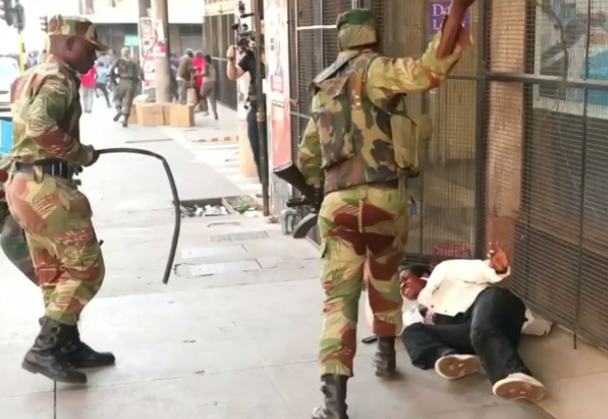
At least 3 people are reported to have died in Harare on 1 August as a result of the Zimbabwe Defence Forces’ (ZDF) use of live ammunition “to disperse” unarmed protestors in Harare’s Central Business District.
Members of the ZDF are reported to have fired live bullets against the fleeing crowd, and assaulted people indiscriminately, resulting in injuries and loss of life.
While the ICJ does not condone acts of violence carried out by protesters and party supporters, it strongly condemns the intentional use of lethal force and other actions of the ZDF, which were disproportionate and unnecessary in the circumstances.
According to the ICJ, the unrest could have been contained in a manner consistent with Zimbabwe’s international human rights law obligations, which, in turn, could have avoided loss of lives and injuries to protesters and bystanders.
“The use of lethal force on unarmed protesters must never be condoned,” said Sam Zarifi, the ICJ Secretary General.
“The intentional lethal use of firearms may only be made when strictly unavoidable in order to protect life,” he added.
The ICJ reminds the authorities in Zimbabwe of their commitment to rule of law, constitutionalism and protection of human rights as provided for under the Constitution and relevant international human rights law and standards.
The ICJ calls on them to uphold the rule of law and protect human rights during this post-election period.
The ICJ urges the responsible authorities to hold to account members of the ZDF responsible for the loss of life and limb during the protests on 1 August.
Contact:
Arnold Tsunga, Director of the Africa Regional Programme, International Commission of Jurists C: +263 77 728 3248, E: arnold.tsunga(a)icj.org
Background information
Protests erupted in the morning of 1 August 1 2018 during the announcement of the results for the National Assembly following “the Harmonised Elections” held on 30 of July 2018.
It is alleged by authorities that protesters were damaging property during the protest.
Media reports published later in the day indicate that the Zimbabwe Republic Police (ZRP) invoked section 37(1) of the Public Order and Security Act [Chapter 11 :17], which allows the Minister of Home Affairs upon request by the Commissioner General of Police to seek assistance from the Zimbabwe Defence Forces (ZDF) to quell civil commotion in any district and for the ZDF to assist.
The Zimbabwean Constitution recognizes and protects the rights of citizens to freely and peacefully demonstrate and petition.
It also guarantees the freedom of assembly and association.
Although section 86 of the Constitution makes clear the non-absolute nature of these rights, Zimbabwean authorities must be reminded that any limitations must be in terms of a law of general application and must be fair, reasonable, necessary and justifiable in a democratic society based on openness, justice, human dignity, equality and freedom.
Citizens of Zimbabwe are also reminded of these constitutional provisions and encouraged to exercise their rights within the confines of the law.