Oct 4, 2017 | Agendas, Events, News
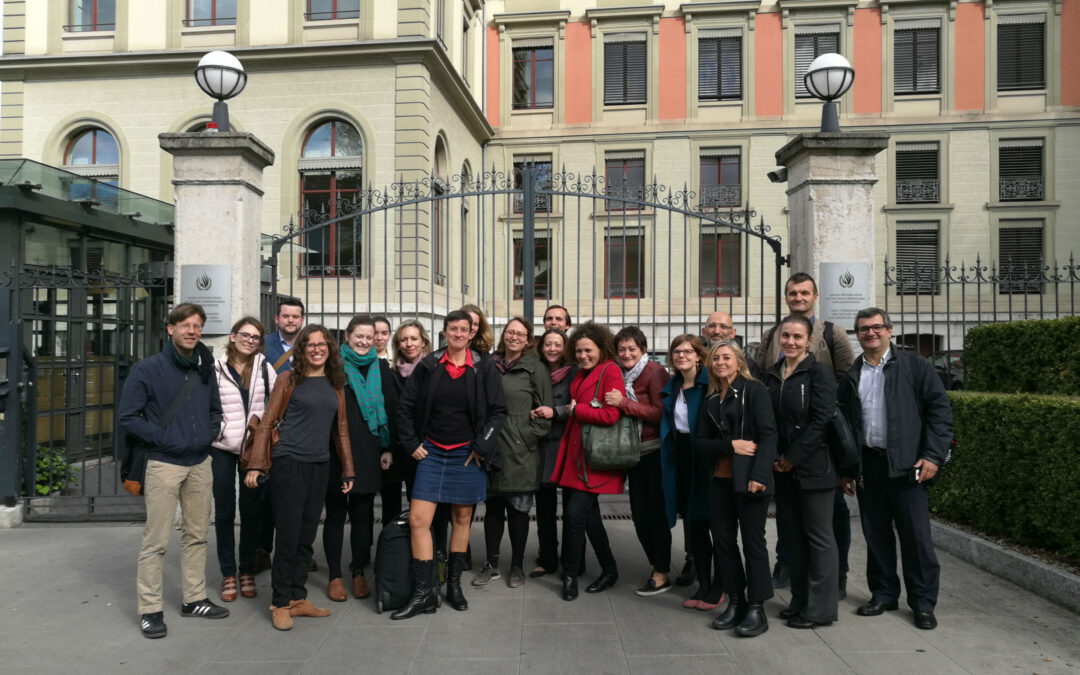
Today starts a five-day Strategic Litigation Retreat for lawyers in Ferney-Voltaire, France organized by the ICJ-EI as part of the EU and OSI funded FAIR project.
Twenty lawyers from Bulgaria, Germany, Greece, Italy, Ireland, Malta and Spain will be meeting with experts and among themselves in order to strategize about their cases of access to justice for migrant children and on accessing international human rights mechanisms.
The retreat is taking place from 4 to 8 October in a close proximity to Geneva, which allows for access to UN treaty bodies experts.
The group will meet with Members of the UN Committee on the rights of the child and the UN Committee on Economic, Social and Cultural Rights and experts from the treaty bodies’ secretariat on individual complaints and on inquiries.
The participants will also have a chance to discuss litigation strategies with experts from the European Court for Human Rights, experts from civil society organizations with long-standing experience in strategic litigation, such as the AIRE Center, ICJ, DCI Belgium or Child Rights Connect.
All the participating lawyers took part in the national trainings organized, through 2016 and 2017, by the ICJ and its national partners.
The trainings were focused on the right to be heard and procedural rights of migrant children, the right to family life, economic, social and cultural rights, detention and on how to access international human rights mechanisms in order to allow for effective access to justice for migrant children.
Out of all the participants, this Strategic Litigation Retreat, brings together three selected lawyers from each of the national trainings.
In the same time, the project management group of the FAIR project, composed of national partners and Child Rights Connect will meet and will contribute to some parts of the Retreat.
The Retreat will use as a basis the draft training materials prepared by the ICJ (to be published an the end of 2017) and the ICJ Practitioners Guide no. 6: Migration and International Human Rights Law.
The FAIR project co-funded by the Rights, Equality and Citizenship Programme of the European Union and OSIFE.
See more information about the national trainings on the rights of migrant children within the FAIR project here: Spain, Italy, Bulgaria, Malta, Greece, Ireland, Germany (photo)
Download the agenda here: Universal-StrategicLitigationRetreat-News-Events-Agendas-2017-ENG
Oct 3, 2017 | Advocacy, Cases, Legal submissions
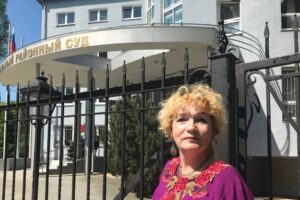
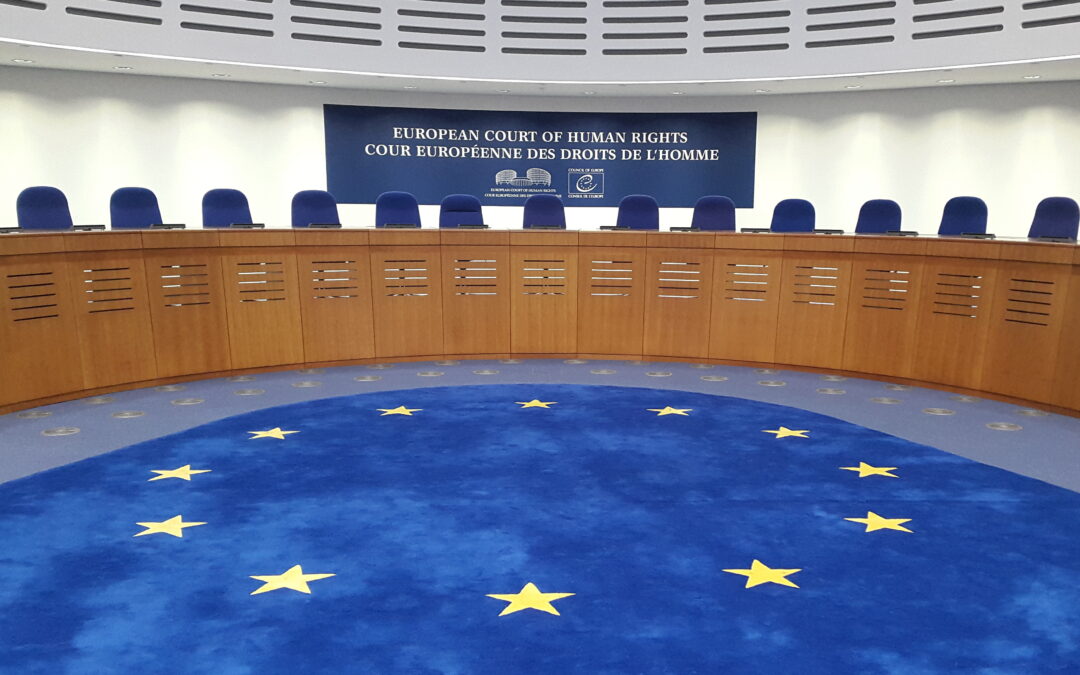
On 2 October, the ICJ and Amnesty International submitted an intervention before the European Court of Human Rights in the case Ecodefence and others v the Russian Federation, Application no. 9988/13 and 48 other applications, which concern labeling NGOs as foreign agents.
In this submission, the applicants provided the Court with an analysis, based on international law sources, of:
a) the scope of application of rights to freedom of expression and association guaranteed under Articles 10 and 11 of the European Convention on Human Rights (ECHR or the Convention) to restrictions on the activity of non-governmental organisations (NGOs);
b) application of the principle of legality to such restrictions;
c) the legitimacy of the aim, necessity and proportionality of measures regulating NGOs, including restrictions on funding, burdensome reporting requirements, sanctions and the stigmatizing effect of labelling NGOs as “foreign agents”; and
d) the scope of permissible restrictions under Article 18 of the ECHR, particularly the question of interferences used for purposes other than those which fall under Articles 10 and 11 of the Convention.
The submission addresses the obligations of State parties to the ECHR with account taken of the other international law obligations, such as those under the International Covenant on Civil and Political Rights (ICCPR) as well as other relevant standards under international law.
Russia-ECtHR-AmicusBrief-Ecodefence-legalsubmissions-2017-ENG (download the third party intervention)
Oct 3, 2017 | Адвокаси, Юридические заявления
2 октября МКЮ и Международная Амнистия представили вмешательство в Европейский Суд по правам человека по делу Экозащита и другие против Российской Федерации, заявка №. 9988/13 и 48 других заявок.
Дело касается обозначения НПО как иностранных агентов. В этом документе заявители предоставили Суду анализ, основанный на источниках международного права:
а) сферы применения прав на свободу выражения мнений и ассоциации, гарантированных статьями 10 и 11 Европейской конвенции о защите прав человека (ЕКПЧ или Конвенции), ограничениями на деятельность неправительственных организаций (НПО);
б) применение принципа законности к таким ограничениям;
в) легитимность цели, необходимости и соразмерности мер, регулирующих НПО, включая ограничения на финансирование, обременительные требования к отчетности, санкции и стигматизирующий эффект обозначения НПО как «иностранных агентов»; а также
г) объем допустимых ограничений согласно статье 18 ЕКПЧ, в частности вопрос о вмешательствах, используемых для целей других чем те, которые подпадают под статьи 10 и 11 Конвенции.
В представлении рассматриваются обязательства государств-участников ЕКПЧ с учетом других международных правовых обязательств, таких как обязательства в соответствии с Международным пактом о гражданских и политических правах (МПГПП), а также другие соответствующие стандарты международного права.
Russia-ECtHR-AmicusBrief-Ecodefence-legalsubmissions-2017-ENG (Скачайте вмешательство третьих лиц на английском)
Oct 2, 2017 | News
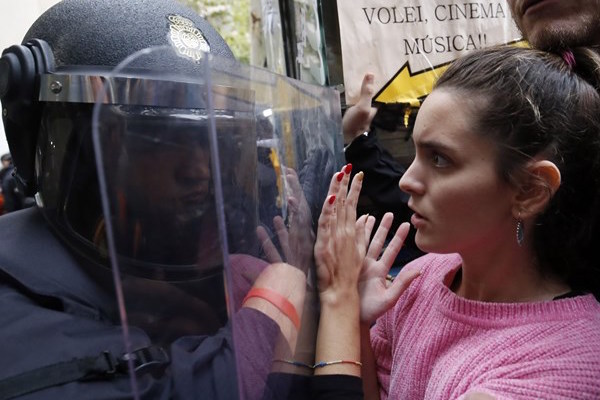
The ICJ today expressed concern at the apparently unlawful violence surrounding yesterday’s referendum in Catalonia, as Catalan authorities sought to hold a vote on the independence of the region. The Spanish Constitutional Court had ruled that the referendum was illegal.
The ICJ calls on all parties concerned to resolve the current crisis in accordance with international human rights law and in the framework of the rule of law.
The ICJ is particularly concerned at allegations of excessive use of force during police operations aimed at enforcing court orders to prevent the referendum being held.
International human rights obligations binding on Spain require that any use of force by agents of the State must be no more than is strictly necessary in the circumstances to meet a grave threat .
All aspects of police operations, including their planning and co-ordination, and the training, guidance and orders given to police officers on the ground, must be designed to minimize the use of physical force.
The ICJ calls for a thorough, prompt and independent investigation into the violence surrounding the referendum, and for those responsible for acts of violence in violation of human rights to be brought to justice.
Background
Spain has obligations to respect the right to life and the right to physical integrity of any person under its jurisdiction under articles 6 and 7 of the International Covenant on Civil and Political Rights, and articles 2, 3 and 8 of the European Convention on Human Rights.
Standards in this regard are re-enforced by the UN Code of Conduct for Law Enforcement Officials and the UN Basic Principles on the Use of Force and Firearms by Law Enforcement Officials.
Positive obligations under these provisions require that allegations of lethal or potentially lethal force, or force that could amount to cruel inhuman or degrading treatment or torture, be the subject of investigation that is independent and impartial, thorough and prompt.
The violence surrounding the referendum on Catalonia’s independence reportedly resulted in injuries to at least 844 civilians and 33 police offices.
Contacts:
Róisín Pillay, ICJ Europe Programme Director, t: +32 2 734 84 46 ; e: roisin.pillay(a)icj.org
Massimo Frigo, ICJ Senior Legal Adviser, t: +41 22 979 3805 ; e: massimo.frigo(a)icj.org
Oct 2, 2017 | Advocacy, Non-legal submissions
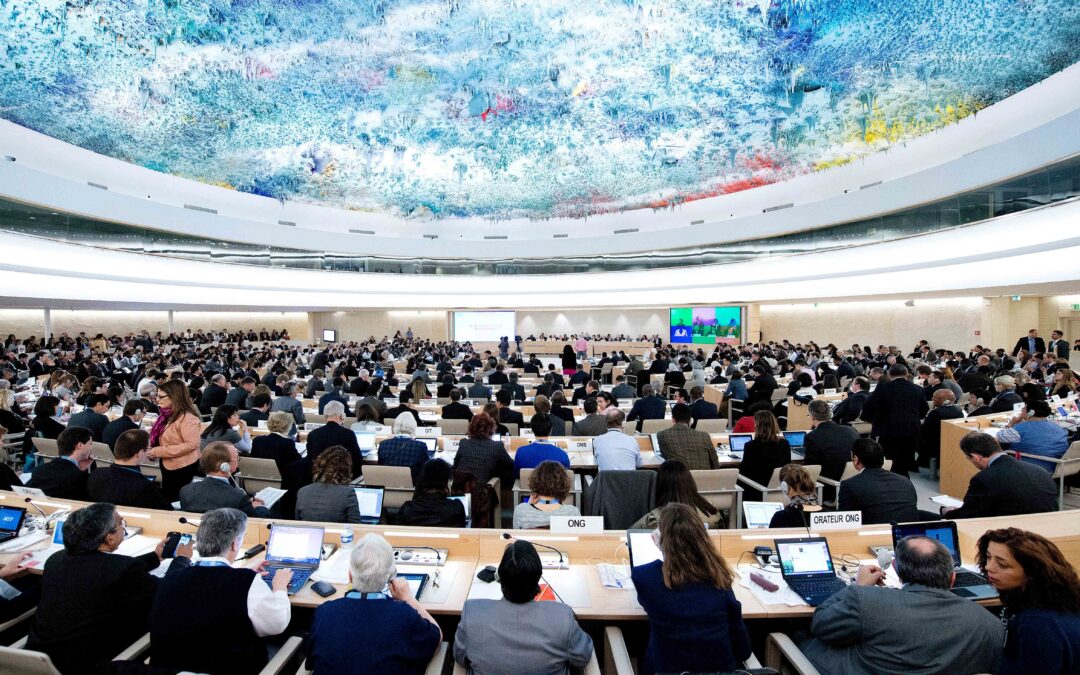
The ICJ has joined other NGOs in welcoming action by the HRC on Yemen, Burundi, and DRC, as well as on reprisals and intimidation against civil society and human rights defenders, and the death penalty, while expressing disappointment about lack of adequate action on other matters.
The full statement is as follows:
Joint statement by International Service for Human Rights on behalf of Amnesty International, Asian Forum on Human Rights and Development (Forum Asia), Cairo Institute for Human Rights Studies (CIHRS), CIVICUS, Human Rights House Foundation, International Commission of Jurists and the International Lesbian, Gay, Bisexual, Trans and Intersex Association (ILGA).
We welcome the adoption of the resolution intended to end acts of intimidation or reprisals. However, we regret that a small group of States – most of them regular perpetrators of acts of intimidation or reprisals – have tried to undermine the Council’s efforts to end reprisals. We thank the majority of the Council members for resisting these efforts.
We are concerned that there were attempts to dilute several resolutions at this Council with the insertion of so-called “sovereignty” clauses. While we welcome the fact that they were ultimately defeated, we are concerned that a significant number members seek to use the concept of Sovereignty to shield themselves and other States from international scrutiny.
We also welcome that the resolution on the death penalty urges States to not impose it as a sanction for specific forms of conduct such as apostasy, blasphemy, adultery and consensual same-sex relations.
We applaud the creation by consensus of an international investigative body on Yemen, and the broad State leadership on this issue. It sends a message that the people of Yemen have not been abandoned, and that accountability for international crimes is urgently required. We call on all parties to the conflict to fully cooperate with this mandate.
On Burundi, we welcome the extension of the mandate of the Commission of Inquiry (COI). This was the only credible response to the CoI’s concerns that crimes against humanity may have been committed, and the persistent non-cooperation of Burundi with both the COI and the OHCHR presence in the country. We urge Burundi to follow through on its promises to start cooperating with the UN system, in line with duties as HRC member, and – failing that – call on the General Assembly to take appropriate action.
On Myanmar, while we welcome the extension of the fact-finding mission’s mandate, we are disappointed that the Council did not do more to address the gravity of the situation on the ground, in particular acknowledging the disproportionate campaign of violence by Myanmar’s security forces in Rakhine State, which have forced around half a million Rohingya to flee to Bangladesh since 25 August. We urge States to use the ongoing UN General Assembly session to address what the High Commissioner for Human Rights described to the Council as a “textbook example of ethnic cleansing.”
On Cambodia, while the Council missed an opportunity for robust scrutiny of the worsening situation, the pre-election reporting in March should put authorities on notice.
On the Democratic Republic of the Congo (DRC), we welcome the Council’s decision to boost scrutiny of the human rights crisis for another year, which shows how horrific the situation has become. The DRC must now cooperate with all Council mechanisms, and the Council needs to keep its eyes on the country until all actors stop committing violations and abuses, and justice for victims has been obtained.
Finally, we regret the increasing effort spent on procedural tricks and manoeuvers by States in an attempt avoid scrutiny – including by abusing the privilege of being a member to seek to avoid scrutiny of their own situation – instead of spending diplomatic time and capital on ending human rights violations, which is the Council’s core mandate. A renewed commitment to addressing situations based on objective criteria is now more urgent than ever.