Sep 11, 2017
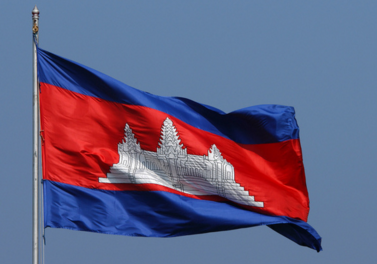
The 36th Session of the UN Human Rights Council, which commenced today, should adopt a resolution which directly addresses the unfolding human rights crisis in Cambodia, said the ICJ today.
The resolution should also urge the Cambodian government to curb its rights violations, and take steps to ensure that the upcoming elections take place in an environment in which everyone is able fully to exercise relevant human rights.
“It is imperative that the Human Rights Council addresses the rapidly deteriorating human rights situation in Cambodia,” said Frederick Rawski, ICJ Regional Director of Asia and the Pacific.
“The international community should strongly urge Cambodia to curb its human rights violations and adopt a course which fosters an environment that ensures respect for human rights as enshrined in the 1991 Paris Peace Agreements,” he added.
On 8 September 2017, the ICJ, together with Asian Forum for Human Rights and Development (FORUM-ASIA), CIVICUS, Human Rights Watch, International Federation for Human Rights (FIDH), and the World Organisation Against Torture (OMCT), wrote to the Human Rights Council Member and Observer States.
The letter urged them to speak out against the latest abuses clearly during the Human Rights Council session, and for the Human Rights Council to adopt a resolution that explicitly condemns the current situation of violations and accordingly.
1. The resolution should request a report by the UN High Commissioner for Human Rights, in consultation with the Special Rapporteur, that would:
- assess the civil and political rights situation in Cambodia in the pre-election period; and
- identify concrete actions that the Cambodian government and international community need to take to ensure that the conditions in which th election takes place accord with international human rights standards; and
2. The resolution should request the High Commissioner to provide an oral update to the Council at its 37th session in March 2018, and present his report at the 38th session in June 2018; and
3. The resolution should provide that at its sessions in March and June, the Council will hold an Enhanced Interactive Dialogue on relevant issues in Cambodia, including stakeholders such as staff from Cambodia’s OHCHR office, the Special Rapporteur on Cambodia, other relevant UN Special Procedures and members of local and international civil society.
The letter sets out a detailed list of examples of human rights violations which form part of a comprehensive campaign of intimidation, violence and misuse of legal mechanisms in the lead-up to next year’s national election.
These include the recent charging of the leader of the opposition, Kem Sokha, with treason in a case that has all the hallmarks of being politically motivated, the expelling of the leading pro-democracy NGO, the National Democratic Institute, and the intimidation and forced closure of several independent media outlets including the Cambodia Daily and Mohanokor Radio.
The 36th Session of the Human Rights Council, which is being held in Geneva from 11-29 September 2017, will address a number of human rights situations and issues from around the world, including the human rights situation in Cambodia.
At 11am on 19 September 2017, the ICJ, Human Rights Watch and other organizations plan to hold a public side event in Geneva to the Human Rights Council at which the rapidly deteriorating human rights situation in the country will be discussed.
On 26 September, the UN Special Rapporteur to Cambodia is scheduled to report to the Human Rights Council on the implementation of her mandate and the Council is likely to adopt a resolution to extend the mandate of the Special Rapporteur.
The Special Rapporteur will present her report and engage in a formal “interactive dialogue” with States, civil society and Cambodia on the human rights situation in the country (currently scheduled for 26 September).
The UN Secretary General is also due to report on the role and achievements of OHCHR in “assisting the Government and the people of Cambodia in the promotion and protection of human rights”. This report will be discussed, together with other country situations, during a General Debate taking place on 27-28 September.
Contact
Frederick Rawski (Bangkok), ICJ Asia Pacific Regional Director, e: frederick.rawski(a)icj.org
Kingsley Abbott, ICJ Senior International Legal Adviser for Southeast Asia, t: +66 94 470 1345 ; e: kingsley.abbott(a)icj.org
Cambodia-Joint Civil Society letter-Advocacy-Open letters-2017-ENG (text of letter, in PDF)

Sep 11, 2017 | News
The Government of Myanmar must do everything in its power to respect and protect human rights during military operations in northern Rakhine State, said the ICJ today.
These military operations have reportedly resulted in widespread unlawful killing and the displacement of more than 200,000 people in response to attacks attributed to ARSA.
The ICJ called on Myanmar’s government to act as swiftly as possible to address the root causes of violence, discrimination and under-development in Rakhine, as well as for enhanced engagement by the international community in efforts to effectively address the situation, and to take measures to ensure that security operations are conducted in accordance with international human rights standards.
The military operations follow attacks by ARSA on August 25 on police posts and a military base in which at least 12 police, military and government officials were killed, along with a large number of attackers (according to government figures).
In the wake of the attacks on 25 August, the military launched what it has termed as a “clearance operation,” and the government announced that parts of northern Rakhine State have been designated as a “military operations area.”
“The attacks attributed to ARSA constitute serious crimes for which individual perpetrators should be brought to account through fair trials conducted in accordance with international standards,” said Sam Zarifi, ICJ’s Secretary General.
“But ‘clearance operations’ carried out by the Tatmadaw (Myanmar’s military) in an unlawful manner, and allegations of serious human rights violations, many amounting to crimes under international law, are on an entirely different scale and cannot be justified in the name of security or countering terrorism. These allegations must be promptly investigated in light of the Tatmadaw’s decades-long record of grave human rights violations and impunity throughout Myanmar,” he added.
“The Tatmadaw is responsible for the conduct of security operations in Rakhine as in other parts of the country, but the entire government remains responsible for upholding its international legal obligations to protect the rights of everyone living in Rakhine State – including the Rohingya Muslim communities that constitute the overwhelming majority of the population in the areas most affected by the violence,” Zarifi said.
“We also urge the State Counsellor Aung San Suu Kyi to use her immense electoral popularity and moral stature to push for full respect for human rights for the Rohingya as well as all others in Rakhine State.”
In the wake of the attacks on 25 August, the military launched what it has termed as a “clearance operation,” and the government announced that parts of northern Rakhine State have been designated as a “military operations area.”
These terms are not clearly prescribed in Myanmar’s laws, but in practice seem to be used to grant the military authority to ignore legal protections afforded under the country’s constitution and international standards.
“Whatever descriptive cover may be used to describe security operations, they must scrupulously respect international standards on the use of force.” Zarifi said.
“Myanmar’s government has the right, indeed the obligation, to protect all people in its jurisdiction from attacks by armed groups, but it must do so in conformity with international law. Experience from around the world has shown that greater respect for rule of law and human rights is the most effective response to terrorism,” he added.
This was unfortunately not the case following the arrests and detentions carried out during the military operations that followed attacks in October 2016.
Many of these arrests appear arbitrary and unlawful, as detainees were not given access to legal counsel, and deaths in custody have not been properly investigated.
Similar violations by the military have been documented recently in Shan and Kachin States.
Government authorities must ensure that arrest and detention in the context of the current operations in Rakhine State be conducted in accordance with national and international law, and respect the rights to liberty, freedom from arbitrary detention and a fair trial.
The most effective way for the government to respond to allegations of abuse by the security forces both in Rakhine and elsewhere in the country would be to take well-founded allegations seriously, and ensure that they are promptly, impartially and thoroughly investigated and those responsibility are brought to justice.
It is an unfortunate fact that investigations and prosecutions of human rights violations are rarely undertaken in regular courts, as national laws shield security forces from public criminal prosecutions, often by using military or special police courts.
Zarifi further said: “Ending the military’s impunity would establish much needed confidence in the government’s commitment to upholding the rule of law.”
“One immediate way to illustrate this commitment would be to cooperate with the UN Fact Finding Mission, which the ICJ and other organizations called for earlier in the year, to investigate allegations of human rights violations and abuses in Myanmar.”
“There are paths forward for the government to both respond to allegations of rights violations, and to show its commitment to finding solutions to the unacceptable state of affairs in Rakhine State.”
Myanmar-RakhineStateCrisis-PressReleases-2017-ENG (full press release)
Sep 8, 2017 | News
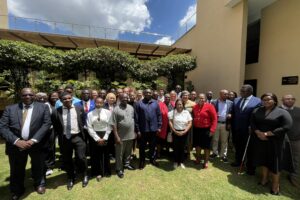
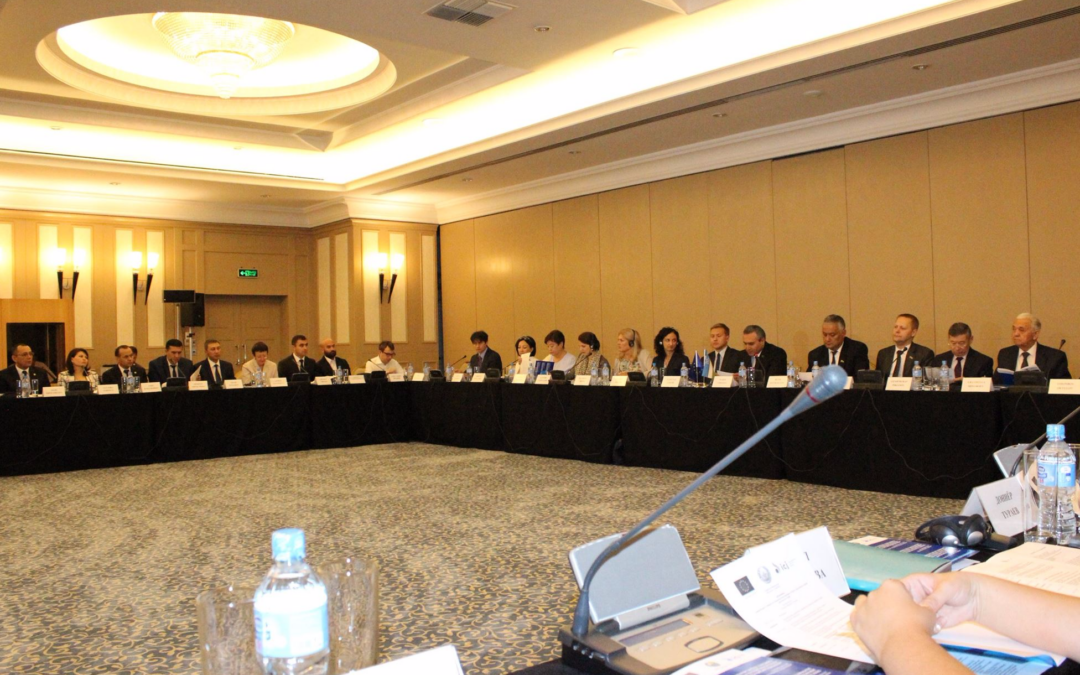
Today, 8 September, the ICJ and the Supreme Judicial Council of the Republic of Uzbekistan (SJC) hold a joint International Seminar on Comparative Approaches to Selection, Appointment and Evaluation of Judges.
The seminar will address issues related to the institutions and procedures on appointment and selection of judges as well as assessment of judicial performance. International standards and national comparative examples will be discussed, including experiences of Uzbekistan, Austria, Germany, Kazakhstan, the Kyrgyz Republic and Serbia. The European and Central Asian perspectives will allow the participants to identify common challenges and find ways to address them.
A Press Release about the event is available to download:
In English, in Russian, or in Uzbek.
Sep 8, 2017 | Новости
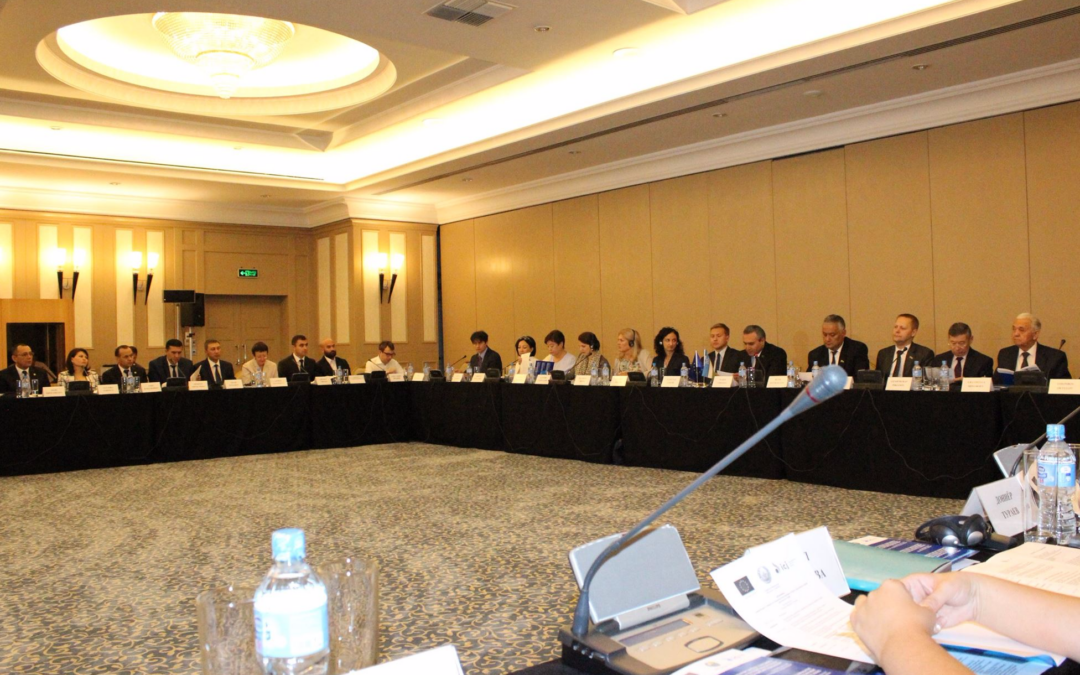
Сегодня, 8 сентября, Международная комиссия юристов (МКЮ) и Высший судейский совет Республики Узбекистан (ВСС) проводят совместный Международный семинар на тему «Сравнительные подходы к отбору, назначению и оценке деятельности судей».
Семинар проходит при поддержке Европейского Союза (ЕС) в рамках проекта «Обучение и обмен в сфере международного права в целях совершенствования национальных систем правосудия в Центральной Азии». В мероприятии принимает участие Управление ООН по наркотикам и преступности.
Пресс-релиз о событии можно загрузить:
На английском, русском или узбекском языках.
Sep 5, 2017 | Eventos, Noticias
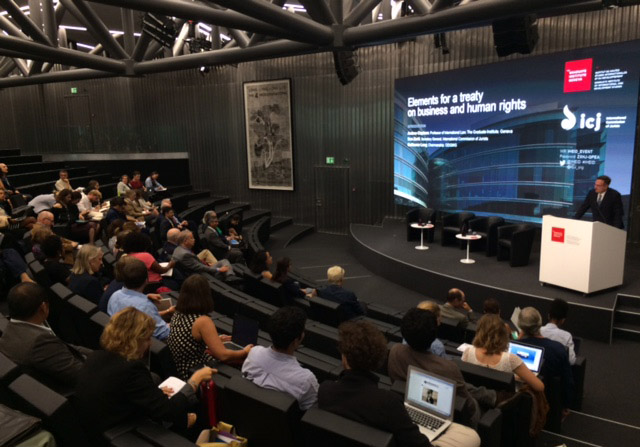
Hoy la CIJ y el Institut de Hautes Etudes Internationales et du Développement co-organizaron una conferencia pública sobre los Elementos de un tratado sobre las empresas y los derechos humanos.
En junio de 2014, el Consejo de Derechos Humanos de las Naciones Unidas estableció un grupo de trabajo intergubernamental encargado de “elaborar un instrumento internacional jurídicamente vinculante para regular, en el derecho internacional de los derechos humanos, las actividades de las empresas transnacionales y otras empresas comerciales”.
La tercera reunión del Grupo de trabajo tendrá lugar del 23 al 27 de octubre de 2017 en el Palacio de las Naciones.
El evento tuvo lugar en un momento crítico para informar el proceso de elaboración del tratado en el Grupo de trabajo, y se orientó a fomentar el intercambio de opiniones entre los actores internacionales con el objetivo de crear las base para el consenso sobre los posibles contenidos de un instrumento jurídicamente vinculante en el ámbito de las empresas y los derechos humanos.
Se espera que el futuro tratado contribuya a subsanar algunas deficiencias en el marco normativo internacional en materia de rendición de cuentas, en relación con las operaciones de las empresas en materia de derechos humanos. El tratado también debería fortalecer la acción de los Estados para garantizar recursos efectivos y reparaciones para las víctimas de abusos.
Este tratado será el primero en el marco internacional del derecho de los derechos humanos para abordar directamente las actividades de las sociedades comerciales.
El tema de los impactos de los derechos humanos por parte de las empresas comerciales figura a la cabeza de la agenda internacional sobre el que se han desarrollado varios instrumentos no vinculantes, entre los que destacan los Principios Rectores sobre las Empresas y los Derechos Humanos.
Se prevé que el proceso hacia un tratado en este ámbito se basará en los logros alcanzados hasta la fecha, cubriendo las lagunas restantes y mejorando las normas y la acción de los Estados y las empresas por igual.