Aug 15, 2017 | Advocacy
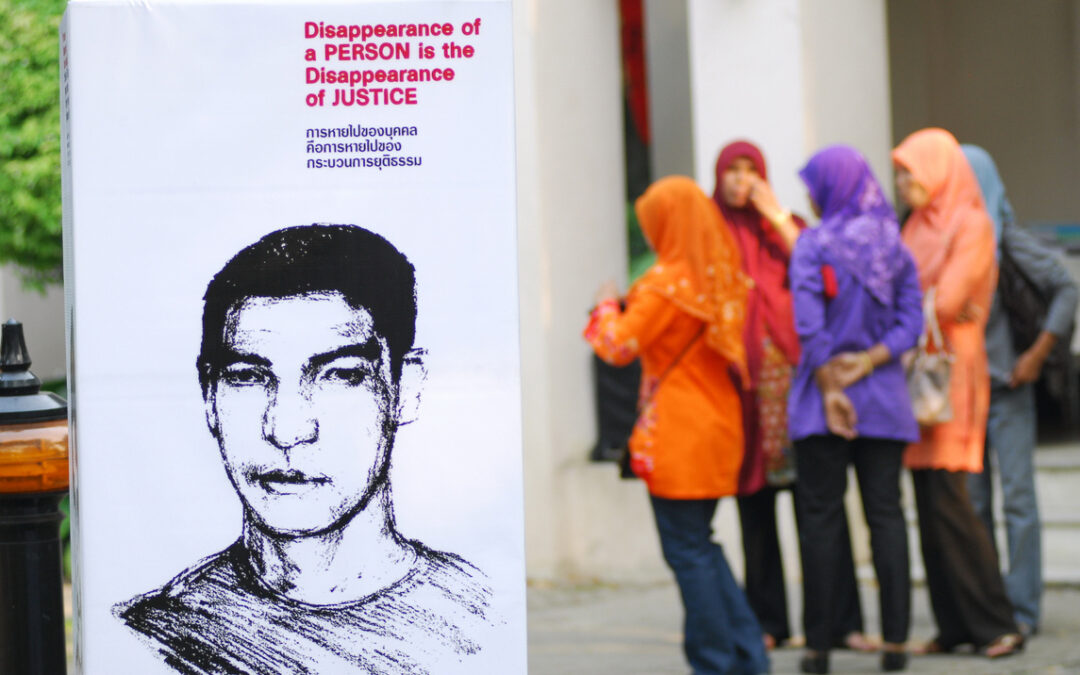
Tep Vanny, one of Cambodia’s most prominent land activists and human rights defenders, will have spent one year in prison on 15 August for defending her community and exercising her human rights.
The ICJ and other human rights organizations condemn her arbitrary imprisonment and call for her convictions to be overturned, for all ongoing politically motivated and unsubstantiated charges against her to be dropped, and for her immediate release from prison.
Tep Vanny has fought tirelessly to protect the rights of members of the Boeung Kak Lake community, following their forced eviction from their homes in Phnom Penh.
More recently, she played a leading role in the so-called ‘Black Monday” campaign, challenging the arbitrary pre-trial detention of five human rights defenders, Lim Mony, Ny Sokha, Yi Soksan, Nay Vanda, and Ny Chakrya (the “Freethe5KH” detainees).
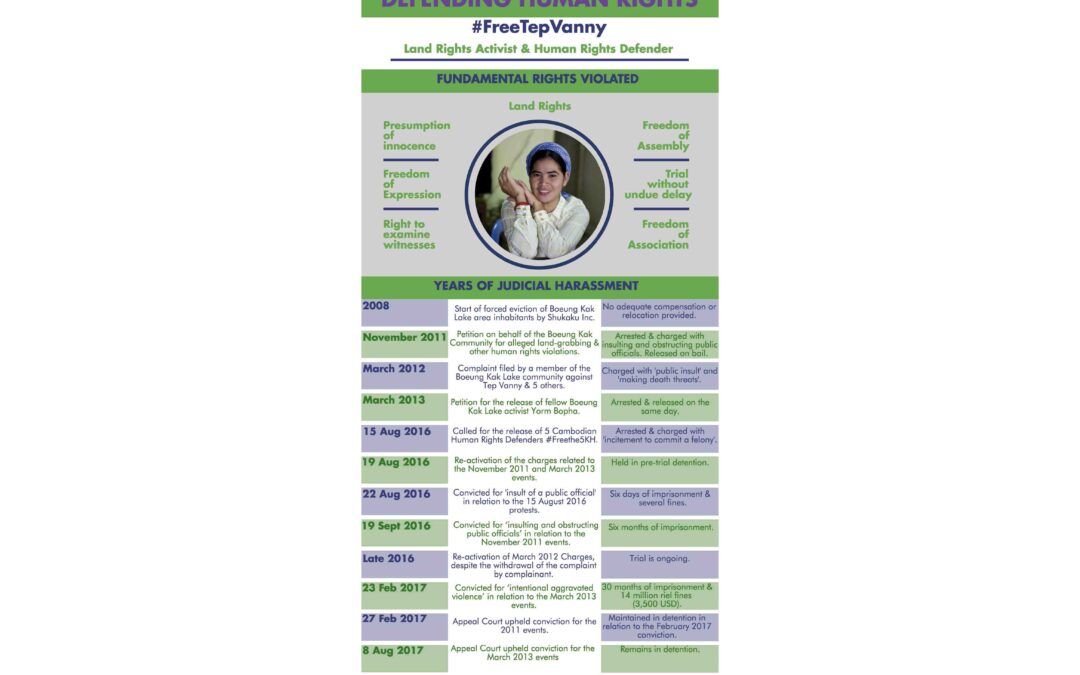
On 22 August 2016, following her arrest at a protest calling for the release of the five, she was convicted of ‘insulting of a public official’, and sentenced to six days in prison.
However, instead of releasing her based on time served, the authorities reactivated dormant charges dating back to a 2013 protest and kept her in detention.
“It is clear that the authorities are using the courts to lock me up, silence my freedom of expression and break my spirit,” said Tep Vanny. “They want to stop me from advocating and seeking a solution for the remaining people from Boeung Kak Lake as well as other campaigns to demand justice in our society.”
On 19 September 2016, Tep Vanny was sentenced, along with three other Boeung Kak Lake community activists, to six months imprisonment for “insulting and obstructing public officials” in a reactivated case related to a 2011 peaceful protest calling for a resolution to the Boeung Kak Lake land dispute, despite the absence of credible inculpatory evidence.
This conviction has since been upheld by the Court of Appeal on 27 February 2017.
On 23 February 2017, following proceedings which fell short of fair trial standards, Tep Vanny was convicted of “intentional violence with aggravating circumstances”, sentenced to a further 30 months in prison and fined more than 14 million riel (about US $3,500 – or twice the annual minimum wage in Cambodia) for having peacefully participated in protests calling for the release of her fellow activist Yorm Bopha, back in 2013.
While the #FreeThe5KH human rights defenders were released on bail on 29 June 2017, after having spent 427 days in arbitrary detention, Tep Vanny remains in prison.
She is currently on trial in a third reactivated case, facing charges of “public insult” and “death threats” brought by another member of the Boeung Kak Lake community, despite the complaint having been dropped by the community member.
On 8 August 2017, the Court of Appeal upheld her February 2017 conviction.
Cambodia-Joint Statement Tep Vanny-Advocacy-2017-ENG (full statement in English, PDF)
Cambodia-Joint Statement Tep Vanny-Advocacy-2017-KHM (full statement in Khmer, PDF)
Cambodia-Infographic TV Case Overview-Advocacy-2017-KHM (Infographic in Khmer, PDF)
Aug 8, 2017
Transitional justice mechanisms must undergo serious reform in line with international human rights standards and the directives of Nepal’s Supreme Court in order to provide justice for victims of conflict-era human rights violations and abuses, the ICJ said in a discussion paper released today.
ICJ’s discussion paper Nepal’s Transitional Justice Process: Challenges and Future Strategy summarizes the key challenges faced by Nepal’s transitional justice process as identified by conflict victims, representatives of human rights organizations, lawyers and other stakeholders during consultations held in Pokhara, Biratnagar and Nepalgunj and a national roundtable meeting in Kathmandu in May and June 2017.
The discussion paper concludes with the identification of the strategies for civil society organizations and victims’ representatives to address the challenges of Nepal’s transitional justice process.
“The voices heard in our consultations provide a stark reminder that more than ten years after the end of the conflict and over two years since the Commissions of Inquiry were established, victims of serious human rights violations and abuses are still searching for justice,” said Frederick Rawski, ICJ’s Director for Asia and the Pacific.
The discussions reaffirm ICJ’s own assessment that the transitional justice mechanisms, the Truth and Reconciliation Commission (TRC) and the Commission on Investigation of Disappeared Persons (CoID), have fallen short of international standards, both in constitution and operation, despite the repeated reinforcement of such standards by the Supreme Court of Nepal.
The Commissions have a deeply flawed legal mandate, which, among other problems, allows them to recommend amnesties for serious human rights violations and abuses.
In addition, their non-consultative, uncoordinated and opaque approach to their work has also created distrust with all major stakeholders, including conflict victims and members of civil society.
The key challenges identified by the participants include:
- Lack of political will to address past human rights violations and abuses;
- Inadequate legislative framework to address conflict-era human rights violations and abuses;
- Lack of adequate human, financial and technical resources for the TRC and COID;
- Failure of the TRC and COID to take measures to gain confidence of conflict victims and other stakeholders;
- Inadequate procedures to ensure confidentiality and security for victims and witnesses;
- Lack of coordination among the Commissions and other state institutions responsible for addressing conflict-era human rights violations and abuses; and
- The failure of the Commissions to adopt credible and transparent processes for their work.
As of July 2017, the TRC has received 58052 complaints of human rights violations, and the CoID has received 2874 complaints of alleged enforced disappearances.
Since the ICJ held its consultations on the operation of the transitional justice mechanisms, the Commissions have started preliminary investigations in some of the cases.
However, according to information received by the ICJ, these investigations also suffer from the flaws described above: the investigation teams have inadequate human and financial resources to handle the large number of cases; there are concerns about the opacity of the appointment process of the investigators; and the Commissions have taken no measures to ensure confidentiality and security of victims and witnesses who participate in the investigations.
Victims have also expressed concern that the investigators in many districts have asked them about their interest in reconciliation, even where there complaints are of serious conflict-era crimes.
This is despite the Supreme Court ruling out any possibility for reconciliation in cases of serious crime in Madhav Kumar Basnet v the Government of Nepal (2014).
“As the Commissions start preliminary investigations into complaints of human rights violations and abuses, they must ensure both victims’ access to justice, as well as the security and confidentiality of victims and other witnesses,” added Rawski.
Contact:
Frederick Rawski, ICJ’s Asia Pacific Regional Director (Bangkok), e: frederick.rawski@icj.org
Nepal-TJus Process-Advocacy-2017-ENG (Full paper in PDF)
Aug 7, 2017
An Opinion Editorial by Karolína Babická, Legal Adviser, ICJ Europe Programme.
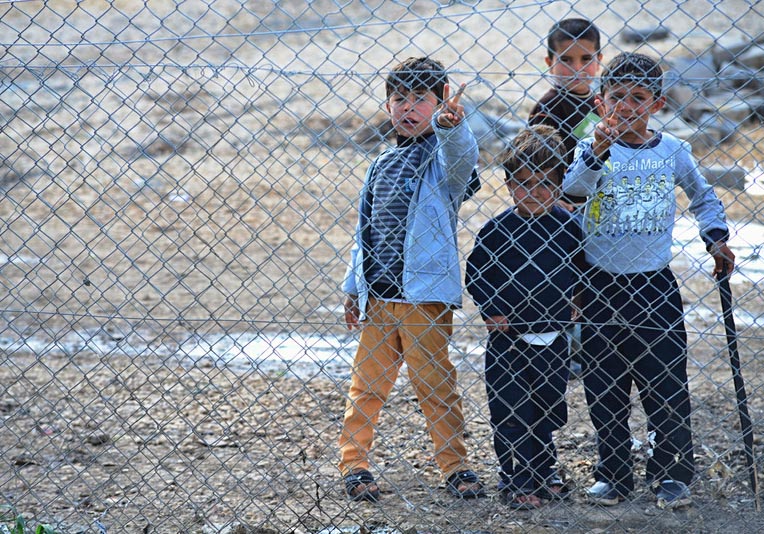
At this very moment, some children in Spain are being held in adult immigration detention centres, pending return to their home countries.
Other migrant children are living on the streets in Madrid and other Spanish cities, suffering from serious illnesses, or are prevented from applying for asylum.
This is happening because they are not Spanish nationals and the authorities have not recognized them as children, but consider them to be adults.
During our capacity and coalition building activities with lawyers and civil society organizations to better defend migrant children’s rights in various European countries, our Spanish partner, Fundación Raíces, raised attention to the dire situation of migrant children in Spain.
In seven cases concerning migrant children in vulnerable circumstances, Fundación Raíces and other Spanish lawyers requested the United Nations Committee on the Rights of the Child to issue interim measures, i.e. orders to the Spanish authorities, with a view to avoiding irreversible harm to these children.
In States that, like Spain, are parties to the Optional Protocol to the Convention on the Rights of the Child on a Communications Procedure, the Committee on the Rights of the Child is empowered to examine individual communications by or on behalf of a child or group of children claiming that there has been a violation of their rights under the Convention.
Pending its determination on the merits, the Committee may request the State party to take interim measures as may be necessary to avoid possible irreversible damage to the victim or victims of the alleged violations.
In one of the seven cases mentioned above, A.D. is a 17-year-old child from Mali that arrived in Spain in March 2017. He was transferred to the immigration detention centre for adults in Madrid as he was considered adult by the public prosecutor, while ignoring the official and original documents A.D. has from his country of origin.
The UN Committee reacted swiftly to the lawyers’ demands and during the past 7 months requested the Spanish government in those seven cases to take interim measures.
Under international law, respect for interim measures is essential for the protection of human rights.
Existing international law and jurisprudence affirm that any State party’s non-compliance with a request for interim measures constitutes a breach of its legal obligations under international law.
The binding nature of interim measures has been reaffirmed by the Human Rights Committee in its General Comment 33 on the individual complaints procedure.
However, the Spanish government has ignored these requests and failed to comply with any of the requested interim measures.
The Spanish government is thus in violation of international obligation it has voluntarily undertaken; more significantly, the lives and well being of dozens of highly vulnerable children are at risk.
The UN Convention on the Rights of the Child obliges States to consider the best interests of the child as a primary consideration above any other.
However, the Spanish authorities claim that the individuals in these cases are not children but adults.
Yet, in the event of any remaining uncertainty, international law affirms that States must accord the individual the benefit of the doubt and treat him or her as a child, until effectively proven otherwise.
Moreover, the Spanish Supreme Court has already expressed concern about the age-assessment procedure used by the Spanish authorities, in more than 10 judgments, as did the Spanish Ombudsman and the United Nations High Commissioner for Human Rights.
Recently, six civil society organizations in Spain (Amnesty International, Fundación Raíces, the General Council of Spanish Lawyers, the Jesuit Mission for Migrants, Noves Vies and Save the Children) have called on the Spanish Government to immediately implement the Committee’s request for interim measures in each case.
The ICJ is training lawyers in seven EU countries, including Spain, and supporting them in bringing their cases to international human rights mechanisms, such as the UN Committee on the Rights of the Child, when no effective remedy is available domestically.
The Spanish government is failing these children and is failing to respect its international law obligations.
Respecting one’s international obligations and ensuring that no harm is caused to children in violation of their rights should be high priorities for any States that are parties to the UN Convention on the Rights of the Child.
The Spanish Government should live up to its obligations, and implement immediately the Committee on the Rights of the Child’s request for interim measures in these cases.
Photo credit: Plan International
Aug 3, 2017 | News
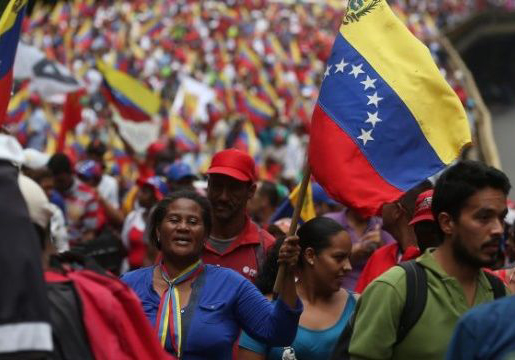
The ICJ is deeply concerned by the Constituent Assembly elections held in Venezuela on 31 July and the violence that accompanied the process and left a number of people killed, injured or arbitrarily detained.
The ICJ considers that the election of a National Constituent Assembly (NCA) failed to comply with the Article 347 of the current Constitution, which provides the legal basis for convening of an NCA. In particular, a significant portion of the members of the NCA should be chosen in open and universal elections, but instead are to be selected from restricted social sectors.
Such arrangements undermine the right to direct, free, equal and secret elections recognized under international human rights standards, the Geneva-based organization adds.
“A Constitution which does not guarantee the basic principles of the rule of law and the validity of fundamental human rights and freedoms not only violates the international obligations of the Venezuelan State, but can also be used as a means of undermining the human rights of Venezuelans,” said Sam Zarifi, Secretary General of the ICJ.
The ICJ also calls for a prompt and independent investigation into alleged electoral fraud on the day of the poll.
The ICJ says that irrespective of its legitimacy, the new NCA must respect human rights and rule of law principles.
In particular, until the approval of a new Constitution, the NCA must respect the current Constitution of 1999, especially in terms of judicial independence, and protection of human rights.
Similarly, the new Constitution, which the NCA will draft, must also fully guarantee the basic principles of the rule of law, including the separation of powers, legislative autonomy, the independence of the judiciary, the subordination of military forces to the civil authority and the principle of legality and judicial control of executive actions.
The new Constitution also must fully guarantee the protection of human rights and fundamental freedoms.
It must enshrine the prohibition of trials of civilians by military courts, and ensure that states of emergency respect the requirements and guarantees of the Covenant International Covenant on Civil and Political Rights (ICCPR) and other international law and standards, the ICJ adds.
The ICJ also considers that the new Constitution, in addition to incorporating the human rights and fundamental freedoms already contained in the current Constitution, should add the express prohibition of extrajudicial executions, enforced disappearances, torture and ill-treatment, arbitrary detention, and other serious human rights violations.
Aug 3, 2017 | Comunicados de prensa, Noticias
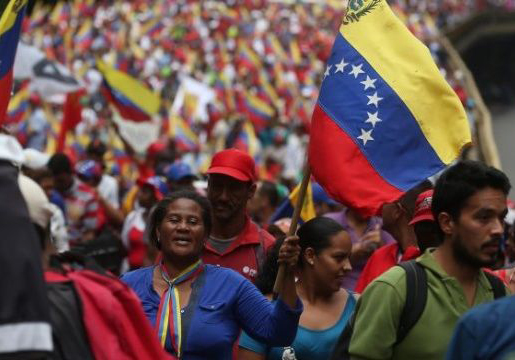
La CIJ expresa su honda preocupación por los comicios electorales del pasado 31 de julio, en los cuales se eligieron a los miembros de la Asamblea Nacional Constituyente (ANC), así como por las muertes violentas, numerosos heridos y detenciones arbitrarias registradas ese día.
La convocatoria a una ANC no fue realizada conforme al artículo 347 de la Constitución vigente y su integración restringida a personas elegidas en los “ámbitos sectoriales y territoriales” socaba los fundamentos mismos de la democracia y, en especial, del derecho humano al sufragio universal, directo, libre, igual y secreto, reconocido en los instrumentos internacionales sobre derechos humanos, dice la CIJ.
“Una Constitución que no garantice los principios básicos del Estado de Derecho así como la plena vigencia de los derechos humanos y las libertades fundamentales, no sólo constituye una violación flagrante de las obligaciones internacionales del Estado venezolano sino que será un instrumento de opresión del pueblo de Venezuela y la negación misma de un régimen democrático,” dijo Sam Zarifi, Secretario General de la CIJ.
Además, la CIJ toma nota de las diversas denuncias de fraude electoral, las cuales, en ausencia de observadores internacionales reconocidos, deben ser debidamente investigadas y aclaradas por instancias independientes.
En todo caso, la CIJ advierte que independientemente de su legitimidad, la nueva ANC debe respetar los valores, principios, obligaciones y límites de los derechos humanos contenidos en los instrumentos sobre derechos humanos.
En particular, durante su funcionamiento y hasta la aprobación de la nueva Constitución, la ANC debe respetar la Constitución vigente de 1999 en un marco de seguridad jurídica, democracia, pluralismo y garantía de los derechos humanos.
Asimismo, la nueva Constitución política venezolana que se propone redactar la ANC debe garantizar de forma efectiva y plena los principios básicos universales del Estado de Derecho y la democracia, y muy particularmente la separación de poderes, la autonomía del Legislativo, la independencia e imparcialidad del Poder Judicial, el funcionamiento de partidos políticos, la subordinación de las fuerzas armadas a las autoridades civiles y el principio de legalidad y control de todas las actuaciones de las autoridades, dice la CIJ.
Asimismo, la nueva Constitución deberá garantizar plenamente la progresividad de los derechos humanos y el ejercicio de las libertades fundamentales; prohibir el juzgamiento de civiles así como de responsables de violaciones a los derechos humanos por tribunales militares; y asegurar que la regulación de los estados de excepción esté en plena conformidad con las exigencias, principios y garantías establecidos en el Pacto Internacional de Derechos Civiles y Políticos y otros instrumentos y estándares internacionales.
La CIJ considera que el nuevo texto constitucional deberá no sólo garantizar los derechos humanos y libertades fundamentales ya consagradas en la Constitución vigente, sino que debe ampliar su contenido y garantías efectivas, el pluralismo político e ideológico y la tolerancia, así como incluir expresas prohibiciones de las ejecuciones extrajudiciales, la desaparición forzada, la tortura, la detención arbitraria, la persecución política y otras graves violaciones a los derechos humanos.