Jul 21, 2016
Libya must reform its legal framework and make revisions to the current draft Constitution in order to consolidate the rule of law and judicial independence and to address ongoing impunity in the transitional process, the ICJ said today.
The statement came as the ICJ released its new report Challenges for the Libyan Judiciary: ensuring independence, accountability and gender equality.
In the report, the ICJ calls on the Libyan authorities to revise the legislation governing the organization of the judiciary, the Supreme Judicial Council, (SJC), the prosecutor’s office and the use of military tribunals in line with international law and standards on the independence and accountability of the judiciary and on gender equality.
The ICJ also calls on the Constitution Drafting Assembly to revise the latest draft of the Constitution to ensure that it fully accords with international law and standards.
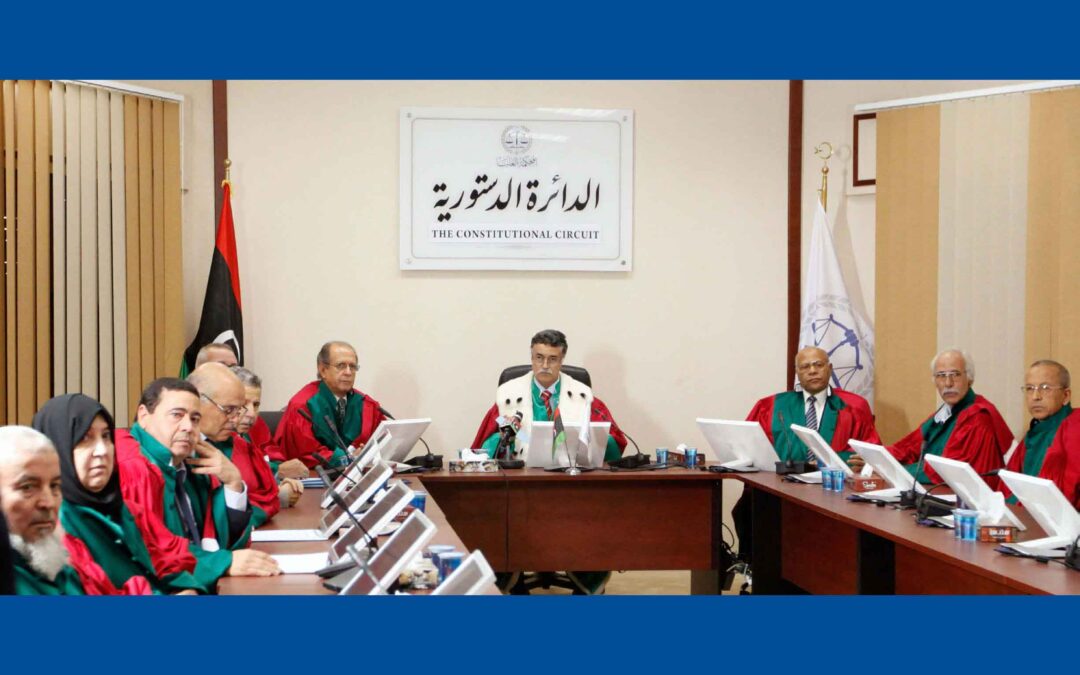
In May, the ICJ held a high level conference, in part to discuss the report’s findings bringing together senior judges, former ministers, members of the Constitution Drafting Assembly, lawyers, prosecutors and legal academics from across Libya.
Participants recognized the need for reforms and expressed their commitment to strengthening the independence of the judiciary and consolidating the rule of law in Libya.
“If Libya is to move forward towards a new era where the rule of law is held paramount, the new Constitution and legislation on the administration of justice must conform to the principles of judicial independence, impartiality and accountability,” said Said Benarbia, Director of the MENA programme at the ICJ.
The report emphasizes the need for the Supreme Judicial Council to be institutionally, financially, and administratively independent from the executive.
It is also important that its membership be pluralistic and gender-representative, with a majority of judges elected by their peers, the report says.
The existing Statute on the Judiciary needs revision to provide fair and transparent procedures for the selection, appointment, promotion and discipline of all judges, according to the report.
It also needs to provide for specific measures aimed at increased representation of women in the judiciary, including in senior positions.
The ICJ report also calls on the Libyan authorities to ensure the functional independence of the prosecutor’s office from both the executive and the rest of the judiciary.
Such independence is important to ensure that any past and ongoing gross human rights violations in Libya are impartially and thoroughly investigated and prosecuted and that all those responsible for such violations are criminally held to account, the ICJ says.
The report underlines that the jurisdiction of military tribunals must be restricted only to cases involving members of the military for alleged breaches of military discipline.
Alleged violations of human rights committed by the military or armed forces must be investigated and prosecuted by civilian authorities, it says.
The report recommends that immediate measures be taken to end arbitrary detention across Libya and ensure to all detainees the right to a fair trial.
Contact
Doireann Ansbro, Associate Legal Adviser of the ICJ Middle East and North Africa Programme, email: doireann.ansbro(a)icj.org
Libya-IoJ report launch-News-Pres releases-ARA-2016 (full press release in Arabic, PDF)
Libya-Challenges the Judiciary-Publications-Reports-Thematic report-2016-ENG (full report in English, PDF)
Libya-Challenges the Judiciary-Publications-Reports-Thematic report-2016-ARA (full report in Arabic, PDF)
Jul 18, 2016 | News
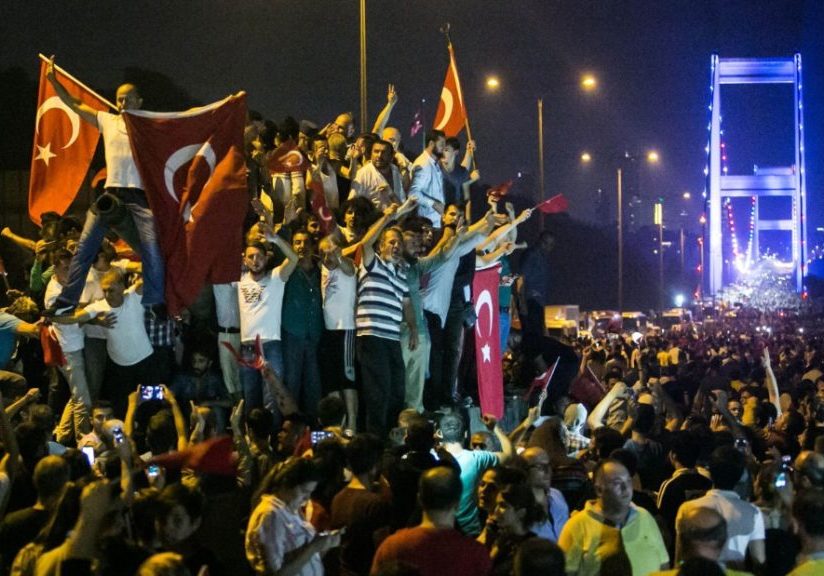
At a critical moment for Turkish democracy, the ICJ today urged the government to uphold the rule of law and respect Turkey’s obligations under international human rights law.
The ICJ condemns what appears to be a wholesale attack on the judiciary, implemented within hours of the failed coup attempt of 15 and 16 July.
“At such moments of crisis, it is crucial that the independence and security of tenure of judges is respected, so that public confidence can be maintained in the fairness of the justice system,” said Wilder Tayler, ICJ Secretary General.
“Purging the judiciary now endangers the deepest foundations of the separation of powers and the rule of law. An independent judiciary will be critical to ensure a functioning administration of justice for all people in Turkey as the country emerges from the crisis,” he added.
Reports indicate that on 16 July 2,745 judges were suspended by the High Council for Judges and Prosecutors (HSYK). Arrest warrants were issued for more than a hundred judges.
Two judges of the Constitutional Court, and ten members the HSYK itself, are reportedly among those detained. The ICJ fears that many of these detentions may be arbitrary.
Allegations that the judges concerned were linked to the attempted coup have not been supported by evidence, and it defies credulity that such a high number of judicial authorities could have been involved in the planning or execution of the military coup d’etat.
According to the ICJ, the measures are arbitrary, and contrary to fundamental rule of law principles.
In June, an ICJ report, Turkey: the judicial system in peril, analysed the increasing government control of the Turkish judiciary, including the HSYK, and arrests and dismissals judges, in violation of international standards.
“This weekend’s mass suspensions and arrests of judges represent a dramatic escalation of an attack on judicial independence that was already underway,” said Tayler.
“Disciplinary proceedings against judges should not proceed until it is clear that they will be heard by a body that is fully independent of the executive, and in accordance with the right to a fair hearing,” he added.
The ICJ is also deeply concerned at suggestions by the government that the death penalty may be introduced for those involved in the failed coup.
Re-introduction of the death penalty would violate Turkey’s obligations under Protocol 13 to the European Convention on Human Rights, and would amount to inhuman and degrading treatment in breach of Article 3 of the Convention.
The ICJ considers the death penalty to constitute in all circumstances a violation of the right to life and the prohibition on cruel, inhuman or degrading punishment.
Contact:
Róisín Pillay, Director, ICJ Europe Programme, t: +32 476 974263 ; e: roisin.pillay(a)icj.org
Additional information:
Under international standards on the independence of the judiciary, judges should be subject to suspension or removal only for reasons of incapacity or behaviour that renders them unfit to discharge their duties.
The ICJ recently published its Practitioners’ Guide N°13 on Judicial Accountability, a major study on international law and standards on the accountability of judges.
Further guidance on relevant international law and standards can be found in the ICJ Legal Commentary to the Geneva Declaration on Upholding the Rule of Law and the Role of Judges and Lawyers in Times of Crisis.

Jul 18, 2016
The ICJ today wrote to President Rodrigo Duterte to express concern on the recent wave of unlawful killings of alleged drug dealers in the country.
The ICJ reminded Duterte of the statement he made during his inaugural speech that his “adherence to due process and the rule of law is uncompromising.”
“With that pledge in mind, we write to urge you to uphold the obligations of the Philippines under international human rights law to protect and promote the right to life, among other rights,” the ICJ letter says.
“To that end, we would request that your government take immediate and effective measures to counter the recent wave of unlawful killings as well as to address unresolved cases of extrajudicial killings and enforced disappearances in the country,” it adds.
Philippines-Letter to President Duterte 2-Advocacy-Open letters-2016-ENG (full letter in PDF)
Jul 18, 2016 | News
Indian authorities must immediately, independently and thoroughly investigate all incidents of excessive, particularly lethal, use of force in Kashmir over the past week, the ICJ said today.
Indian security forces have an obligation to comply with Government commitments to avoid using excessive force to quell protests, and must be held to account for any violations.
Violent clashes between protesters and security forces broke out in Kashmir after a popular Kashmiri militant leader, Burhan Wani, was killed, along with his two associates, by security forces on 8 July.
More than 35 people have been killed, including one security officer, and over 2000 injured. In some areas, protestors threw stones and attacked police stations. Security forces used tear gas, pellet guns and firearms.
“Security forces must respect the right to life at all times, and only use force when strictly necessary and in a manner proportionate to the legitimate performance of their duties,” said Sam Zarifi, ICJ Asia Director.
“The number of persons injured over the past week, as well as the nature of their injuries, indicates the urgent need for investigations. If security forces use any kind of weapon, they are governed by international standards that require force to be used as a last resort in self-defence or defence of others against an imminent threat of death or serious bodily injury, and in a manner to minimize injuries,” he added.
Indian security forces began using pellet guns routinely after 2010 following heavy criticism of their misuse of firearms against protesters.
But during the recent protests, the use of pellet guns, considered non-lethal weapons by security forces, has resulted in serious and potentially permanent health consequences for persons affected, including eye injuries and organ damage, which have required urgent treatment.
A recent report has suggested that at least a 100 people have sustained eye injuries. Pellet guns have also injured non-protestors, including children.
“Indian authorities should stop the use of pellet guns until they can assess whether these weapons can be used in a manner that is consistent with human rights standards on the use of force, including whether they are inherently inaccurate, indiscriminate and arbitrary; and ensure that the use of all non-lethal weapons is strictly regulated, because they have the capacity to cause serious and permanent injury,” Zarifi said.
Hospitals in Kashmir are struggling to cope with the high number of patients. There have also been reports that security forces have stopped ambulances carrying injured people, and disrupted the functioning of hospitals.
“All allegations of excessive use of force and other unlawful behaviour by the security forces must be investigated immediately. At the same time, protesters who resort to violence or injure other people must also be properly investigated and brought to justice by proper trials,” he added.
“Security forces absolutely must not interfere with access to health care. In addition to prompt, independent and effective investigations on this, the Government must proactively ensure that all injured persons are able to safely access necessary and quality health care,” he added.
Indian Prime Minister Narendra Modi has called on security forces in Kashmir to exercise “absolute restraint”.
The Chief Minister, Mehbooba Mufti, has committed to ensuring accountability in all cases where excessive force was used by security forces.
It is crucial that the Government follows through on this promise, and conducts thorough, independent and prompt investigations.
In the past, violations by security forces have largely enjoyed impunity in Kashmir for several reasons, including laws like the Armed Forces Special Powers Act that shield security forces from legal accountability for human rights violations.
For example, in 2010, clashes between protestors and security forces in Kashmir resulted in over 100 deaths. Very few, if any, of these have been credibly investigated to date.
Current events also cast doubt over whether the reforms introduced since have improved policing practices and made security forces more accountable.
The ICJ is therefore calling on Indian authorities to:
- Order that security forces desist from using excessive and unlawful force, comply with international human rights law, and only use force when strictly necessary and in a manner proportionate to the legitimate performance of their duty;
- Promptly, independently and effectively investigate all allegations of excessive and lethal uses of force by security forces, make the results of these investigations public, initiate prosecutions where appropriate, and ensure that all victims are provided with effective redress;
- Provide necessary and quality health care to injured persons, ensure they are able to access it, that hospitals are stocked and equipped to deal with the increased patient load, and that all allegations of security forces attacking ambulances and hospitals are immediately investigated.
Contact:
Sam Zarifi, ICJ Regional Director for Asia and the Pacific, t: +66807819002; e: sam.zarifi(a)icj.org
India-Kashmir statement-News-Press release-2016-ENG (full text in PDF)
Jul 18, 2016 | News
The Maldives must immediately commute the death sentence imposed on Hussain Humam Ahmed and reinstate the 60-year old moratorium on capital punishment with a view towards abolishing it in law, the ICJ said today.
The Maldives Supreme Court on 24 June 2016 upheld the death sentence of 22-year old Hussain Humam Ahmed, convicted in 2012 for the murder Afrasheem Ali, a Member of Parliament (MP).
The execution, which the Government has expressed its intention to carry out within thirty days of the ruling, would be the first in the country since 1953.
“The reintroduction of the death penalty after 60 years, even as an increasing majority of nations are moving towards its abolition, is a tremendous blow to the already weak human rights situation in the Maldives,” said Nikhil Narayan, the ICJ’s South Asia senior legal adviser.
“Maldivian authorities must immediately halt Humam’s and others’ imminent executions and reinstate the moratorium as a first step towards getting rid of it outright,” he added.
On 7 July 2016, just two weeks after upholding Humam’s death sentence, the Supreme Court upheld a second death sentence, this one against Ahmed Murrath, a 32-year old convicted for the 2012 murder of Ahmed Najeeb, a prominent lawyer.
Hussain Humam was first arrested in October 2012 for the stabbing death of Afrasheem Ali, an MP for the ruling Progressive Party of the Maldives (PPM).
The trial, conviction and Supreme Court decision come even as the prosecutor’s office has admitted that the investigation into the murder is still ongoing.
The Supreme Court ruling also ignored a last-minute request by the victim’s family to delay enforcement of the death sentence until the conclusion of the investigation.
Human rights groups and independent observers have highlighted a number of fair trial and due process irregularities in Humam’s investigation and trial.
Humam’s conviction was based solely on his “confession” at a May 2013 hearing, after initially pleading not guilty.
Humam later retracted the confession and claimed that the police had obtained it through coercion.
“Proceeding with Humam’s execution on the basis of a deeply flawed trial, particularly in a context in which the Maldivian Supreme Court and criminal justice system are already under considerable criticism for their lack of independence, impartiality and failure to adhere to international fair trial and due process standards, would amount to a further violation of his rights to life and human dignity,” said Narayan.
The ICJ opposes capital punishment in all cases without exception. The death penalty constitutes a violation of the right to life.
“The death penalty is the ultimate form of cruel and inhuman punishment, which cannot be reversed once carried out, and neither serves the interests of justice for victims nor as a deterrent against future crimes,” Narayan added.
Following the Supreme Court’s decision, on 30 June, the Maldivian Government amended regulations to enforce the death sentence by lethal injection.
The new regulations require the president to order Humam’s execution within three days of endorsement of the death sentence by a committee comprising of the chief prosecutor, the commissioner of prisons, and the chief justice.
The execution must then be carried out within seven days of the president’s order. The president may then only halt the execution on a direct plea from the victim’s family.
President Yameen’s administration has maintained its resolve to implement the death sentence within thirty days of the 24 June Supreme Court ruling.
The Maldives must immediately halt Humam’s and others’ imminent execution, reinstitute the moratorium on the use of the death penalty and take meaningful steps towards its eventual abolition in law and practice, the ICJ says.
Background:
The ICJ has previously detailed the human rights crisis in the Maldives, and the deep politicization of the Maldivian judiciary and criminal justice system, in its August 2015 fact-finding report.
The Maldives is party to most of the principal human rights treaties, including the International Covenant on Civil and Political Rights, which obliges the Maldives to respect the rights to life, human dignity, freedom from cruel, inhuman or degrading treatment or punishment, and to a fair trial.
In December 2014, the UN General Assembly adopted a resolution, for the fifth time since 2007, emphasizing that the use of the death penalty undermines human dignity and calling on those countries that maintain the death penalty to establish a moratorium on its use with a view to its abolition. A majority of 117 UN Member States voted in favor of a worldwide moratorium on executions as a step towards abolition of the death penalty.
Contact:
Nikhil Narayan, ICJ South Asia Senior Legal Adviser, t: +977-981-3187821, e: nikhil.narayan(a)icj.org.