Oct 2, 2019 | Новости
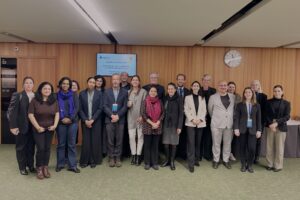
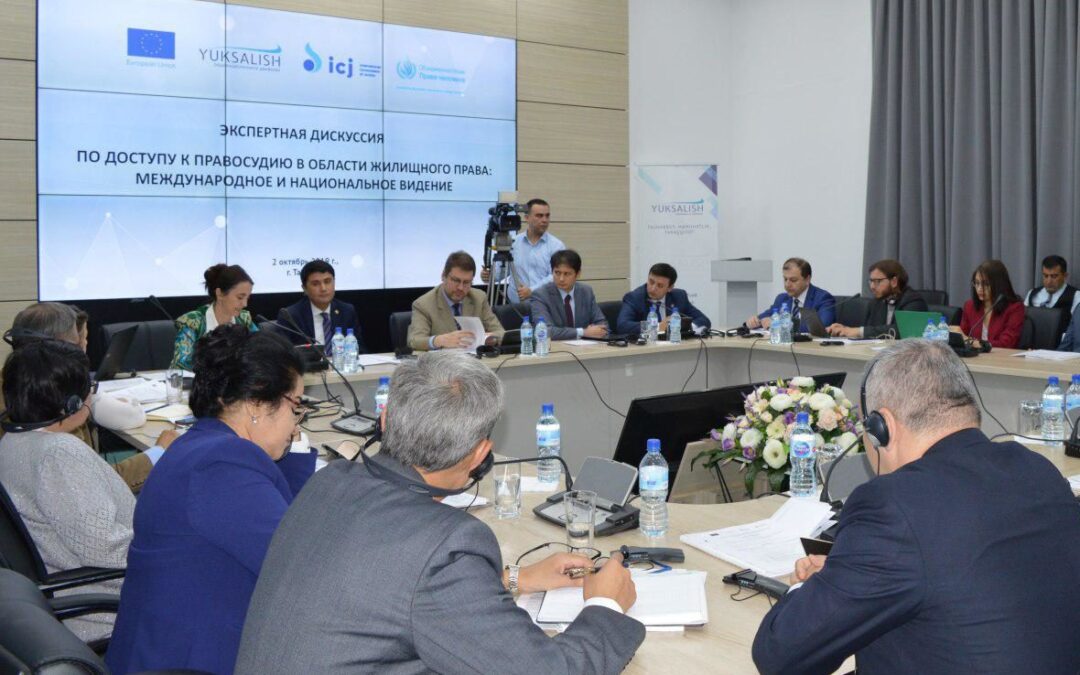
Сегодня Международная комиссия юристов (МКЮ,) Региональное отделение Управления Верховного комиссара ООН по правам человека для Центральной Азии (УВКПЧ ООН) и Общенациональное движение «Юксалиш» организуют экспертную дискуссию по экономическим, социальным и культурным (ЭСК) правам и стандартам в Узбекистане.
Темой для четвертой экспертной дискуссии является «Доступ к правосудию в области жилищного права: международное и национальное видение». Данные дискуссии будут направлены на обсуждение права на достаточное жилище.
Обсуждения экспертов направлены на повышение осведомленности об имплементации международного права и стандартов в области ЭСК прав в национальных судах, а также на обеспечение доступа к правосудию в области ЭСК прав и эффективного использования международного права прав человека в применении ЭСК прав. Каждая встреча сопровождается выступлениями зарубежных и местных экспертов. Первая дискуссия прошла в сентябре 2018 года по международным стандартам права на труд, вторая, прошедшая в декабре 2018 года, была посвящена вопросам реализации принципа не дискриминации в судах и судебных решениях, третья, прошедшая в марте 2019, была направлена на обсуждение прав людей с инвалидностью.
Прошедшие три экспертные дискуссии объединили юристов, адвокатов, специалистов, ученых и студентов-юристов посредством интерактивных обсуждений, исследовательских работ, обзорных статей и аналитических записок.
«В последние годы в Узбекистане были проведены масштабные реформы по обеспечению жильем сельского населения путем строительства доступных жилых зданий в соответствии с обновленными стандартами. Тем не менее, при обеспечении гарантий права на жилище необходимо принятие решений посредством консультаций. Крайне важно создать возможность для различных групп высказаться по этой теме и установить открытый диалог. Мы надеемся, что сегодняшняя платформа является одним из таких инструментов для обмена мнениями», – отметил Акмал Бурханов, председатель Общенационального движения «Юксалиш».
Глава Представительства ЕС в Узбекистане, Посол Эдуард Стипрайс сказал: «Экономические, социальные и культурные права являются фундаментальными правами для каждого человека. Они также имеют фундаментальное значение для экономического развития общества. Ни один человек и ни одна компания не будут инвестировать в улучшение своего положения, если они не могут рассчитывать на свои права использовать плоды своих инвестиций».
Хелена Фрейзер, Постоянный координатор ООН в Республике Узбекистан, в своей вступительной речи отметила, что «согласно Цели 11 в области устойчивого развития к 2030 году все Государства-члены ООН обязуются «сделать города и населенные пункты открытыми, безопасными, жизнестойкими и устойчивыми. Национально-принятые задачи в рамках ЦУР для Узбекистана — это обеспечение всеобщего доступа к доступному жилью, и расширение масштабов открытого для всех планирования населенных пунктов».
«Это наше четвертое экспертное обсуждение экономических и социальных прав, которое посвящено важному вопросу права на достаточное жилище – праву, которое хорошо известно в международном праве прав человека. Мы стремимся провести конструктивную дискуссию, основанную на международном праве и лучших национальных практиках, чтобы найти способы решения ряда вопросов, связанных с правом на жилище в Узбекистане. Мы хотели бы поблагодарить делегацию ЕС за их поддержку, а также наших партнеров – Региональный Офис ООН по правам человека (УВКПЧ) для Центральной Азии и Общенациональное движение «Юксалиш», – сказала Роишин Пиллэй, Директор программы по Европе и Центральной Азии Международной комиссии юристов.
Справочная информация:
Узбекистан ратифицировал Международный пакт об экономических, социальных и культурных правах (МПЭСКП) в 1995 году. В 2014 году Комитет по экономическим, социальным и культурным правам рекомендовал Узбекистану «принять надлежащие меры, включая законодательные и другие меры, для обеспечения всех выселяемых лиц альтернативным жильем или адекватной компенсацией».
Третий национальный периодический доклад Узбекистана о выполнении положений МПЭСКП был представлен в июне 2019 года. Перечень вопросов относительно представленного отчета будет утвержден в марте 2020 года.
Экспертные дискуссии проводятся в рамках проекта «Усиление роли гражданского общества в продвижении стандартов в области экономических, социальных и культурных прав» (ACCESS), поддерживаемого ЕС через Европейский инструмент в области демократии и прав человека (EIDHR).
За более подробной информацией просим обращаться:
Дилфуза Куролова, Консультант по правовым вопросам (МКЮ), Тел.: +998 90 9050099 ; e: dilfuza.kurolova(a)icj.org
Uzbekistan-Expert discussions ESCR-News-2019-RUS
Oct 2, 2019 | News
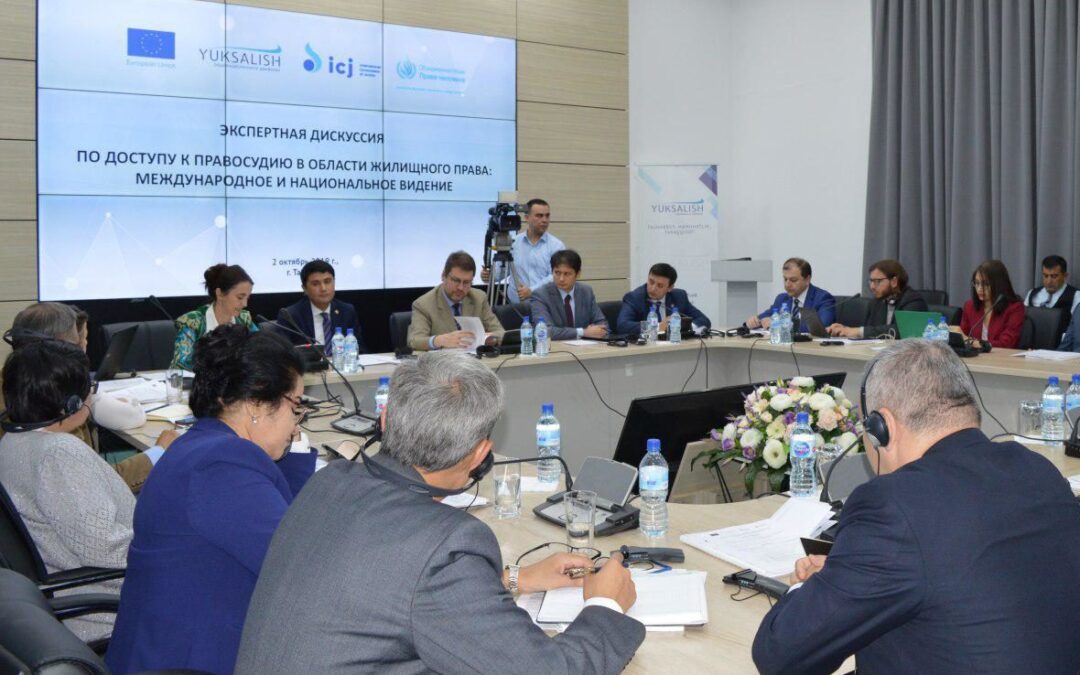
Today, the ICJ, Regional Office of the UN High Commissioner for Human Rights (OHCHR) for Central Asia and the Nationwide Movement “Yuksalish” are holding an Expert Discussions on economic, social and cultural rights (ESC) rights and standards in Uzbekistan.
The topic of the Fourth Expert Discussions is “Access to justice for housing rights: international and national perspectives.” This discussion will be focused on the right to adequate housing.
The Expert Discussions are aimed at increasing awareness about the implementation of international law and standards on ESC rights by national courts, to facilitate access to justice in relation to ESC rights and effective use of international human rights law for ESC rights at the national level.
Each Expert Discussion is supported by presentations of international and national experts.
The first experts’ meeting was held in September 2018 on international standards in labour rights, the second meeting – held in December 2018 touched upon the principle of non-discrimination in courts and court decisions, and the third meeting – held in March 2019 – was dedicated to the rights of people with disabilities.
These three events brought together lawyers, defense lawyers, individual experts, civil society activists, NGOs, academia representatives and law students via interactive discussions, research papers, peer review articles and policy papers.
“In recent years, large-scale work has been carried out in Uzbekistan to provide housing for the rural population through the construction of affordable residential buildings according to updated standards. However, participatory decision-making is in need to guarantee housing rights. It is vital to create opportunities for various groups to speak out on the topic and establish an open dialogue. We hope that today`s platform is one of such tools for exchange of opinions,” said Akmal Burkhanov, Chairperson of the Nationwide Movement “Yuksalish”.
Head of the EU Delegation in Uzbekistan Ambassador Eduards Stiprais said: “Economic, social and cultural rights are fundamental rights for every individual. They are also fundamental for the economic development of the society. No man and no company will invest in improving its situation unless it can rely on its right to appropriate the fruits of its investment.”
Helena Fraser, UN Resident Coordinator, noted in her opening remarks that “under Sustainable Development Goal 11 by 2030 all UN member States commit to “make cities and human settlements inclusive, safe, resilient and sustainable. The nationally adopted SDG targets for Uzbekistan are to ensure access to affordable housing for all; and to increase the scale of participatory planning of human settlements”.
“These, our fourth expert discussions on economic and social rights, are devoted to the important issue of the right to adequate housing, a right that is well established in international human rights law. We aim to hold a constructive discussion, informed by international law as well as national best practices, to find ways to address an array of issues linked to housing rights in Uzbekistan. We would like to thank the EU Delegation for their support, as well as our partners – the Regional UN Human Rights Office (OHCHR) for Central Asia and the Nationwide movement “Yuksalish”,” said Róisín Pillay, Europe and Central Asia Programme Director of the ICJ.
Background
Uzbekistan ratified the International Covenant on Economic, Social and Cultural Rights (ICESCR) in 1995. In 2014, the Committee on Economic, Social and Cultural Rights recommended Uzbekistan “to take appropriate measures, including legislative and other measures, to provide all evicted persons with alternative accommodation or adequate compensation”.
The third national periodic report of Uzbekistan on implementation of provisions of the ICESCR was submitted in June 2019. The list of questions regarding the submitted report will be adopted in March 2020.
The Expert Discussions are organized in the framework of the project “Advancing Civil Society in Promoting Economic, Social and Cultural Rights’ (ESCR) Standards (ACCESS)” funded by the EU through the European Instrument for Democracy and Human Rights (EIDHR).
Contact
Dilfuza Kurolova, ICJ Legal consultant, t: +998 90 9050099 ; e: dilfuza.kurolova(a)icj.org
Download
Uzbekistan-Expert discussions ESCR-News-2019-ENG (full story in PDF)
Oct 1, 2019 | News
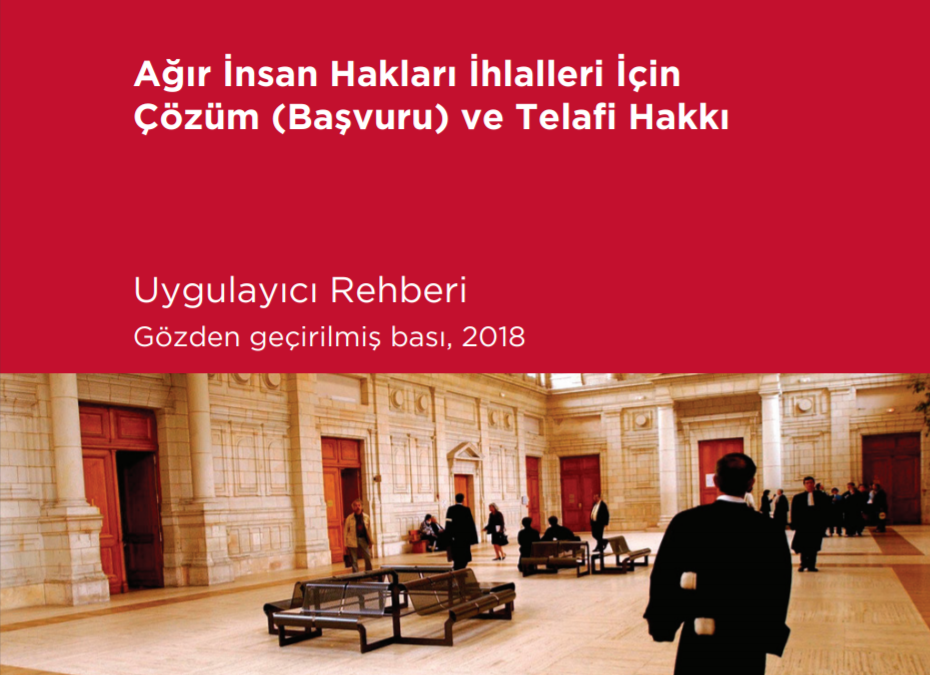
Today, the ICJ published a Turkish translation of Practitioners’ Guide N°2 on the Right to a Remedy and Reparation for Gross Human Rights Violations.
The translation has been funded by the European Instrument for Democracy and Human Rights (EIDHR).
Under its Global Redress and Accountability Initiative, the ICJ had launched its 2018 update to Practitioners’ Guide No 2, outlining the international legal principles governing the right to a remedy and reparation for victims of gross human rights violations and abuses by compiling international jurisprudence on the issues of reparations.
The Guide is aimed at practitioners who may find it useful to have international sources at hand for their legal, advocacy, social or other work.
Amongst revisions to the Guide, the 2018 update includes new sections on terminology and on non-discrimination;updated sections on the notions of ‘collective victims’, ‘collective rights’, the rights of ‘groups of individuals’; additional references to the work of the Committeeon the Elimination of Discrimination against Women and the Committee on the Rights of the Child; an updated section on remedies for unlawful detention, including references to the 2015 UN Basic Principles and Guidelines on Habeas Corpus; and updates on gender-based violence and on violations occurring in the context of business activities.
The Guide first recalls the States’ general duty to respect, protect, ensure and promote human rights, particularly the general duty of the State and the general consequences flowing from gross human rights violations (Chapter 1).
It then defines who is entitled to reparation: victims are, of course, the first beneficiaries of reparations, but other persons also have a right to reparation under certain circumstances (Chapter 2).
The Guide goes on to address the right to an effective remedy, the right to a prompt, thorough, independent and impartial investigation and the right to truth (Chapters 3-4).
It then addresses the consequences of gross human rights violations, i.e. the duty of the State to cease the violation if it is ongoing and to guarantee that no further violations will be committed (Chapter 6). It continues by describing the different aspects of the right to reparation, i.e. the right to restitution, compensation, rehabilitation and satisfaction (Chapter 7).
While the duty to prosecute and punish perpetrators of human rights violations is not necessarily part of the reparation as such, it is so closely linked to the victim’s right to redress and justice that it must be addressed in this Guide (Chapter 8).
Frequent factors of impunity, such as trials in military tribunals, amnesties or comparable measures and statutes of limitations for crimes under international law are also discussed (Chapter 9).
The guide in Turkish is available here.
This document has been produced with the financial assistance of the European Union. The contents of this document are the sole responsibility of the ICJ and can under no circumstances be regarded as reflecting the position of the European Union.

Sep 30, 2019 | Advocacy, Non-legal submissions
The ICJ has made a submission to the UN Human Rights Committee in advance of its forthcoming examination of Pakistan’s follow-up report under International Covenant on Civil and Political Rights (ICCPR).
In its submission, the ICJ has brought to the Committee’s attention concerns in relation to the following issues:
- Shortcomings in the legal framework relevant to enforced disappearances;
- The continuing practice of enforced disappearances and, in this context, the ongoing impunity of law enforcement and security agencies;
- The promulgation of the Actions (in aid of civil power) Ordinance, 2019; and
- The ineffectiveness of the Commission of Inquiry on Enforced Disappearances.
The Human Rights Committee will examine Pakistan’s follow-up report during its 127th session, which will be held in Geneva from 14 October to 9 November 2019.
The UN Human Rights Committee issued its Concluding Observations in August 2017, following its review in July 2017 of Pakistan’s first periodic report. Among its many recommendations, for follow-up the Committee prioritized recommendations related to the death penalty; enforced disappearances and extrajudicial killings; and freedom of religion, conscience and belief.
The Committee requested Pakistan to provide information on the implementation on these recommendations within one year of the adoption of the Concluding Observations, which was due on in August 2018.
Pakistan submitted its follow up report to the Committee in May 2019.
Download
Pakistan-UNHCR submission-advocacy-non legal submission-2019-ENG(submission in PDF)
Sep 30, 2019 | Agendas, Events, Uncategorized
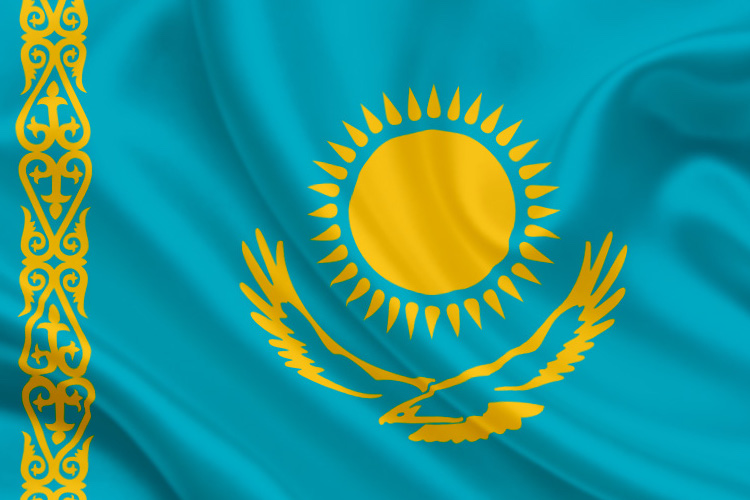
Today, in the framework of the EU funded project “Enhancing legal protection of migrants rights in Kazakhstan”, the Legal and Policy Resource Center (LPRC) and the ICJ began a series of three trainings linked to this issue for lawyers and civil society organizations.
Three two-day trainings on “International and national Law on the protection of migrants in legal practice” will take place from 30 September to 5 October in Nur-Sultan, Shymkent and Almaty.
The trainings will address international and national law and standards relevant to the protection of the rights of migrants, including in situations of expulsion and detention, as well as with regard to the respect, protection and fulfilment of their economic, social and cultural rights.
During the trainings, 100 attorneys and lawyers of non-governmental organizations from 10 regions of Kazakhstan will be trained.
Kazakhstan-Training-Agenda-MigrationIHRL-NurSultan-2019-engrus (download the agenda of the Nur Sultan training in Russian and English)
Kazakhstan-Training-Agenda-MigrationIHRL-Shymkent-2019-engrus (download the agenda of the Shymkent training in Russian and English)
Kazakhstan-Training-Agenda-MigrationIHRL-Almaty-2019-engrus (download the agenda of the Almaty training in Russian and English)