May 23, 2016
An opinion piece by Reema Omer, ICJ legal adviser in Pakistan.
Chief Justice Anwar Zaheer Jamali has declared the year 2015-2016 as the year of judicial accountability.
Judicial independence has long been a flashpoint in Pakistan, as illustrated by the movement nearly a decade ago to reinstate the unlawfully deposed former Chief Justice Iftikhar Muhammad Chaudhry.
However, accountability has largely been absent from this discourse.
Without accountability, independence has the potential to act as a shield behind which judges have the opportunity to conceal possible unethical behavior.
Indeed, judicial accountability is part and parcel of judicial independence, since a judge whose conduct and decisions are influenced by extra-legal elements cannot be independent.
Under International standards, including UN Basic Principles on the Independence of the Judiciary, therefore, the independence and accountability of the judiciary are inextricably linked.
Chief Justice Jamali’s focus on accountability within the judiciary is welcome, as corruption in the judiciary is a longstanding and chronic issue in Pakistan.
Transparency International’s corruption perception surveys, for example, frequently place the judiciary as the most corrupt institution in the country (along with the police).
CJ Jamali’s focus on accountability in all tiers of the judiciary, including the high courts and the Supreme Court, is an important aspect of the accountability drive.
In the past, where judges have acknowledged corruption in the judicial institution, the focus has been limited only to judges in the subordinate judiciary.
The National Judicial Policy adopted by the Supreme Court in 2009, for example, recommended that strict action be taken against district and sessions judges who carry a “persistent reputation of being corrupt”.
However, while judges of the superior courts were encouraged to decide cases expeditiously, there was no recognition of corruption or other misuse of authority by judges of the Supreme and high courts in the policy.
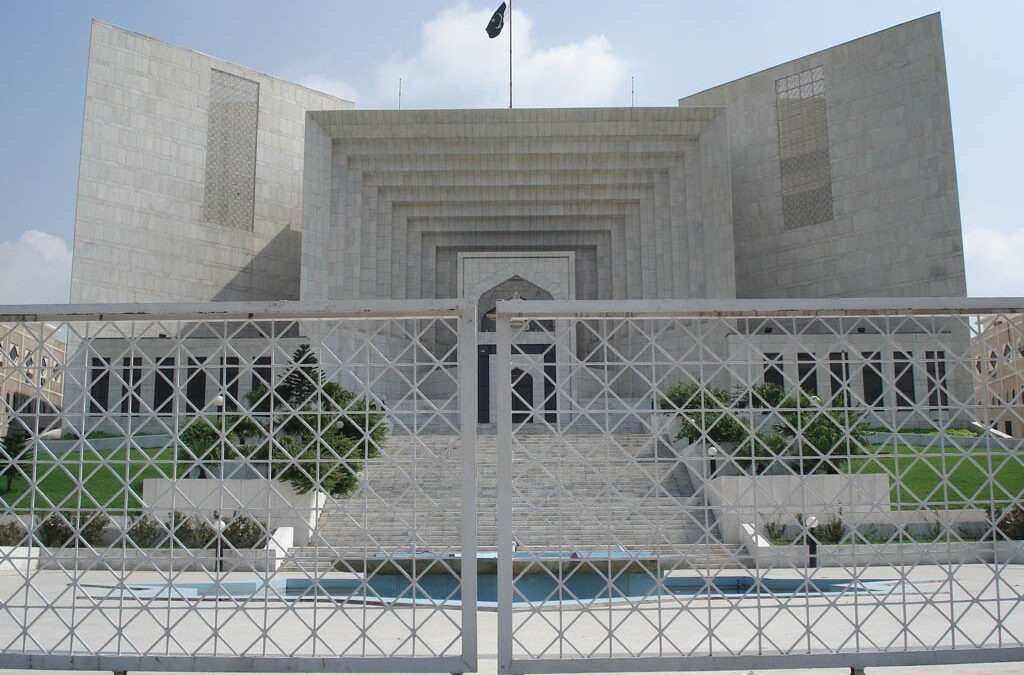
The Chief Justice’s vision on accountability rests on “activating” the Supreme Judicial Council (SJC), which under Article 209 of the Constitution is tasked with carrying out inquiries into the capacity and conduct of Supreme Court and high court judges.
The SJC comprises the Chief Justice of Pakistan, the two most senior judges of the Supreme Court, and the two most senior chief justices of the high courts.
Disciplinary proceedings are initiated before the Council if there is information from “any source”, or it is the opinion of the President of Pakistan, that a judge from the superior judiciary is either incapable of performing his or her duties due to mental or physical incapacity, or that he or she may have engaged in misconduct.
A finding of guilt by the SJC is the only method by which a judge of the Supreme Court or of a high court can be removed.
The Chief Justice has acknowledged that the SJC has been rendered ineffective because of prolonged delays in deciding complaints: according to the CJ, 90 per cent of cases before the Supreme Judicial Council have become moot, as the accused judges retired while their cases were still pending.
In addition, especially in the recent past, military governments and judges of the Supreme Court have also undermined the authority and the constitutional role of the Supreme Judicial Council.
The most glaring (and damaging) recent example occurred after General Musharraf’s proclamation of emergency in 2007, when the unlawful sacking of then Chief Justice Iftikhar Muhammad Chaudhry and other judges of the high courts and Supreme Court was justified in the name of “judicial accountability”.
These judges were dismissed without the involvement of the Supreme Judicial Council.
Ironically, under the leadership of Chief Justice Chaudhry, the process of circumventing the Supreme Judicial Council continued.
Following restoration in 2009, the Supreme Court gave at least 72 judges who were accused of taking oath under General Musharraf’s provisional constitution the option of resigning or facing contempt of court charges. Their plea to appear before the Supreme Judicial Council for hearing was dismissed by the Supreme Court.
In this context, therefore, Chief Justice Jamali’s focus on rejuvenating the Supreme Judicial Council to perform its constitutional role is a welcome move.
The process of judicial accountability, however, will require much more. Some of these issues were highlighted at a conference of leading judges and lawyers convened by the ICJ in December 2015 on holding judges accountable for involvement in corruption, human rights violations and other misconduct:
First, measures must be taken to ensure that disciplinary proceedings are not used as a means of intimidation, harassment, or retaliation against judges for exercising their judicial functions independently and diligently.
At the minimum, this would mean that disciplinary proceedings against judges are strictly according to the provisions of the Constitution and international standards, and must meet all fair trial and due process guarantees.
Second, transparency should be a key aspect of disciplinary proceedings against judges. The number of cases referred to the Supreme Judicial Council; the legal and evidentiary bases for the complaints; the time taken for adjudication; and the outcomes of the proceedings must be made public – both to maintain the public’s confidence in the administration of justice and also to protect the interests of the parties involved.
Third, what amounts to judicial misconduct must be clearly defined and must be appropriate under the rule of law.
While the current understanding of misconduct seems limited to financial corruption, nepotism and misuse of authority, perhaps what is also needed is the recognition of the role of judges in undermining human rights protections or facilitating violations or impunity for such violations.
One of the ways this can be done is to revise the judicial code of conduct to bring it in line with international standards, including reflecting the duty of judges to guarantee and protect human rights.
And finally, judicial immunity under section 77 of the Penal Code and other provisions of the law, which protect judges from liability resulting from their “good faith” judicial actions, should never insulate judges from prosecution for serious crimes and crimes under international law.
If carried out fairly, expeditiously and transparently, the judicial accountability drive initiated by the Chief Justice can be a step towards restoring public confidence and trust in the judiciary, which has long suffered because of neglect of the problems plaguing the institution. It will also bring Pakistan closer to an independent judiciary, in a truer sense of the term.
May 15, 2016 | News
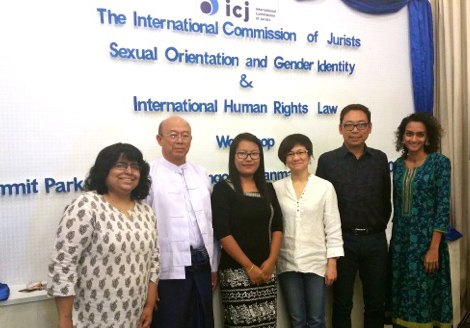
The ICJ hosted a workshop on “Sexual Orientation and Gender Identity and International Human Rights Law” in Yangon on 14 and 15 May 2016.
The workshop was the first of its kind in Myanmar to bring together such a varied group of people to discuss the topic of Sexual Orientation and Gender Identity (SOGI) and international human rights law.
The event drew together a diverse group, including more than 50 lawyers from different parts of Myanmar, along with lesbian, gay, transgender, bisexual, inter-sex and queer (LGBTI) activists, members of the Myanmar National Human Rights Commission, and regional academics and lawyers and international experts.
Myanmar-SOGI workshop-News-Web Story-2016-ENG (full story in PDF)

May 13, 2016
In a new report released today, the ICJ called on the Tunisian authorities to adopt comprehensive legal and policy reforms as well as practical measures to fully guarantee effective remedy and reparation for victims of human rights violations.
Under Ben Ali’s regime, thousands of human rights violations, including torture and other ill-treatments, unlawful killings, enforced disappearances, and arbitrary arrests and detentions, were committed by law enforcement and other security officers, the ICJ reminds.
Numerous similar violations were also committed during the December 2010 to January 2011 uprising and some continue today.
The ICJ report Illusory Justice, Prevailing Impunity highlights how, five years after the toppling of former President Ben Ali, legal and practical obstacles continue to undermine victims’ right to a remedy and reparation.
“Despite the adoption of some reforms and transitional justice measures, such as the establishment of the Truth and Dignity Commission, to date the legal system has failed to deliver the truth and justice that victims have been tirelessly seeking,” said Theo Boutruche, Legal Adviser at ICJ’s Middle East and North Africa Programme.
While several cases have been brought before Tunisian courts, in particular military courts, these proceedings in themselves do not fulfil Tunisia’s obligations to fully investigate and prosecute crimes under international and national law, establish the truth about violations, and ensure remedy and reparation for victims, the ICJ says.
The report details numerous flaws, in law and practice, including: lack of independence of the judiciary; inadequate statutory definitions of crimes; inadequate statutory recognition of the responsibility of superior officers for certain violations committed by their subordinates; the broad discretion of the public prosecutor to dismiss cases without providing specific reasons; the inadequacy of criminal investigations, including the lack of effective measures for the protection of victims and witnesses; and the resort to military justice, rather than ordinary civilian courts, to address human rights violations.
“Hope and expectations for justice grew within the transition period, but victims are frustrated and disappointed by persistent impunity and the inadequate outcomes in the proceedings brought against law enforcement officials since 14 January 2011,” added Boutruche.
The report identifies specific reforms of the justice system, in line with international law and standards that are needed to address current obstacles and fully realize the victims’ right to a remedy and reparation.
These include ensuring that: gross human rights violations are promptly, thoroughly and effectively investigated by bodies capable of triggering criminal prosecutions where required; victims and witnesses are protected; and that victims’ rights are given full effect, including the possibility to judicially review any decision by a prosecutor to dismiss a case prior to opening an investigation.
“Comprehensive reforms of the justice system are needed not only for victims of past violations to obtain justice and reparation but also for ‘transitional justice’ measures to deliver meaningful justice. The successful transfer of cases by the Truth and Dignity Commission to the Specialized Chambers highly depends on those reforms,” said Boutruche.
Contact:
Theo Boutruche, Legal Adviser of the ICJ Middle East and North Africa Programme, tel: +96 170 888 961, e-mail: theo.boutruche@icj.org
Tunisia-Remedy & reparations launch-News-Press releases-2016-ARA (full press release in Arabic, PDF)
Tunisia-Remedies and reparations-Publications-Thematic report-2016-ENG (full report in English, PDF)
Tunisia-Remedies and reparations-Publications-Thematic report-2016-ARA (full report in Arabic, PDF)
Watch the 12-minute documentary here:
May 13, 2016 | News
Nepal’s leading political parties should not bargain away justice for victims of serious human rights abuses as part of an agreement to form a new coalition government, the ICJ, Human Rights Watch, and Amnesty International said today.
A new agreement between the ruling parties threatens to entrench impunity for those who planned and carried out killings, enforced disappearances, torture, and other crimes in Nepal’s civil war, just as the country’s long delayed transitional justice process is finally about to get under way.
On May 5, 2016, presumably in a bid to retain the support of the United Communist Party of Nepal (Maoist) (UCPN-M) for the Communist Party of Nepal-Unified Marxist Leninist (CPN-UML) coalition government of Prime Minister K.P. Sharma Oli, the two ruling coalition partners agreed to a nine-point deal containing provisions that aim to shield perpetrators of abuses in Nepal’s decade-long civil war.
Provision 7, which directs the authorities to withdraw all wartime cases before the courts and to provide amnesty to alleged perpetrators, is particularly problematic.
“This political deal between the ruling parties is extremely damaging to the credibility of an already deeply politicized and flawed transitional justice process in the eyes of Nepal’s victims,” said Sam Zarifi, ICJ Asia-Pacific Director.
“Moreover, it flies in the face of Nepal’s international human rights obligations and the rulings of its own Supreme Court by trying to wash away the crimes of the conflict by attempting to coopt pending criminal cases and provide blanket amnesty to alleged perpetrators,” he added.
The Supreme Court of Nepal has in several instances reaffirmed the principle under international law that amnesties are impermissible for serious international crimes.
However, Nepal authorities have consistently ignored the orders from the country’s highest court.
Nepal has an obligation under international law to investigate and, where sufficient evidence exists, prosecute crimes under international law, including torture and other ill-treatment, enforced disappearance, extrajudicial executions, war crimes, and crimes against humanity.
Article 2 of the International Covenant on Civil and Political Rights (ICCPR) and Article 14 of the Convention against Torture and Other Cruel, Inhuman and Degrading Treatment or Punishment (CAT) – both treaties to which Nepal is a party – require states to ensure the right to an effective remedy and reparation for victims of human rights violations.
“The political deal by the ruling parties to grant amnesty to those responsible for conflict-era human rights abuses is a callous attempt to disregard Nepal’s international treaty obligations by violating victims’ right to an effective remedy,” said Brad Adams, Asia Director at Human Rights Watch. “Nepal’s political deal jeopardizes the war victims’ last best hope for justice and accountability.”
The applicability of this international obligation under Nepali law was reaffirmed by the Nepal Supreme Court in its 2015 decision in the Suman Adhikari case, striking down provisions of the Investigation of Disappeared Persons, Truth and Reconciliation Commission Act, 2014 (TRC Act) that it ruled were inconsistent with international law and ordering the government to amend the TRC Act, the May 2014 legislation creating the two transitional justice mechanisms, the Commission on Investigation of Disappeared Persons (COID) and the Truth and Reconciliation Commission (TRC).
The Supreme Court ruled in the same decision that criminal cases already before the judiciary could not be transferred to the two commissions, confirming that the judiciary and not the commissions had the authority to determine the criminality of conflict-era human rights violations.
“Nepal’s ruling parties cannot bargain away victims’ rights to truth, justice, and reparation by using the commissions as a substitute for their legal obligations to investigate and prosecute human rights abuses through the criminal justice system,” said Champa Patel, South Asia Regional Office Director at Amnesty International.
The ICJ, Human Rights Watch, and Amnesty International, along with Nepali civil society, victims’ groups, the United Nations, and the international diplomatic community, have consistently called for the Nepal government to amend the TRC Act in line with Nepal’s international obligations as well as the Supreme Court’s jurisprudence, in order to ensure a credible transitional justice process that safeguards victims’ rights and conforms to rule of law principles.
In a flagrant display of deliberate disregard for the rule of law, however, the ruling parties’ deal to amend the TRC Act by attempting to reinforce the same amnesty provision that has been repeatedly struck down by the Supreme Court ignores both the country’s international legal obligations and the binding judgments of its own apex court, and further threatens the prospects for post-war justice and accountability in Nepal.
The ICJ, Human Rights Watch, and Amnesty International therefore call upon the Nepal government to take immediate and effective steps to safeguard victims’ rights to truth, justice, and reparation through a credible transitional justice process that is free of any political interference or any forms of pressure or intimidation.
Contact
Sam Zarifi, ICJ Asia-Pacific Director, t: +66-807-819-002; e: sam.zarifi(a)icj.org
Nikhil Narayan, ICJ Senior Legal Adviser, t: +977-981-318-7821 (mobile); e: nikhil.narayan(a)icj.org
May 13, 2016 | Uncategorized
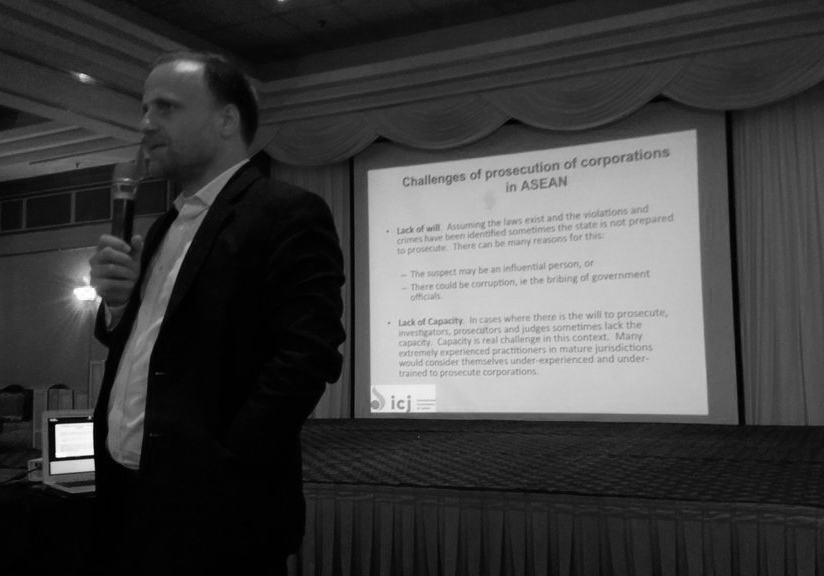
The workshop, held in Yangon on 12-13 May, brought together lawyers and activists from Cambodia, Laos, Myanmar, Thailand and the Philippines to share experience and best practice on access to remedy in the area of business and human rights.
“The ASEAN Economic Community and economic growth in Southeast Asia have not occurred with corresponding improvement in human rights,” said Carlos Lopez, ICJ Senior Legal Adviser on Business and Human Rights.
“The ICJ has identified supporting the right to a remedy as a key factor in ensuring that regional economic growth does not come at the expense of rights,” he added.
The Yangon workshop was designed to promote regional networking and sharing of experiences. In particular, participants discussed how to use strategic litigation to change a culture of impunity in South East Asia.
Strategic litigation can bring about significant changes in the law, practice or public awareness via taking carefully selected cases to court.
The clients involved in strategic litigation have been victims of human rights abuses that are suffered by many other people.
But strategic litigation does not happen entirely in the courts. Successful litigation will include social mobilization, awareness-raising, and skillful use of media.
Lawyers shared case studies revealing human rights abuses committed by business enterprises, fuelled by rapid, unregulated investment.
Unresolved and endemic disputes over land in Cambodia, Laos and Myanmar have given rise to human rights abuses and even conflict.
Illegal labour practices and the plight of migrant workers highlight the legal difficulty of prosecuting companies that operate in multiple jurisdictions.
Many of the abuses discussed concern the rights of communities, often the most marginalized.
Retaliation against communities and their lawyers for opposing development projects is common.
They fear legal action, intimidation and violence as a result of asserting human rights.
The workshop made clear that ASEAN states are not fulfilling their responsibility to protect human rights and are not providing adequate remedy for abuses by corporations.
“Despite diverse legal and political systems, the challenges facing these lawyers are strikingly similar,” said Daniel Aguirre, ICJ International Legal Adviser based in Yangon. “Protective laws are unimplemented in practice, individuals and communities lack effective access to remedy and they are often persecuted for asserting their human rights.”
Aside from outlining their important cases, participants at the workshop explained the strategies employed to affect change.
They discussed social mobilization and marches in the Philippines, the promotion of local culture and the use of media in Thailand, the engagement of civil society with lawyers in Cambodia and the struggle for land rights in Myanmar and Laos.
Participants took advantage of simultaneous translation to compare approaches.
Many participants pointed to a culture of impunity, where business activities often went unregulated, and corrupt authorities failed to implement and enforce laws.
Lawyers explained the difficulty of collecting evidence when so few locals were aware of the law and their human rights.
Moreover, crimes of a transnational nature present additional challenges, as people from different languages, cultures and legal systems must cooperate to enforce laws.
Underpinning all of these problems is the lack of independent judiciaries. “The lawyers all agreed that access to remedy is undermined by partial authorities that lack independence,” said Aguirre. “Even if they manage to get to trial, the courts are not always independent, impartial and competent.”
Contact:
Daniel Aguirre, ICJ International Legal Adviser, Yangon. daniel.aguirre(a)icj.org
Carlos Lopez, ICJ Senior Legal Adviser on Business and Human Rights, Geneva. carlos.lopez(a)icj.org