May 31, 2016 | News
Myanmar’s Supreme Court engages in 2nd High Level Dialogue with the ICJ on Drafting and Implementing a New Judicial Code of Ethics and Accountability.
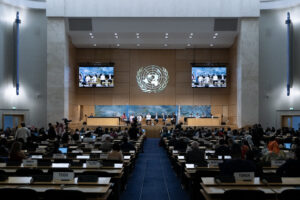
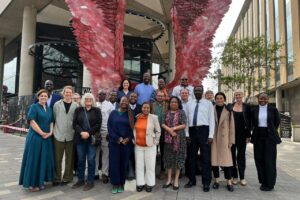
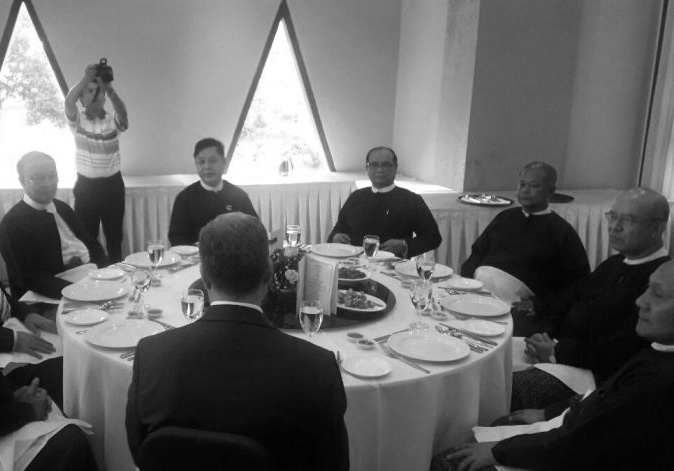
The ICJ, the United Nations Development Program and the Office of the Supreme Court of the Union (OSCU) held a High Level Dialogue on “Implementing a Code of Judicial Ethics” in Nay Pyi Taw on 30-31 May 2016.
This dialogue followed a commitment by the OSCU to draft a code and to ensure it is informed by and implemented in accordance with international best practice. The OSCU’s Judicial Ethics Review Committee, Supreme Court and High Court Judges and other senior court administrators participated in the dialogue.
Building on the previous dialogue’s focus on the contents of a code of ethics, the participants and their international counterparts from the ICJ and UNDP discussed international standards for accountability and implementation mechanisms to accompany a code of ethics.
In opening the dialogue, the Honourable Supreme Court Justice of the Union, U Mya Thien explained that the new code reflected international standards and would enhance public trust and promote accountability in the Judiciary.
In his opening remarks, ICJ Commissioner and Justice of the Supreme Court of South Africa, Azhar Cachalia, explained the importance of the code as a basis for legitimacy and independence.
He stressed that the judiciary must become accountable to the public.
“Myanmar has an historic opportunity to make decisions that will shape the judiciary for generations to come,” he said.
During the dialogue, the UNDP’s Elodie Beth outlined research on regional judicial accountability and its lessons for Myanmar.
Sam Zarifi, the ICJ’s Regional Director shared experience and international standards on implementing a code of ethics Zarifi explained that “in order for it to be effective, the Supreme Court must establish mechanisms and institutions to hold judges accountable to the code of ethics.”
All participants agreed that implementing a proper code of ethics would strengthen the accountability and independence of Myanmar’s judiciary.
Both the UNDP and the ICJ congratulated the OSCU for following its Strategic Plan for 2015-2018 and engaging in a dialogue designed to further this process.
Both expressed willingness to continue working with Myanmar’s judiciary on the issues of judicial independence, the rule of law and human rights.
May 30, 2016 | News
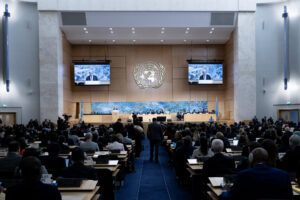
The ICJ commends the victims of the former Chadian president Hissene Habre for their relentless pursuit of justice that resulted in Habre’s conviction of crimes against humanity.
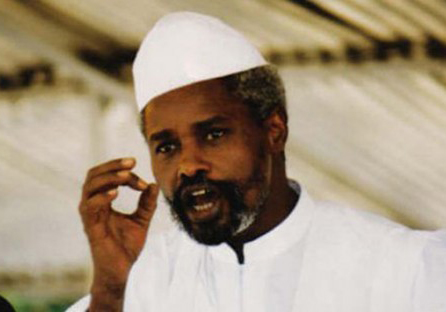
Today Hissene Habre (photo) was convicted for the murders, summary executions and torture of over 40,000 people, which were committed during his rule from 1982-1990 until he was deposed by the current president Idriss Deby Itno.
For over two decades victims and survivors groups have been campaigning with human rights organizations for an end to the lack of accountability and impunity that enabled Habre to spend years in exile before prosecution.
Speaking after the handing down of the judgement by the Extraordinary African Chambers, Wilder Tayler, ICJ’s Secretary General, reminded the African Union of the “need to enhance effectiveness of the African Court on Human and Peoples’ Rights to ensure that crimes against humanity can be addressed in a timely way that ensures the provision of remedies to victims of human rights violations.”
Further, Tayler urged other countries that have housed war criminals to reconsider their attitude towards international human rights and criminal law, and to ensure that international jurisdiction and prosecution requirements to end impunity are met.
In conclusion, the Secretary General, expressed his hope that “this event mark the beginning of the end of the African continent being perceived as an epicentre of impunity.”
Contact
Arnold Tsunga, ICJ Regional Director for Africa, t: +27 73 131 8411, e: arnold.tsunga(a)icj.org
May 30, 2016 | News
The ongoing criminal trial in the Loei Provincial Court, where a verdict is awaited tomorrow, is an important test of Thailand’s commitment to hold those responsible for criminal offences against human rights defenders to account, the ICJ and Protection International said today.
On 31 May, the Loei Provincial Court will render its verdict following the trial of retired Royal Thai Army officer, Lt Gen Poramet Pomnak, and his son, Royal Thai Army officer, Lt Col Poramin Pomnak, on criminal charges related to their alleged participation in a violent attack by a group of over 100 armed men against members of the Khon Rak Ban Kerd Group (KRBKG) in Nanonbong village in Loei and other villagers.
The victims were assaulted and held captive for over seven hours during the attack in the evening of 15 May 2014.
More than 20 people were injured, with seven requiring hospitalization for serious injuries.
KRBKG is a community-based group protesting what they allege is the damaging impact of mining operations on their health and their environment.
Most of KRBKG’s activities have focused on stopping the operations of the Phuthapfa gold mine operated by Thai company, Tungkum Ltd., situated in Loei Province.
“This case has become emblematic of the human rights abuses faced by human rights defenders trying to protect their communities in Thailand,” said Sam Zarifi, ICJ’s Asia Director. “Many people are looking at this case to see whether the Thai government will follow through on its commitment to protect human rights defenders.”
The attack on Nanonbong village occurred after KRBKG and local residents barricaded the road to the gold mine, which passes through the village.
During the attack, the barricade was destroyed and at least 13 trucks were reportedly seen transporting materials from the mine site.
Partly based on the villagers’ testimony that Lt Col Poramet Pomnak and Lt Col Poramin Pomnak were involved in the 15 May violence, the two were indicted on several charges, including offences of ‘injury to the person causing bodily harm’ and ‘false imprisonment’ (or illegal deprivation of liberty), under articles 295 and 309 of the Thai Criminal Code.
“Given credible reports that a group of over 100 armed men were involved, the ICJ is concerned that only two people have been indicted for the attack, and we are therefore calling on the Thai authorities to re-open investigations and ensure all those responsible are held to account and redress is provided for the victims concerned,” Zarifi added.
The case against Lt Col Poramet Pomnak and Lt Col Poramin Pomnak comes against a background of disputes between KRBKG and Tungkum Ltd.
The company filed at least 19 criminal and civil lawsuits against 33 members of KRBKG and other villagers in the past seven years.
One of those cases includes claims of criminal defamation against a 15-year old girl who allegedly made negative statements about the company’s activities on a television program.
Members of KRBKG have joined as plaintiffs in the criminal case and are demanding compensation from the two defendants.
Background
Lt Col Poramet Pomnak and Lt Col Poramin Pomnak were formally indicted on the following charges of the Thai Penal Code: articles 295 (‘injury to the person causing bodily harm’) and 296 (sentencing for bodily harm), 309 (‘false imprisonment’ or ‘illegal confinement’) and 310 (sentencing for false imprisonment), 358 (‘offence of mischief’ or ‘damage to property’) 371 (‘offence of bearing arms’), 376 (‘offence of discharging a firearm’), 391 (sentencing for acts of violence not amounting to bodily harm) taken together with articles 32, 33, (‘forfeiture of property used in the commission of an offence’) 83, 84, (principals and accomplices, accessories or conspirators) 91, (articles 90 and 91 set out provisions for sentencing when an act constitutes multiple offences. Sentences can be awarded for each offence consecutively, but with a maximum time as prescribed by article 91); and articles 4, 7, 8bis, 72, 72bis of the Firearms, Ammunition, Explosives, Fireworks, and the Equivalent of Firearms Act B.E.2490 (1947); article 3 of the Firearms, Ammunition, Explosives, Fireworks, and the Equivalent of Firearms Act (No.3) B.E.2501 (1958); No. 3, 6, 7 of the Order of the Announcement of the National Administrative Reform Council no.44 dated 21 October 1976.
Thailand has a legal obligation to protect all human rights defenders from retaliation for the legitimate and lawful exercise of their rights. On 17 December 2015, Thailand joined 126 other States at the UN General Assembly in adopting one of the latest UN resolutions on human rights defenders. General Assembly resolution 70/161 recognizes the importance of States’ protection of human rights defenders, in particular from being prosecuted for peaceful activities and against other threats, harassment and intimidation; and encourages States to investigate allegations of intimidation and reprisals, and to bring perpetrators to justice.
Thailand-Loei case-News-2016-THA (full text in Thai, PDF)
May 27, 2016
The Myanmar government should begin using the writ of habeas corpus to prevent unfair arrests and detention, the ICJ said today as it released its Handbook on Habeas Corpus in Myanmar.
The Handbook describes the legal practice in Myanmar since the writ of habeas corpus was reintroduced in the country’s 2008 Constitution after decades of neglect.
Along with international standards regarding this important legal safeguard for human rights, the Handbook outlines judicial precedent before the writ was effectively abandoned in the late 1960s following the establishment of military rule in the country, the ICJ says.
Although Articles 296(a) and 378 (a) of Myanmar’s 2008 Constitution guarantee that a person deprived of his or her liberty has the right to petition for a writ of habeas corpus, in practice the ICJ could not find a single case in which the writ had been used successfully to challenge the lawfulness of anyone’s arrest or detention.
“Around the world, the writ of habeas corpus is one of the key legal devices to prevent unlawful detention and other human rights violations such as torture or other ill-treatment and enforced disappearance,” said Sam Zarifi, ICJ’s Asia Director. “When Myanmar’s military rulers began cracking down on political dissent and imposed authoritarian rule, they naturally got rid of this protective mechanism.”
“It’s crucial that this writ now be used properly to ensure that there are no more political prisoners or people improperly detained without due process,” he added.
The right to habeas corpus entitles petitioners for the writ of habeas corpus to challenge the legality of their arrest or detention before a Court.
The Court issues an order to bring the petitioner before it to review and determine the legality of his or her arrest and detention.
If the authorities cannot prove the legality of arrest and detention, the Court may order the detainee’s release if appropriate.
The ICJ’s analysis in the Handbook shows that, notwithstanding some reform, there are still multiple cases of arbitrary or otherwise unlawful arrest and detention in the country, particularly as a tool to suppress political dissent.
Despite the 1898 Criminal Procedure Code (CrPC) setting out the procedures for arrest and detention, in practice, security forces rarely adhere to these procedures, the ICJ says.
The ICJ has observed and documented pre-trial and trial phases of several cases, where the failure to comply with due process rights could have provided an effective basis on which to mount habeas corpus challenges against deprivation of liberty.
For instance, the habeas corpus procedure could have been used to challenge the arbitrary arrest and detention of human rights defender U Gambira, who has been detained since 19 January 2016.
The writ of habeas corpus would have allowed him to contest several shortcomings in his arrest and detention, for instance, that he was not promptly notified of the reasons for his arrest when he was detained, the ICJ adds.
Likewise, defendants in a number of cases accused of offences against religion should be able to exercise their right to habeas corpus to challenge their detention if it was the result of a conviction solely for the lawful enjoyment of one’s freedom of expression.
The writ would entitle the Supreme Court to review the case and re-examine whether there was deliberate and malicious intent to insult a religion. If the basic criminal law requirement of intent was not met then the detainees should be set free.
“Until now, many lawyers are convinced that it’s not useful even to try to use the habeas corpus petition to protect their clients, in part because they’re unfamiliar with the writ, and in part because they believe that Myanmar’s judiciary has lacked the independence to review the decisions of the Executive branch, and particularly the security and intelligence authorities,” said Zarifi.
Contact
Dr Daniel Aguirre, ICJ International Legal Adviser in Myanmar, e: daniel.aguirre(a)icj.org
Myanmar-Habeas Corpus Handbook-News-Press release-2016-ENG (Full press release and background, in PDF)
Myanmar-Highlight Habeas Corpus-Advocacy-2016-ENG (Key points of handbook, in PDF)
Myanmar-Handbook on Habeas Corpus-Publications-Reports-thematic reports-2016-ENG (Full handbook in PDF, English)
Myanmar-Handbook on Habeas Corpus-Publications-Reports-thematic reports-2016-BUR (Full handbook in PDF, Burmese)

May 25, 2016 | Advocacy, Open letters
More than 230 non-governmental organizations (NGO) world wide have called on members of the UN’s Economic and Social Council to reform the practice of the UN Committee on NGOs, and to ensure apolitical, fair and transparent consideration of NGO applications for access to UN processes.
The response has been sparked by the long-term practice of some States to delay or effectively block certain NGOs from participation at the UN, through perpetual questioning and multiple deferrals of applications for accreditation.
In doing so, the Economic and Social Council (ECOSOC) Committee on NGOs has turned what should be largely an administrative role into the obstruction of NGOs working on issues on which States disagree. Human rights organisations are amongst those facing the most obstacles.
The joint open letter may be downloaded in PDF format here: UN-NGOCommittee-OpenLetter-2016