Apr 2, 2016 | News
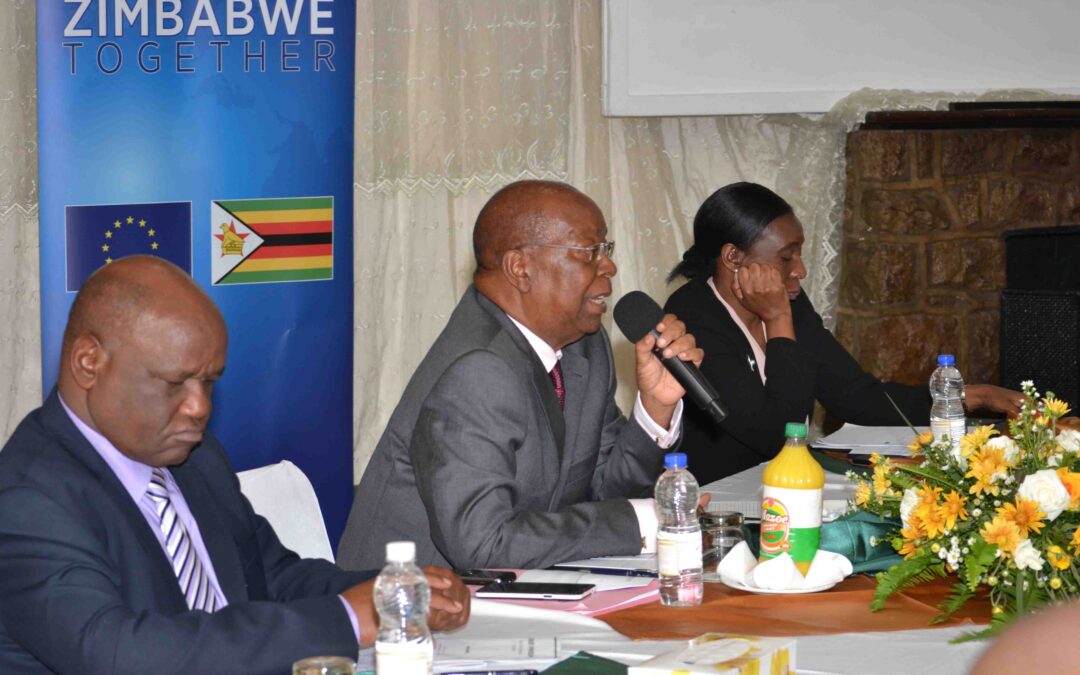
The ICJ and the Judicial Service Commission of Zimbabwe held the End of Term Symposium for the judiciary of Zimbabwe at the Troutbeck Inn in Nyanga, 31 March – 2 April 2016.
Chief Justice Chidyausiku in his opening remarks at the End of Term Symposium, stated that the Symposia are important because they give judges an opportunity to meet and engage with each other on various issues of interest or concern.
Additionally the purpose of the Symposium is to improve the quality of service in terms of judgments and the speedy outcome of cases.
In attendance at the Symposium were 72 delegates including judges from the Supreme Court, High Court and Labour Court, as well as representatives from the Law Society of Zimbabwe.
The programme included a joint session with all the courts in attendance, to discuss topics of judicial ethics and case management.
Apr 1, 2016
An opinion piece by Vani Sathisan, ICJ’s International Legal Adviser in Myanmar, and Bobbie Sta. Maria, Senior Researcher for Southeast Asia, Business & Human Rights Resource Centre.
More than half a century of military rule ostensibly comes to a close on April 1, when Daw Aung San Suu Kyi’s National League for Democracy officially takes over Myanmar’s government and the first civilian President since 1962 starts leading the nation.
Despite these extraordinary developments, daunting challenges remain in Asia’s second poorest country. Myanmar’s military still controls key governmental functions; the country is barely emerging from decades of civil conflicts; rule of law and institutions are weak; the economy is fragile and dominated by crony companies; corruption, and human rights abuses remain stubbornly persistent.
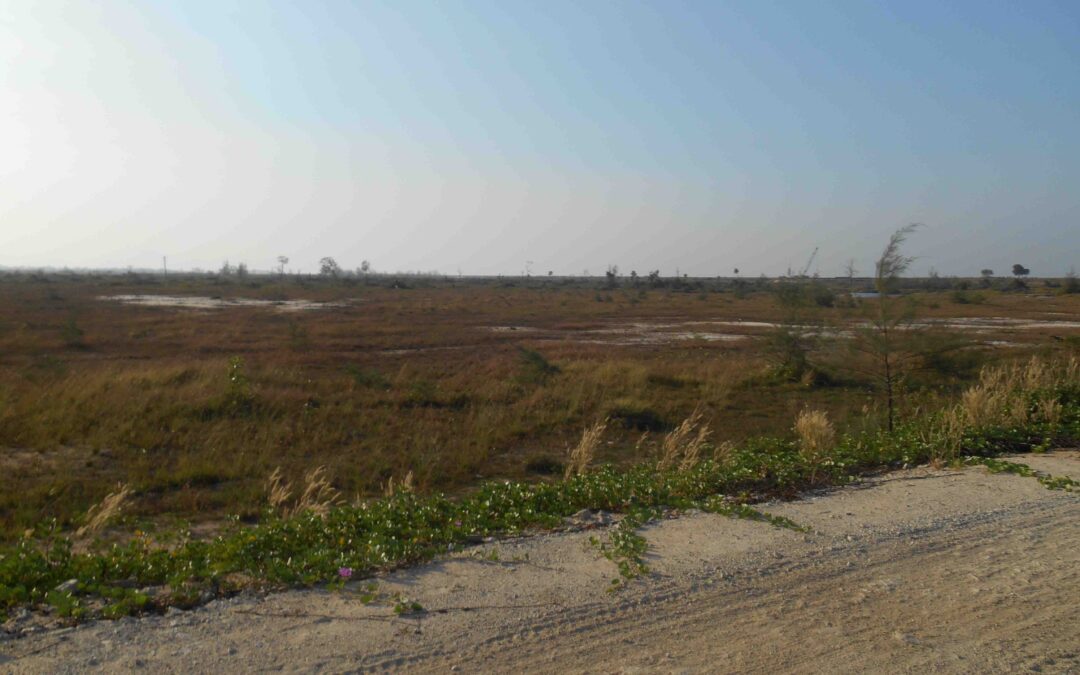
In opening up, Myanmar has embraced special economic zones (SEZs) – designated areas in which businesses receive tax, tariff and regulatory benefits – as a means to encourage economic trade and investment heavily promoting three major zones; Thilawa, Dawei and Kyaukphyu.
But in all three, affected communities have repeatedly complained about the need to address human rights and environmental harms caused by the projects, including land, air, and water pollution, and the displacement and loss of traditional forms of livelihoods of thousands.
Communities in these zones have also voiced concerns about a lack of transparency, inadequate consultation and participation of affected local communities in project-related decisions, and insufficient compensation for losses.
While SEZs are supposed to drive Myanmar’s economic growth, at the moment it looks as if this growth disproportionately rewards businesses and investors, and not the communities displaced and impoverished to make way for them.
Business & Human Rights Resource Centre and the International Commission of Jurists are engaged in efforts to encourage greater public accountability among foreign companies for their human rights impacts – including by highlighting concerns of affected communities with businesses, providing guidance, and tracking companies’ investments and efforts to avoid negative impacts – but a concerted response by government is vital.
The National League for Democracy taking office is crucial, because whilst they support the Thilawa zone, they have said they will review the continuation of the Dawei and Kyaukphyu zones including by speaking with relevant stakeholders.
We hope that the new regime will not lose sight of its commitments in its Election Manifesto, including encouraging “foreign investment in line with the highest international standards”, and laying down “paths for economic cooperation that can bring sustainable long-term mutual benefits”.
The problems surrounding SEZs are significant and urgent. This period of re-evaluation provides the new government an opportunity to fulfill its duty to protect affected communities.
They can build upon the limited progress of the previous government in legislating rights protections by ensuring that laws are properly implemented.
For example: Myanmar law now requires environmental impact assessments (EIA) for investments in certain industries.
The newly approved EIA Procedures cover environmental and social impacts and incorporate international best practices on involuntary resettlement and indigenous peoples. The new National Land Use Policy refers to participatory, transparent and accountable processes.
The new government must amend the SEZ law to ensure that investment projects are planned, designed and undertaken with respect for the fundamental principles of participation, transparency and accountability.
While land issues are undoubtedly complex, the prevalence of land-related grievances presents a challenge for the new government to take bold steps towards the protection of land rights, including addressing illegal land acquisitions and making real efforts to meet international standards for consultation, compensation and resettlement.
By design, SEZs are meant to lure businesses through friendly conditions.
But this goal must not be pursued at all costs, especially not in ways that will lead to irreversible environmental damage, abuse of rights, or further impoverishment of locals.
The challenge to govern carries with it the responsibility to listen, respectfully engage, and ensure the protection of the human rights of all people in Myanmar.
Mar 31, 2016 | News
A Delhi Court acquitted human rights defender Irom Sharmila of an “attempt to commit suicide” charge. The government of Manipur must in turn immediately drop the charges against her, said the ICJ today.
Irom Sharmila, was charged under section 309 the Indian Penal Code.
She has been on a continuous hunger strike for over 15 years, demanding repeal of the Armed Forces Special Powers Act (AFSPA).
“This order is a welcome recognition that Irom Sharmila’s hunger strike is a form of peaceful dissent and protest protected by the right to freedom of expression,” said Sam Zarifi, ICJ’s Asia Director.
This week, Iron Sharmila was acquitted of the charges against her in Delhi. The case against her in Manipur is, however, still on-going.
The decision of the Delhi court is not binding on the courts in Manipur, but the charges are analogous, and similar reasoning should prevail, the ICJ says.
“The government of Manipur should drop the other charges under section 309 against her, and release her immediately and unconditionally,” said Zarifi.
On at least two occasions previously, courts in Manipur have directed that Irom Sharmila be released, saying that charges under section 309 were not applicable.
“The use of section 309 against Sharmila highlights the outdated and absurd nature of this law,” Zarifi said.
“The government should expedite the repeal of 309 and, instead of criminalizing Irom Sharmila’s protest, focus on the reason behind it and repeal the AFSPA,” he added.
The AFSPA gives armed forces a range of “special powers” in “disturbed areas”, which include the power to arrest without warrant, to enter and search any premises, and in certain circumstances, “fire upon or otherwise use force, even to the causing of death”.
Furthermore, under the AFSPA, governmental permission, or sanction, is required before any member of the armed forces can be prosecuted for crimes in a civilian court.
These provisions are inconsistent with a range of human rights, including the right to life and right to remedy.
They have also facilitated torture, rape and enforced disappearances in areas where operational, the ICJ notes.
“This law is inconsistent with India’s human rights obligations, and has led to human rights violations, wide-spread impunity, and immense grief and suffering in the areas where it operates”, Zarifi said.
“It is high time that it was taken off the books”.
Background
Irom Sharmila began a hunger strike in November 2000, calling for the repeal of the AFSPA, following the unlawful killing of 10 civilians by security forces purportedly acting under it in Malom.
She was arrested by the Manipur government in 2000 under section 309 of the Indian Penal Code, which prohibits an “attempt to commit suicide”.
Irom Sharmila has been in custody almost continuously since her initial arrest, and has continued her hunger strike.
She is fed through a nasal tube at the Jawaharlal Nehru hospital in Imphal where she is usually held.
The Delhi government also charged her on similar grounds with respect to an incident from 2006, when she held a protest in their jurisdiction.
In 2014, a Manipur court quashed charges under section 309 against Irom Sharmila, saying “The agitation of Irom Chanu Sharmila is a political demand through lawful means of repealing a valid statute. … she may continue with the fast till her demand is met politically by the Government”.
However, since she continued her hunger strike, she was immediately re-arrested on the same grounds.
In its 210th report, the Indian Law Commission has recommended that section 309 be repealed. In 2011, the Supreme Court said: “the time has come when [section 309] should be deleted by Parliament as it has become anachronistic.”
In 2014, the government announced that it was in the process of repealing 309.
The AFSPA applies to “disturbed areas” in the states of Arunachal Pradesh, Assam, Manipur, Meghalaya, Mizoram, Nagaland and Tripura.
An almost identical law is also applicable in Jammu and Kashmir.