Mar 30, 2016 | News
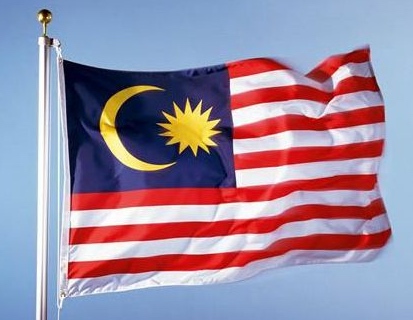
The Malaysian government must immediately halt the politically motivated sedition investigation launched by the police against members of the Malaysian Bar who had called for the Attorney General’s resignation, the ICJ said today.
“The Malaysian authorities are using the archaic, colonial Sedition Act to harass and silence lawyers who are demanding that the country’s legal authorities observe international standards of propriety and independence,” said Emerlynne Gil, ICJ’s Senior Legal Adviser for Southeast Asia.
“This latest misuse of the Sedition Act constitutes a brazen political attack on the independence of the country’s lawyers,” she added.
On 29 March 2016, lawyers Charles Hector, Francis Pereira, and Shanmugam Ramasamy, received letters from police authorities summoning them to the Bukit Aman Police Headquarters on 31 March 2016 for the purpose of taking down their statements regarding a complaint filed against them under the Sedition Act (1948).
The three had proposed a motion during the Malaysian Bar’s 70th Annual General Assembly, calling for the resignation of Attorney-General Tan Sri Mohamed Apandi Ali. The motion was passed by a majority vote.
Karen Cheah Yee Lynn, Secretary of the Malaysian Bar, was also notified that her statement would likewise be taken but she was not summoned to the Bukit Aman Police Headquarters.
The Malaysian Bar demanded the resignation of Attorney-General Tan Sri Mohamed Apandi Ali after he summarily ended the investigation of alleged corruption by Prime Minister Najib Razak.
The Prime Minister appointed Attorney-General Apandi on 27 July 2015, in the midst of the corruption investigation.
Attorney General Apandi subsequently cleared Prime Minister Najib Razak of any criminal wrongdoing and instructed the Malaysian Anti-Corruption Commission to close the investigations.
“In 2012, Prime Minister Razak had promised to repeal the Sedition Act, but since then his government has increasingly relied on the law’s impermissibly vague and broad language as a useful tool of repression,” Gil said.
International standards highlight that protecting the independence of lawyers and their professional associations is essential for upholding the rule of law and the administration of justice, the ICJ says.
“This police investigation is clearly designed to challenge that independence,” Gil said.
“The Malaysian Bar has been one of the few institutions consistently defending the rule of law and human rights in Malaysia, and it is crucial to maintain the ability of its members to engage critically in upholding the standards of professional integrity and independence,” she added.
The ICJ urges the Malaysian government to repeal the archaic Sedition Act 1948 and fulfill the commitment it made in 2012 to abolish it.
Unless repealed or considerably revised so that it will be consistent with international law, the Sedition Act 1948 will continue to unduly limit and repress the freedom of expression, not only of lawyers and human rights defenders, but of all Malaysians exercising their fundamental rights, the ICJ says.
Contact
Emerlynne Gil, ICJ’s Senior International Legal Adviser, t: +66840923575, e: emerlynne.gil@icj.org
Background
Under the UN Basic Principles on the Role of Lawyers, governments have the obligation to ensure that lawyers are able to perform all of their professional functions without intimidation, hindrance, harassment or improper interference (Principle 16).
Like other citizens, lawyers are entitled to freedom of expression, belief, association, and assembly. Lawyers have the right to take part in the public discussion of matters concerning the law, the administration of justice, and the promotion and protection of human rights (Principle 23).
The UN Basic Principles on the Role of Lawyers also state that lawyers are entitled to form and join self-governing professional associations to represent their interests and protect their professional integrity (Principle 24).
Governments should ensure that these professional associations are able to function without improper interference (Principle 25).
In its 2016 resolution on human rights in the administration of justice, the UN Human Rights Council unanimously affirmed that “the independence and impartiality of the judiciary, the integrity of the judicial system and an independent legal profession are essential prerequisites for the protection of human rights, the rule of law, good governance and democracy, and for ensuring that there is no discrimination in the administration of justice, and should therefore be respected in all circumstances” (Resolution 30/7, 1 October 2015).
Malaysia’s Sedition Act 1948, originally enacted by the British colonial government and amended times over the years, criminalizes speech and publications considered to have “seditious tendencies”.
The term “seditious tendencies” is ambiguously defined to mean any kind of speech or publication that causes “hatred or contempt, or excite disaffection” against any ruler or the government or promotes “ill will and hostility between the different races or classes”.
The law also considers “seditious” any speech or publication that questions the special privileges of the Malay people, as provided in the Constitution.
Furthermore, sedition is a strict liability offence in Malaysia, which means that the intention of a person allegedly making seditious statements is irrelevant.
Mar 29, 2016
An opinion piece by Nikhil Narayan, ICJ’s Senior Legal Adviser for South Asia.
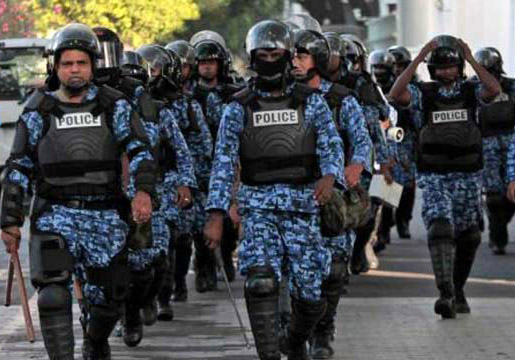
The government of President Yameen Abdul Gayoom of the Maldives continues to abuse an overbroad anti-terror law as a blunt-force tool to arbitrarily and indiscriminately silence perceived political threats to his regime.
During a recent visit to the Maldives last month, I was alarmed by the numerous and increasing number of terrorism trials against public officials.
While international attention has relaxed in recent months following former president Mohamed Nasheed’s medical leave to the UK pending appeal of his own terrorism conviction from last year, President Yameen’s government continues to use a deeply politicized criminal justice system to persecute anyone out of favour with the President, be they opposition party members, judges, even former cabinet members and erstwhile allies.
In October 2015, for instance, then-Vice President Ahmed Adeeb was arrested in connection with a suspected bomb blast on a boat carrying the President, even though a US FBI investigation was unable to conclude that the explosion was caused by a bomb.
The then-VP was subsequently summarily impeached and soon thereafter charged with several counts of corruption and terrorism.
During a 15 February 2016 hearing, a terrorism charge based on an alleged firearm seen in the former VP’s residence in April 2015 was formally presented and disclosed to the defense for the first time, though the defense continues to be denied access to the evidence or witness list in this case on national security grounds.
A second charge of terrorism against the former VP, this one in connection with the alleged bomb blast on the President’s boat, was filed on 17 March.
The defense was not formally notified of this new charge, only learning of it through media reports.
Here too, the defense is yet to be given access to any government witnesses or evidence relating to the charge.
Such denial of access to evidence and witnesses contravenes the right to prepare an adequate defence and the right to test evidence, fundamental components of the right to fair trial.
On 16 February, leader of the opposition Adhaalath party, Sheikh Imran Abdullah, was convicted and sentenced to 12 years’ imprisonment on terrorism charges in connection with a public speech given during an opposition protest rally.
The disproportionately severe punishment in Sheikh Imran’s case – a 12-year ‘terrorism’ sentence for a political speech – was the outcome of an arbitrary and unfair trial process fraught with apparent fair trial violations, including allegedly doctored evidence.
Two more recent victims of inappropriate ‘terrorism’ charges are Magistrate Judge Ahmed Nihan and former Prosecutor General Muhthaz Muhsin, both of whom were arrested on 7 February in connection with an alleged ‘forged’ arrest warrant against the President for his alleged role in a major corruption scandal involving the embezzlement of several million dollars of state funds.
On 8 March, more than one month after the arrests, both were charged under sections 4(a) and 5(a) of the Prevention of Terrorism Act, 2015, for conspiring to ‘kidnap’ the President.
Meanwhile, on 15 March, former Defense Minister Col. (retd.) Mohamed Nazim’s conviction on ‘weapons smuggling’ charges (based on the discovery of one pistol and three bullets allegedly found in his home in January 2015) was upheld by the appellate High Court, one year since his conviction and three months since the final hearing in his appeal.
The ICJ has previously documented in detail, in its August 2015 fact-finding report, the substantial fair trial violations in Col. Nazim’s investigation and trial, including indications that the weapons in question were planted, that implicate an arbitrary, unfair and politically motivated proceeding.
There is a clear pattern here of the Maldives government seeking to neutralize certain political actors through arbitrary, heavy-handed and politically motivated abuse of the anti-terrorism law that amounts to a flagrant violation of the basic international principles of fair trial, judicial independence and separation of powers.
It is also a clear breach of the Maldives’ international legal obligation to respect the right to fair trial under article 14 of the International Covenant on Civil and Political Rights (ICCPR), to which the Maldives acceded in 2006.
The misuse of anti-terror laws in the Maldives seems part of an effort to halt and reverse the progress made during the country’s brief democratic transition after 2008.
As the country faces growing political unrest and instability, President Yameen’s government must restore the rule of law, strengthen the judiciary and other democratic institutions, and set the country back on the path towards a more representative and accountable government.
An important first step in doing so is immediately ceasing from using the anti-terror law as a political weapon to chill the actions of public officials and silence real or perceived political opponents, and ensuring that those currently facing criminal charges are provided a fair trial in accordance with the Maldives’ international human rights obligations and its national laws.
Mar 29, 2016
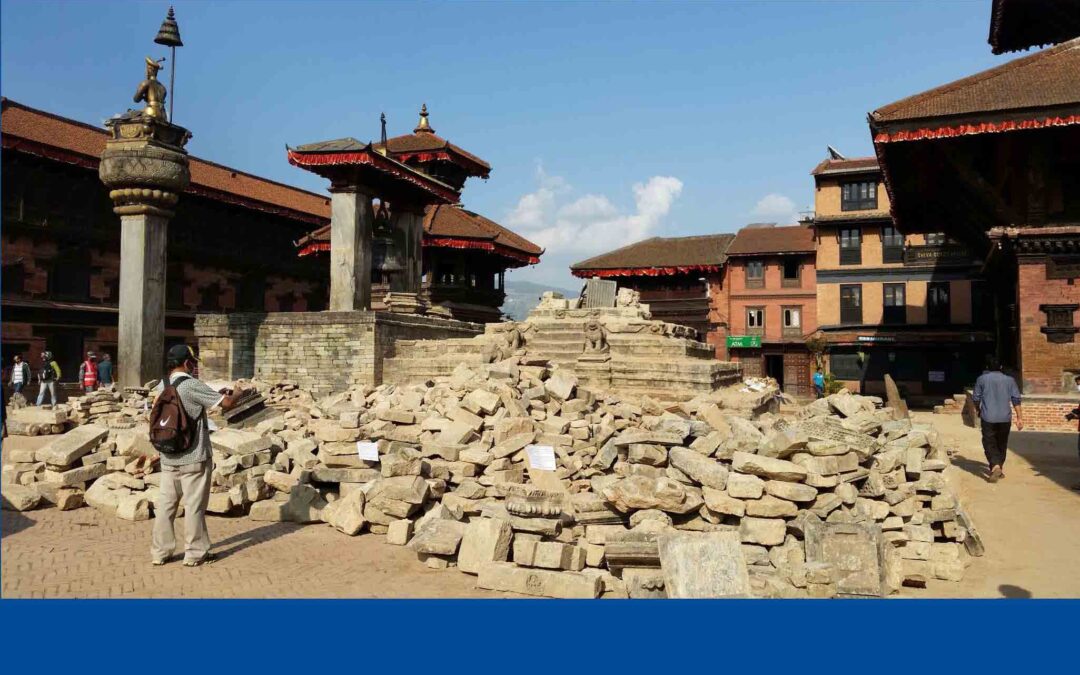
As the Government and the National Reconstruction Authority (NRA) finally begin the reconstruction phase of their response to the 2015 earthquake, they must ensure that the post-earthquake recovery moves forward in full accordance with the country’s human rights obligations.
Nepali authorities must ensure that post-earthquake assistance is based on needs alone and without discrimination on any status grounds, including descent (caste), gender, ethnicity or political affiliation, say the ICJ and and the Nepal Bar Association (NBA).
A preliminary report released today presents the results of a fact-finding study conducted in 2015 by the ICJ, in collaboration with the NBA, and focuses on three disaster-affected districts of Gorkha, Dolakha and Okhaldungha with the aim of assessing the humanitarian response in the earthquake’s immediate aftermath on the basis of international human rights law and standards.
In particular, the report notes that such assistance must be directed at protecting key economic and social rights, such as the rights to food, water, adequate housing, health, education and adequate standard of living.
“The ICJ and the NBA found that the political delays in operationalizing the NRA aggravated existing problems with marginalized groups and hampered the provision of necessary aid,” said Nikhil Narayan, the ICJ’s Senior Legal Advisor for South Asia and Head of Office in Nepal.
“Nepali authorities, particularly the newly launched NRA, must re-affirm their commitment to protecting the rights of those affected by the earthquake who have been suffering for nearly one year now,” he added.
The report aims to assist policy makers, particularly the recently operational NRA, and humanitarian actors by identifying the most immediate human rights concerns and providing recommendations to ensure the protection of the human rights of affected populations.
Among its main findings, the report raises concerns that:
- The Nepal Government’s undue delay in formulating a comprehensive long term policy plan for resettlement, livelihood and other assistance for those displaced has severely infringed victims’ right to adequate housing;
- The undue delay for political reasons in the establishment of a central coordinating body such as the NRA, and the failure to provide adequate guidance to local authorities in the meantime, exacerbated the other infringements of rights by stalling the relief and reconstruction process;
- The loss of documentation and the burdensome process to reacquire necessary documentation, including EVIC cards, other personal identity records and land and property ownership records, greatly impacted victims’ access to humanitarian assistance to fulfill at least the minimum essential levels of their economic and social rights and the right to recognition before the law;
- Many of the most vulnerable victims were not provided adequate information by authorities on the assistance to which they were entitled, or the process by which they could access these entitlements;
- The lack of a participatory or transparent consultative process in the design and implementation of relief programs, and a lack of awareness of available complaints mechanisms, denied many victims access to needs-appropriate relief and to redress for their grievances;
- While further in-depth field research is necessary, anecdotal information suggested that discrimination based on political affiliation, caste and gender persisted in some degree in the humanitarian relief process.
Among its key recommendations, the report observes that:
- The Government of Nepal should ensure that the NRA is provided adequate resources to fulfill its mandate promptly, independently, impartially and with full consideration for Nepal’s national and international human rights obligations;
- Nepali authorities (both the Government and the NRA) should ensure that the resettlement and reconstruction process is carried out transparently and uniformly based on need alone, in a participatory and consultative manner, and in conformity with principles of equal protection and non-discrimination;
- Nepali authorities should take special measures where necessary to ensure that women and marginalized and disadvantaged groups have equal access to assistance, including easing the procedural obstacles to obtain assistance due to lost documentation;
- Nepali authorities should ensure that an independent and impartial mechanism is available to promptly, effectively and transparently investigate complaints of discrimination, abuse of authority or corruption in both the prior phase of relief as well as the next phase of reconstruction, and that those persons found responsible are held accountable.
The NRA formally launched its operations on 16 January 2016, and is now preparing to distribute the first installment of housing reconstruction grants for displaced persons in Dolakha in coming weeks.
“Nepali authorities had a monumental challenge to respond urgently to the devastating human and physical toll caused by the April 2015 earthquake, even as they too were suffering the same trauma as the rest of the population,” said Sunil Pokharel, the NBA’s Secretary General.
“At the same time, safeguarding the human rights of victims is especially critical in times of disaster, and the State has a duty to ensure that human rights are fully integrated in post-disaster humanitarian assistance from the outset and at all phases,” he added.
Nepal-Earthquake Disaster response-Publications-Reports-2016-ENG (full report in PDF)

Mar 29, 2016 | News
Today, the ICJ expressed serious concern at the apparent murder of lawyer Yury Grabovsky who was found dead on 25 March. The lawyer had been missing for two weeks and was reportedly found shot and buried near the Kiev-Odessa main route.
“The death of lawyer Yury Grabovsky must be investigated in a prompt, impartial and effective manner. Other lawyers who may be under threat should be urgently granted the necessary measures of protection”, said Temur Shakirov, ICJ Legal Adivser.
Yury Grabovsky was the managing partner of law firm “Garbovsky and Co”, as well as Deputy Chair of the High Qualification Disciplinary Commission.
He represented Aleksandr Aleksandrov, who along with Evgeniy Yerofeyev, was detained last May in the Lugansk Region in Eastern Ukraine and accused of terrorism and a number of other crimes.
The lawyer’s whereabouts had been unknown since 5 March after he had left for Odessa to stay at “Arkadiya” hotel.
He was apparently supposed to leave the hotel on 7 March but he never took his belongings from there.
On 9 March, a court hearing did not take place because the lawyer was missing.
Garbovsky’s colleagues reportedly doubted the authenticity of a post on his facebook account stated that he had left Ukraine.
On 10 March, the National Association of Lawyers of Ukraine informed the National Police that the lawyer had been missing.
The same day, the Odessa police opened a criminal case on “intentional murder”.
On 20 March, the Chief Military Prosecutor of Ukraine, Anatoly Matios, stated that a suspect in the organization of the disappearance of Grabovsky had been apprehended.
On Friday, 25 March, Prosecutor Matios said that Grabovsky “was killed in a violent way and finished off with a firearm” which according to the Prosecutor was a “specially planned operation.”
The lawyer’s body was found shot and buried 138 km south of Kiev after one of the suspects had reportedly disclosed the place of burial.
The lawyer is said to have had an explosive bracelet on his leg, apparently intended to prevent him from escaping. The names of the suspects have not been made public.
It is the second killing of a lawyer in Ukraine this month, and the fourth such killing since January 2015, including, lawyers Alexandr Gruzkov, Yury Ignatenko, Viktor Loiko, and now Yuri Grabovskiy.
Temur Shakirov stressed that “in order to fulfil their function lawyers must be able to act without fear and free from fear of reprisals of any kind”.
The UN Basic Principles on the Role of Lawyers affirm that“[w]here the security of lawyers is threatened as a result of discharging their functions, they shall be adequately safeguarded by the authorities.”
The ICJ calls on the Government of Ukraine to investigate the case and bring those responsible to justice, including both anyone who directly carried out the killing and anyone who ordered the crime.
Urgent measures to guarantee the security of lawyers should be taken, which should include effective security measures against attempts on their lives and lives of their family members.
Contact:
Róisín Pillay, Director, Europe Programme, roisin.pillay(a)icj.org
Temur Shakirov, Legal Adviser, Europe Programme, temur.shakirov(a)icj.org

Mar 29, 2016 | News
The ICJ expresses its grave concern at the 28 March 2016 conviction and sentencing of 17 Angolan activists to terms of imprisonment ranging from two years to more than eight years, for the peaceful exercise of their human rights of freedom of association and freedom of expression.
Following an unfair trial, they were found guilty of “preparatory actions of rebellion and association of evildoers” [malfeitores], based on having read and discussed reading material on nonviolent means for resisting dictatorship or being associated with others who did so.
The ICJ joins numerous civil society organizations in condemning the failure by the authorities in Angola to conduct the trial in a manner consistent with its obligations under international human rights law.
“Judicial persecution of opponents of the government in Angola must be stopped forthwith” said Arnold Tsunga, ICJ’s Africa Director.
“A worrisome trend and pattern is emerging where the authorities in Angola are increasingly using the law and legal system as an instrument of repression targeting critics of the government as well as human rights defenders,” he added.
The ICJ calls on the Angolan authorities to invalidate the conviction and sentences, and to take concrete measures to strengthen the rule of law by ensuring the independence of the judiciary and legal profession as well as fully implementing international human rights standards in the national legal system.
Contact
Arnold Tsunga, ICJ’s Africa Director, t: +27731318411 or +263777283249 ; e: arnold.tsunga@icj.org
Background
Fifteen of the Accused were arrested in June 2015 and later joined by another two accused.
They were initially charged with rebellion and a conspiracy to mount a coup against the President for studying and discussing reading material on nonviolent means for resisting dictatorship.
The prosecution later dropped the second charge but added a charge of “criminal association” or “association with evildoers”.
The defense maintains that the state did not manage to prove anything beyond the fact that the accused discussed politics, which is allowed under the Angolan constitution.
No independent observers were allowed to attend the trial, raising serious concerns about the right to fair trial.
The African Charter on Human and Peoples’ Rights and the International Covenant on Civil and Political Rights, treaties to which Angola is a party, recognize freedom of expression and freedom of association as human rights, and prohibit governments from arbitrarily or otherwise illegitimately interfering with them.
Domingos da Cruz was sentenced to 8 years and six months; Luaty Beirão to 5 years and 6 months; Nuno Dala, Sedrick de Carvalho, Nito Alves, Inocêncio de Brito, Laurinda Gouveia, Fernando António Tomás “Nicola”, Afonso Matias “Mbanza Hamza”, Osvaldo Caholo, Arante Kivuvu, Albano Evaristo Bingo -Bingo, Nelson Dibango, Hitler Jessy Chivonde e José Gomes Hata were all sentenced to 4 years and 6 months); while Rosa Conde e Jeremias Benedito got 2 years and 3 months in jail.