Feb 23, 2016 | Доклады, Публикации, Тематические доклады
«Реформа адвокатуры в Республике Таджикистан зашла в тупик, и необходимо принять экстренные меры, направленные на защиту независимости профессии», – заявила сегодня МКЮ после опубликования рекомендаций по реформе адвокатуры.
МКЮ признала, что в стране сложилась ситуация, которая может привести к утрате независимости адвокатуры и к существенному сокращению числа практикующих адвокатов.
После того, как в декабре 2015 года МКЮ провела в Душанбе «круглый стол», участники семинара обратились к МКЮ с просьбой проанализировать состояние реформы и представить свои рекомендации.
В частности, МКЮ сделала следующие рекомендации:
- Властям следует воздерживаться от вмешательства в процесс свободного избрания должностных лиц самоуправляемой профессии;
- Следует отменить или изменить поправки к Закону «Об адвокатуре», принятые в ноябре 2015 года, которые ограничивают независимость адвокатуры;
- Необходимо обеспечить независимость Квалификационной комиссии от исполнительных органов власти, в частности, сделав её органом Союза адвокатов;
- Необходимо отменить требование о прохождении переаттестации адвокатами, уже допущенными к практике, под угрозой лишения их права на осуществление адвокатской деятельности; и
- Не должна допускаться прямая или косвенная дискриминация при предоставлении допуска к профессии.
- Эти и другие рекомендации направлены на поиск быстрого выхода из тупиковой ситуации, сложившейся в Таджикистане, где независимо избранный председатель Союза адвокатов не может получить статус адвоката в результате действия спорных поправок к новому закону.
Рекомендации подготовлены по результатам проведения «круглого стола», организованного МКЮ в декабре 2015 г., на котором обсуждались принципы и практические аспекты независимости и самоуправления адвокатских ассоциаций, а также иные вопросы, важные с точки зрения независимости адвокатов, включая процедуры их аттестации и привлечения к дисциплинарной ответственности.
Данное обсуждение, а также анализ законодательства легли в основу настоящих рекомендаций, подготовленных в свете международного права и стандартов, касающихся роли юристов.
Tajikistan-Independence of legal profession-Publications-Reports-Thematic reports-2016-RUS (полный доклад на русском, PDF)
Tajikistan-Indep legal prof-News-Web stories-2016-RUS (полная история на русском, PDF)

Feb 23, 2016
In January 2016, ICJ provided an expert legal opinion to the applicant’s legal counsel in the case of “X” before the Swedish Migration Agency with a view to assisting them in assessing “X”’s asylum claim.
The case in the context of which this expert legal opinion was submitted concerns a sur place application for refugee status under the Refugee Convention based on a well-founded fear of persecution for reasons of the applicant’s membership of a particular social group, namely one defined by his sexual orientation.
Sweden-Expert legal opinion sur place asylum claims-Advocacy-Legal submissions-2016-ENG

Feb 20, 2016
Hoy, la CIJ hace público su estudio sobre los vacíos e incompatibilidades del sistema jurídico e institucional colombiano respecto de las disposiciones de la Convención internacional para la protección de todas las personas contra las desapariciones forzadas.
Asimismo, el estudio identifica las medidas y los correctivos necesarios para adecuar el ordenamiento interno a las disposiciones y obligaciones establecidas en la Convención. Así, la CIJ pretende contribuir a una correcta implementación en el orden nacional colombiano de la Convención.
En julio de 2012, el Estado colombiano ratificó la Convención y, en diciembre 2014, presentó su informe sobre la implementación de este tratado para su examen por el Comité contra las Desapariciones Forzadas. Según la programación del Comité, el informe será examinado en septiembre de 2016.
Colombia-CIJ EstudioVacíosDesapForz-Publications-Thematic report-2016-SPA (full report, in PDF)

Feb 19, 2016 | E-bulletin on counter-terrorism & human rights, News
Read the 99th issue of ICJ’s monthly newsletter on proposed and actual changes in counter-terrorism laws, policies and practices and their impact on human rights at the national, regional and international levels. The E-Bulletin on Counter-Terrorism and Human...
Feb 19, 2016
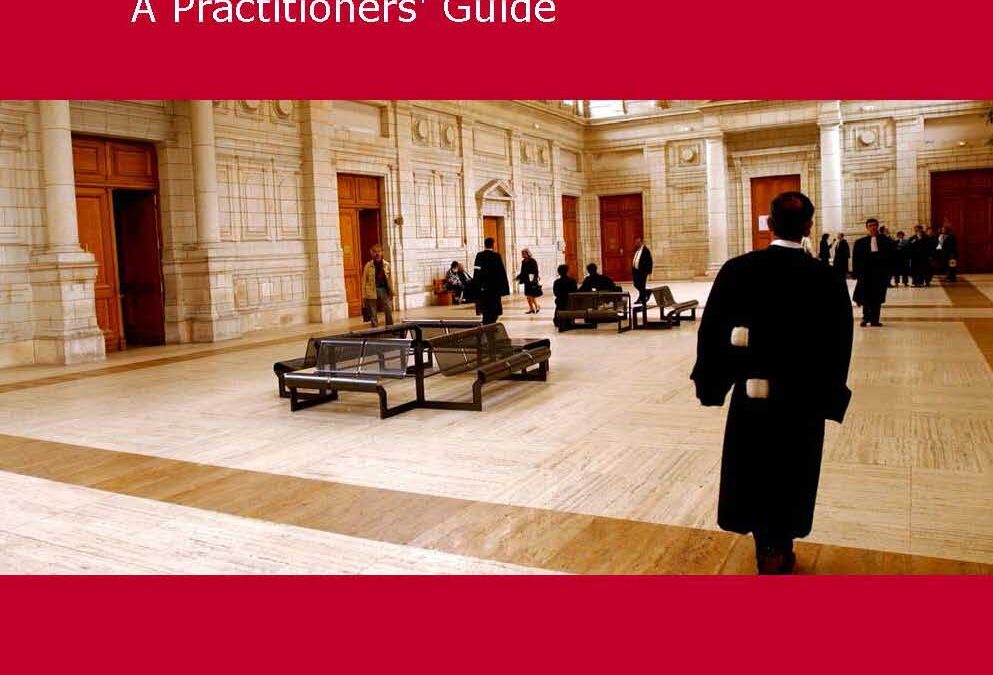
Today, the ICJ publishes Refugee Status Claims Based on Sexual Orientation and Gender Identity – A Practitioners’ Guide.
The organization has decided to publish this guide for two main reasons.
First, persecution of individuals motivated in whole or in part by ignorance of, prejudice and hatred against their real or imputed sexual orientation and/or gender identity (SOGI) is rife in all regions of the world, with serious and widespread human rights abuses being perpetrated too often with complete impunity.
Therefore, claims to refugee status under the Refugee Convention for reasons of real or imputed SOGI are unfortunately likely to increase in all regions, given that around the world, lesbian, gay, bisexual, transgender and intersex individuals continue to be targeted for egregious human rights abuses, paradoxically, in part, because they have become more visible by asserting their existence, rights and agency outside the relative safety of “the closet”.
Secondly, while persecution for reasons of real or imputed SOGI is not a new phenomenon, in many asylum countries there is a greater awareness that people fleeing persecution for those reasons are entitled to be recognized as refugees under the Refugee Convention.
Nonetheless, this is an area of the law of refugee status where the application of the refugee definition remains inconsistent, as it is complex and fraught with both substantive and procedural challenges.
The ICJ’s latest practitioners’ guide describes both in general and specific terms each element of the refugee definition under the Refugee Convention that is critical to understanding and doing justice to claims based on SOGI.
After discussing how to establish refugee claimants’ credibility with respect to SOGI, the structure of the practitioners’ guide follows the relevant elements of the refugee definition in Article 1A(2) of the Refugee Convention, namely: well-founded fear; persecution; for reasons of; membership of a particular social group; and failure of State protection.
The guide also addresses the concepts of internal flight/relocation alternative and sur place refugee claims, which, while not expressly mentioned in the Refugee Convention, are increasingly critical to refugee claims for reasons of SOGI.
The practitioners’ guide is intended to provide both legal and practical interpretative guidance on those types of refugee claims to:
- legal practitioners representing individuals;
- others who assist refugee claimants, whether in a professional or voluntary capacity, including members of non-governmental organizations;
- decision-makers within refugee status determination authorities and members of the judiciary presiding over claims to refugee status;
- officials within government departments issuing asylum policy guidance and instructions;
- UNHCR officials both within the Division of International Protection and those who carry out refugee status determination under the agency’s Statute; and
- refugee claimants themselves.
The ICJ’s aspiration and ultimate aim in producing this practitioners’ guide is to provide enduring legal and practical advice on the interpretation of the refugee definition under the Refugee Convention in respect of claims to refugee status based on SOGI notwithstanding the fact that this is an area where the law of refugee status is particularly fast-moving and is constantly evolving.
Finally, the ICJ hopes that this practitioners’ guide will assist in ensuring that people entitled to international protection for reasons of real or imputed SOGI be recognized as refugees under the Convention.
universal-pg-11-asylum-claims-sogi-publications-practitioners-guide-series-2016-eng (full book in PDF)