Feb 24, 2016
The ICJ published today a briefing paper providing a first assessment of the process of transition of the judicial system in Northern Kosovo from the Serbian to the Kosovo legal system.
The briefing paper, which follows a visit of a delegation of the ICJ in Kosovo from 1 to 4 November 2015, preliminarily identifies key issues for access to justice and the protection of human rights through the justice system, which need to be addressed and monitored during the transition process.
The paper documents an ongoing process of transition of the judicial system in Kosovo.
It concludes that a key determinant of the success of this transition must be the effective protection of access to justice for all in Kosovo that must be provided by an independent, impartial and effective judicial system, assisted by independent, impartial and effective legal profession and prosecution service.
In its conclusion, the ICJ found that the Kosovo legal system does not yet meet the requirements of the Kosovo Constitution to respect international human rights law and standards and, in particular, the right of minorities, including under the Council of Europe’s Framework Convention. Its shortcomings include:
- the reported lack of security for Kosovo Serb and Kosovo Albanians to access courts in areas dominated by the other ethnicity, with a clear obstructive effect on access to justice;
- the dramatic incapacity of the Kosovo legal and education system to ensure generational continuity for the Serb community in the legal profession with future stark consequences for the ethnic composition and competence of the judiciary, prosecution service and legal profession;
- the lack of equality in practice between Albanian and Serbian languages in judicial proceedings and unreliable quality of the drafting and translation of its legislation; and
- the existence of a deep divide between the laws as written, which often recall or refer to international standards, and the implementation of the laws on the ground.
Finally, the ICJ stressed that the respect, protection and fulfillment of all conditions of access to justice of the non-Albanian minorities is therefore a key benchmark against which the success of this transition or “integration” must be assessed.
The ICJ mission team was composed of Ketil Lund (ICJ Commissioner and former Supreme Court Justice of Norway), Róisín Pillay (Director of the ICJ Europe Programme), and Massimo Frigo (Legal Adviser of the ICJ Europe Programme).
Kosovo-Integration of the justice system-Publications-Reports-Fact Finding mission reports-2016-ENG (full paper, in PDF)
Feb 24, 2016 | News
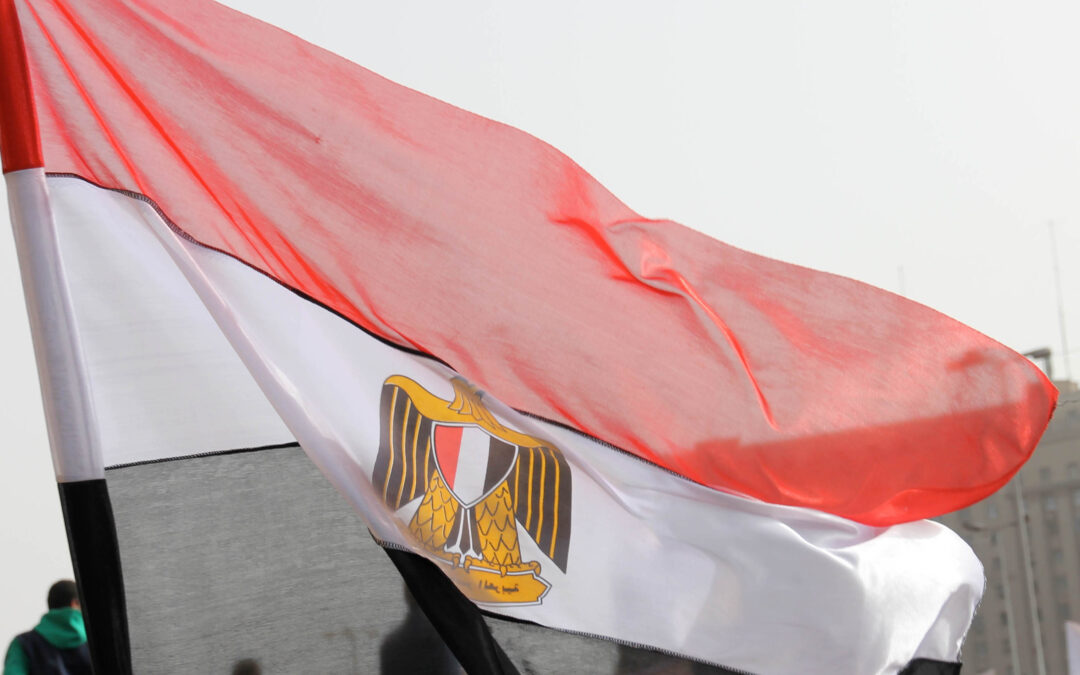
The ICJ today called on the Egyptian authorities to put an immediate end to their campaign to muzzle judges through unfair and arbitrary “unfitness” proceedings.
The Disciplinary Board, in hearings that tried dozens of judges at the same time, declared a total of 41 judges “unfit” for judicial office in 2015, forcing them into retirement.
The Supreme Disciplinary Board is currently reviewing these two cases.
The ICJ is concerned that many of the judges that have been subjected to these proceedings are leading advocates for judicial independence in Egypt and that the proceedings before both the Disciplinary Board and the Supreme Disciplinary Board were not fair.
Further, the cases stem from the judges’ exercise of freedom of association, belief, assembly and expression, and it appears that the Disciplinary Boards did not act in accordance with relevant international standards in this regard.
”Ending judges’ tenure following mass proceedings that are both arbitrary and unfair is inconsistent with Egypt’s obligations under international law,” said Said Benarbia, Director of the ICJ Middle East and North Africa Programme.
“With these assaults on individual judges, the Egyptian authorities are ensuring that their ongoing, sustained crackdown on fundamental rights and freedoms is extended to the very institution that is supposed to protect such rights and freedoms- the judiciary,” he added.
In the “July 2013 Statement Case”, 56 judges were subjected to disciplinary proceedings, following the Military seizure of power in July 2013, for endorsing a statement that called for the 2012 Constitution to be restored, for a dialogue between all stakeholders to be established within the framework of constitutional legitimacy, and for the right to peaceful demonstration to be respected.
The ICJ considers the statement to have been made consistent with the judges’ right to freedom of expression and association, exercised in a manner that preserved the dignity of their office and the impartiality and independence of the judiciary.
However, on 14 March 2015, the Disciplinary Board found that 31 of the 56 judges were not fit to hold judicial office and in effect removed them from office by forcing them into retirement.
The Board found there was not sufficient evidence that the other 25 judges had in fact endorsed the statement.
The ICJ is concerned that the procedures and hearings before the Disciplinary Board and the Supreme Disciplinary Board have not satisfied international standards of fairness.
In many instances, judges were not adequately notified of the dates of the hearings or of the courtrooms where such hearings took place.
In Egypt, judges facing disciplinary hearings are entitled to have another judge represent them; however, many of the judges were not permitted by Board officials to bring their representative to the hearings, without any reason being given for barring the representative, or because no representative could be secured as a result of fear of reprisals.
Further, many judges were not provided with adequate time and facilities to prepare their defense.
In another case, the “Judges for Egypt Case”, each judge had limited time to make his case before the Board during the hearings, though they were granted the right to submit at the final hearing written pleadings of no more than two pages .
At the final hearing in the case, while the judges waited all day in the Board’s premises, the hearing was held in the absence of all but one of them.
Furthermore, the Board refused to collect the written pleadings without giving any reasons.
On 22 February 2016, after protesting against the adjournment of his hearing, Judge Amir Awad was arrested and placed under detention for four days by the office of the prosecutor.
He is charged with insulting a public employee and forcibly entering his office.
“Both cases have been tainted by failures to ensure the fairness of the proceedings. The Egyptian authorities must nullify all decisions to remove judges resulting from these proceedings and put an immediate end to all forms of intimidation against and persecution of judges,” Benarbia added.
Contact:
Nader Diab, Associate Legal Adviser of the ICJ Middle East and North Africa Programme, t: +216 51727023; e: nader.diab(a)icj.org
Egypt-Attacks against judges-News-Web Stories-2016-ENG (full story in PDF, English)
Egypt-Attacks against judges- Press Release -2016- ARA (full story in PDF, Arabic)
Feb 23, 2016
An opinion piece by Nikhil Narayan, ICJ’ South Asia Senior Legal Adviser.
“The regime has changed, but the system remains the same; how can we expect justice from them?,” asked a Tamil nun who survived the brutal conflict between the Sri Lankan Government and the Tamil Tigers in Vavuniya district in Sri Lanka’s Northern Province.
Her sentiments echo a growing sense of skepticism shared by many in the country’s north and east in the willingness and ability of the Sri Lankan State to deliver justice and accountability for victims of the conflict and their families.
Interviews with local lawyers, activists, victims and victims’ families during my recent visit to the north and east reinforced the importance of ensuring a credible transitional justice process that will provide a genuine remedy to victims and survivors, and in so doing restore public confidence in the State.
Achieving this credibility requires, among other things, the participation of a majority of foreign judges, prosecutors, lawyers and investigators in any proposed special tribunal created to address alleged war crimes, crimes against humanity and other serious human rights violations committed by all sides during the conflict.
Since the new government came to power a little over a year ago, Sri Lanka has taken some important and welcome steps towards national reconciliation.
Particularly, victims’ hopes for justice were bolstered by the government’s apparent acceptance of the September 2015 report of the UN High Commissioner for Human Rights documenting alleged serious human rights violations and abuses committed by all sides to the conflict.
The Sri Lankan government even co-sponsored the subsequent Human Rights Council resolution, which affirmed the importance of the participation of foreign judges, prosecutors, lawyers and investigators to ensure the credibility of a “judicial mechanism” as part of the justice and accountability process.
But the government has yet to demonstrate any concrete initiatives towards fulfilling this promise of accountability.
Recent statements emanating from various quarters of the government have fed mistrust among victims in the war-affected north and east.
President Sirisena’s January 2016 BBC interview, in which he emphatically rejected the possibility of foreign participation in a proposed accountability mechanism, alarmed many.
Equally troubling were his comments expressing full confidence in the existing justice system and questioning the UN report’s allegations of war crimes committed by the Sri Lankan Army.
Prime Minister Wickremesinghe’s statements only a few days later during his visit to Jaffna to mark Thai Pongal, that the majority of missing persons should be considered deceased, also did not go unnoticed.
Families of the disappeared have the right to know, to the extent possible, the whereabouts of their family members.
The PM’s message suggesting knowledge and admission of their fate, but without further details, left families wanting; I was told more than once that the PM’s statement on the missing was “hurtful” to the families of the disappeared.
Lawyers, activists and medical officers dealing with ongoing human rights cases complained that it is common for such cases to drag on for as much as 10 years due to delays in the police investigative stage, as well as further delays in prosecuting the case by the Attorney General’s department if and when the investigation is concluded.
When asked whether these delays were due to lack of political will or capacity, I consistently received some form of non-verbal response amounting to: “Take your pick.”
Police also remain inadequately trained in investigative methodology, continuing to rely almost exclusively on confessions, often elicited by torture or other forms of coercion.
Under the current government, the climate of fear in the north and east has no doubt markedly improved; under the prior regime, for instance, I myself would not have been able to visit, move around and conduct interviews as freely as I did.
At the same time, surveillance, threats and intimidation have not ended completely.
Victims and lawyers in cases involving the armed forces as alleged perpetrators still face intimidation and obstruction of investigations.
Sri Lanka has had a long and well-documented history of creating domestic commissions of inquiry into serious human rights violations during the conflict, none of which has been successful in adequately addressing issues of impunity, justice or truth-seeking.
The ICJ has for the past thirty years documented the gradual erosion of judicial independence under successive governments, and the resulting culture of impunity in the justice system.
In its 2010 report, for example, the ICJ highlighted the failure of the criminal justice system, as well as the many commissions that have been established, to satisfy the State’s obligations to its citizens due to an absence of State accountability, limitations in the investigative and prosecutorial system and limitations in the law.
While the new government has taken some steps to address this, most notably with the restoration of the Constitutional Council, much more work remains to be done.
In such a context, the existing justice system is poorly equipped to handle cases of gross human rights violations and violations of international humanitarian law, including alleged war crimes and crimes against humanity, that will require not only highly technical forensic evidentiary and investigative expertise, but will also involve specific prosecutorial and judicial capacity to deal with issues of modes of liability such as command responsibility for superior officers.
The nun in Vavuniya told me: “We want them to accept responsibility, tell us the truth, and then we can have reconciliation; it is not about revenge.”
The call by domestic and international human rights activists and observers for an accountability process that involves, as a minimum prerequisite, the meaningful participation of a majority of foreign judges and other personnel is very simply a matter of restoring public trust in the rule of law in the country, through a credible, impartial, independent, victim-centric transitional justice process that effectively addresses victims’ right to truth, justice, remedy and reparation, and on whose foundation the country can move forward with genuine reconciliation.
The GOSL can take a significant step towards bridging this trust gap in the immediate term by reaffirming in no uncertain terms its commitment to the promises to which it voluntarily agreed in Geneva last year, including its recognition: that “accountability is essential to uphold the rule of law and to build confidence in the people of all communities of Sri Lanka in the justice system[;]” that “a credible justice process should include independent judicial and prosecutorial institutions led by individuals known for their integrity and impartiality;” and, of “the importance of participation in a Sri Lankan judicial mechanism, including the special counsel’s office, of Commonwealth and other foreign judges, defence lawyers and authorized prosecutors and investigators”.

Feb 23, 2016
“The reform of the legal profession in the Republic of Tajikistan is in deadlock and requires urgent measures to secure an independent profession,” the ICJ said today as it published its recommendations on the reform of the legal profession in the country.
The ICJ found that the current situation risks depriving the legal profession of its independence and reduce significantly the number of practicing lawyers.
Following an ICJ round table discussion held in Dushanbe in December 2015, the ICJ was requested by the participants to provide an analysis of the state of the reform and present its recommendations.
The ICJ recommended amongst other things that:
- The authorities abstain from interference with the free election of office-holders of the self-regulating profession;
- Amendments to the Law on Advokatura enacted in November 2015 that impede the independence of the legal profession be repealed or replaced;
- The independence of the Qualification Commission from the executive be ensured in particular by making it a body of the Union of Lawyers;
- The requirement that already-qualified lawyers re-apply for qualification or lose their right to practice be repealed; and
- No discrimination, direct or indirect, should be permitted as regards entry into the profession.
These and other recommendations aim to facilitate a rapid way out of a stalemate which has emerged in Tajikistan where an independently elected Chair of the Union of Lawyers is refused his status as a lawyer as a result of problematic legislative amendments.
The recommendations follow a round table discussion organized by the ICJ in December 2015, where the principles and practice of the independence and self-governance of bar associations, as well as other issues of significance for the independence of lawyers, including the qualification process and disciplinary action, were discussed.
These discussions as well as the analysis of the legislation served as a foundation for the present recommendations based on international law and standards on the role of lawyers.
Tajikistan-Independence of legal profession-Publications-Reports-Thematic reports-2016-ENG (full report in PDF, English)
Tajikistan-Independence of legal profession-Publications-Reports-Thematic reports-2016-RUS (full report in PDF, Russian)
Tajikistan-Indep legal prof-News-Web stories-2016-RUS (full story in PDF, Russian)