Feb 5, 2016 | News
The ICJ today called on the Royal Thai Government to immediately drop criminal proceedings against human rights lawyer Sirikan Charoensiri.
On 2 February 2016, Sirikan Charoensiri received two summons to appear at the Chanasongkram Police Station on 9 February 2016 to be charged with two offences under the Criminal Code of Thailand: “giving false information regarding a criminal offence” and “refusing to comply with the order of an official”.
Such charges could result in punishment of up to two years’ imprisonment.
“The charges against Sirikan Charoensiri apparently relate to her efforts to protect the legal and human rights of her clients, students who never should have faced arrest or criminal proceedings for peacefully exercising their freedoms of expression and assembly in the first place,” said Matt Pollard of the ICJ’s Centre for the Independence of Judges and Lawyers.
“Prosecuting Sirikan Charoensiri for her efforts to defend human rights is totally unacceptable and will only put Thailand further in violation of its international obligations,” he added.
The charges appear to relate to the circumstances surrounding Sirikan Charoensiri’s provision of legal aid to 14 students who were arrested on 26 June 2015 after carrying out peaceful protests calling for democracy and an end to military rule.
Although the precise basis for the changes is not set out in the summonses, the complainant is named as Pol. Col. Suriya Chamnongchok, a police officer involved in the investigation of the 14 students.
Sirikan Charoensiri, a lawyer with Thai Lawyers for Human Rights (TLHR), has provided legal aid to many individuals, including activists and human rights defenders, since military rule was imposed in May 2014.
The ICJ first expressed concern about the Government’s targeting of Sirikan Charoensiri on 2 July 2015, after the Royal Thai Police threatened Sirikan Charoensiri with legal action, publically announced they were considering charging her with a crime, and visited her home and questioned her family.
These threats and harassment, like the currently pending charges, appeared to be in retaliation for her having refused consent for police to search her car after the students’ court hearing, and for having filed a complaint with the police when they proceeded to impound it.
The ICJ has brought the case to the attention of the United Nations Special Rapporteurs on the Independence of Judges and Lawyers, and on the Situation of Human Rights Defenders.
The situation of human rights in Thailand will be examined by the UN Human Rights Council in May 2016, as part of the Council’s Universal Periodic Review of all States.
“Ahead of Thailand’s human rights review by the United Nations in May, and against the background of the tabled ‘roadmap’ towards democratic rule, the need for the Royal Thai Government to restore respect for human rights only grows more urgent by the day,” said Pollard.
Contact
In Bangkok: Kingsley Abbott, International Legal Adviser for Southeast Asia, t +66 94 470 1345 ; e: kingsley.abbott(a)icj.org
In Geneva: Matt Pollard, ICJ Senior Legal Adviser, t: +41 22 979 38 12 ; e: matt.pollard(a)icj.org
Background
The International Covenant on Civil and Political Rights (ICCPR), to which Thailand is a Party, guarantees the right to peaceful assembly; the right to freedom of expression; the prohibition of arbitrary arrest or detention; the right to a fair and public hearing by a competent, independent and impartial tribunal established by law (including the right of prompt access to a lawyer and precluding jurisdiction of military courts over civilians in circumstances such as these); and the prohibition of arbitrary or unlawful interference with privacy, family, home and correspondence (which includes arbitrary searches or seizures).
The UN Declaration on Human Rights Defenders affirms the right of everyone peacefully to oppose human rights violations. It prohibits retaliation, threats and other harassment against anyone who takes peaceful action against human rights violations, both within and beyond the exercise of their professional duties. It protects the right of persons to file formal complaints about alleged violations of rights. The UN Basic Principles on the Role of Lawyers provide that governments are to ensure that lawyers are able to perform their professional functions without intimidation, hindrance, harassment or improper interference.
Thailand-Sirikan Charoensiri-News-Press releases-2016-THA (full text in PDF, Thai)

Feb 5, 2016 | News
The ICJ is monitoring the ongoing trial under court martial of the 23 members of the Lesotho Defence Forces in the case The King vs Brigadier Mareka and 22 Others.
The Court Martial was convened through a government order issued and signed by the Minister of Defence and National Security Hon Tseliso Mokhosi on 13 August 2015.
Under the convening order, Brigadier Mareka and 22 others were generally accused of charges related to planning and or involvement in mutiny and violence.
The convening order also identified the names of the members of the court martial as well as the prosecuting authority at such court martial.
The court martial raises issues around observance of human rights, the rule of law and good governance in Lesotho.
Its significance is reflected in the fact that the Southern African Development Community (SADC), an inter-governmental organization, is also seized with the matter as part of its mandate under the SADC Organ on Politics, Defence and Security Cooperation, and directed the convening of a SADC supported Commission of Inquiry into the issues related to the court martial.
The subsequently-established Commission of Inquiry has completed its work and filed its report with the SADC Organ on Politics, Defence and Security Cooperation and the Prime Minister of Lesotho.
The report is yet to be made public and is planned to be released on the 8th February 2016.
The ICJ will particularly monitor the consistency of the Court Martial trial with international fair trial standards, both in terms of the conduct of proceedings, and the independence and impartiality of the tribunal including in light of the manner of selection of the Court Martial members, in which a number of junior soldiers were promoted in rank in order to justify their presiding in a disciplinary case over their superiors.
In particular the promotion of the President of the Court Martial Major General Letsoela seems to have been done to facilitate that he as a junior officer sits to determine a case involving Brigadier Mareka and another brigadier who ordinarily are his superiors in terms of rank.
The ICJ will also monitor whether the Court Martial and investigative authorities act in accordance with international standards in responding to the credible allegations of human rights violations committed against Brigadier Mareka and 22 others.
The allegations include prolonged incommunicado detention, torture, inhuman and other degrading treatment while in custody, being inhibited from fully consulting with and briefing their legal representatives, and defiance of High Court orders by the Lesotho Defence Forces including that the soldiers should be detained in open prison and not a military detention facility and should not be kept in leg irons.
Contact
Arnold Tsunga, ICJ’s Africa Director, t: +277 16405926 ; e: arnold.tsunga(a)icj.org
LESOTHO-Brig Mareka and 22 Others-News-Web story-2016-ENG (full story in PDF)
Feb 5, 2016
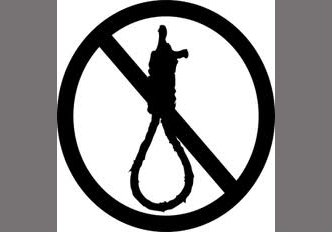
The purpose of this document is to provide clear and updated information on the death penalty regime in Singapore.
In Singapore, about 26 offences carry the death penalty; it is most commonly used for murder (under s300 the Penal Code) and drug-trafficking/importation and exportation offences (under s5 and s7 of the Misuse of Drugs Act). These laws were amended in 2012 and the amendments came into effect on 1 January 2013.
The ICJ opposes capital punishment in all cases without exception.
The death penalty constitutes a violation of the right to life and the right not to be subjected to cruel, inhuman or degrading punishment.
Singapore-Death penalty laws-Advocacy-Analysis brief-2016-ENG (full text in PDF)

Feb 3, 2016 | News
Yesterday’s decision of the Indian Supreme Court to refer to a larger bench of the same Court the petition challenging Section 377 of the Indian Penal Code (IPC), offers the opportunity to undo the appalling 2013 judgment of a two-judge bench of the SC in the Suresh Koushal case, says the ICJ.
“This order of the Supreme Court is a crucial opportunity to undo the injustice of the Suresh Koushal decision,” said Sam Zarifi, ICJ’s Asia Director. “It is an important test of the Supreme Court’s commitment to equality and ending discrimination against people on the basis of sexual orientation or gender identity.”
After the December 2013 Suresh Koushal decision – when the Supreme Court upheld the constitutionality of section 377 and reversed the Delhi High Court’s courageous and much celebrated decision – the petitioners filed a review petition, which was dismissed.
The petitioners then filed “curative petitions” in 2014, stating that the Supreme Court’s judgment of December 2013 violated principles of natural justice for several reasons. A “curative petition” allows the Supreme Court to re-assess its previous decisions on limited grounds, even after appeals and reviews have concluded.
Yesterday the Supreme Court referred the curative petition, and the major constitutional questions it raised, to a five-judge bench of the same Court, thus acknowledging doubts about the correctness of its 2013 ruling. A five-judge bench will now be set up to hear this challenge.
“The referral highlights the Supreme Court’s recognition of the need for a judicial response to the ongoing discrimination against people on the basis of sexual orientation and gender identity,” Zarifi said.
“After 16 years within the court process, this issue clearly could not be resolved with the highly problematic Suresh Koushal decision, which ignored the reality of consensual same sex behavior in India and the fact that Section 377 criminalizes people for who they are and leads directly to serious human rights violations.”
By criminalizing consensual same-sex adult sexual conduct, Section 377 is inconsistent with India’s obligations under international human rights law, including in respect of the rights to sexual autonomy, equality, non-discrimination, privacy, dignity, free expression, and life.
Many of these rights are guaranteed in India’s Constitution.
India is also a party to several international instruments, which require that these rights be respected, protected and fulfilled.
The Yogyakarta Principles – which apply international human rights law to issues of sexual orientation and gender identity – clarify that the rights to equality, non-discrimination and privacy require states to “repeal all laws that criminalize consensual sexual activity among persons of the same sex who are over the age of consent.”
The Supreme Court referred to these principles in the 2014 National Legal Services Authority v Union of India (NALSA) case where it also acknowledged that Section 377 was “used as an instrument of harassment and physical abuse against Hijras and transgender persons”.
“Yesterday’s decision offers hope that the Supreme Court intends to reaffirm the principle that people in India cannot be subjected to discrimination, harassment and violence, simply on the basis of their sexual orientation or gender identity,” Zarifi said.
Background
Section 377 makes it an offence to “voluntarily ha[ve] carnal intercourse against the order of nature with any man, woman or animal” and has been used to persecute people for their real or purported engagement in consensual same-sex sexual conduct. The penalty can extend to life imprisonment.
Several reports document how Section 377 has been a tool for discrimination, blackmail, extortion, and violence by state and non-state actors against the LGBTI community.
It has adversely affected HIV/AIDS prevention efforts, and has also reinforced harmful social stereotypes and taboos against sexual minorities.
The petitioners in the original challenge against section 377 have waged this legal battle for over a decade. The constitutional challenge against Section 377 was filed in 2001.
In 2009, in Naz Foundation v. Government of NCT of Delhi and Others, the Delhi High Court held that Section 377 denied “a person’s dignity and criminalises his or her core identity solely on account of his or her sexuality”.
It went on to find that this criminalization of identity denied “a gay person a right to full personhood which is implicit” in the notion of life under Article 21 of the Indian Constitution, and also violated the constitutional right to equality and non-discrimination. The High Court held that Section 377 was unconstitutional insofar as it criminalized consensual same-sex sexual conduct.
However, its judgment was appealed to the Supreme Court.
On appeal, in 2013 the Supreme Court reversed the decision of the Delhi High Court, holding the section to be constitutional.
The Supreme Court also affirmed that legislature would “be free to consider the desirability and propriety of deleting Section 377 IPC from the statute book or amend the same as per the suggestion made by the Attorney General”.

Feb 2, 2016
The report, published today, assesses the current state of the independence and accountability of the Serbian judiciary and prosecution service, and, in particular, the self-governance of the two professions under the High Judicial Council and the State Prosecutors’ Council.
Following ICJ’s visit to Serbia on 26-30 October 2015, the report Serbia’s judges and prosecutors: the long road to independent self-governance concludes that a culture of dependency from the Executive still exists in the Serbian judiciary and that the system is affected by a stress of reform, due to the continued introduction of new judicial reforms without proper implementation.
The ICJ considers that the self-governance of the judiciary and of the prosecution service, entrusted respectively to the High Judicial Council and to the State Prosecutorial Council, is relatively weak.
The ICJ mission has identified considerable shortcomings in these bodies, including:
- excessive dependence in practice on the political branches of government;
- lack of effective procedures and of sufficient will in the Councils to defend the independence, autonomy and professional integrity of their professions and of individual judges and prosecutors;
- appointment, selection and dismissal procedures open to direct and indirect political influence;
- lack of effective procedures of evaluation of the work of judges and prosecutors;
- misuse of such procedures to impose conformity in decisions;
- a strong hierarchical system in the prosecution service and, in practice, in the judiciary, that undermines internal independence and risks undermining independence of investigations and prosecutions.
The mission, aimed to assess the situation of self-governance of the judiciary and of the prosecutorial service at a critical juncture in their development, took place in the context of the ICJ’s global objective to advance the effective administration of justice and the independence of judges and lawyers.
Serbia-Long Road to Indep Self-Gov-Publications-Reports- Fact-Finding Mission Report-2016-ENG (full report in PDF, English)
Serbia-Long Road to Indep Self-Gov-Publications-Reports- Fact-Finding Mission Report-2016-SER (full report in PDF, Serbian)