Feb 1, 2016
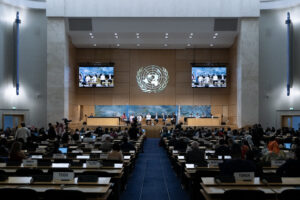
Today is the first of a four-day hearing at the UK Supreme Court in joined appeals from the High Court (Al-Waheed v Ministry of Defence) and the Court of Appeal (Ministry of Defence v Mohammed and Others), in which the ICJ intervened.
The case concerns the detention of persons in Iraq and Afghanistan during the non-international armed conflict phases of British military operations in those countries. Together with Human Rights Watch, Amnesty International and Open Society Justice Initiative, the ICJ submitted an intervention in the joined appeal, addressing:
- The complementary application of international humanitarian law (IHL) and international human rights law (IHRL) in situations of armed conflict.
- The lack of authority under IHL, whether treaty or customary law, for internment in situations of non-international armed conflict (NIAC), including consideration of the inapplicability in NIAC of internment rules that govern situations of international armed conflict.
- The requirement that detention in NIACs is compliant with IHRL, the implications of this and the key means by which internment can be lawful while also responsive to the exigencies of the situation.
UK-GlobalSecurity-DetentionArmedConflict-Advocacy-Legal submissons-2016-ENG (download the joint intervention)
Jan 29, 2016 | News
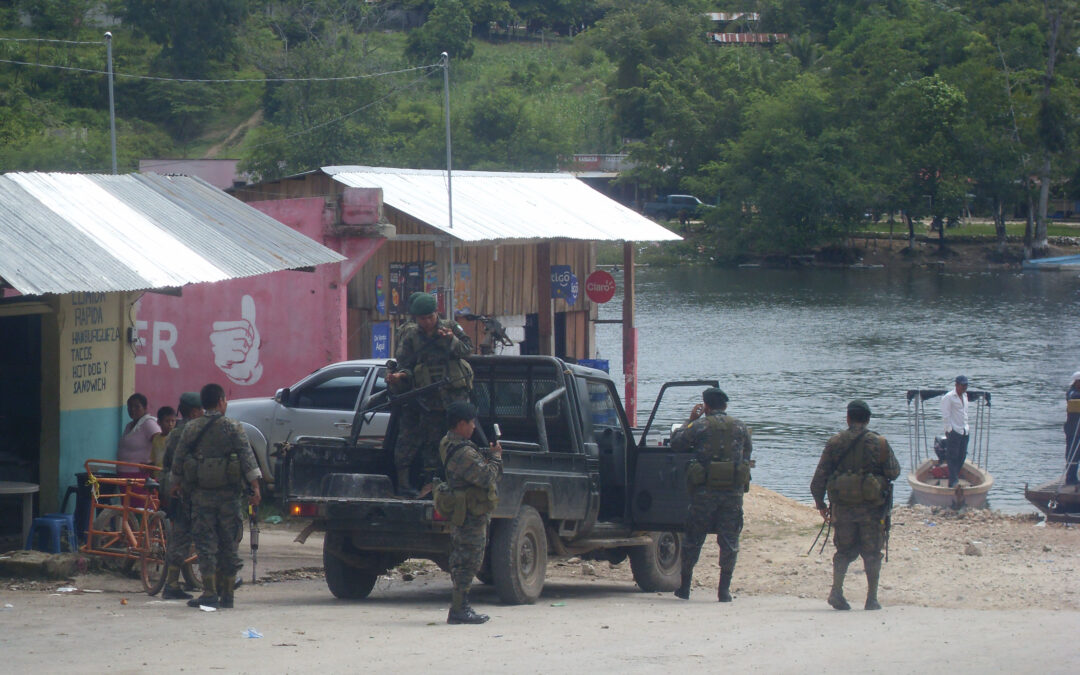
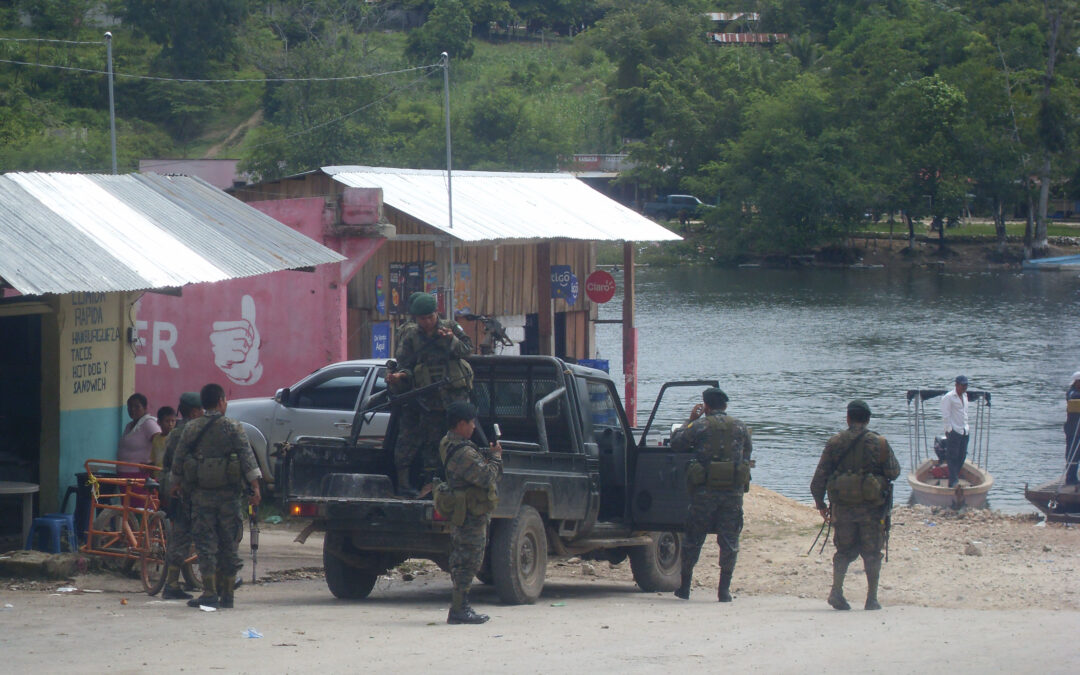
La CIJ expresa su preocupación frente a una nueva denuncia abusiva de la Fundación contra el Terrorismo, esta vez contra el Director de la CIJ para Centroamérica y un consultor que contribuye con el Bufete de Derechos Humanos, y contra el Director de Centro de Acción Legal, Ambiental y Social.
Esta denuncia se suma a otras en contra de abogados y abogadas de Guatemala. A través de querellas y acusaciones falsas, esta Fundación pretende afectar la función que estos profesionales cumplen como defensores de los derechos humanos.
Estas denuncias falsas son parte de una campaña iniciada hace más de un año y que ha querido afectar a más de cien personas, a quienes la Fundación contra el Terrorismo ha calificado como terroristas y guerrilleros (as), sin aportar pruebas.
Efectivamente se han presentado denuncias contra funcionarios y ex funcionarios del Ministerio Público, como la ex Fiscal General Claudia Paz y Paz y la actual Fiscal General Thelma Aldana, el Fiscal de Derechos Humanos o en contra de jueces y juezas del Organismo Judicial que ejercen su función en forma independiente, promoviendo un discurso de odio en contra de estas personas que actúan como defensores y defensoras de derechos humanos.
Ante esto hechos, la CIJ demanda:
- Que el Estado de Guatemala, por medio de las autoridades correspondientes, inicie una investigación exhaustiva e imparcial acerca de las actividades que realiza la Fundación contra el Terrorismo sobre todo, que investigue el origen de aquellas actividades que dirige en contra de defensores y defensoras de Derechos Humanos;
- Que el Estado de Guatemala, por medio de las autoridades correspondientes, brinde la protección debida a defensores y defensoras de derechos humanos;
- Que una vez finalizada la investigación el Estado de Guatemala, a través de las autoridades y mecanismos correspondientes, adopte las medidas necesarias de acuerdo a derecho con respecto a la Fundación contra el Terrorismo y su Director, por llevar a cabo campañas de odio en contra de defensores y defensoras de derechos humanos.
Jan 29, 2016 | Comunicados de prensa, Noticias
La CIJ expresa su preocupación frente a una nueva denuncia abusiva de la Fundación contra el Terrorismo, esta vez contra el Director de la CIJ para Centroamérica y un consultor que contribuye con el Bufete de Derechos Humanos, y contra el Director de Centro de Acción Legal, Ambiental y Social.
Esta denuncia se suma a otras en contra de abogados y abogadas de Guatemala. A través de querellas y acusaciones falsas, esta Fundación pretende afectar la función que estos profesionales cumplen como defensores de los derechos humanos.
Estas denuncias falsas son parte de una campaña iniciada hace más de un año y que ha querido afectar a más de cien personas, a quienes la Fundación contra el Terrorismo ha calificado como terroristas y guerrilleros (as), sin aportar pruebas.
Efectivamente se han presentado denuncias contra funcionarios y ex funcionarios del Ministerio Público, como la ex Fiscal General Claudia Paz y Paz y la actual Fiscal General Thelma Aldana, el Fiscal de Derechos Humanos o en contra de jueces y juezas del Organismo Judicial que ejercen su función en forma independiente, promoviendo un discurso de odio en contra de estas personas que actúan como defensores y defensoras de derechos humanos.
Ante esto hechos, la CIJ demanda:
- Que el Estado de Guatemala, por medio de las autoridades correspondientes, inicie una investigación exhaustiva e imparcial acerca de las actividades que realiza la Fundación contra el Terrorismo sobre todo, que investigue el origen de aquellas actividades que dirige en contra de defensores y defensoras de Derechos Humanos;
- Que el Estado de Guatemala, por medio de las autoridades correspondientes, brinde la protección debida a defensores y defensoras de derechos humanos;
- Que una vez finalizada la investigación el Estado de Guatemala, a través de las autoridades y mecanismos correspondientes, adopte las medidas necesarias de acuerdo a derecho con respecto a la Fundación contra el Terrorismo y su Director, por llevar a cabo campañas de odio en contra de defensores y defensoras de derechos humanos.
Jan 29, 2016 | News
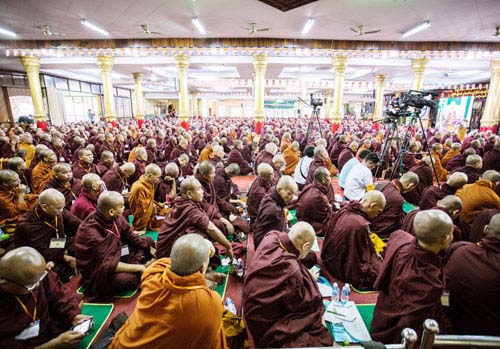
The Myanmar authorities must immediately release and drop all charges or quash convictions against all people detained for allegedly having the “deliberate and malicious intention to insult religion,” said the ICJ today.
While President Thein Sein had declared an amnesty on 22 January for 102 prisoners, including 52 political prisoners, it is unclear exactly how many prisoners continue to be detained in prison under section 295A of the Penal Code and awaiting trials for blasphemy.
“Charging and imprisoning people on charges under Myanmar’s blasphemy laws is inconsistent with human rights including freedom of opinion and expression, freedom of thought, conscience, and religion, the right to liberty, and the right to equality before the law without discrimination,” said Sam Zarifi, ICJ’s Asia Director.
“The problem is compounded in Myanmar when courts have been convicting individuals in unfair trials and in the absence of evidence of any deliberate and malicious intent to insult religion,” he added.
Last week, President Thein Sein pardoned Philip Blackwood, a New Zealand citizen sentenced to two and a half years with hard labour for posting on Facebook a psychedelic image of the Buddha wearing headphones to promote a bar.
His colleagues Tun Thurein and Htut Ko Ko Lwin, Myanmar citizens, do not seem to have been released (although it is possible that they may have been granted amnesty as well).
Another detainee, Htin Linn Oo, a writer and National League for Democracy information officer who was sentenced to two years imprisonment with hard labour, has not been released.
U Nyar Na (aka) Moe Pyar Sayar Taw, a monk arrested in Kachin state in 2010 and charged under various provisions of the Penal Code, including section 295A, was sentenced to imprisonment for 20 years. His reported release during the amnesty last week remains unconfirmed.
These charges and convictions are in violation of international law, including a range of human rights guaranteed by the Universal Declaration of Human Rights and by international treaties, the ICJ says.
“The laws must be repealed or fundamentally changed, ongoing prosecutions ended, and those imprisoned for their beliefs or protected speech and other expression immediately and unconditionally released,” Zarifi said.
“These prosecutions seem to be a result of intense political pressure from extremist Buddhist political groups. As the Myanmar judiciary and legal system try to emerge from decades of political interference on with independence, it’s crucial that they act in the interests of justice and human rights,” he added.
The ICJ urges the Myanmar authorities to drop all charges against the accused persons who have not yet been tried; take immediate measures to secure the quashing of convictions under the law; and take effective measures to ensure the immediate and unconditional release of all detainees held pursuant Section 295A.
The ICJ also calls on the government to act to repeal or amend section 295A to bring it in line with international law and standards.
Contact:
In Bangkok: Sam Zarifi, ICJ Regional Director, Asia-Pacific Programme, t: +66807819002 ; e: sam.zarifi(a)icj.org
In Myanmar: Vani Sathisan, ICJ International Legal Adviser, t: +95 9250800301 ; e: vani.sathisan(a)icj.org
Additional information:
Myanmar’s Constitution guarantees the right to freedom of expression, conscience, and to freely profess and practice religion.
The UN Human Rights Committee established by the International Covenant on Civil and Political Rights (ICCPR) emphasizes that “Prohibitions of displays of lack of respect for a religion or other belief system, including blasphemy laws, are incompatible with the Covenant”. The only limited exception under the Covenant would be for proportionate and non-discriminatory measures to prohibit “advocacy of…religious hatred that constitutes incitement to discrimination, hostility or violence”. Section 295A falls far short of this threshold.

Jan 27, 2016
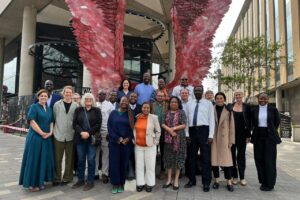
On 8 and 9 October 2015, the ICJ held a consultation meeting in Tunis on the topic of judicial accountability. The ICJ today is publishing a summary report of the discussions.
The focus of the meeting was on mechanisms and procedures for holding judges to account for involvement in violations of human rights, judicial corruption or similar judicial misconduct, in developing countries.
The Tunis meeting offered the opportunity for judges, researchers and other professionals with expertise in justice systems in a range of developing countries from Africa, South America and the MENA region, to exchange views and experiences on the topic.
Drawing from their professional experience,knowledge and personal opinion, the participants discussed types of accountability mechanisms, their efficiency, and the main challenges faced in pursuing judicial accountability and potential ways to overcome them in developing countries.
The Tunis consultation forms part of a larger ongoing project on judicial accountability.
The ICJ intends to publish in the coming months a report of further reflections on the particular challenges for judicial accountability in developing countries, as well as a more global Practitioners’ Guide on Judicial Accountability in June 2016.
These publications will draw on the Tunis consultation, the 2015 Geneva Forum of Judges and Lawyers (14-15 December 2015), as well as further research.
This report of the Tunis consultation offers a thematic summary of the discussions held over the course of the two days meeting, and also includes annexes with the list of participants, and questions for reflection, provided to the participants in advance of the meeting.
The ICJ is grateful for funding from the Ministry of Foreign Affairs of Finland, without which the Tunis consultation and additional ICJ consultations, research and analysis on judicial accountability in developing countries would not have been possible.”
Universal-Tunis Consultation-Publications-Seminar and Conference Report-2016-ENG (full report in PDF)