Nov 24, 2015
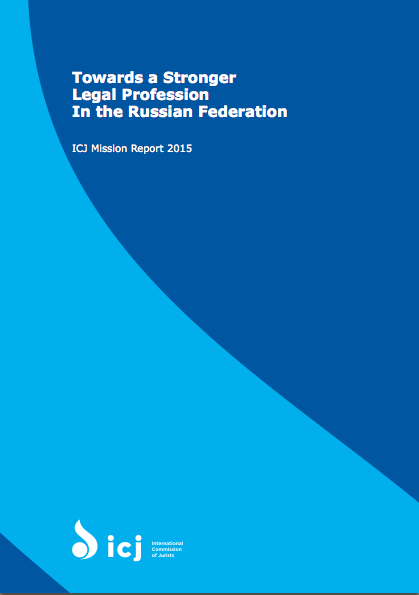
Today, the ICJ released a report calling for reform of the legal profession in the Russian Federation.
“The legal profession in Russia presents a complex picture. It includes obvious achievements and strengths, but remains severely constrained and flawed in its ability to uphold the rule of law and human rights within the justice system,” says the ICJ report published today in English and in Russian languages.
“The wider problems in the justice system, and its routine failure to protect human rights and in particular the right to a fair trial, including the principle of equality of arms, pose grave challenges to lawyers in fulfilling their professional duties,” the report concludes.
The ICJ report Towards a Stronger Legal Profession in the Russian Federation follows a mission to the Russian Federation in May 2015.
After three reports dedicated to various aspects and issues of the judiciary in the Russian Federation, the ICJ through the mission, and this report, has turned its attention to the problem of the legal profession at a time when significant changes in the profession are under discussion.
The report analyses the legal framework governing the legal profession in the Russian Federation, and discusses practical issues raised during the mission.
It evaluates laws and practices in light of international law and standards on human rights, including the right to fair trial, as well as international standards on the independence of the legal profession.
These standards address the organization and operation of the legal profession including regulation of the profession, qualification, ethics and discipline of lawyers, guarantees against interference with the work of lawyers and protections necessary for lawyers to defend the rights of clients.
Though these standards may be broadly worded and leave room for differing approaches by national systems, they provide authoritative and widely accepted guidance which should inform national systems and practices.
The report describes the history and current landscape of the legal profession in the Russian Federation. It describes the organization, bodies and procedures of the Federal and regional chambers and analyses questions related to the entry to the profession.
The report further describes problems with ethics and disciplinary proceedings and the professional guarantees of lawyers as well as the main points of the ongoing reform of the legal profession.
Finally, based on international law and standards, the report provides recommendations which propose legal and practical measures to be taken to advance the independence of the legal profession in the Russian Federation, and its effectiveness in upholding human rights.
CONTACTS:
Róisín Pillay, Director, Europe Programme, roisin.pillay(a)icj.org
Temur Shakirov, Legal Adviser, Europe Programme, temur.shakirov(a)icj.org
DOCUMENTS:
Russia-Towards-a-Stronger-Legal-Profession-Press-Release-2015-RUS (Press release PDF – Russian)
Russia-Towards-a-Stronger-Legal-Profession-Publication-2015-Eng (Full publication in PDF – English)
Russia-towards-a-stronger-legal-prof-publication-2015-RUS (Full publication in PDF – Russian)
Nov 23, 2015
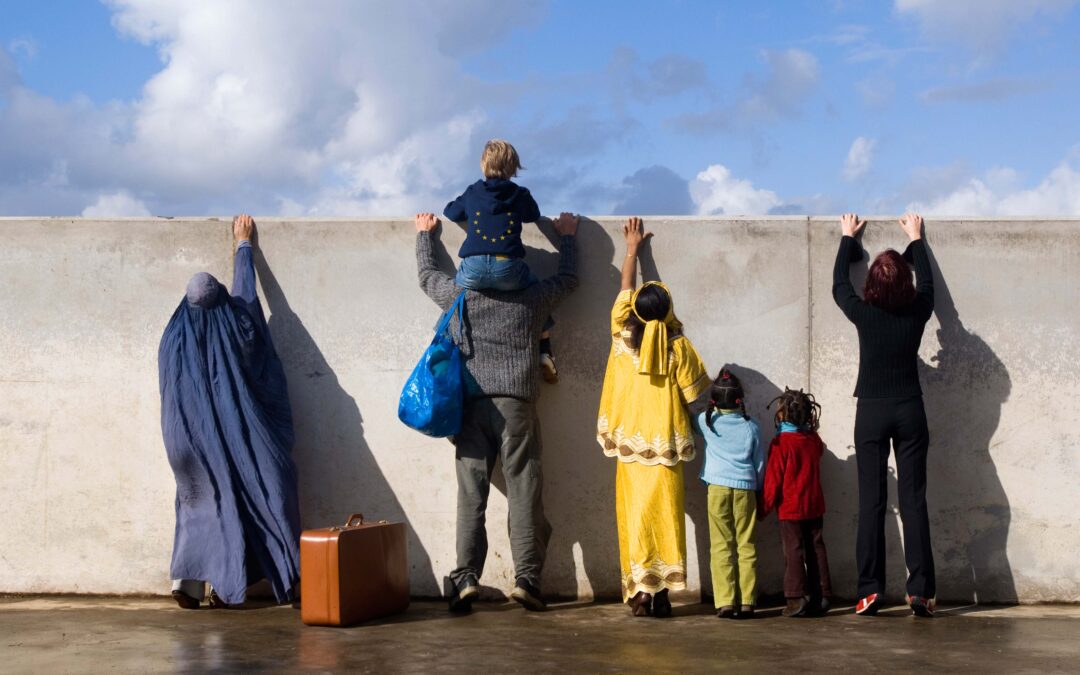
Today, the ICJ, the AIRE Centre, Amnesty International and the European Council on Refugees and Exiles jointly intervened before the European Court of Human Rights in a case against Spain on the denial of entry of asylum seekers in the enclave of Melilla.
The four human rights organisations argued that the European Convention on Human Rights prohibits refusal of entry, and/or return of a person to face serious violations of human rights, including of the right to life, the prohibition of torture or inhuman or degrading treatment or punishment, or flagrant denial of justice and of the right to liberty. They submitted that these refusals of entry are also contrary to the rights set out in the EU Charter of Fundamental Rights (CFR) and the prohibition on non-refoulement found in the 1951 Geneva Convention on the Status of Refugees (Refugee Convention).
The joint interventions presents the argument that, for these prohibitions to be practical and effective and not theoretical and illusory, Contracting Parties must have in place effective systems for identifying people within their jurisdiction who are entitled to benefit from the prohibition on refusing entry.
Spain-ICJ&others-AmicusBrief-ND&NT-ECtHR-legalsubmission-2015 (download the third party intervention)

Nov 19, 2015 | News
Bangladesh President Abdul Hamid should stay the imminent executions of Salahuddin Quader Chowdhury and Ali Ahsan Mohammad Mujahid, the ICJ said today.
Salahuddin Quader Chowdhury, a leader of the opposition Bangladesh Nationalist Party, and Ali Ahsan Mohammad Mujahid, a leader of the Jamaat-e-Islami party, were found guilty of crimes committed during the 1971 war for independence in Bangladesh by the International Crimes Tribunal (ICT) in October 2013.
On 18 November 2015, the Supreme Court rejected their review petitions challenging their death sentences.
The only legal option available to them now is to seek a pardon from the President.
“The ICJ expresses its solidarity with the victims and survivors of the human rights violations committed during the 1971 war, and believes the perpetrators of these atrocities must be brought to justice,” said Sam Zarifi, ICJ Asia Pacific Regional Director. “However, the death penalty, especially following a deeply flawed trial, amounts to nothing more than vengeance and does not serve the interests of justice.”
The ICJ has previously raised concerns that trials before the ICT do not comply with international standards for fair trials.
Following the two previous executions in Bangladesh resulting from convictions by the ICT to date (Muhammad Kamaruzzaman in April 2015 and Abdul Qader Mollah in December 2013), the ICJ raised concerns about the serious procedural flaws in the ICT at all stages: pre-trial release has been routinely and arbitrarily denied; witnesses have been abducted and intimidated; and there have been credible allegations of collusion between the Government, prosecutors and judges.
UN agencies have also raised fair trial concerns with respect to how certain cases have been heard at the ICT.
Concerns have been raised with respect to Salahuddin Quader Chowdhury and Ali Ahsan Mohammad Mujahid’s trials as well.
“There have been several problems about the fairness of the trials under the ICT,” Zarifi added.
“Instead of compounding injustice by executing people who have been found guilty through flawed trials, the Government of Bangladesh should commute these death sentences and abolish the death penalty.”
The ICJ opposes capital punishment in all cases without exception.
The death penalty constitutes a violation of the right to life and the right not to be subjected to cruel, inhuman or degrading punishment.
Contact:
Sam Zarifi, ICJ Asia Pacific Regional Director (Bangkok), t: +66 807819002; email: sam.zarifi(a)icj.org
Background:
Ali Ahsan Mohammad Mojaheed was convicted by the International Criminal Tribunal and sentenced to death in July 2013. The Supreme Court upheld the conviction and sentence in June 2015.
Salahuddin Quader Chowdhury was found guilty and sentenced to death in October 2013 for war crimes, including genocide. The Supreme Court on appeal upheld the decision in July 2015.
The ICJ calls on Bangladesh to impose an official moratorium on the death penalty, with a view to abolishing the death penalty outright.
In December 2014, the UN General Assembly adopted a resolution, for the fifth time since 2007, emphasizing that the use of the death penalty undermines human dignity and calling on those countries that maintain the death penalty to establish a moratorium on its use with a view towards its abolition.
117 UN Member States, a clear majority, voted in favor of a worldwide moratorium on executions as a step towards abolition of the death penalty.
Nov 18, 2015 | Events, News
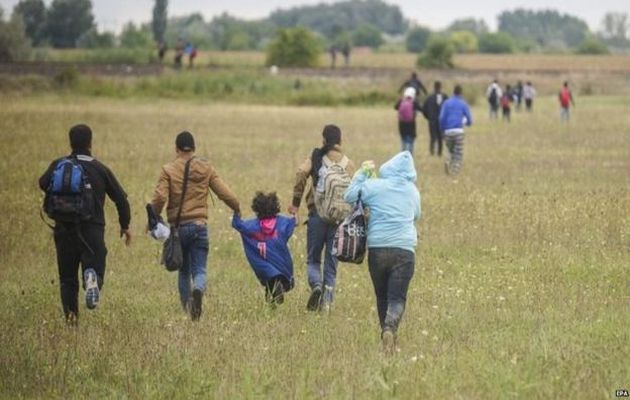
The ICJ, OSCE and Group 484 are holding a training on migration and international human rights law starting on Tuesday 17 November in Vrnjačka Banja (Serbia).
The training has been organised by the Organisation for Security and Cooperation in Europe (OSCE) and the Serbian NGO “Group 484” and will be given by the International Commission of Jurists.
It will focus on international protection of migrants and asylum seekers, access to territory and asylum and the principle of non-refoulement, in light of the current migrants and refugee crisis and drawing from the jurisprudence of the European Court of Human Rights, of the UN human rights systems and from EU law.
The training will be centred on the ICJ Practitioners Guide no. 6: Migration and International Human Rights Law.
Serbia-JointTrainingMigrationHR-Events-2015-ENG (download the agenda in English)

Nov 17, 2015 | Artículos, Noticias
Desde el año 2004, la CIJ ha señalado casos en los que el Estado de Guatemala dirige su poder punitivo en contra de defensores y defensoras de derechos humanos por su asociacion a actos pacíficos en defensa de los recursos naturales de distintas comunidades en el país.
Ante esta práctica, que socava el derecho a defender los derechos humanos, la CIJ expresa:
1. La criminalización de la protesta social se ha convertido en un fenómeno recurrente en Guatemala, en la que el Derecho Penal es utilizado como instrumento de represión y deslegitimación de la labor que las y los defensores de derechos humanos llevan a cabo en el país.
2. Especial preocupación causan las detenciones arbitrarias de las que son objeto defensores y defensoras de derechos humanos, que trabajan en áreas de alta conflictividad social y se vinculan a la protección de los recursos naturales, territorios o derechos de los Pueblos Indígenas. En algunos casos, el Estado de Guatemala ha optado por la suspensión de las garantías constitucionales en esas regiones, decretando estados de prevención o de sitio.
3. Con el objeto de conocer el impacto de esta práctica, la eurodiputada Marina Albiol, visitó Guatemala del 2 al 5 de noviembre del presente año. En dicha ocasión, la CIJ acompañó a su delegación en una visita in situ a los departamentos de Huehuetenango y San Marcos, para entrevistarse con defensores y defensoras de Derechos Humanos, así como para sostener reuniones con funcionarios de gobierno y movimientos sociales.
4. La delegación constató que frecuentemente las y los líderes comunitarios y defensores de derechos humanos, son sometidos a procesos penales injustos, práctica que consituye una herramienta para el acoso a dichas personas.
5. La delegación pudo constatar el caso de las detenciones arbitrarias de Ermitaño Bernardo López , Rigoberto Juárez y Domingo Baltazar, Francisco Pedro (Chico Palas), Adalberto Villatoro (Don Tello), Arturo Pablo Juan,Saúl Méndez y Rogelio Velásquez, todos ellos del Departamento de Huehuetenango; en los dos últimos casos mencionados, se ha dictado sentencia absolutoria, pero ambos continúan detenidos. Todos han padecido su privación de libertad , en la cárcel de Huehuetenango o en la prisión de la zona 18 de Guatemala, bajo condiciones extremadamente difíciles. Los anteriores no son los únicos, ya que junto a ellos se encuentran detenidas arbitrariamente otras defensoras y defensores de derechos humanos del departamento de Huehuetenango y de otros departamentos.
6. Asímismo preocupa la detención de Mauro Vay, dirigente y defensor de derechos humanos de la organización CODECA, quien se encuentra bajo medida sustitutiva, pero con restricciones que han afectado su derecho al trabajo y libertad de movimiento, durante todo el año 2015 en el departamento de Suchitepéquez.
7. La Comisión Interamericana de Derechos Humanos ha expresado que la protesta social pacífica, es una herramienta fundamental para la labor de defensa de los derechos humanos, esencial para la crítica política y social de los gobiernos. En tal sentido, los Estados están obligados a asegurar que ningún defensor o defensora de los derechos humanos sea impedido de reunirse y manifestarse públicamente en forma pacífica.
Ante estos hechos, Wilder Tayler, Secretario General de la CIJ expresó: “Urgimos a las autoridades del Estado de Guatemala a detener la criminalización de la protesta social y las detenciones arbitrarias que este fenómeno conlleva. Amendrentar y obstaculizar la labor de defensoras y defensores de derechos humanos constituye de por sí, una violación del derecho de las garantías individuales”.