Nov 9, 2015
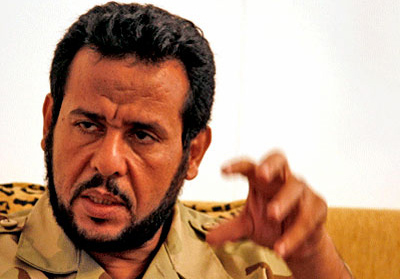
The ICJ, together with JUSTICE, Amnesty International and REDRESS, filed a third party intervention with the Supreme Court in the case Abdul-Hakim Belhaj and Other v. Jack Straw and Others.
The case involves the appeal of an action brought by a Libyan national and his spouse against the UK authorities for their alleged role of complicity in the rendition and torture of the complainants. The appeal is from a decision of the High Court, which had determined that the case could not go ahead because the courts could not adjudicate the complaint since it was an “act of States” not subject to judicial review.
The four organizations argued that application of the act of state and of the sovereign immunity doctrines, in the manner accepted by the High Court and rejected by the Court of Appeal, was not consistent with national and international human rights law.
In their brief, the human rights organisations addressed the following topics:
- The scope of the doctrine of State immunity in English law, in particular the circumstances in which a foreign State is directly or indirectly “impleaded”;
- Whether the act of State doctrine in English law reflects international law, and the scope of the principle that the act of State doctrine cannot be invoked in cases where serious breaches of international law (including international human rights law) are alleged;
- The nature of the prohibition of torture and the right to a remedy for serious human rights violations in international law.
UK-ICJ&others-AmicusBrief-Belhadj_v_Straw-SC-legalsubmission-2015 (download the amicus brief)
Background information
On 20 December, the High Court of Justice dismissed the claim for civil damages of Abdul-Hakim Belhaj, a Libyan opposition member during the rule of Muammar Gaddafi, and of his wife Fatima Boudchar. They sought civil compensation from the UK government for complicity of the UK secret services in their US-led rendition to Libya in 2004, including their unlawful detention and torture in China, Malaysia, Thailand and Libya. Fatima Boudchar was pregnant at the time of the rendition. Abdul-Hakim Belhaj was released from detention in Libya only in 2010. The Court, although it rejected Government claims of immunity, held that the action was barred on the basis of the doctrine of “act of state” according to which “domestic court exercises judicial restraint in order to avoid adjudicating upon the actions of foreign sovereign states, ‘in the area of transactions between states’”. The Court held that it could not assess the lawfulness of actions committed by officials of China, Malaysia, Thailand and Libya in those countries according to their laws. It also declined “to decide that the conduct of US officials acting outside the United States was unlawful, in circumstances where there are no clear and incontrovertible standards for doing so and where there is incontestable evidence that such an enquiry would be damaging to the national interest”.

Nov 7, 2015 | News
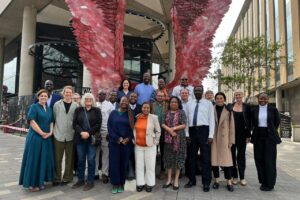
The ICJ, Lawyers for Human Rights Swaziland (LHR(S), Lawyers for Human Rights South Africa (LHR), and Southern Africa Litigation Centre (SALC) organized a training on strategic litigation for lawyers and human rights defenders from 6-7 November 2015 in Ezulwini.
The training was intended to empower Swazi lawyers and human rights defenders with tools for legal empowerment through litigation.
Further the training provided an opportunity for introducing the participants to international, regional and domestic mechanisms for strategic litigation and analysis of strategic litigation cases, opportunities and challenges in Swaziland.
Participants were drawn from different private law firms, human rights organisations, and the office of the Attorney General and women’s rights organisations.
To nurture regional peer learning and approaches the President of the Law Society of Lesotho Advocate Shale gave the key note presentation borrowing on lessons from other regions and Lesotho.
Resources persons included David Cote (LHR), Caroline James (SALC), Otto Saki (ICJ) and Thabiso Mavuso (Swaziland).
The expected impact is that increasingly lawyers and human rights defenders will take up strategic litigation as part of contributing to the achievement of systemic change and positive enforcement of fundamental rights and freedoms.
This training was held with the generous support of the European Union (EU) through the EU Delegation to Swaziland.
Contact:
Arnold Tsunga, ICJ Regional Director for Africa, t: +27 73 131 8411, e: arnold.tsunga(a)icj.org
Mandla Mkhwanazi LHR Swaziland Chairperson, t: +268 7602 6320, e: m.z.mkhwanazi(a)swazi.net
Caroline James, Lawyer, Southern Africa Litigation Centre t: 27 72 200 1813, e: CarolineJ(a)salc.org.za
David Cote, Programme Manager: Strategic Litigation Programme, LHR (South Africa) t: +27 11 339 1960, e: david(a)lhr.org.za
Nov 6, 2015
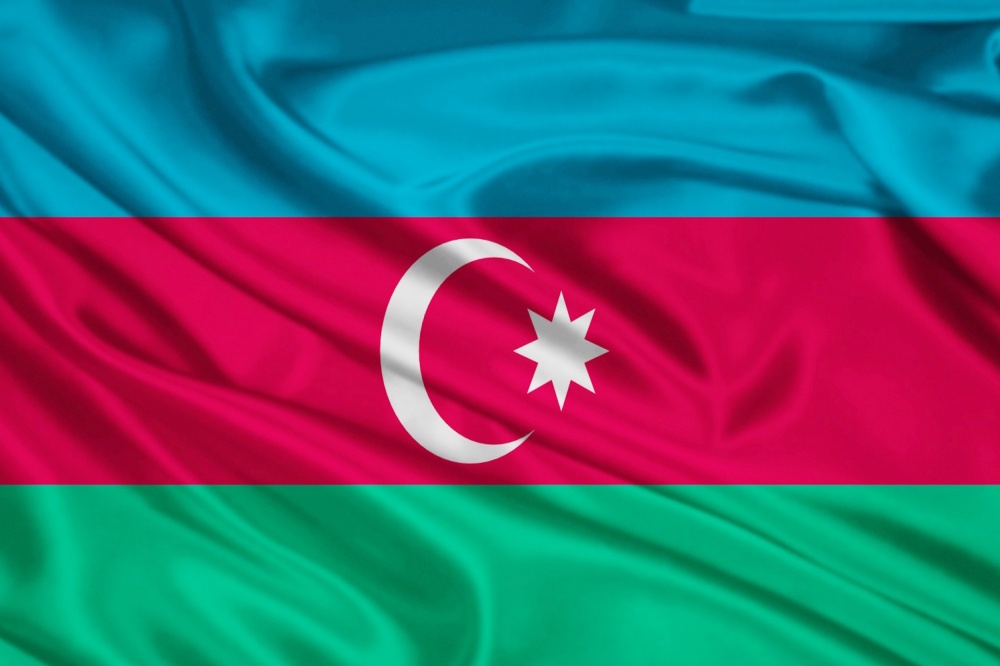
The ICJ submitted a third-party intervention in the case of Bagirov v Azerbaijan before the European Court of Human Rights.
In this intervention the ICJ argues that the special role of lawyers in the administration of justice, pursuant to the rule of law, necessitates their ability to carry out their important professional functions without undue restrictions, which requires close scrutiny of any limitations imposed, including concerning those statements made by lawyers outside of courts.
The ICJ further submits that the role and responsibility of lawyers in imparting information to the public on issues of public concern related to the justice system, is not confined to comments on individual cases in which the lawyer represents a client.
In addition, such remarks warrant particularly strong protection under Article 10 of the European Convention.
The ICJ argues that comments by a lawyer that are critical of State authorities responsible for the detention of a person who has been injured or has died in their custody should be interpreted and be presumed to constitute protected forms of expression, unless they can be shown to have been made in bad faith, and that disciplinary action against lawyers should be subject to strong safeguards against arbitrariness or disproportionate penalties.
Azerbaijan-Bagirov v Azerbaijan-Advocacy-legal submission-2015-ENG (full text in PDF)
Azerbaijan-Bagirov v Azerbaijan-Advocacy-legal submission-2015-RUS (full text in Russian)

Nov 6, 2015 | Адвокаси, Новости, Статьи, Юридические заявления
МКЮ представила вмешательство третьей стороны по делу Багирова против Азербайджане перед Европейским судом по правам человека.
В настоящем представлении МКЮ указывает на то, что особая роль адвокатов в процессе отправления правосудия, предусмотренная принципом верховенства права, предполагает, что они должны иметь возможность выполнять важные профессиональные обязанности в отсутствие необоснованных ограничений, что требует тщательной проверки любых используемых ограничений, в том числе относительно высказываний, которые адвокаты делают за пределами суда.
МКЮ также отмечает, что роль и обязанности адвокатов с точки зрения обнародования информации по общественно значимым вопросам, связанным с судебной системой, не ограничивается замечаниями по конкретным делам, которые они ведут.
Кроме того, такие замечания пользуются повышенной защитой по статье 10 Европейской Конвенции.
МКЮ считает, что критические замечания адвокатов в отношении действий (бездействия) государственных органов, несущих ответственность за содержание под стражей лица, которому были причинены увечья или смерть которого наступила, пока оно находилось под контролем данных органов, должны изначально рассматриваться как формы выражения мнения, которые пользуются юридической защитой, если не будет доказано, что они являются недобросовестными, а дисциплинарное производство в отношении адвокатов может возбуждаться только при условии всестороннего соблюдения гарантий защиты от необоснованного применения несоразмерного взыскания.
Azerbaijan-Bagirov v Azerbaijan-Advocacy-legal submission-2015-RUS (полный текст, русский)
Nov 6, 2015 | E-bulletin on counter-terrorism & human rights, News
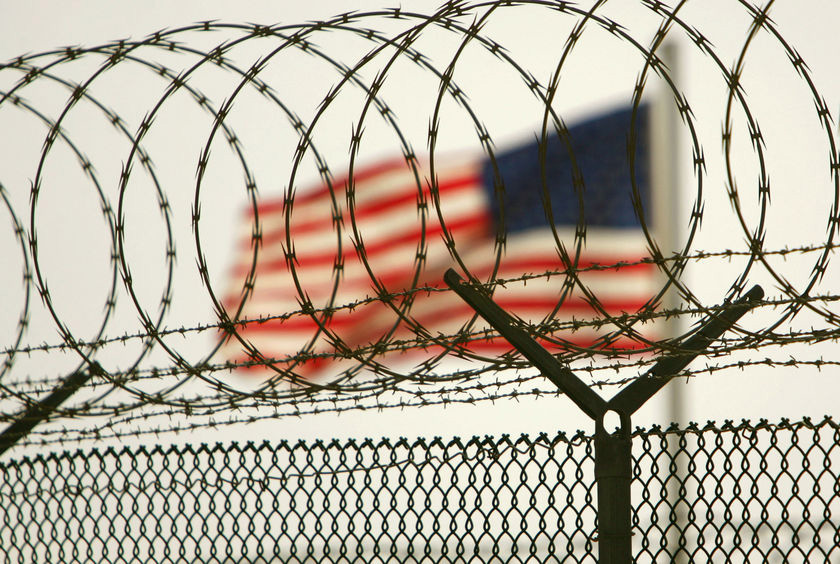
Read the 97th issue of ICJ’s monthly newsletter on proposed and actual changes in counter-terrorism laws, policies and practices and their impact on human rights at the national, regional and international levels. The E-Bulletin on Counter-Terrorism and Human...