Nov 5, 2015 | News
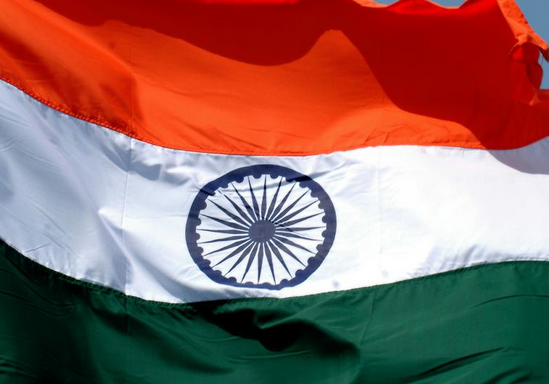
On the 15th anniversary of Irom Sharmila’s hunger strike, the International Commission of Jurists calls on the Indian government to repeal the Armed Forces Special Powers Act without further delay.
Irom Sharmila began a hunger strike in November 2000, calling for the repeal of the AFSPA, following the unlawful killing of 10 civilians by security forces purportedly acting under it in Malom.
“The AFSPA has facilitated gross human rights violations by the armed forces in the areas in which it is operational,” Sam Zarifi, Asia-Pacific Director of the ICJ said. “It is a repressive and draconian law that should have no place in today’s India”.
Once an area is declared “disturbed” under the AFSPA, armed forces are given a range of “special powers”. These include the power to arrest without warrant, to enter and search any premises, and in certain circumstances, “fire upon or otherwise use force, even to the causing of death”. These and other vaguely framed provisions give armed forces broad powers that are inconsistent with the government’s obligations to respect the right to life.
In addition to leading to many unlawful killings in the areas in which it has been in effect, the provisions of the AFSPA have also facilitated torture, rape and enforced disappearances.
“The AFSPA has created a culture of impunity, shielding security forces from accountability in India for crimes under international law, and making it impossible for victims of human rights violations to access justice”, Sam Zarifi said.
Under the AFSPA, governmental permission, or sanction, is required before any member of the armed forces can be prosecuted for crimes in a civilian court. Decisions regarding sanction take many years, and as yet, no member of the armed forces has been prosecuted in a civilian court.
The Indian government has often justified the need for the AFSPA as necessary to address terrorism and militancy in “disturbed areas”. “International law requires and experience shows that effective counter- terrorism measures must reinforce human rights, and not undermine and violate them,” said Sam Zarifi.
Calls for the repeal or amendment of the AFSPA –including from official bodies – have come from near and far for a number of years.
Several UN human rights bodies have recommended that the AFSPA be repealed or significantly amended. These include the Committee on the Elimination of Discrimination against Women (2014), the Special Rapporteur on violence against women (2014), the Special Rapporteur on extrajudicial, summary or arbitrary executions (in 2013 and again in 2015), the Special Rapporteur on the situation of human rights defenders (2012), the Committee on the Elimination of Racial Discrimination (2007), and the UN Human Rights Committee (1997).
In recent years, prominent Indian bodies have recognized the brutality of the AFSPA and echoed demands for repeal or amendment. The Justice Jeevan Reddy Committee set up by the Government of India to review the working of the AFSPA, has advocated its repeal. The Fifth Report of the Second Administrative Reforms Commission seconded this recommendation.
The Verma Commission, set up by the government following the gang rape in Delhi in 2012, called for the repeal of sanction provisions under the AFSPA as they relate to sexual offences. In 2015, a High Level Committee on the Status of Women also reportedly advocated its repeal.
In 2012, the Extra Judicial Execution Victims Family Association, Manipur (EEVFAM) filed a petition at the Supreme Court of India, alleging that between 1979 and 2012, 1528 people were extra-judicially executed by security forces in Manipur.
A court-appointed fact-finding commission – popularly known as the Santosh Hegde Commission – studied 6 of these cases, and found that the deaths were not lawful.
In its report, the Hegde Commission agreed with the observation of the Jeevan Reddy Commission, that the AFSPA had become “a symbol of oppression, an object of hate, and an instrument of discrimination and high-handedness.”
The case is still pending in the Supreme Court.
Contact:
Sam Zarifi, ICJ Asia Pacific Regional Director (Bangkok), t: +66 807819002; email: sam.zarifi(a)icj.org
Sanhita Ambast, ICJ International Legal Advisor (Delhi), t: +91 9810962193; email: Sanhita.ambast(a)icj.org
Nov 5, 2015
The ICJ has released a paper reflecting discussions on the implementation of international law and standards on sexual and gender based violence within the context of fair trial standards.
The discussions took place at an ICJ organized regional colloquium event, which took place in Swaziland in July 2015, attended by judges, lawyers, academics and other human rights defenders from Sub-Saharan Africa.
The theme of sexual and gender based violence in the context of fair trial standards focus attention on one of the prevalent challenges faced by women human rights defenders when seeking to use law and justice systems, and the ways in which laws and justice institutions may hamper or undermine their work as defenders.
Sexual and gender based violence is a persistent and universal problem that occurs globally across all geographical regions and social strata.
Yet, despite its pervasiveness gender based violence does not get the attention called for by the extent of the problem.
Participants identified a number of issues in the way the problem of sexual and gender based violence has been addressed and in how domestic legislation designed to combat the problem has been implemented.
Participants made a number of recommendations around the following areas:
- Balancing the rights of victims and accused at trial;
- Protecting the rights of children and other vulnerable victims at trial;
- Implementing international standards on sexual and gender based violence;
- National legislation on sexual and gender based violence;
- Cross-sector collaboration;
- Changing cultural attitudes; and
- Applying a gender balanced perspective.
Africa-Sexual and gender based violence-Publication-Thematic report-2015-ENG (full report in PDF)
Nov 4, 2015 | News
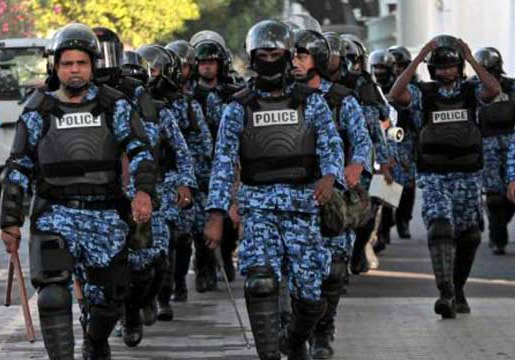
The government of Maldives must immediately revoke its suspension of human rights protections under the state of emergency declared today and restore the rule of law to the country, said the ICJ.
The Maldivian government suspended a range of constitutional protections under a 30-day state of emergency declared on 4 November, citing a threat to national security based on the allegation that “some groups are planning to use … dangerous weapons and explosives,” according to a translated version of the emergency decree obtained by the ICJ.
“The complete suspension of constitutional protections for human rights such as the right to liberty and right to free assembly goes far beyond anything that could be justified by the alleged grounds cited by the government,” said Nikhil Narayan, ICJ’s South Asia Senior Legal Adviser.
“International law strictly regulates attempts by governments to suspend or otherwise derogate from human rights on the grounds of emergency,” he added.
Article 4 of the International Covenant on Civil and Political Rights (ICCPR), to which the Maldives is a State Party, expressly permits derogations only for certain human rights, and then only ‘in time of public emergency which threatens the life of the nation’.
“Maldivian authorities have not come close to explaining how the current situation constitutes a threat to the ‘life of the nation’, the high threshold set by international law for the derogation of rights in times of emergency,” Narayan said.
According to the emergency decree, the constitutionally protected rights that have been suspended during the state of emergency are, among others:
- Article 19: “A citizen is free to engage in any conduct or activity that is not expressly prohibited by Islamic Shari’ah or by law. No control or restraint may be exercised against any person unless it is expressly authorised by law.”
- Article 24: “Everyone has the right to respect for his private and family life, his home and his private communications. Every person must respect these rights with respect to others.”
- Article 31: “Every person employed in the Maldives and all other workers have the freedom to stop work and to strike in order to protest.”
- Article 32: “Everyone has the right to freedom of peaceful assembly without prior permission of the state.”
- Article 41(a): “Every citizen has the freedom to enter, remain in and leave the Maldives, and to travel within the Maldives.”
- Article 45: “Everyone has the right not to be arbitrarily detained, arrested or imprisoned except as provided by law enacted by the People’s Majlis in accordance with Article 16 of this Constitution.”
- Article 47(a) and (b): “(a) No person shall be subject to search or seizure unless there is reasonable cause. (b) Residential property shall be inviolable and shall not be entered without the consent of the resident, except to prevent immediate and serious harm to life or property, or under the express authorisation of an order of the Court.”
“The basic prohibition against arbitrary detention and imprisonment can never be derogated from,” Narayan said.
The declaration of the state of emergency also seems to target the country’s vice president, whom the president appears to regard as a political threat. The vice president is facing impeachment proceedings for his alleged role in the boat explosion which the government claims was caused by a bomb as part of a deliberate assassination attempt.
The emergency decree reduces the period provided under Article 100 of the Maldives Constitution for the vice president to respond to the impeachment charges from 14 days to 7 days.
“There seems to be a clear political motive in arbitrarily reducing the vice president’s procedural rights in the impeachment process,” added Narayan.
Additional information
The alleged threat cited by the Maldivian government refers to the announcement that Maldivian security forces had discovered weapons and explosives in two areas, and that some additional weapons were missing.
These allegations followed the purported discovery of an explosive device near the president’s palace on Monday that, following closely on last month’s explosion on a boat carrying the president and his wife, the government claims is part of an alleged assassination attempt on the president.
The government rejected the findings of an FBI investigation into the earlier boat explosion which ruled out the possibility that it was caused by a bomb.
In August 2015, following a joint fact-finding mission to the Maldives, the ICJ and South Asians for Human Rights (SAHR) documented the breakdown of the rule of law and human rights in the Maldives in a 35-page report, Justice Adrift: Rule of Law and the Political Crisis in the Maldives.
Contact:
Nikhil Narayan, ICJ Senior Legal Adviser for South Asia, t: +977 9813187821 ; e: nikhil.narayan(a)icj.org

Nov 4, 2015
People accused of violating Pakistan’s draconian “blasphemy laws” face proceedings that are glaringly flawed, said the ICJ in a new report published today.
“Pakistan’s blasphemy laws fly in the face of Pakistan’s international legal obligations, including the duties to respect the rights of freedom of expression and freedom of religion and belief,” said Sam Zarifi, ICJ’s Asia Director. “But even worse, those facing accusations of blasphemy suffer through trials that are often fundamentally unfair.”
In the 60-page report On Trial: the Implementation of Pakistan’s Blasphemy Laws, the ICJ has documented in detail systematic and widespread fair trial violations in proceedings related to blasphemy offences in Pakistan, particularly in trial courts.
Some of the problems documented in the report include:
- Intimidation and harassment of judges and lawyers that impede on the independence of the judiciary and the right to a defense;
- Demonstrable bias and prejudice against defendants by judges during the course of blasphemy proceedings and in judgments;
- Violations of the right to effective assistance of counsel;
- Rejection of bail and prolonged pre-trial detention;
- Incompetent investigation and prosecution that do not meet due diligence requirements under the law;
- The prosecution and detention of people living with mental disabilities;
- Inhumane conditions of detention and imprisonment, including prolonged solitary confinement.
Pakistan’s laws on “offences related to religion” – sections 295-298-C of the Penal Code that are commonly known as “blasphemy laws” – include a variety of crimes including misusing religious epithets, “defiling” the Holy Quran, deliberately outraging religious sentiment, and using derogatory remarks in respect of the Prophet Muhammad.
Sentences for these offences range from fines to long terms of imprisonment, and in the case of defamation of the Prophet Muhammad (section 295-C), a mandatory death sentence.
“Section 295 is a relic of the British colonial system that lends itself to human rights violations, including in Pakistan, India, Myanmar, and elsewhere,” Zarifi said. “In Pakistan, General Zia-ul-Haq made additions to the laws that made them truly draconian.”
Based on the analysis of over 100 judgments of the high courts and courts of first instance from 1986-2015 as well as interviews with defendants in blasphemy cases, their families, and defense counsel; judges, lawyers and police officials; and human rights activists, the report found:
- In 19 out of 25 cases under section 295-C (defamation of the Prophet Muhammad) studied by the ICJ, high courts have acquitted individuals convicted for blasphemy by trial courts. Glaring procedural irregularities and mala fide complaints are the grounds for acquittal on appeal in over 80 per cent of cases;
- Even in cases that ultimately result in acquittal, blasphemy proceedings suffer from undue delay – proceedings in trial courts can take on average three years, and appeals can take even longer, more than five years on average;
- Individuals accused of blasphemy under section 295-C are frequently denied bail even though they meet requirements under the law;
- Individuals detained pending trial or convicted for blasphemy are often kept in prolonged solitary confinement, at times, over a number of years.
The report also confirms concerns recently raised by the Supreme Court of Pakistan that individuals accused of blasphemy ‘suffer beyond proportion or repair’, in the absence of adequate safeguards against misapplication or misuse of such blasphemy laws, the Geneva-based organization says.
The ICJ has also made a number of recommendations to the Pakistani executive, legislative and judicial branches to address the defects in the framing of the blasphemy laws as well as of the shortcomings at the investigative, prosecutorial, procedural, administrative and judicial levels highlighted in the report to minimize the misuse of the blasphemy laws and ensure that those accused of blasphemy have a fair chance at defending themselves.
“It’s time Pakistan and other countries got rid of these noxious laws, which continue to stifle freedom of expression and freedom of religion or belief, and instead promote extremism and intolerance,” Zarifi added.
Contact:
Sam Zarifi, ICJ Asia Pacific Regional Director (Bangkok), t: +66 807819002; e: sam.zarifi(a)icj.org
Pakistan-On Trial Blasphemy Laws-Publications-Thematic Reports-2015-ENG (full report in PDF)
Nov 3, 2015
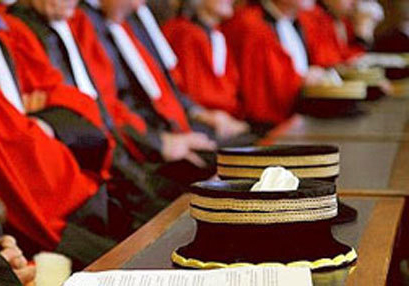
In a memorandum published today, the ICJ is calling on the Tunisian Parliament to revise the draft law on the Constitutional Court with a view to ensuring its full compliance with international standards, in particular those on judicial independence.
The establishment of a truly independent Constitutional Court in Tunisia holds out the promise of strengthening the rule of law by enhancing protection of the rights guaranteed under the new Constitution, the ICJ notes.
But to achieve these aims, key aspects of the draft law must be changed, the Geneva-based organization stresses.
“Tunisian law makers must amend the draft law to provide the Court with the necessary guarantees of independence, broader functions and to ensure individuals easier access to the Court, whose function is to protect their rights under Tunisia’s new Constitution,” said Said Benarbia, Director of the ICJ Middle East and North Africa Programme.
The draft law must also be revised to ensure that all members of the Court are appointed because of their legal expertise and integrity, and that its composition includes women and reflects the diversity of the population of Tunisia, the ICJ says.
Ensuring that a body composed of at least a majority of judges will select the individuals to be appointed to the Court will bolster the Court’s independence.
“The judges of the Court should be selected in a clear and open process, led by judges, that ensures that the individuals appointed to sit on the Court are chosen for their skills and not on the basis of their political affiliations or loyalties,” Benarbia added.
Additional safeguards against the possibility of removal for unjustified reasons and which ensure fair disciplinary procedures are needed to ensure the guardians of the Constitution may rule without fear or favour, the ICJ adds.
The draft law should be amended so as to more clearly provide the Court with a role as a check on measures taken by the executive branch of government.
It is also crucial that provisions of the draft law be added to broaden the Court’s mandate and increase individuals’ access to it, the ICJ underlines.
For example, unnecessary restrictions, such as any specific accreditation for lawyers should be removed, and provisions authorizing the Court to accept third parties as interveners and amicus curiae to increase the basis of information on which the Court decides a case should be added.
Contact:
Theo Boutruche, Legal Adviser of the ICJ Middle East and North Africa Programme, t: +96 170 888 961, e: theo.boutruche(a)icj.org
Tunisia-Draft Law Const Court-Advocacy-Analysis Brief-2015-ENG (full memo in PDF, English)
Tunisia-Draft Law Const Ct-News-Press releases-2015-ARA (full press release in PDF, Arabic)
Tunisia-Draft Law Const Court-Advocacy-Analysis Brief-2015-ARA (full memo in PDF, Arabic)