Jul 8, 2015 | News
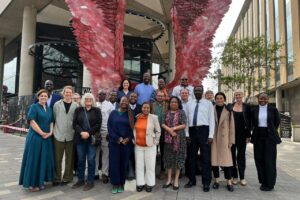
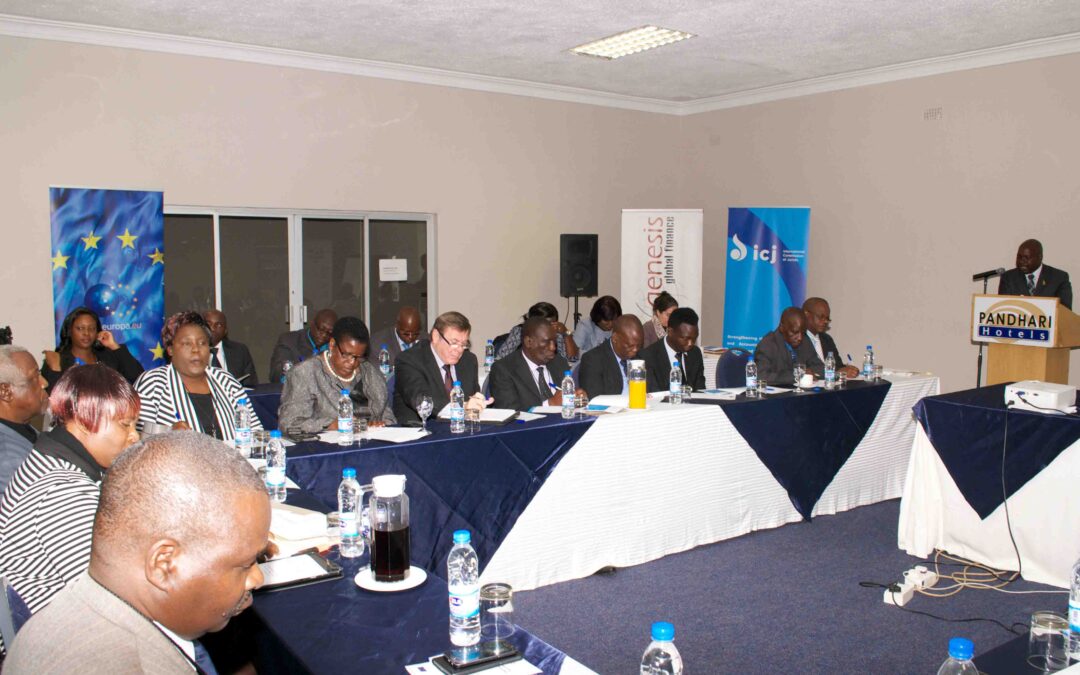
The National Prosecuting Authority (NPA) of Zimbabwe convened its first strategic planning workshop with technical support from the ICJ, under recently launched European Union (EU) funded project to contribute to an improvement in administration of justice in Zimbabwe.
The strategic planning workshop took place in Harare from 6 to 8 July 2015.
The NPA is established under section 259 of the 2013 Constitution as a separate, independent and accountable institution responsible for instituting and undertaking criminal prosecutions on behalf of the State, promoting a just and fair system for all persons approaching the courts and protecting the rights of the arrested and detained persons as provided for by the Constitution.
The strategic plan will allow the NPA to set its vision, objectives and including stakeholders’ expectations as guided by the Constitution and the National Prosecuting Authority Act for the next 5 years.
The NPA held this strategic plan as its first ever strategic stakeholder’s engagement since its establishment under the Constitution in May 2013.
To validate and ground the strategic plan and outputs, the NPA invited civil society organizations, law based institutions, human rights advocates, women lawyers associations, legal aid institutions, the Parliament Thematic and Standing Committee representatives, law enforcement agencies, and law professors, among others.
The Judicial Service Commission and Law Society of Zimbabwe, ICJ’s partners in EU funded project on improvement in the administration of justice, also attended the NPA strategic planning session.
The strategic plan will inform further interventions and activities for strengthening the observance of the rule of law, fair trial and access to justice by the NPA with support from ICJ’s EU funded project.
Once developed and adopted, the strategic plan will further open opportunities for other technical partnerships and funding opportunities for the NPA.
Contact:
Arnold Tsunga, ICJ Regional Director for Africa, t: +27 73 131 8411, e: arnold.tsunga(a)icj.org

Jul 8, 2015
Today, the ICJ presented its written submissions to the European Court of Human Rights in the case of A.N. v. France (Application No. 12956/15).
The case arises from the French authorities’ dismissal of an asylum application.
The ICJ’s submissions focus on:
- the obligation to ensure that the risk upon removal be assessed so as to guarantee that the protection of the Convention for the Protection of Human Rights and Fundamental Freedoms (‘the Convention’) be practical and effective;
- whether requiring coerced, including self-enforced, suppression of a fundamental aspect of one’s identity — as enforced concealment of one’s same-sex sexual orientation entails — is compatible with the Convention, in particular, Article 3;
- whether the criminalization of consensual same-sex sexual conduct gives rise to a real risk of Article 3 prohibited treatment, thus triggering non-refoulement obligations under that provision of the Convention; and
- the significance of the EU asylum acquis and the case-law of the Court of Justice of the European Union (CJEU), including the joined cases Minister voor Immigratie en Asiel v X, Y and Z v Minister voor Immigratie en Asiel.
In its observations, the ICJ also drew the Court’s attention to the CJEU’s judgment in A, B, and C v Staatssecretaris van Veiligheid en Justitie, as well as to recent Belgian and Italian superior courts’ reported decisions that have found in favour of Senegalese homosexual applicants based on, inter alia, the risk to the individuals concerned arising from Senegal’s criminalization of consensual same-sex relations and of becoming victim of homophobic crimes, including at the hands of family members, from which there is no effective state protection.
France-A.N.v.FRANCE AMICUS-Advocacy-legal submissions-2015-ENG (full text in PDF)

Jul 7, 2015 | E-bulletin on counter-terrorism & human rights, News
Read the 94th issue of ICJ’s monthly newsletter on proposed and actual changes in counter-terrorism laws, policies and practices and their impact on human rights at the national, regional and international levels. The E-Bulletin on Counter-Terrorism and Human...

Jul 7, 2015 | Advocacy
The ICJ and 15 other NGOs participating in the first session of the OEIWG to elaborate a treaty on business and human rights highlighted that in principle all conduct by all types of business enterprises, whether local or transnational, shall be addressed in the legally binding instrument.
The footnote in the preamble should not be interpreted as limiting in any way the scope of possible discussions in the Open Ended Intergovernmental Working Group (OEIWG) or any analysis or recommendations that may be reported back to the Council on a future treaty.
Business enterprises that do not have any or any significant transnational operations no doubt are capable of and in many instances have been responsible for human rights abuses no less serious in scale or severity than those of transnational businesses.
The people whose human rights are abused directly or indirectly by businesses are unlikely to distinguish whether the business enterprise that causes them harm has transnational ownership or operations; nor are affected people likely to excuse abuses they suffer from a “local” business simply because the entity lacks a transnational element.
From the point of view of those whose human rights are affected by business activities, the key consideration is not the formal character of the business entity, but instead the their practical access to effective remedy and reparation for the harm they have suffered.
If a treaty is going to take the view and needs of those adversely affected by business activity as a central concern, it must address all business enterprises that can potentially carry out abuses and not only on those with transnational links.
The statement can be downloaded here: Joint Oral Statement on Scope v.2
Jul 6, 2015
The ICJ and 39 other international NGOs have sent a letter to Cambodian Prime Minister Hun Sen calling on the withdrawal of a law which appears designed to restrict the legitimate activities of civil society and human rights defenders.
The ICJ and 31 other organizations also write a letter to Heng Samrin, the President of the Cambodian National Assembly.
The full text of both letters can be downloaded here, in PDF format:
Cambodia-Letter to Hun Sen Withdraw LANGO-Advocacy-Open Letters-2015-ENG
Cambodia-Letter to Heng Samrin Withdraw LANGO-Advocacy-Open Letters-2015-ENG
Related article:
Cambodia: ICJ and other rights groups urge end to NGO law