Sep 13, 2019 | Events, News
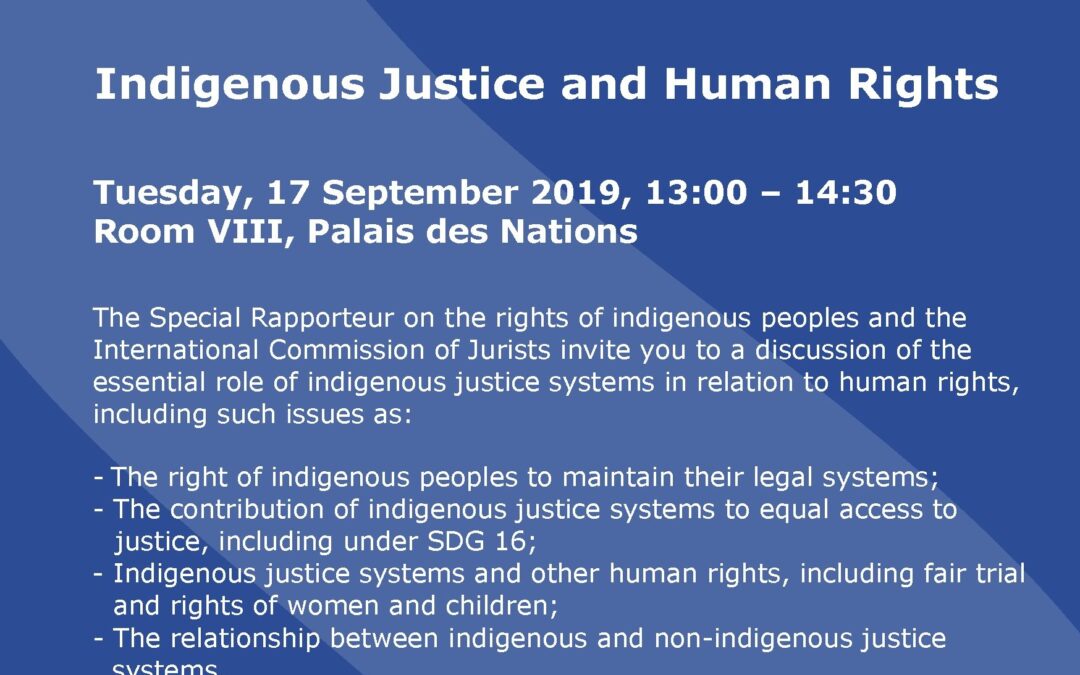
The ICJ and the UN Special Rapporteur on the rights of indigenous peoples are organizing a panel discussion on indigenous justice and human rights, at the UN Human Rights Council session in Geneva.
The event takes place Tuesday, 17 September 2019, at 13:00 – 14:30, Room VIII, in the Palais des Nations.
The event will discuss, among other aspects:
- The right of indigenous peoples to maintain their legal systems;
- The contribution of indigenous justice systems to equal access to justice, including under SDG 16;
- Indigenous justice systems and other human rights, including fair trial and rights of women and children;
- The relationship between indigenous and non-indigenous justice systems.
The panel will feature:
- Victoria Tauli Corpuz, UN Special Rapporteur on the rights of indigenous peoples.
- Ilaria Bottigliero, IDLO Director of Policy, Research and Learning.
- Jovita Tzul Tzul, indigenous lawyer from Guatemala.
- Matt Pollard, ICJ Senior Legal Adviser.
The event will allow for dynamic exchange between panelists and attendees, on current initiatives including: the Special Rapporteur’s report on indigenous justice systems; ICJ’s global initiative on indigenous and other traditional or customary justice systems; and IDLO’s series of publications titled ‘Navigating Complex Pathways to Justice: Engagement with Customary and Informal Justice Systems’, which aim to advance policy dialogue and distil lessons from programming and research to help realize SDG 16.
Spanish-English interpretation will be available.
A flyer in PDF format can be downloaded here: SideEvent-IndigenousJusticeandHumanRights
For more info contact un(a)icj.org
Sep 13, 2019 | News
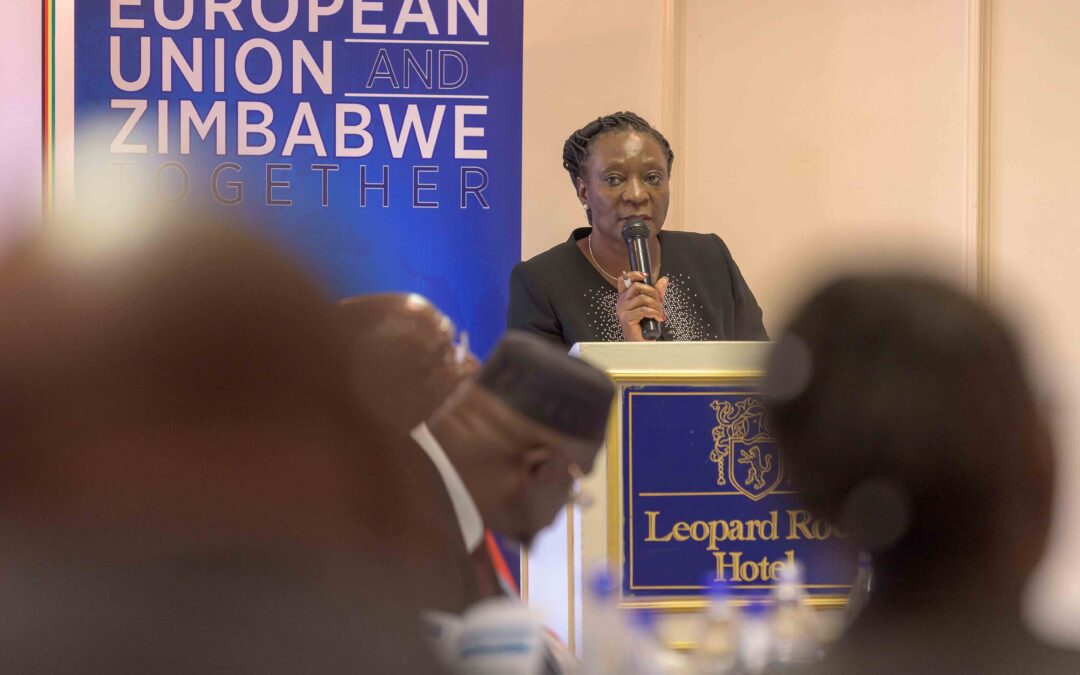
The ICJ, in collaboration with the Judicial Service Commission (JSC) of the Republic of Zimbabwe, has concluded a two-day Judicial Symposium on the theme ‘Core-Skilling: Towards a Human Rights Jurisprudence’, organized to mark the end of the second judicial term in the Zimbabwe judicial calendar.
In his remarks at the opening of the symposium, ICJ’s Africa Regional Director, Mr Arnold Tsunga, noted that the theme of the symposium had been carefully chosen to enhance discourse on national transformation in an atmosphere of respect for the rule of law and international human rights. He noted further that the symposium was to critique the concept of transformative adjudication and explore its relevance to applying the Constitution of Zimbabwe as an instrument and framework for national transformation.
Noting that the ICJ appreciated its on-going partnership with the JSC in Zimbabwe, Mr Tsunga expressed the hope that the training and symposium would enhance the effectiveness of the judiciary with a view to improving access to justice for all, especially victims of human rights violations, women, marginalized and vulnerable groups and contributing to attainment of the United Nations Sustainable Development Goals number 16 and 5.
On his part, in his opening remarks the Chief Justice of the Republic of Zimbabwe, the Hon. Chief Justice Malaba, noted that the ICJ-JSC organized symposia have provided a platform for continuous improvement of judicial work and networking amongst judges.
Chief Justice Malaba observed that these meetings have enabled judges to dialogue on how to improve the effectiveness and efficiency in the justice delivery system. He noted that this year’s theme on human rights jurisprudence lies at the heart of an independent and effective judiciary.
He further noted that the current Constitution of Zimbabwe has a better framework and potential for the protection of human rights than previous constitutions. Accordingly, he expressed the view that the judiciary has a more important role to play in protecting and safeguarding human rights.
He highlighted that the judiciary’s commitment to the protection of human rights is evidenced in local jurisprudence in respect to human rights cases, where several important judgments have been given by all the courts.
Chief Justice Malaba used the opportunity to give updates on developments which were taking place within the JSC, particularly in its research centre, in the High Court, in the Fiscal and Tax Appeals Division, amendments to the Judicial Laws which were gazetted on the 9th of September 2019.
Chief Justice Malaba stated that in performance appraisal, the JSC has constituted a Performance and Training Committee led by the Deputy Chief Justice to come up with a system that enables accurate measurement of the performance of judges.
Responding to issues of accountability raised by the Chief Justice, ICJ’s Mr Tsunga urged the JSC to develop and adopt a system to track, monitor, document and communicate results arising from these trainings, as the results would help the ICJ, and international development partners to evaluate the usefulness of the trainings and efforts at justice sector reforms.
This year’s symposium was attended by 16 female and 27 male judges from the Constitutional Court, Supreme Court, High Court, Labour Court and Administrative Court of Zimbabwe.
Sep 11, 2019 | Advocacy, Non-legal submissions
The ICJ today reiterated its call for the UN Human Rights Council to establish an international independent Commission of Inquiry on the human rights situation in Venezuela.
The statement, delivered in a general debate at the Council following the oral update by the UN High Commissioner for Human Rights mandated by the previous Human Rights Council resolution on Venezuela, read as follows:
“Mr. President,
The International Commission of Jurists (ICJ) welcomes the High Commissioner for Human Rights’ oral update on the situation in Venezuela.
The update and previous reporting point to a wide range of human rights violations, which continue to occur inside the country. These include arbitrary deprivation of liberty, serious violations of indigenous people’s rights, excessive use of force by security forces and attacks on freedom of expression, among others, as well as the impacts of laws, policies and practices that have adversely affected the independence of the judiciary.
Over the years, the International Commission of Jurists has monitored and documented the lack of judicial independence in Venezuela and the absence of accountability for those responsible for gross human rights violations.
The ICJ urges the Human Rights Council to establish an independent Commission of Inquiry on the human rights situation in Venezuela, given that Venezuelan authorities have been unable or unwilling to pursue effective domestic accountability, and judicial and prosecutorial mechanisms in the country lack independence and impartiality.
The Commission of Inquiry should be mandated to investigate reports of violations of international human rights law in Venezuela, establish the facts and circumstances of violations committed since at least 2014, and identify those responsible with a view to contributing to full accountability for all violations, including those that constitute crimes under international law.
Thank you.”
The oral update of the UN Human Commissioner for Human Rights, on the situation in Venezuela, may be accessed here.
In August 2019, the ICJ joined other NGOs in calling for an international commission of inquiry on Venezuela.
States are expected to discuss a further resolution on Venezuela at the current Human Rights Council session, for adoption on 26 or 27 September.
Sep 10, 2019 | Events, News
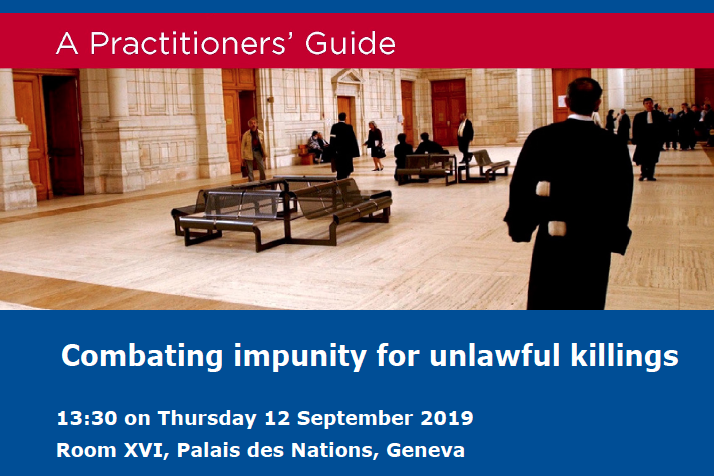
The ICJ invites you to a discussion of new tools to assist investigation and accountability for extrajudicial, summary or arbitrary executions, and other potentially unlawful deaths. The event takes place on Thursday, 12 September, 13:30, Room XVI, at the Palais des Nations in Geneva.
ICJ’s new Practitioners’ Guide No 14 on the Investigation and Prosecution of Unlawful Death helps legal practitioners ensure that investigation and accountability processes are implemented in accordance with international human rights law.
The Guide elaborates on the revised Minnesota Protocol on the Investigation of Potentially Unlawful Death (2016), a set of practical standards and guidelines that was updated by former UN Special Rapporteur on extrajudicial, summary or arbitrary executions, Christof Heyns, and published by the Office of the United Nations High Commissioner for Human Rights (OHCHR) in 2017.
The panel discussion will highlight key elements of the Protocol and Practitioners Guide, and their relevance to cases such as the 2016 killing of political commentator, Kem Ley, in Cambodia and the 2018 killing of Saudi Journalist, Jamal Khashoggi in Turkey.
Speakers
- Agnes Callamard, Special Rapporteur on extrajudicial, summary or arbitrary executions (by video conference, TBC).
- Stuart Maslen, Honorary Professor, Centre for Human Rights, University of Pretoria.
- Kingsley Abbott, Senior Legal Adviser & Coordinator of the ICJ’s Global Accountability Initiative.
Moderator
- Carolina Villadiego, ICJ Legal and Policy Adviser, Latin America
Printed copies of the ICJ’s Practitioners’ Guide No 14 on the Investigation and Prosecution of Unlawful Death will be available.
A flyer for the event is available here.
*** Room XVI is on the 5th floor of Building A, behind the Assembly Hall, accessible by the elevators at the Salle des Pas Perdus. Details here.
Sep 10, 2019 | Новости, Статьи
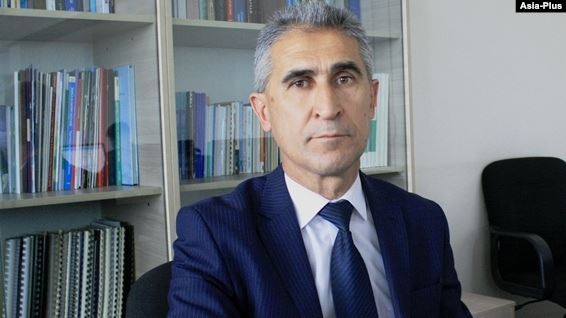
Сегодня Международная комиссия юристов (МКЮ) выразила обеспокоенность в связи с актами запугивания в отношении председателя Союза адвокатов Республики Таджикистан Саидбека Нуритдинова и еще 15 адвокатов со стороны государственного ведомства по борьбе с коррупцией.
По всей видимости, оказываемое давление связано с тем, что адвокаты осуществляют защиту Абдулазиза Абдурахмонзода. Дело по обвинению адвоката в мошенничестве рассматривается судом, и имеются сведения о том, что в ходе содержания под стражей он подвергся жестокому обращению со стороны сотрудников Агентства по финансовому контролю и борьбе с коррупцией Республики Таджикистан (Антикоррупционное ведомство).
После того, как адвокаты, осуществляющие защиту Абдурахмонзода, заявили о жестоком обращении, судья Ахмадзода Фарогат из суда района Сино г. Душанбе, которая рассматривает данное дело, обратилась в Генеральную прокуратуру с просьбой провести расследование по указанным жалобам.
После возбуждения проверки по заявлениям на жестокое обращение глава Антикоррупционного ведомства в г. Душанбе предположительно направил запросы в ряд районных судов г. Душанбе, чтобы получить информацию о гражданских и уголовных делах, в которых Саидбек Нуритдинов принимал участие в качестве адвоката. Сообщается о том, что были запрошены такие данные, как имена и адреса клиентов; предмет гражданских дел и сведения об обвинениях, предъявленных подзащитным. Кроме того, МКЮ стало известно о том, что судья Ахмадзода Фарогат по запросу Антикоррупционного ведомства передала последнему список с именами пятнадцати адвокатов, а также копии их ордеров на представление интересов подзащитного.
МКЮ отмечает, что хотя указанные сведения не являются конфиденциальными, ранее подобные проверки, предпринятые Антикоррупционным ведомством, уже привели к уголовному преследованию и осуждению адвокатов.
«В данном случае в дело адвоката, привлеченного к уголовной ответственности, вступили его коллеги, включая руководителя Союза адвокатов, что соответствует профессиональной этике адвоката, – отметил Тимур Шакиров, старший правовой советник МКЮ. – Их участие в деле в качестве защитников соответствует международным стандартам, касающимся роли юристов, а также национальному законодательству Таджикистана».
«Если расследование связано с участием адвокатов в деле Абдурахмонзода, то оно может рассматриваться как средство запугивания адвокатов. В таком случае оно должно быть прекращено, а адвокатам должна быть предоставлена возможность действовать свободно и добросовестно, в соответствии с национальным законодательством и международным правом и стандартами, касающимися роли юристов», – добавил Шакиров.
Общие сведения
17 апреля 2019 года в отношении адвоката Абдулазиза Абдурахмонзода было возбуждено уголовное дело по статье 247 ч.2 Уголовного кодекса (Мошенничество). В ходе судебного процесса, на котором присутствовал наблюдатель от МКЮ, Абдурахмонзода настаивал на своей невиновности и жаловался на нарушения уголовно-процессуального законодательства в ходе предварительного расследования: возбуждение уголовного дела в отсутствие правовых оснований (сообщается о том, что в материалах дела отсутствует заявления потерпевшего о мошеннических действиях, совершенных Абдурахмонзода); нарушение хода предварительного расследования и представление в суд доказательств, полученных заведомо незаконными средствами. МКЮ продолжает наблюдать за судебным процессом по данному делу.
В соответствии с Основными принципами ООН, касающимися роли юристов, правительства должны обеспечить, чтобы юристы «могли выполнять все свои профессиональные обязанности в обстановке, свободной от угроз, препятствий, запугивания или неоправданного вмешательства» и «не подвергались судебному преследованию и судебным, административным, экономическим или другим санкциям за любые действия, совершенные в соответствии с признанными профессиональными обязанностями, нормами и этикой, а также угрозам такого преследования и санкций» (принцип 16).
Кроме того, вмешательство или воспрепятствование деятельности адвоката запрещено Законом Таджикистана «Об адвокатах и адвокатской деятельности». Согласно Закону, адвокат не может быть привлечен к ответственности за какое-либо мнение, выраженное им(ею) в рамках адвокатской деятельности, за исключением действий, которые могут составить преступление. Не допускается истребование у адвокатов или союзов адвокатов сведений, связанных с предоставлением юридической помощи по конкретным делам.
Проект Всеобщей декларации независимости правосудия («Декларация Сингви»), который наделяет ассоциацию адвокатов полномочиями по защите независимости адвокатов, предусматривает, что ассоциация «незамедлительно уведомляется о причинах и правовых основаниях для задержания или заключения под стражу любого члена ассоциации или любого адвоката, практикующего в пределах ее юрисдикции». В таком случае ассоциации адвокатов «имеют право, в лице своего председателя или иного представителя, следить за ходом производства по делу и, в частности, обеспечивать соблюдение профессиональной тайны и независимости профессии».