Apr 28, 2015 | Advocacy, News, Non-legal submissions
The ICJ is urging the European Council to immediately act to take effective measures to protect the lives of migrants at sea, after it failed to respond adequately to the repeated tragedies at a special meeting held on 23 April.
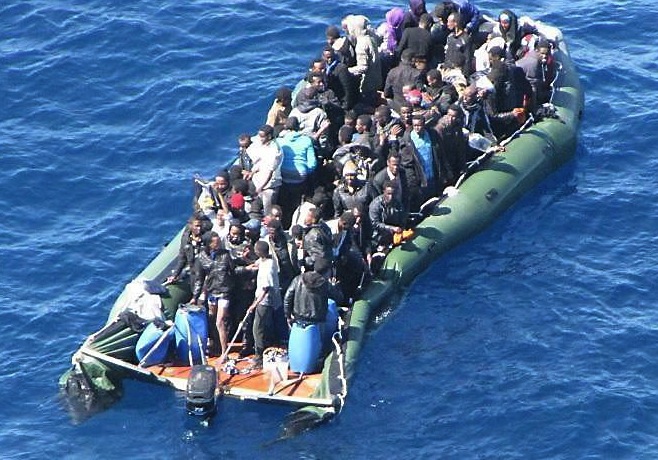
The special meeting of the European Council was called after the sinking of a boat in the Libyan Search and Rescue Zone left at least 700 persons dead. Since then, other incidents have brought the death toll in the Mediterranean to more than 1,000 in one week.
In its statement, released following the meeting, the European Council directed the EU institutions and the Member States to take a set of actions with the stated aim of preventing further loss of lives at sea.
The ICJ is deeply saddened by these tragedies that are the concern not only of the Mediterranean region and of Europe, but of the whole of the international community.
It is deeply regrettable that the reaction of the European Union and its Member States at a moment of such gravity has concentrated on presevering security of borders, and returning migrants, rather than on humanitarian and human rights concerns, particularly strengthening search and rescue operations in order to save lives, the ICJ says.
Although the European Council has affirmed that its “immediate priority is to prevent further loss of life at sea”, the measures envisaged in this statement are not designed to achieve this aim. Instead, they reflect a continuing security-based policy, centred on the need to “fight the traffickers” and on combatting irregular migration.
The ICJ supports the call of the UN Special Rapporteur on the rights of migrants, Fraçois Crépeau, urging the EU and Member States to focus their migration policies on the introduction of safe and legal migration routes and combatting the black labour market.
The framing of migration policies around narrowly perceived “security” interests and the strengthening of border controls creates a situation in which smugglers provide the only route for many migrants and this is leading to serious abuses of human rights. Migrants, many of whom are fleeing war or persecution, should not have to resort to such means of reaching safety in Europe.
“Strengthening our presence at sea”
While welcoming the increase in financial support for Frontex operations Triton and Poseidon with a view to foster its search and rescue capabilities, the ICJ is concerned that this commitment in the context of operations presently aimed to “control irregular migration flows towards the territory of the Member States of the EU and to tackle cross-border crime” risks marginalizing rescue at sea within these operations.
Resources must also be allocated directly to increase search and rescue capacities at the EU and national levels, in order to ensure that the human rights of migrants are protected, and that lives are saved.
“Fighting traffickers in accordance with international law”
The commitment in the statement to increase intelligence and police co-operation with third countries as a means of fighting trafficking, without corresponding human rights protections. Any such co-operation must be carried out in compliance with the EU Charter of Fundamental Rights, the European Convention on Human Rights and other international human rights law and standards.
Without strong safeguards in law and in practice, there is a risk that such co-operation may lead to exchange of information or evidence with, or transfer of suspects to, States in which human rights abuses are systematic or widespread or where particular individuals may be at risk.
This may lead to violations of human rights, including of the right to asylum, the right to the protection of non-refoulement, the right to be free from torture and ill-treatment and the right life.
In addition, engagement in intelligence and police cooperation, while an important tool in effective law enforcement, risks, if not undertaken with adequate safeguards, leading to infringements to the right to privacy, the right to data protection, and the prohibition of collective expulsions.
All of these rights are protected by the EU Charter of Fundamental Rights, as well as by international human rights treaties binding on EU Member States.
Regarding the commitment to take systematic action to capture and destroy vessels used by traffickers in the Mediterranean, the ICJ is also seriously concerned that any such any action risks to be in violation of international law and could lead to a risk of loss of lives.
Finally, the proposal to use Europol to detect and request removal of internet content used by “traffickers” to attract migrants and refugees may lack a sufficient legal basis in EU or national law.
While welcoming the statement’s acknowledgment that such measures must be in accordance with national constitutions, the ICJ recalls that they must also be in compliance with the EU Charter and international human rights law.
Any new measures must include safeguards and limitations to ensure that human rights, including the rights to freedom of expression and association are fully respected.
“Preventing illegal migration flows”
The ICJ is concerned that the stepping up of cooperation initiatives envisaged in the statement, with the aim of preventing irregular migration, poses a risk of complicity by the EU, i.e. aiding or assisting in violations of human rights by third countries.
The ICJ urges that any co-operation with third countries in preventing irregular migration must be in compliance with the EU Charter of Fundamental Rights and international human rights law.
Furthermore, the ICJ is particularly concerned by the decision of the European Council to promote further the readmission to third countries of “unauthorised economic migrants” and to order the establishment of a new return programme for the rapid return of “illegal migrants” from frontline member states, co-ordinated by Frontex.
While the content of the new fast return programme proposed by the Council remains unclear, as does the definition of “rapid return,” the ICJ considers that such a programme is likely to increase the possibility of European Union complicity in violations of the protections of non-refoulement, the right to asylum, the prohibition of collective expulsions and the right to an effective remedy, against its obligations under the EU Charter of Fundamental Rights.
The ICJ is concerned that the rapidity of the return could be linked to certain national expulsion practices that are at odds with the Member States’ obligations under the EU Charter and international human rights and refugee law. Furthermore, the ICJ recalls that under article 9 of the Frontex Regulation, Frontex, in its joint return operations, is not able to assess the compliance of return decisions on the merits. This lack of control increases the risk of aiding or assisting in serious violations of human rights.
“Reinforcing internal solidarity and responsibility”
Finally, in regard to the commitment to provide emergency aid to frontline Member States, the ICJ supports the rapid deployment of a long-term, sustainable programme of aid to such states, directed at the provision of search and rescue operations in the Mediterranean, and designed to safeguard the lives and rights of migrants.
The ICJ also recalls that, consistent with the dictates of the UN charter and international human rights treaties, States are under a general obligation to engage in international cooperation and assistance to protect human rights.
Conclusion
The ICJ deplores the fact that, following the tragic death of more than 1,000 people in one week, the EU Member States and the European Council, have failed to act meaningfully to protect the lives of migrants by taking decisive measures to protect the right to life of those crossing the Mediterranean.
In prioritizing border security and returns over search and rescue, the Member States of the European Union have demonstrated a reckless disregard for the human rights of migrants fleeing war, persecution or dire standards of living.
The ICJ urges the EU Member States and the EU institutions to take swift action, centred on the protection of lives and rights of migrants, in order to uphold the EU founding values of the rule of law and human rights, affirmed in article 2 of the Treaty on the European Union.
Apr 27, 2015 | News
The ICJ urged the Government of Indonesia today to stop the imminent execution of nine persons convicted of drug-related offenses.
The ICJ emphasized that the death penalty constitutes a denial of the right to life and freedom from cruel, inhuman, or degrading punishment.
Emerlynne Gil, ICJ’s Senior Legal Advisor, said: “The government is trying to send the message that it is forcefully cracking down on crime, especially on drug-related offenses. Extinguishing the lives of nine people will almost certainly not serve to reduce crime, but it will clearly subvert human rights and the rule of law.”
Recent studies have called into question the notion of any meaningful deterrent effect of capital punishment on the commission of crimes, the ICJ says.
“Indonesia, by imposing the death penalty on those convicted in drugs related cases, is violating its obligations under the International Covenant on Civil and Political Rights,” Gil added.
Indonesia is a State Party to the ICCPR, having acceded to it in 2006.
The ICJ opposes capital punishment in all cases without exception.
In line with the plea by the UN General Assembly in repeated resolutions, the ICJ calls on the Government of Indonesia, as a first step, to establish a moratorium with a view of abolishing the death penalty in the near future.
Background
Nine persons are scheduled to be executed in the next few days: Myuran Sukumaran (Australia), Andrew Chan (Australia), Mary Jane Veloso (Philippines), Rodrigo Gularte (Brazil), Sylvester Obiekwe Nwolise (Nigeria), Okwudili Oyatanze (Nigeria), Martin Anderson (Ghana), Zainal Abidin (Indonesia), and Rahem Agbaje (Nigeria).
Last month, the UN Human Rights Committee strongly criticized Indonesia for its failure to respond to the Committee’s call in 2013 to stop executing prisoners for drug-related crimes.
After a regular review of Indonesia’s human rights record, the Committee in August 2013 urged the State to reinstate the de facto moratorium on the death penalty and to ensure that, if capital punishment was maintained, it was only for the most serious crimes, which do not include drug-related offences.
In December 2014, the UN General Assembly adopted a resolution, for the fifth time since 2007, emphasizing that that the use of the death penalty undermines human dignity and calling on those countries that maintain the death penalty to establish a moratorium on its use with a view to its abolition. A majority of 117 UN Member States voted in favor of a worldwide moratorium on executions as a step towards abolition of the death penalty, with only 37 opposed.
Contact:
Emerlynne Gil, ICJ Senior Legal Adviser, in Bangkok, t: +66840923575, e: emerlynne.gil(a)icj.org
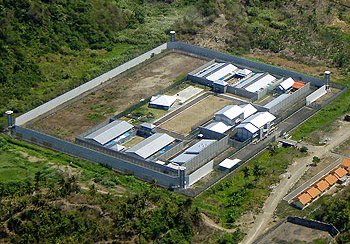
Photo: aerial view of a prison on Nusakambangang, the island where the executions take place.

Apr 24, 2015 | News
The ICJ today called on the Egyptian authorities to ensure a prompt, impartial and effective investigation into the deaths of two lawyers, Imam Afifi and Karim Hamdi, who recently died while in police custody in Mataria police station.
The ICJ is deeply concerned that the deaths of Imam Afifi and Karim Hamdi while in police custody are part of a widespread and sustained campaign targeting hundreds of lawyers since 2013, including those defending political opponents of the regime and human rights activists, as well as lawyers exercising their rights to freedom of assembly and expression.
“The Egyptian authorities must effectively investigate and prosecute all those responsible for the alleged torture and death of Imam Afifi and Karim Hamdi while in police custody and must hold accountable any person responsible for wrongful conduct ,” said Said Benarbia, Director of the ICJ MENA Programme.
“The authorities must bring an end to their ongoing campaign of harassing and persecuting lawyers, including arbitrary arrests and prosecutions, for simply discharging their professional duties or for speaking out against human rights violations,” he added.
Under international standards, lawyers should be able to carry out their professional duties free from hindrance, intimidation, harassment or interference, says the ICJ.
They should not be identified with their clients or their clients’ causes or subject to arbitrary arrest and prosecutions as a result of the discharge of their functions.
Background:
On 10 April, Imam Afifi, a 63-year old lawyer, was assaulted and arrested in the Mataria neighborhood where a demonstration was taking place against the government.
He was detained in Mataria police station where he was allegedly subjected to torture, including a severe beating to his head.
On 11 April, he was transferred from the police station to Mataria hospital.
A medical report from the same day, to which the ICJ had access, indicates that Imam Afifi was admitted to the hospital with a massive trauma to the head. He died in hospital on 22 April.
On 22 February, another lawyer, Karim Hamdi, was arrested and questioned on suspicion of belonging to the Muslim Brotherhood, membership of which has been outlawed, and participating in an unauthorized demonstration against the government.
While in police custody in Mataria police station, he was reportedly severely beaten on his neck, chest and abdomen. He died two days later after being transferred to hospital.
Following a complaint by the Bar Association to the prosecutor’s office, two members of the National Security Agency were charged with torturing and murdering Karim Hamdi.
Additional information:
According to information available to the ICJ, attacks against lawyers since 2013 include the following:
On 23 April 2015, six lawyers were summoned for interrogation in relation to their participation in a demonstration on 9 March to protest against the death of Mr Karim Hamdi.
The lawyers also challenged the prosecutor’s decision to prohibit anyone from reporting on the investigation into Mr Hamdi’s case.
On 23 March 2015, human rights lawyer, Azza Soliman, was charged with breaching public order and security under the 2013 Demonstration Law after voluntarily providing testimony against police involved in the killing of Social People’s Alliance party activist, Shaimaa El Sabbagh, on 24 January 2015.
The Qasr El Nile Prosecution Office in Cairo subsequently changed her status from witness to defendant.
On 9 February 2015, a human rights lawyer, Ms Mahienour El Massry, was sentenced to two years imprisonment after she attended the El-Ramel police station in Alexandria, in March 2013, in order to defend demonstrators.
The charges against her included “insulting government employees in the performance of their duties”, “insulting representatives of the authorities” and “attempting to break into a police station”.
Three lawyers, Basma Zahran, Mahmoud Bilal and Oussama Al Mahdi, were referred for investigation, on 3 September 2014, for “disrupting and causing trouble” during trial proceedings for insisting that their client, the human rights activist Ahmed Douma, seated in a sound-proof glass cage, should be heard.
On 5 July 2013, Abdel Men’em Abdel Maqsoud was arrested while attempting to attend the interrogation of his clients, deputy Secretary General of the Muslim Brotherhood, Rachad Bayoumi, and Mohamed Saad Al Katanah.
He was detained before being released on bail on 2 September 2014.
Contact:
Alice Goodenough, Legal Adviser of the ICJ Middle East and North Africa Programme, t: 44 7815 570 834, e: alice.goodenough(a)icj.org
Nader Diab, Associate Legal Adviser of the ICJ Middle East and North Africa Programme, t: 41 229 793 804, e: nader.diab(a)icj.org
Egypt-Deaths of lawyers-News-Press release-2015-ARA (full text of Arabic version in PDF)

Apr 23, 2015 | News
The ICJ is concerned at the recent arrest of Swaziland High Court Judges Jacobus Annandale and Mpendulo Simelane, the High Court Registrar Fikile Nhlabatsi and the Minister of Justice Sibusiso Shongwe.
The four detainees appeared today before High Court Justice Qinisile Mabuza (photo).
Justice Minister Sibusiso Shongwe was denied bail and remains detained, while the other two High Court Judges and the registrar were released on bail.
The judges, registrar and Minister of Justice are all facing various charges related to corruption and obstructing the course of justice.
The ICJ is also aware that police are presently seeking to arrest Chief Justice Michael Ramodibedi, and that they have surrounded his place of residence.
The ICJ has received information alleging that the police have cut off the electricity and water and have actively prevented people from bringing food supplies to him and his family.
The ICJ urges the authorities in Swaziland to immediately investigate the situation of the Chief Justice and, if the allegations are substantiated, to immediately restore supply of essential services to the Chief Justices family, denied in violation of rights guaranteed under the Swaziland’s Constitution and its international legal obligations.
“The arrest and attempted arrest of several judges, and a High Court Registrar as in this case, invariably raises questions of separation of powers and the independence of the judiciary,” said Wilder Tayler Secretary General of the ICJ.
“The ICJ therefore calls on the authorities in Swaziland to conduct themselves with rigorous adherence to rule of law principles, the separation of powers between the executive and the judiciary. They must also do so with strict respect for international human rights law,” he added.
The ICJ emphasizes that the Chief Justice and the other judges are entitled as everyone else in Swaziland to freedom from arbitrary detention and the right to a fair trial guaranteed under international law.
These protections include the right to be informed the reasons for their arrest and the nature of any criminal charges, the right to representation by a lawyer of their choice and the right to be considered for bail if appropriate.
If no crime is alleged, but serious professional misconduct is suspected, then arrest and detention is inappropriate.
Additional information:
The ICJ has had longstanding concerns with the state of the independence of the judiciary and legal profession and the fair administration of the justice in Swaziland.
The ICJ has recently intervened in a case involving the conviction of prominent lawyer Thulani Maseko in an unfair trial.
For an ICJ analysis of the independence of the judiciary and legal profession in Swaziland, go here.
Contact:
Arnold Tsunga, Regional Director, ICJ’s Africa Programme, t: +27 731318411, e: arnold.tsunga(a)icj.org

Apr 23, 2015
An opinion piece by James Tager, a Satter Fellow from Harvard Law School currently working with the ICJ on research focusing on business and human rights in the Asean.
This week, the Asean People’s Forum (APF), an annual convergence of civil society groups coming from all Asean countries, will be held in Kuala Lumpur.
For several days, Kuala Lumpur will be hosting discussions on a number of broad issues of concern, including human rights, development, trade, and the environment.
One way in which the APF is significant is that it constitutes one of very few opportunities for civil society voices to be heard at the regional level.
Asean has always maintained a rather dismissive and condescending approach when dealing with civil society organizations (CSOs).
This approach is very much apparent in the closed and opaque manner in which the Asean Intergovernmental Commission on Human Rights (AICHR) approaches its work.
This has been evident in its development of important regional human rights instruments, such as the Asean Human Rights Declaration (AHRD) and the various thematic studies the AICHR promised to undertake for each year of its Five-Year Work Plan.
Marginalization of civil society has also been reflected in the recently adopted, but not formally released, Guidelines on the AICHR’s Relations with Civil Society Organizations.
One of the AICHR’s thematic studies, on the question of corporate social responsibility, was initiated in December 2011.
Civil society groups, including some with expertise in this area, made queries to the AICHR and offered to contribute to the development of the study.
But with no AICHR procedures in place for CSOs to comment, these offers were essentially ignored.
The development of the study was kept under wraps, with meetings on this topic largely involving handpicked experts, some of whom were not independent.
The resulting Baseline Study on Corporate Social Responsibility and Human Rights in Asean was completed in June of 2014.
It has since been released to the public and posted on the AICHR’s website.
The released document exposes the results of the AICHR’s dismissive approach to the views of civil society.
The study is disappointing in its lack of meaningful content. Several of its aims – most of which were vague to begin with – are either only vaguely addressed or seemingly forgotten, including any discussion of ‘mechanisms allowing effective access to remedy’ for victims of corporate rights abuses.
There is little critical evaluation of the effectiveness of corporate or governmental policies: at one point, the reader is reassured that although one company has been “frequently accused of being a human rights violator,” the company has a good human rights policy described on its website.
The study’s individual country reports may be more substantial, but that is impossible to know as – almost a year since the study was reportedly completed – they have still not been publicly released.
This lack of transparency is astonishing for an intergovernmental regional human rights organization.
Building a foundation on air?
Reading this document, one could forget that entire Asean communities have had their lives and livelihoods damaged by corporate projects, from hydropower dams to coal mines to deforestation.
The AICHR claims that this study could serve as “the foundation for the establishment of a common framework to accelerate the promotion of corporate social responsibility and human rights in the region.”
To build a human rights framework on this foundation, however, is to build on air.
This work did not have to be an empty exercise for the AICHR, which could have built upon well-developed research such as two reports released by civil society groups: The Asian Forum for Human Rights and Development’s (Forum-Asia) Corporate Accountability in Asean: A Human Rights-Based Approach, and the Human Rights Resource Centre’s (HRRC) Business and Human Rights in Asean: A Baseline Study.
The AICHR’s baseline study itself makes repeated reference to these two reports, but refrains from affirming their sensible recommendations.
The two reports contain page upon page of specific and comprehensive analysis that the official AICHR study appears to lack.
These civil society reports also address the framework of corporate accountability, not just voluntary corporate social responsibility.
If the AICHR wants to create a common framework for human rights in the region, whether for corporate behavior or for other fields, it must collaborate with civil society groups that are already doing this important work.
But if the AICHR decides to keep CSOs at arms-length – rather than invite them to be partners in promoting and protecting human rights within Asean – there will surely be more examples of AICHR studies which say little and which mean less.
Malaysia recently took a significant step in developing a national-level policy on business and human rights, with the launch of its Strategic Framework on a National Action Plan on Business and Human Rights.
One notable aspect of the Framework is its provisions identifying how civil society groups can be actively involved in developing the National Action Plan, by using the document to guide their own actions and by providing input to help shape the Plan’s policy recommendations.
Malaysia’s acknowledgment of the positive role that civil society plays in developing and strengthening human rights policies should be commended.
But more than this, Malaysia should use its time as Asean chair to bring this acknowledgment to a regional level.
Malaysia’s chairpersonship includes this opportunity to set a strong foundation for the next several years of human rights protection and promotion.
Involvement of civil society, and commitment to a significant agenda, will help ensure that this foundation is solid.