Sep 2, 2019 | News
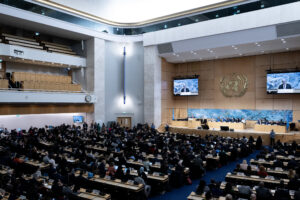
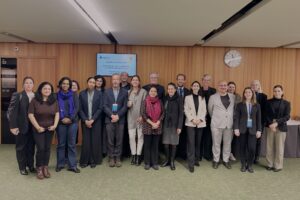
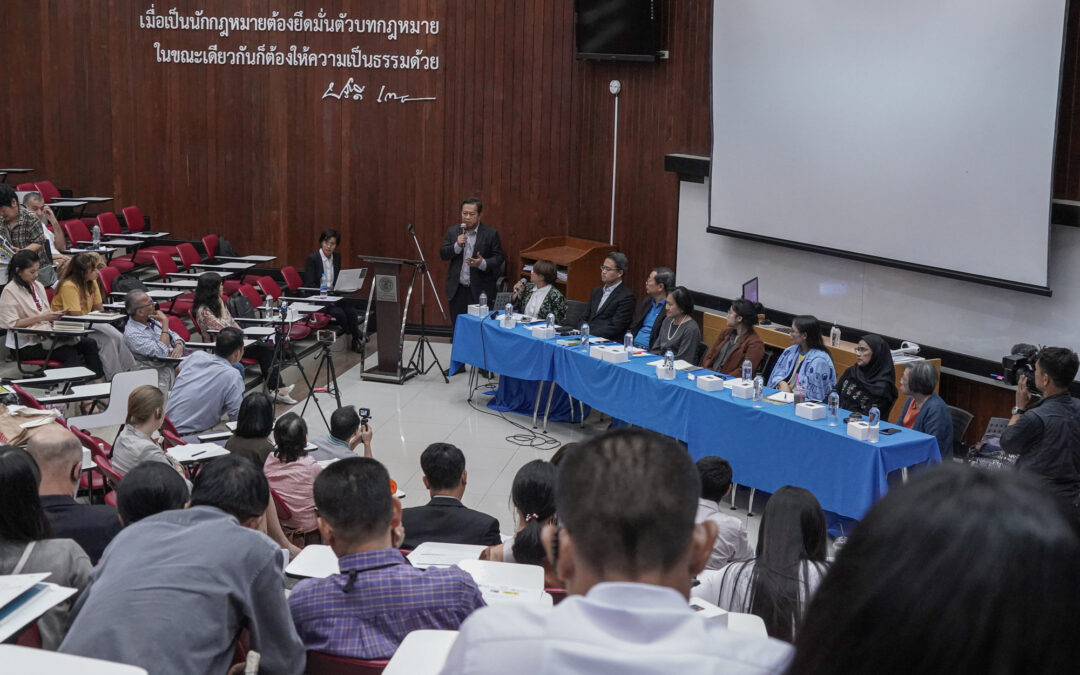
On 30 August 2019, on the occasion of the International Day of the Disappeared, the ICJ co-hosted an art exhibition, a closed-door round table discussion and a public forum titled “Enforced Disappearance and the Absence of a Law” to commemorate individuals who were subject to apparent enforced disappearance and whose fates remains unknown.
The closed-door round table discussion provided an opportunity for victims’ voices to be heard on challenges faced in gaining access to justice and redress. Relatives spoke about the challenges they face, mostly about the poor progress of investigations into the allegations of enforced disappearance against their relatives.
Sanhawan Srisod, the ICJ’s Legal Adviser, during the closed-door round table discussion, gave a briefing about the latest developments on the Draft Prevention and Suppression of Torture and Enforced Disappearance Act. The legislation had been dropped by the National Legislative Assembly (NLA) prior to the 2019 national elections, but is currently before the President of the National Assembly, pending his consideration to bring it before the House of Representative.
The public forum focused on the development and progress of the investigations into enforced disappearances and evaluated the progress in developing legislation in Thailand to address this critical issue.
During the public forum, Sanhawan Srisod highlighted that the Draft Act would, if adopted, fail to bring the law into full compliance with Thailand’s international human rights obligations. The key concerns include:
- Incomplete definitions of the crimes of enforced disappearance;
- The continuous nature of the crime of enforced disappearance that was not recognized in the Draft Act;
- Inadequacy of provisions on the command responsibility;
- Possibility that the military court may have power to try and adjudicate enforced disappearance cases; and
- Insufficient safeguards against enforced disappearances.
Background
Thailand has signed but has yet to ratify the International Convention for the Protection of All Persons from Enforced Disappearance.
According to their 2018 annual report, the UN Working Group on Enforced or Involuntary Disappearances has recorded 86 outstanding cases of alleged enforced disappearance in Thailand.
The Thai government, through the recently set up Committee Managing Complaints for Torture and Enforced Disappearance Cases, says it is currently conducting investigations in connection with this list.
Closed-door round table discussion session included the following speakers: Ms. Phinnapha Phrueksaphan, wife of Mr. Porlajee Billy Rakchongcharoen; Ms. Angkhana Neelapaijit, wife of Mr. Somchai Neelapaijit; Ms. Pranee Danwattananusorn, wife of Mr. Surachai Danwattananusorn; Mr. Adisorn Pho-Arn, son of Mr. Thanong Pho-Arn; Ms. Kanya Theerawut, mother of Mr. Siam Theerawut; Ms. Suphab Kamlae, wife of Mr. Den Kamlae; Mr. Prasert Laosophapan, brother of Mr. Kamon Laosophapan; Ms. Shui-Meng Ng, wife of Mr. Sombath Somphone from Lao PDR; Mr. Truong Son Nguyen, Regional Campaigner, Amnesty International Vietnam; Representatives, indigenous Lahu Community, Chiang Mai province; and Ms. Sanhawan Srisod, Legal Adviser, International Commission of Jurists
Public forum session included the following speakers: Ms. Shui-Meng Ng, representative of Asian Federation Against Involuntary Disappearances; Ms. Angkhana Neelapaijit, wife of Mr. Somchai Neelapaijit; Ms. Phinnapha Phrueksaphan, wife of Mr. Porlajee Billy Rakchongcharoen; Mr. Angsukate Wisutwattanasak, Director of Security Cases Department 1, Department of Special Investigation (DSI); Ms. Nongporn Roongpetchwong, Human Rights Expert, Rights and Liberties Protection Department, Ministry of Justice; and Ms. Sanhawan Srisod, Legal Adviser, International Commission of Jurists. The opening session included remarks from Mr. Giuseppe Busini, Deputy Head of Mission of the Delegation of the European Union to Thailand, and Mr. Surapong Kongchantuk, President of the Cross-Cultural Foundation. The closing session included remarks from Mr. Badar Farrukh, Human Rights Officer, OHCHR Regional Representative for South East Asia.
See Also:
Summary of the ICJ analysis of the Draft Act (PDF)
Thailand: ICJ submits recommendations on draft law on torture and enforced disappearance amendments
Sep 2, 2019 | News
In a statement, the ICJ, along with various other local and international civil society organizations and affected communities demand redress for forced evictions following visit of African Commission member and ICJ Commissioner Jamesina King.
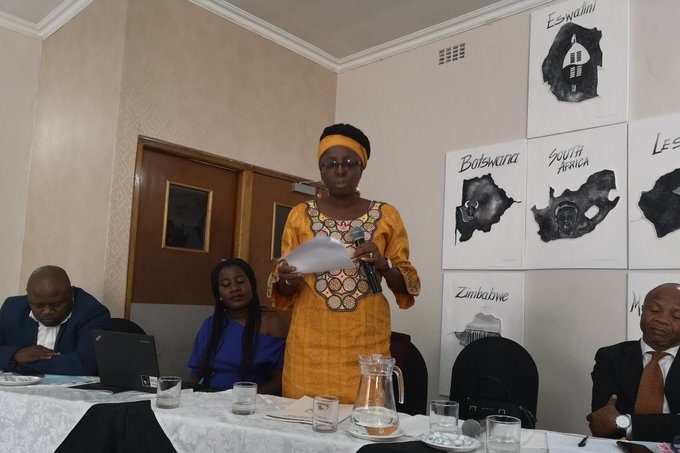
On 27-28 August 2019 members of local communities who have endured or are at imminent risk of forced evictions in Eswatini met in Manzini to continue their advocacy efforts against forced and mass evictions. These stakeholders called on the responsible government authorities in Eswatini to take immediate measures to address the practice of forced evictions in violation of the right to housing.
The Eswatini land governance system fails Swazi people. Most land is held by the King in “trust”, other Swazi people live on title-deed land without formal recognition. Swazi people do not enjoy security of tenure and are vulnerable to forced evictions. Under international human rights law, forced evictions may only happen as a last resort, in terms of a court order, once all other feasible alternatives have been exhausted and appropriate procedural protections are in place.
Some participants in the workshop had previously submitted a report that documents forced evictions in Eswatini and engaged with the African Commission on Human and Peoples’ Rights (ACHPR) at its 63rd Ordinary Session in Banjul, Gambia in October 2018. As a follow-up, the community representatives invited ACHPR Commissioner Jamesina King to participate in their meeting in Manzini in August 2019.
“It is very obvious that the laws of Eswatini have to evolve to provide these communities with legal protection and to put an end to forced evictions,” Commissioner King told the communities. King also called for the government to declare a moratorium on forced evictions until laws have been enacted which provide sufficient protection for the right to adequate housing.
The meeting, which was facilitated and coordinated in partnership with the Foundation for Socio-Economic Justice, the International Commission of Jurists, Amnesty International and the Southern African Litigation Centre, was also attended by local civil society organizations, religious groups and concerned individuals. The participants also had the opportunity of engaging with the Eswatini Commission on Human Rights and Public Administration.
Participants included representatives from communities recently affected by evictions from affected communities, from Nokwane and the Malkerns. Representatives from communities facing imminent eviction in Mbondzela, Gege in the Shiselweni region, Vuvulane, Madonsa and Sigombeni also participated.
Participants demanded the following in conclusion of the engagement:
- A public, time bound commitment to a moratorium on forced and mass evictions.
- The enactment of legislation that explicitly prohibits forced and mass evictions in all circumstances and sets out safeguards that must be strictly followed before any eviction is carried out.
- The provision of reparations for those families who have already been subjected to forced evictions in the absence of sufficient legal protections.
“The ICJ sees the Minister of Justice Pholile Dlamini-Shakantu’s willingness to discuss forced evictions with Commissioner King as a welcome indication of the government’s openness to constructive input by the African Commission. It is hoped that the government takes heed of struggles of community members, and acts swiftly to put an end to forced evictions in Eswatini”, said Arnold Tsunga, ICJ’s Africa Director.
Find the full statement, which is endorsed by the Foundation for Socio-Economic Justice, the International Commission of Jurists, Amnesty International and the Southern African Litigation Centre here;
Eswatini-Swazi Government to End Forced Evictions-News-Webstory-2019-ENG
For more information contact:
Tim Fish Hodgson timothy.hodgson(a)icj.org +27 82 871 9905

Aug 30, 2019
The purpose of the new ICJ Guide on the Enforcement and Adjudication of Economic, Social and Cultural Rights (ESCR) in South Africa is to act as a resource to legal practitioners and human rights defenders on both South African constitutional standards and international human rights law standards on ESCR.
The Guide may also be useful to international human rights practitioners and domestic and international practitioners in other jurisdictions.
ICJ Commissioner Jamesina King, who formally launched the guide at Constitutional Hill in South Africa said:
“As an advocate for the protection of human rights defenders, as a member of the quasi-judicial African Commission on Human and Peoples’ Rights, and as a sitting judge in my home country Sierra Leone I am passionate about the role of such commissions, tribunals and forums in ensuring access to justice for abuses and violations of ESCR. In my view, international human rights law rightly recognizes that a right (and a corresponding obligation) without an effective remedy is not a meaningful right at all.”
While, to some extent, South African law does reflect international human rights law standards on ESCR, the specifics of international standards are practically useful to South African practitioners and human rights defenders.
The Guide can be used by judges, magistrates, advocates, lawyers, governmental administrators, legal advisors, paralegals, legal researchers, human rights defenders and academics.
Additionally, the Guide should be useful to international human rights practitioners and domestic and international practitioners in other jurisdictions.
Basing its analysis of ESCR in the present South African context, the Guide may also assist the South African government in evaluating South Africa’s compliance with its international human rights obligations. This is especially important given the UN Committee on Economic, Social and Cultural Rights concluding observations to South Africa issued in October 2018.
In summary, the Guide comprehensively details the following:
- How and why international human rights law must be considered in the interpretation of the South African Constitution;
- What the meaning of certain key operational provisions relating to ESCR are which are common to domestic, regional and international instruments. Such provisions include detail explanations of the meanings of:
- “progressive realization” and “immediate realization”;
- the “minimum core” obligations of states;
- “reasonableness” as an evaluation standard for rights violations; and
- the broader meaning of “available resources” both as positive budgetary obligation and a potential state defense for failing to secure ESCR.
- The implications of the need for equality and non-discrimination in access to ESCR, using examples of, in particular;
- Gendered ESCR needs and rights;
- Disability-conscious understandings of ESCR; and
- ESCR protections as specified to the circumstances of LGBTIQ persons.
- The application of ESCR obligations to “private”, “non-state” entities including but not limited to businesses.
- The remedies that are available to victims of ESCR violations on a domestic, regional and international level.
The Guide includes references to African and international standards throughout, weaving them into the sophisticated jurisprudence and body of knowledge developed in the South African context. It aims to add some value to the already large body of excellent publications on ESCR in South Africa.
Download
South Africa-Guide ESCR-Publications-Thematic Report-2019-ENG
Aug 30, 2019 | News
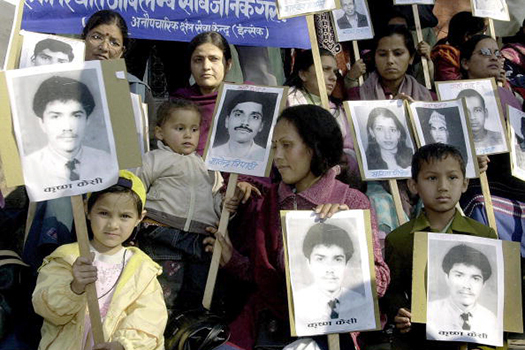
On the occasion of the International Day of the Victims of Enforced Disappearances, Advocacy Forum-Nepal, the Terai Human Rights Defenders Alliance (THRD), and the ICJ voiced their concern about the Government’s failure to provide justice for the victims of the country’s decade-long armed conflict, including victims of enforced disappearance.
The organizations also remembered the victims of enforced disappearances in Nepal and recognized the unceasing efforts of victims and their families and others advocating and campaigning for truth and justice for serious human rights violations in Nepal for over a decade.
Nepal faced a protracted internal armed conflict from 1996 to 2006. In the decade-long conflict, serious human rights violations and abuses were committed by both sides: the Government, including the Royal Nepal Army; and the Communist Party of Nepal (Maoist). Approximately 1,300 people were “disappeared” during the conflict. The fate of many of “disappeared” is yet to be known.
The Comprehensive Peace Agreement (CPA) put an end to the conflict on 21 November 2006, with both sides agreeing to hold perpetrators of human rights violations and abuses accountable and provide access to effective remedies and reparation to victims, including a commitment to publicize the fate or whereabouts of “disappeared”. However, nearly 13 years after the signing of the Comprehensive Peace Agreement in November 2006, these promises remain unfulfilled.
The Truth and Reconciliation Commission and Commission on Investigation of Disappeared Persons, both established in February 2015, have failed to resolve the many thousands of complaints brought to them by victims and their families, and have yet to publicize their findings. Furthermore, in 2015, the Supreme Court ruled the 2014 Act creating the legal framework for the Commissions to be unconstitutional, due in part to the inclusion of provisions that could be used to grant amnesty to perpetrators. In February 2019, the tenure of the commissions was extended to 2020, but the terms of the commissioners expired on 13 April 2019. As of August 2019, no formal replacements had been announced, though a committee to recommend appointments has been established. The ICJ and other organizations have called for a suspension of the current appointment process until amendments to the legal framework are made, and a more consultative and transparent process is initiated.
Nepal has also enacted a new Penal Code, with effect from August 2018. For the first time, the Penal Code recognized enforced disappearance as a distinct crime. While the intent behind this measure is commendable, the law does not meet Nepal’s obligations concerning crimes under international law. In particular, the definition of enforced disappearance falls short of international standards; the crime of enforced disappearance is not absolutely prohibited; provisions related to superior and command responsibility are inadequate; and the penalties for enforced disappearance are inconsistent with international standards. The provisions will apply retroactively to the more than 1,300 conflict era cases.
The organizations urged the Government of Nepal to:
- Amend the 2014 Transitional Justice Act to ensure it is consistent with international human rights standards and Supreme Court rulings, including removing amnesty for perpetrators;
- Revise the criminal code to bring it in line with international standards. At the minimum, this should include:
- amending the definition of enforced disappearances to bring it in line with Nepal’s international obligations and the Convention on the Protection of All Persons from Enforced Disappearance (CED)
- revising the penalty provisions in the Criminal Code Bill to comply with relevant provisions of the CED and other international law and standards
- removing the statute of limitations for enforced disappearance cases
- Ratify International Convention for the Protection of All Persons from Enforced Disappearances;
- Publicize the findings of the CIEDP; and
- Ensure that in Nepal’s legal system, the victims of enforced disappearance, including family members of “disappeared” persons, have the right to obtain reparation and prompt, fair and adequate compensation; and they can effectively exercise that right in practice.
Contact:
For the ICJ: Frederick Rawski, ICJ Asia-Pacific Director, t: +66 64 478 1121; e: frederick.rawski(a)icj.org
Background:
The International Day of the Victims of Enforced Disappearances falls on 30 August every year. Nepal is bound by international legal obligations under the International Covenant on Civil and Political Rights (ICCPR) and Convention against Torture and Other Cruel, Inhuman or Degrading Treatment or Punishment (CAT) – both of which it has acceded to – to investigate, prosecute, punish and provide remedies and reparation for the crimes of torture, other acts of ill-treatment, and enforced disappearance.
Nepal-International Day Enforced Disappearances-Press releases-2019-NEP (Story in Nepali)

Aug 30, 2019 | Advocacy, Non-legal submissions
The ICJ has presented information to the UN Human Rights Committee in preparation for the Committee’s examination of the eighth periodic report of Ukraine under the International Covenant on Civil and Political Rights (ICCPR).
In this submission, the ICJ draws the Committee’s attention to the situation with the security and independence of the legal profession and Ukraine’s compliance with and implementation of its obligations under Articles 2, 6 and 14 of the ICCPR, as well as the UN Basic Principles on the Role of Lawyers.
The ICJ stresses that attacks on lawyers are likely to lead not only to violations the rights of the individual lawyers concerned, but also to violations of the rights of the clients they represent, including the right to a fair trial (Article 14 ICCPR), the right to liberty (Article 9 ICCPR), the right to freedom from torture or other ill-treatment (Article 7 ICCPR), and the right to an effective remedy (Article 2.3 ICCPR) as attacks on lawyers may, in turn, hinder the provision of effective legal representation.
Ukraine-List of Issues-Advocacy-non legal submission-2019-ENG (full submission, in PDF)