Oct 3, 2014 | Artículos, Noticias
Este communicado sigue una nueva visita a San Juan Sacatepéquez, con el objeto de observar la situación de derechos humanos en dicho municipio.
La Comisión Internacional de Juristas a la comunidad nacional e internacional expresa:
1. Con fecha 28 de septiembre del presente año la CIJ llevó a cabo una nueva visita a San Juan Sacatepéquez, con el objeto de observar la situación de derechos humanos en dicho municipio, a raíz del establecimiento de un estado de prevención por el Organismo Ejecutivo. La CIJ tuvo la oportunidad de entrevistarse con dirigentes en Santa Fe Ocaña y Pilar II, quienes manifestaron que desde el establecimiento del estado de prevención, han sido afectados otros derechos tales como los derechos de las mujeres, el derecho a la educación, el derecho al desarrollo, el derecho a la salud ante las dificultades de movilidad en casos de emergencia, los derechos de la niñez y el derecho a la libertad de culto.
2. La CIJ lamenta que dicho estado de prevención esté afectando el ejercicio de otros derechos y permitiendo que se lleven a cabo diferentes violaciones por parte de las fuerzas de la Policía Nacional Civil (PNC) y de las fuerzas del Ejército de Guatemala. Entre las denuncias recibidas se pueden citar:
a) Las actividades religiosas han sido suspendidas y esto les impide celebrar diferentes fiestas de los santos de las comunidades;
b) Las mujeres del lugar sufren acoso sexual y tanto policías como soldados les hacen comentarios ofensivos, insinuaciones sexuales y en general, molestan a las mujeres con propuestas de tipo sexual;
c) Algunos niños y niñas no están acudiendo a la escuela, ya que tienen temor que algo pueda sucederles con tanto policía y tanto militar en los caminos;
d) La comercialización de flores se ha visto afectada, lo cual repercute negativamente en su economía;
e) Miembros de la Policía Nacional Civil entran a sus casas exigiendo que les den tortillas o alimentos;
f) La presencia militar y policial es desproporcionada y considerable; no instalaron los sanitarios suficientes, ni tomaron medidas de higiene cuando llegaron a las comunidades; esto provoca que utilicenen forma abusiva los terrenos de los comunitarios;
3.cLa CIJ pide a las autoridades que no se prorrogue el estado de prevención en San Juan Sacatepéquez, porque viola el principio de proporcionalidad y de estricta necesidad y porque se fundamenta en una Ley de Orden Público que no recoge los estándares internacionales. De llegarse a prorrogar, la CIJ considera que el nivel de conflictividad puede aumentar en una forma alarmante y que dicha violencia afectará principalmente a la población civil que en forma pacífica y legítima defiende sus derechos.
4. La CIJ considera que dado el nivel de tensión que existe y el número de efectivos militares y policiales, en cualquier momento puede iniciarse un conflicto de dimensiones muy negativas para las comunidades.
5. La CIJ lamenta que se esté acusando al dirigente comunitario Daniel Pascual y al diputado Amílcar Pop de ser los “instigadores” y “quienes provocan la violencia en el municipio”. Estas acusaciones infundadas, lejos de resolver el problema, abonan más elementos para que el conflicto crezca, se perpetúe y se desarrolle. Además, provoca una campaña de odio que afecta seriamente los derechos de estas dos personas, poniendo en riesgo su integridad física.
6. La CIJ considera que para resolver esta crisis, deberían tomarse como mínimo las siguientes medidas:
a) Que la Comisión Internacional contra la Impunidad (CICIG) y las autoridades de seguridad y justicia del Estado de Guatemala,inicien de manera inmediata una investigación objetiva e imparcial, que permita con la mayor rapidez posible, individualizar la responsabilidad de las personas involucradas en hechos de violencia y desarticular los cuerpos ilegales y aparatos clandestinos de seguridad que vienen operando en la zona desde hace ya varios años;
b) Que se establezca una mesa de diálogo entre las partes en conflicto, es decir entre la empresa privada que impulsa un mega proyecto y laconstrucción de una carretera en la región y los dirigentes comunitarios que se oponen a dicho proyecto, con la mediación internacional de un experto o experta de un organismo especializado como la Organización de los Estados Americanos o la Organización de las Naciones Unidas. Una primer tarea de esta mesa sería establecer por consenso entre las partes, una agenda para el diálogo; las autoridades del Organismo Ejecutivo deberían ser parte de la mesa y no coordinar, ni moderar el diálogo;
c) Que no se prorrogue el estado de prevención, ya que la CIJ insiste en los peligros que pueden derivarse de la prórroga del estado de prevención.

Oct 2, 2014
The International Commission of Jurists submitted today its contribution to the European Commission in the framework of the public consultation on the renewal of the EU Internal Security Strategy (“ISS”).
The contribution provides recommendations on two questions posed by the consultation, relating to (1) actions at EU level in the next five years, and (2) what is needed to safeguard European citizens when developing future EU security actions. Its starting point for this paper is the need to give continued and increased priority to protection of human rights and the rule of law, which must be central to the activities and policies of the strategy as well as security objectives themselves.
The first European Union’s ISS (“Towards a European Security Model”) was adopted in 2010 by the European Council, following the entry into force of the Lisbon Treaty and the Stockholm Programme in the Area of Freedom, Security and Justice.
In this submission, the ICJ made the following recommendations.
- The future ISS must be centred on human rights and the rule of law. In the context of a wider EU fundamental rights strategy, it must include protection of fundamental rights and the rule of law as a security objective, and must strive to ensure compliance with fundamental rights and principles of rule of law in all security related laws, policies and practices.
- The future ISS should clarify its objectives on “border management”, ensuring that issues of migration, including asylum, are not represented mainly as security issues, but as matters primarily concerned with the protection of human rights. The EU must ensure better protection of human rights in “border management”, and this should be reflected in the ISS.
- Data protection of all individuals subject to EU jurisdiction and/or affected by EU policies must be prioritized under the ISS, since large-scale violation of privacy rights poses a serious threat to the protection of rights of privacy and data protection, and therefore to security, within the EU.
- The ISS should critically evaluate its counter-terrorism strategies and the counterterrorism activities of the Member States, ensuring that fundamental rights and the rule of law are protected, in particular in regard to securing accountability and reparation for complicity in rendition and secret detention practices.
- The ISS should also include a security objective relating to justice and the rule of law, as a basis for further EU legislative protection for fair trial rights.
- The proposed European Public Prosecutor’s Office (EPPO) can play a potentially significant in fighting corruption. It will remain important to clarify the specific aim of the EPPO to ensure safeguards for human rights and the rule of law, including by providing appropriate guarantees for respect of fundamental rights.
EU-ISSSubmission-Advocacy-LegalSubmission-2014-eng (full text in PDF)
Oct 2, 2014
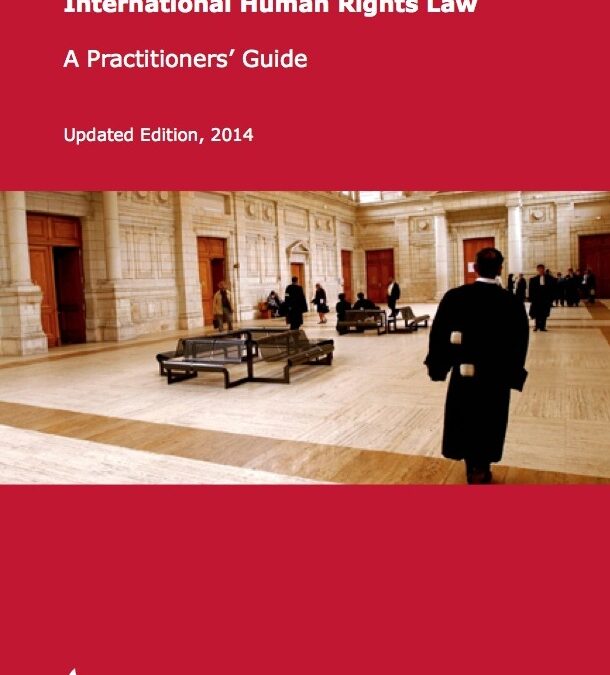
The ICJ published today the 2014 update of its Practitioners Guide no. 6 on Migration and International Human Rights Law.
The Practitioners Guide on Migration and International Human Rights Law analyses the protection afforded to migrants by international law and the means to implement it at national and international levels.
The Guide synthesises and clarifies international standards on key issues, in particular:
- the rights and procedures connected to the way migrants enter a country and their status in the country of destination;
- human rights and refugee law constraints on expulsion;
- the human rights and refugee law rights linked to expulsion procedures;
- the rights and guarantees for administrative detention of migrants;
- rights connected to work and labour; and
- rights to education, to the highest attainable standard of health, to adequate housing, to water, to food, and to social security.
Universal-MigrationHRlaw-PG no 6-Publications-Practitioners’Guide-2014-eng (full text of the second edition in English, PDF)
universal-pg-6-migration-publications-practitionners-guides-series-2016-rus (full text of the second edition in Russian, PDF)
Universal-migration and international human rights law-practitioners guide-2014-gre (full text of the second edition in Greek, PDF)
Universal-PG 6 Migration-Publications-Practitionners’ Guides Series-2016-ser (full text of the second edition in Serbian, PDF)
Universal-migration and international human rights law-practitioners guide-2011-ita (full text of the first edition in Italian, PDF)
Universal-migration and international human rights law-practitioners guide-2011-eng (full text of the first edition in English, PDF)

Oct 1, 2014
The ICJ has submitted information to the UN Committee on Economic, Social and Cultural Rights in preparation for the Committee’s examination of the third periodic report of Ireland under the International Covenant on Economic, Social and Cultural Rights (ICESCR).
During its pre-sessional working group meeting in December 2014, the Committee will adopt a ‘List of Issues’ for the examination in June 2015 of the third periodic report of Ireland under ICESCR. To assist the Committee in preparation of its List of Issues, the ICJ’s submission raises issues concerning access to safe and legal abortion in Ireland.
Ireland-CESCR-LOIsubmission-LegalSubmission-2014-ENG