Oct 1, 2014
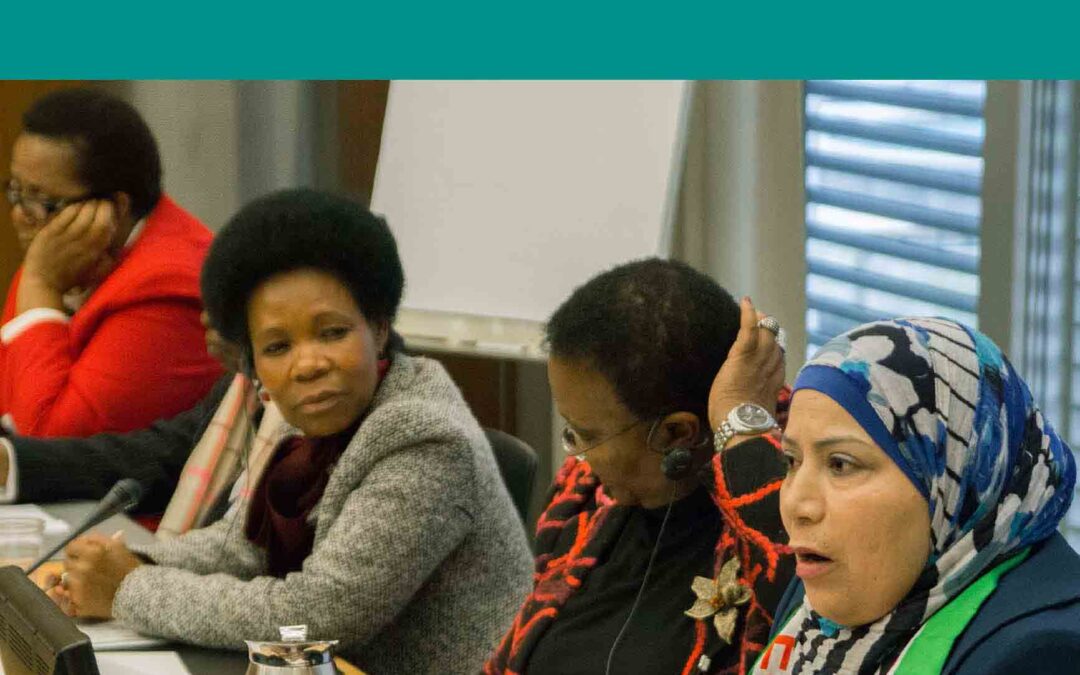
The present publication, no. 1 in the “Geneva Forum Series”, brings together materials related to the 2013 Geneva Forum on women and the judiciary.
Discussions focused on overcoming obstacles to women’s full and equal participation in the judiciary, and possible links to the better protection of women’s human rights by the judiciary.
The publication opens with highlights of the discussions in Geneva.
A second paper integrates the insights of the Geneva discussions together with findings from earlier regional colloquia in Tanzania and Tunisia. Finally, short snapshots are provided of the situation for women and the judiciary in six jurisdictions: Jordan, Kenya, Saudi Arabia, Tanzania, Tunisia and Uganda.
The ICJ has convened the Geneva Forum of Judges and Lawyers each year since 2010.
Organized by the ICJ’s Centre for the Independence of Judges and Lawyers, the Forum gathers legal practitioners from around the world for dialogue aimed at identifying and finding practical solutions to the challenges their professions face.
Improved judicial protection of human rights is the underlying motivation and theme for the Forums.
The ICJ plans to publish further entries in the “Geneva Forum Series” following future Forums.
The Series seeks to provide a permanent record of the discussions.
The summaries of the proceedings at the previous Geneva Forums can be consulted here:
1st Geneva Forum
2nd Geneva Forum
3rd Geneva Forum
Download the full text of the Geneva Forum Series no 1:
Universal-Women and Judiciary Gva For 1-Publications-Conference Report-2014-ENG

Sep 27, 2014 | News
On 24-26 September 2014, the ICJ conducted a workshop on fair trial standards and trial monitoring for Vietnamese lawyers in Manila, Philippines.
The objectives of the workshop were to strengthen the participants’ understanding of fair trial standards and to increase the pool of trained lawyers available to conduct trial monitoring activities in the ASEAN region.
As part of the workshop, the participants observed several criminal proceedings at the Regional Trial Court of Quezon city and visited the Paranaque City Jail, in Manila.
The speakers included experts from the Free Legal Aid Group (FLAG), the Human Rights Resource Center (HRRC), and the Asian International Justice Initiative (AIJI).
The ICJ’s manual on trial monitoring, which was used at the training, provides trial observers with practical guidance on how to prepare for a trial observation mission, carry out the observation and write the follow-up report.
It also provides a synthesis of the basic legal standards applicable in relation to (i) the right to a fair trial, (ii) the right to remedy of victims of human rights violations, and (iii) combating impunity.
Sep 26, 2014 | News
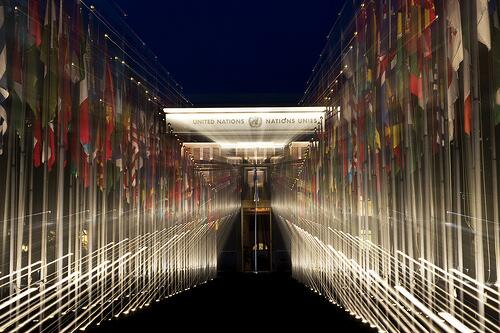
As the UN Human Rights Council approached the conclusion of its 27th regular session tonight, it adopted resolutions including on the topics of violence and discrimination on the basis of sexual orientation or gender identity and the protection of civil society space.
The resolutions on civil society space, and on non-violence and non-discrimination on grounds of sexual orientation or gender identity, were adopted after a series of hostile amendments were defeated.
The resolution on sexual orientation and gender identity, led by Brazil, Chile, Colombia and Uruguay, recognizes the worldwide problem of violence and discrimination, and builds on a resolution on the same subject from 2011. It calls for the High Commissioner for Human Rights to update the report produced under the 2011 resolution.
The States that supported the resolution on sexual orientation and gender identity overcame a series of amendments brought by Congo, Djibouti, Egypt, Malaysia, Nigeria, South Sudan, Uganda, and United Arab Emirates. The amendments would have among other things deleted all references to sexual orientation and gender identity from the resolution text, fundamentally changing its purpose, and perpetuating a complete denial of the very real violence and discrimination inflicted on lesbian, gay, bisexual, transexual and intersex people in all regions of the world.
The civil society space resolution, which was led by Chile, Ireland, Japan, Sierra Leone, Tunisia, draws on discussions at a Panel convened by the Council earlier in the year. It affirms the valuable contribution made by civil society in countries around the world, expresses concern about the threats and challenges faced by civil society, and requests the High Commissioner for Human Rights to produce practical recommendations for addressing these threats and concerns.
The texts of the resolutions (in the final draft form on which they were adopted – the official final versions are not yet available) are available here: Civil Society Resolution Sexual Orientation Gender Identity Resolution
A joint NGO press release on the resolution on sexual orientation and gender identity is available here.
The ICJ maintains databases of jurisprudence, legislation and UN action on the topic of sexual orientation and gender identity.
Sep 26, 2014 | News
The government of Nepal has failed for over a decade to deliver justice for the killing of Krishna Prasad Adhikari. In protest his father, Nanda Prasad Adhikari, died on September 22, 2014, after over 300 days on hunger strike, the ICJ and Human Rights Watch said today.
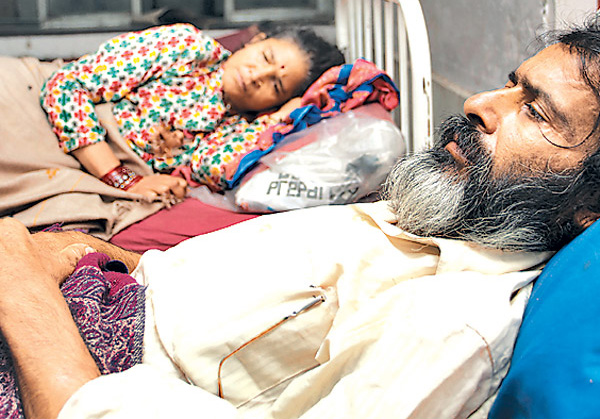
Nanda Prasad Adhikari and his wife, Ganga Maya Adhikari (photo), began their hunger strike on October 23, 2013, to protest the failure of successive Nepali governments to ensure a credible investigation of the killing in 2004 of their son, allegedly by members of the United Communist Party of Nepal–Maoists (UCPN-M).
The ICJ and Human Rights Watch call on the Nepali government to protect the human rights of Ganga Maya Adhikari, who is reported to be in critical but stable condition in Kathmandu’s Bir Hospital. She continues to refuse food even after her husband’s death.
“Nanda Prasad Adhikari made the ultimate sacrifice in the pursuit of justice for his son, but it should never have come to this sad moment,” said Sam Zarifi, ICJ’s Regional Director for Asia and the Pacific. “The Adhikari couple symbolize the thousands of people in Nepal who demand justice for the violations and abuses they suffered at the hands of the government’s armed forces as well as the Maoists.”
Despite several promises by the government, there has been little movement towards accountability for Krishna Adhikari’s death.
In September 2013, after initial protests by the Adhikari couple, Nepali authorities announced that they would follow the Supreme Court’s directive to investigate the killing.
One year later, in April 2014, the Chitwan District Attorney filed charges against 13 people allegedly involved in the killing of Krishna Prasad Adhikari.
But when two men were arrested and produced in court, UCPN-M leaders protested, with leader Babu Ram Bhattarai saying publicly that if Parsuram Poudel, one of the accused, could be arrested, the government should arrest Bhattarai as well.
After three days of protests and threats by the UCPN-M, the Chitwan District Court granted bail to the two suspects. The case is still pending in court.
Throughout this period, the Adhikaris continued their hunger strike, pointing out serious flaws and shortcomings in the investigation carried out by Nepali authorities.
“Nepali politicians should stop making empty promises and investigate all allegations of human rights abuses and violations during the conflict,” said Brad Adams, Asia director for Human Rights Watch. “Nanda Prasad Adhikari’s death highlights Nepal’s flawed attempts at reconciliation and redress for conflict-era crimes, and looks like a desire to sweep all wartime injustice under the rug.”
The Comprehensive Peace Accord (CPA) that ended the conflict in 2006 explicitly recognizes Nepal’s obligations under international human rights law without reservation.
The CPA is unequivocal about the need to investigate and prosecute human rights violations in line with Nepal’s laws.
A promised Truth and Reconciliation Commission remains stalled, and the draft legislation to promulgate it is deeply flawed.
The ICJ and Human Rights Watch call on Nepali authorities to continue investigations and prosecutions for Krishna Adhikari’s death, as well as hundreds of unresolved cases of enforced disappearances and extrajudicial executions.
Contact:
Sam Zarifi, ICJ’s Regional Director for Asia and the Pacific, t +66-807-819-002 (mobile); e: sam.zarifi(a)icj.org

Sep 25, 2014
El 23 y 24 de septiembre, en Lima (Perú), la Comisión Internacional de Juristas y el Equipo Peruano de Antropología Forense (EPAF) realizaron un seminario sobre la impunidad y las graves violaciones a los derechos humanos.
Con ocasión a este Seminario la CIJ hizo el lanzamiento de su nueva Guía para profesionales No. 7 “Derecho internacional y lucha contra la impunidad”.
El Seminario abordó, desde la perspectiva del Derecho internacional, diferentes aspectos de la cuestión de la impunidad en materia de graves violaciones a los derechos humanos y crímenes internacionales, de relevancia para el Perú.
Para ello, el Seminario contó con la participación, entre otros, de Robert K. Goldman (Vicepresidente de la CIJ), César Landa (Comisionado peruano de la CIJ), Wilder Tayler (Secretario General de la CIJ) y José Pablo Baraybar (Director del EPAF). Al evento asistieron magistrados, jueces, fiscales, representantes de la Defensoría del Pueblo, miembros de las organizaciones no gubernamentales de derechos humanos y de asociaciones de víctimas, representantes de la comunidad diplomática y periodistas.
Universal-Lucha contra la Impunidad PG7-Publications-Practitioners’ guide series-2014-SPA (descargar el pdf)