Mar 25, 2014
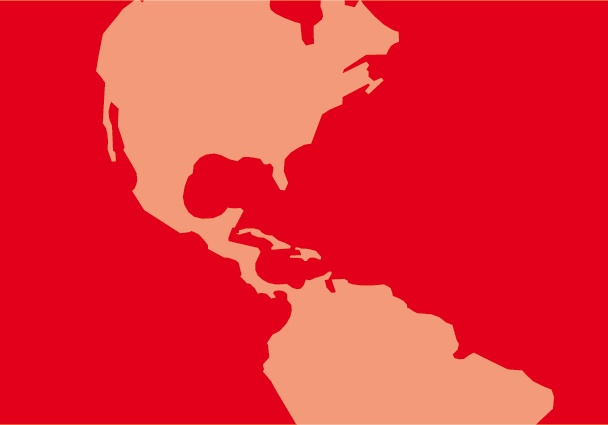
The ICJ has submitted an alternative report in advance of the Committee’s examination of El Salvador’s combined third, fourth and fifth periodic reports under the International Covenant on Economic, Social and Cultural Rights (ICESCR).
The ICJ submission draw’s the Committee’s attention to concerns related to:
- The rights of victims of alleged violations of economic, social and cultural rights;
- Discrimination and denial of equal rights;
- The right to work and to just and favourable conditions of work; and
- The right to an adequate standard of living.
The Committee will examine El Salvador’s combined report during its 52nd session held in April to May 2014, following which it will adopt Concluding Observations setting out recommendations to the Government of El Salvador.
ElSalvador-CESCR52-AlternativeReport-LegalSubmission-2014 (download full submission in PDF)
Mar 24, 2014 | Advocacy, Non-legal submissions
The ICJ made an oral statement to the UN Human Rights Council during the general debate on the situation of human rights in the Occupied Palestinian Territory.
The ICJ noted that, almost ten years after the International Court of Justice ruled the construction of the separation wall in the Occupied Palestinian Territory (OPT) to be unlawful, States and international organizations have failed to take effective measures to hold Israel accountable for violations of international humanitarian law and human rights law arising from the wall.
As the International Court of Justice held, States must not “recognize the illegal situation resulting from the construction of the wall” and must not “render aid or assistance in maintaining the situation created by such construction.” Israel, for its part, must dismantle the wall and its associated regime and provide reparation to victims.
At the same time, Palestinian armed groups must renounce all direct or indiscriminate attacks on civilians and civilian objects. Israel must also cease its own violations of international humanitarian law.
The ICJ further addressed the human rights impacts of Israeli settlements in the occupied territory, and the need for the Security Council effectively to address the issue.
The full statement can be downloaded in PDF here: Advocacy-UN-HRC25-IsraelOPT-24032014
Mar 24, 2014 | News
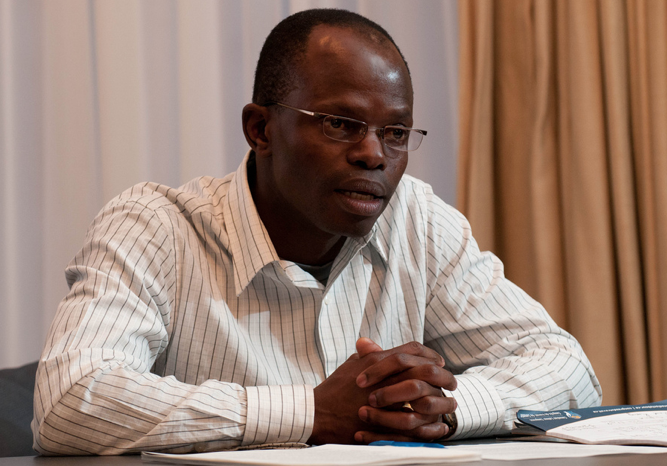
The ICJ, in collaboration with other organizations, has dispatched a team of lawyers to attend the bail hearing of prominent lawyer and human rights defender, Thulani Maseko and journalist, Bheki Makhubu on 25 March 2014.
The ICJ is working with the SADC Lawyers Association, the Southern Africa Litigation Centre, the Zimbabwe Lawyers for Human Rights and the Southern Africa Human Rights Defenders Network.
Maseko and Makhubu were jointly charged on 18 March 2014 and remanded to appear on 25 March for a bail hearing.
Their lawyer was not allowed to make submissions when the accused appeared for initial remand, in contravention of regional and international standards guaranteeing the right to be represented by a lawyer in legal proceedings.
The accused were arrested after Chief Justice Ramodibedi issued a warrant for their arrest on charges of criminal contempt of court.
The charges arise from articles allegedly written by Maseko and Makhubu in February and March 2014, in which they questioned circumstances surrounding the arrest of government vehicle inspector, Vincent Gwebu.
The vehicle inspector had been arrested and charged with contempt of court after he had arrested the driver of a High Court Judge.
They questioned the integrity, impartiality and independence of the Swaziland judiciary in the way they handled the Gwebu case.
The legality of the arrest, detention and charges is likely to be challenged at the bail hearing.
The ICJ trial observer team of lawyers will assess the compliance of the trial proceedings with international standards of fair trial, including those of the African Union.
The ICJ has previously expressed initial concern that the arrest and detention appear to be arbitrary, and carried out in retribution for their exercise of their right to freedom of expression.
The ICJ also previously expressed further initial concern that the lawyer for the two was not allowed the legitimate exercise of his professional functions as a lawyer when the two appeared before the Chief Justice for the initial remand.
The team of trial observers consists of the following lawyers: Arnold Tsunga, Director, ICJ Africa Regional Programme; Martin Okumu-Masiga, Deputy Director, ICJ Africa Regional Programme; Andrew Makoni, Board member, Zimbabwe Lawyers for Human Rights; and Emilia Siwingwa, Deputy Director, SADC Lawyers Association.
Contact
For further information contact Arnold Tsunga or Martin Okumu-Masiga on +27 11 024 8268, +27 73 131 8411 or +27 78 234 9125.
Mar 21, 2014 | Advocacy, Non-legal submissions
The ICJ spoke at the UN Human Rights Council on the lack of progress in Nepal on ending impunity.The oral statement was delivered during the general debate on the Universal Periodic Review (UPR).
Nepal has failed to take concrete action to implement key UPR recommendations, including those crucial to implementing the right to an effective remedy and reparation, creating effective mechanisms for transitional justice and ending impunity.
The Government continues to try to force through a Truth and Reconciliation Commission that is not human rights complicant and has already been ruled invalid by the Supreme Court of Nepal.
Nepal has also failed to take meaningful measures to investigate human rights violations and abuses that arose during the armed conflict.
The ICJ called on Nepal to take specific measures towards ending impunity.
The full written statement can be downloaded, in PDF format: Advocacy-UN-HRC25-Nepal-OralStatement-2103214
The representative of Nepal exercised the right of reply in response to ICJ’s oral statement.
Video of the oral statement, and Nepal’s statement in reply, via the official UN webcast.
Mar 20, 2014
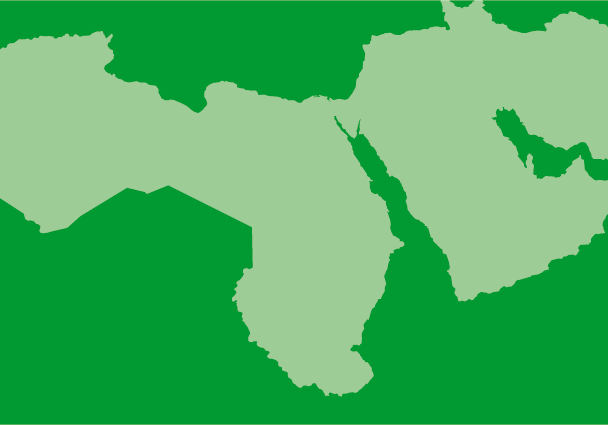
National and global human rights organizations today called upon the Arab League’s member States to suspend efforts to adopt a draft statute of the Arab Court of Human Rights (the Arab Court).
Our organizations are concerned, ahead of the Arab League’s summit to be held in Kuwait on 25 and 26 March, that efforts to adopt a draft statute are being rushed in a way that would be detrimental to the efficacy of the court.
Our organizations believe efforts should be suspended until broad discussions and consultations have taken place with all interested stakeholders, who must be permitted to participate meaningfully in all stages of the process of establishing the Arab Court.
Our organizations call on the on the member States of the League of Arab States (LAS), LAS Summit, and Secretariat to amend the draft statute as detailed in the attached documents.
This statement is supported by:
International Commission of Jurists; International Federation for Human Rights; Egyptian Initiative for Personal Rights; Al Haq; Human Rights Watch; Cairo Institute for Human Rights Studies; Human Rights Information Training Center; Gulf Center for Human Rights; Human Rights Organization for the Documentation of War Crimes in Libya; Damascus Center for Human Rights Studies; Mauritanian Association for Human Right; Open Society Foundations – Arab Regional Office; Arab Women Organization of Jordan; African Center for Justice and Peace Studies; Bahrain Center for Human Rights; The Yemeni Organization for Defending Rights and Democratic Freedoms – Aden; Legal Agenda
Contact:
Said Benarbia, Director, Middle East & North Africa Programme, t + 41 22 979 38 17, said.benarbi(a)icj.org
Further information:
MENA-Arab Court-Press Release-2014-Eng (Full press release, PDF, English)
MENA-Arab Court-Press Release-2014-Ara (Full press release, PDF, Arabic)
MENA-Arab Court-Position Paper-2014-Eng (Position paper, PDF, English)
MENA-Arab Court-Position Paper-2014-Ara (Position paper, PDF, Arabic)