
ICJ responds to consultation on the future of the European Convention protection system
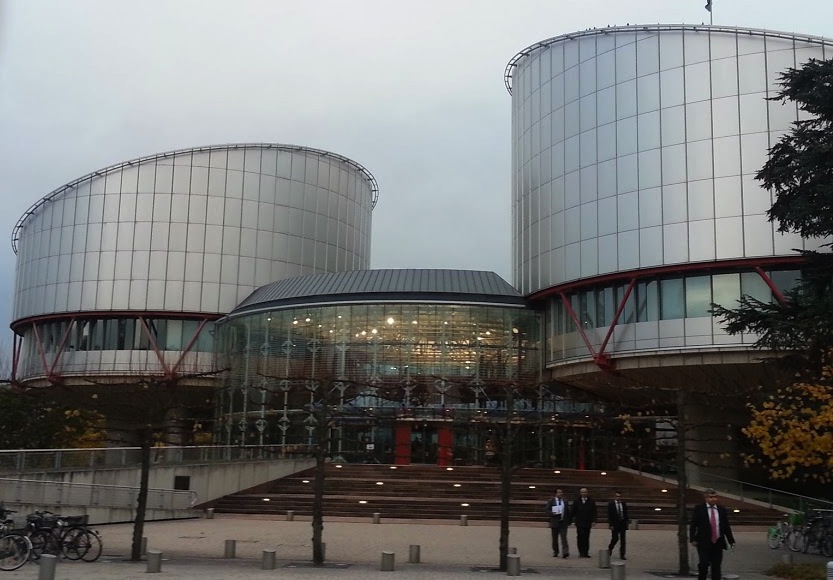
The ICJ, together with Amnesty International, has responded to a Council of Europe consultation on the long-term future of the European Convention on Human Rights and European Court of Human Rights system.
In their response, the ICJ and Amnesty International stress that the guiding principles in any new reforms of the Convention system must be that they serve to enhance the protection of human rights, and in particular to ensure better implementation of the Convention at national level; that they enhance access of individuals to justice for violations of the full range of Convention rights; that that they ensure more effective reparation for violation of the rights guaranteed under the Convention. The success of the Convention system in the long-term requires:
- respect by all Member States for the Convention institutions, and acknowledgment of the shared responsibility for the protection of Convention rights;
- enhanced national implementation of the Convention, including by states bringing their law and policy into line with judgments of the Court regarding other Member States;
- adequate powers and jurisdiction of the Court to ensure consistency in standards, and to ensure effective protection to individuals, preserving the system of individual petition in its current form;
- measures to address systemic human rights problems leading to numerous similar applications to the Court;
- further reforms to execution of judgments and supervision of execution procedures, in particular for systemic violations, making Article 46(4) operational and giving further consideration to financial penalties.
Europe-long-term future of EU Convention-advocay-position paper-2014 (full text in pdf)

The ICJ assesses the new Tunisian Constitution
In a position paper published today, the ICJ assesses the conformity of key provisions of the new Constitution with international law and standards.
On 26 January 2014, three years after the ouster of President Ben Ali, the Tunisian National Constituent Assembly voted for the new Constitution.
The ICJ believes that the adopted Constitution is the product of a representative and inclusive process.
The Constitution provides for better guarantees for upholding the rule of law and protecting human rights.
It expands on the rights provided for by the 1959 Constitution and establishes a more balanced separation of powers.
Nevertheless, in certain key respects, the Constitution falls short of international law and standards.
The ICJ recommends that the Tunisian authorities take into account the deficiencies in the Constitution highlighted in this paper when enacting legislation to implement constitutional provisions and defining public policy.
Tunisia-New Constitution assessment by ICJ-Advocay-Position Paper 2014 (full text in pdf)
La CIJ évalue la nouvelle constitution tunisienne
Dans une prise de position publiée aujourd’hui, la CIJ évalue la conformité des principales dispositions de la nouvelle constitution avec le droit et les normes internationales.
Le 26 janvier 2014, trois ans après l’éviction du président Ben Ali, l’Assemblée nationale constituante tunisienne a voté pour sa nouvelle constitution.
La CIJ estime que la constitution adoptée est le produit d’un processus représentatif et inclusif.
Néanmoins, à certains égards, la constitution est en deçà du droit international et des normes internationales.
A ce titre, la CIJ recommande aux autorités tunisiennes de prendre en compte les déficiences de la constitution mise en évidence dans ce document.
Tunisia-Evalusation Nouvelle Constitution-Advocacy-Position Paper 2014-Fr (Texte complet en PDF)
Nepal: respect Supreme Court ruling on human rights law
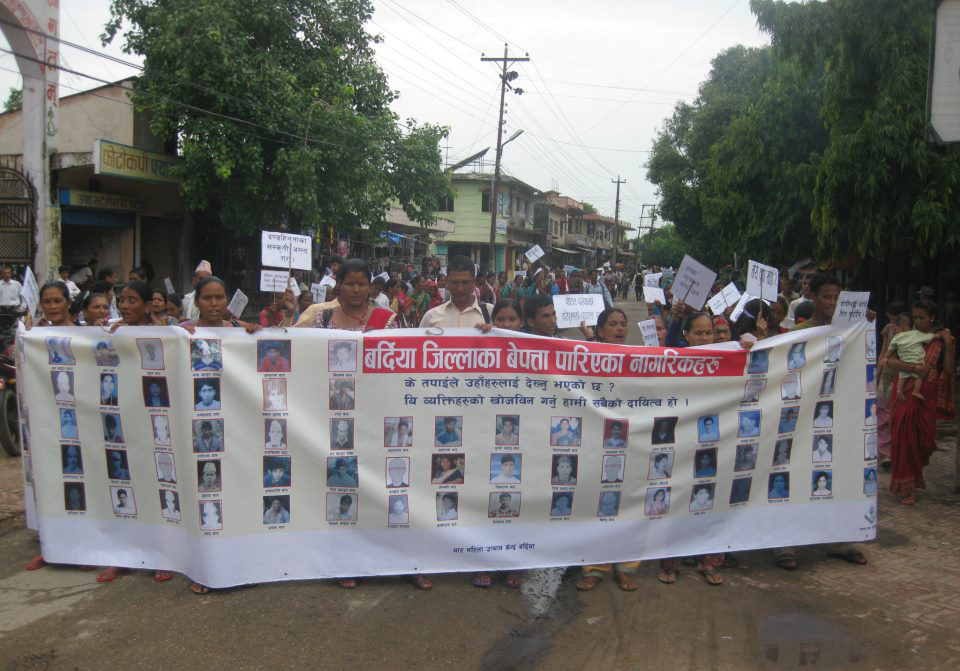
The Parliament of Nepal should reject the Ordinance on Truth, Reconciliation and Disappearances tabled this week and enact a new transitional justice mechanism that complies with international human rights law, the ICJ and HRW said today.
The Ordinance on Disappearances, Truth and Reconciliation Commission, signed by the President on 14 March, 2013, was declared unconstitutional and in violation of international human rights law by the Nepali Supreme Court on 2 January, 2014.
In a directive, the Supreme Court ordered the Ordinance be repealed or amended significantly to bring it in line with Nepal’s obligations under national and international law.
However, on 27 January, the Government reintroduced the Ordinance with no amendments in the meeting of the Legislative-Parliament – in direct contravention of the Supreme Court’s orders.
“Tabling a rejected version of the Ordinance after the Supreme Court’s landmark judgment on transitional justice is contemptuous, and raises serious concerns over the government’s respect for the rule of law in Nepal,” said Ben Schonveld, ICJ’s South Asia Director.
The Interim Constitution says clearly that the Supreme Court’s rulings are binding on the Government of Nepal. Article 116 of the Interim Constitution states that any order issued by the Supreme Court in the course of the hearing of a case shall be binding on the Government of Nepal and all its offices and courts.
The Supreme Court has previously held that any mechanism for transitional justice must conform with international standards, lead to accountability for serious human rights violations, and ensure victims their right to remedy and reparations, which includes the right to truth, justice, and guarantees of non-recurrence.
In its 2013 briefing paper, “Authority without Accountability,” the ICJ expressed concern over multiple provisions in the Ordinance, including amnesty provisions, which would entrench impunity for gross human rights violations in Nepal.
Any amnesty for gross human rights violations would add another layer to the complex web of immunities, documented in the report, that continue to shield those responsible for human rights abuse from accountability in Nepal.
“The Parliament of Nepal should strongly reject the tabled Ordinance and the government must expeditiously implement the Supreme Court’s directive,” said Meenakshi Ganguly, South Asia Director at Human Rights Watch. “The ordinance in its current form violates undertakings made as part of the peace agreement, and essentially strips victims of serious rights abuses of a proper chance at justice.”
The rights groups called on the government to implement the Supreme Court’s ruling, creating a new transitional justice law that, at a minimum:
- Establishes two separate transitional justice commissions: a “Truth and Reconciliation Commission” and a “Commission of Inquiry on Enforced Disappeared Persons;”
- Criminalizes the act of enforced disappearance in accordance with the definition set out in the International Convention on the Protection of All Persons from Enforced Disappearance and ensures that it is punishable with penalties commensurate with the gravity of the crime;
- Criminalizes other serious crimes, including crimes against humanity, and other crimes under international law, in a manner that is consistent with international law;
- Prohibits amnesties for gross human rights violations or crimes under international law;
- Does not contain a limitation period on the reporting of violations and ensures there are no time limits on the prosecutions of of serious crimes including enforced disappearance, other crimes under international law including, war crimes, and crimes against humanity;
- Ensures that the composition and structure of the Commissions complies with international standards. In particular, there should be a fair vetting system which aims to ensure the impartiality of the commission members and to ensure that no individuals against whom there are credible allegations they have committed human rights abuses are selected as Commissioners;
- Requires the necessary legal and institutional measures to be taken to enable and ensure the establishment, adequate resourcing and maintenance of effective victim and witness protection mechanisms; and
- Establishes and requires other necessary legal, administrative, institutional, or other arrangements for an effective reparation program.
Contact:
In Bangkok, Sam Zarifi: +66-857200723; or sam.zarifi(a)icj.org
In Kathmandu, Ben Schonveld +977-9804596661; : ben.schonveld(a)icj.org
Read also: ICJ releases new report on the struggle for justice in Nepal
The report Authority without accountability: the struggle for justice in Nepal can also be downloaded below:
Nepal-SUMMARY-Authority without Accountability-Publication-report summary-2012 (full text in pdf)
Nepal-FULL-Authority without accountability-publications-report-2012 (full text in pdf)
Recent News
 Thailand: Judges have a critical role to play in combating and ensuring accountability for torture and enforced disappearance16 Oct 2026
 Joint Letter: Urgent diplomatic action to halt further executions in eastern Libya13 Oct 2026
 Czech Republic: UN Committee on the Rights of the Child finds that immigration detention of children violated the prohibition of arbitrary detention and ill-treatment13 Oct 2026
 UN Human Rights Council once again navigates troubled waters to protect human rights in crisis situations, despite global setbacks.12 Oct 2026