Jan 28, 2014
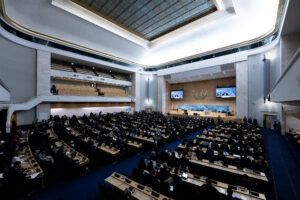
The ICJ has made a submission to the CEDAW in advance of the examination of Kazakhstan’s combined third and fourth periodic reports under Article 18 of the Convention on the Elimination of All Forms of Discrimination against Women.
The ICJ submission draws the Committee’s attention to concerns related to gender-based violence and gender-discrimination.
It also includes a number of broadly framed recommendations urging the authorities in Kazakhstan to address these concerns and give effect to the State Party’ obligations under the Convention.
The Committee will examine the combined third and fourth periodic reports of Kazakhstan during its 57th session in February 2014, following which it will adopt Concluding Observations setting out recommendations to the Government of Kazakhstan.
Kazakhstan-ICJ Submission to CEDAW-advocacy-legal submission-2014 (download in pdf)

Jan 27, 2014
The ICJ deplores the recent enactment of a new penal code by Brunei Darussalam.
If implemented, the code would lead to serious human rights violations by reintroducing the death penalty and imposing other cruel and inhuman punishment including stoning, even for conduct that should not even be considered criminal.
In an open letter to Prime Minister, H.M. Haji Hassanal Bolkiah, the ICJ also stressed that the Syariah Penal Code Order 2013 is clearly incompatible with international human rights law and standards that prohibit discrimination against women and protect the rights to religious freedom and freedom of opinion and expression. The law also criminalizes adultery, extramarital sexual relations and consensual same-sex conduct, in contravention of international standards.
“These provisions in the 2013 Penal Code are a serious step back for Brunei,” Sam Zarifi, ICJ regional director for Asia & the Pacific, said in the letter. “These provisions are not in accord with the commitment made by Brunei as a member of the Association of Southeast Asia Nations to promote and protect human rights in the region.”
The 2013 Penal Code, enacted by the government of Brunei Darussalam in October 2013, is due to take effect in April 2014.
The ICJ condemns the adoption of provisions of the 2013 Penal Code that reintroduce the death penalty after years of an effective moratorium in the country, and provide for stoning and other forms of torture and ill treatment for a range of conduct, some of which should not be criminalized at all.
The ICJ noted the 2013 Penal Code provides for the death penalty as a possible penalty — for both Muslims and non-Muslims — for the crimes of robbery (Article 63), rape (Article 76), adultery and sodomy (Article 82). It also is prescribed as a penalty — for Muslims only — upon conviction for acts constituting extramarital sexual relations (Article 69).
“The 2013 Penal Code also specifies that a manner by which capital punishment is to be imposed for rape, adultery, sodomy and extramarital sexual relations is stoning to death, a particularly horrific form of torture and execution,” Zarifi said. “The death penalty, in any circumstance, is a form of torture and inhumane treatment, and its reintroduction in the 2013 Penal Code is out of step with the global trend towards and abolition of the death penalty and the establishment of a moratorium on execution.”
Brunei Darussalam has not carried out the death penalty since 1957 and has been viewed as de facto abolitionist.
Brunei Darussalam is a member of ASEAN, which also comprises Cambodia, Indonesia, Lao PDR, Malaysia, Philippines, Singapore, Thailand and Vietnam.
Brunei-New Penal Code Open Letter-advocay-2013 (PDF file of open letter)
CONTACT:
Sam Zarifi, ICJ Asia-Pacific Regional Director, (Bangkok), t:+66 807819002, e-mail: sam.zarifi@icj.org
Craig Knowles, ICJ Media & Communications, (Bangkok), t:+66 819077653, e-mail: craig.knowles@icj.org
Jan 23, 2014 | News
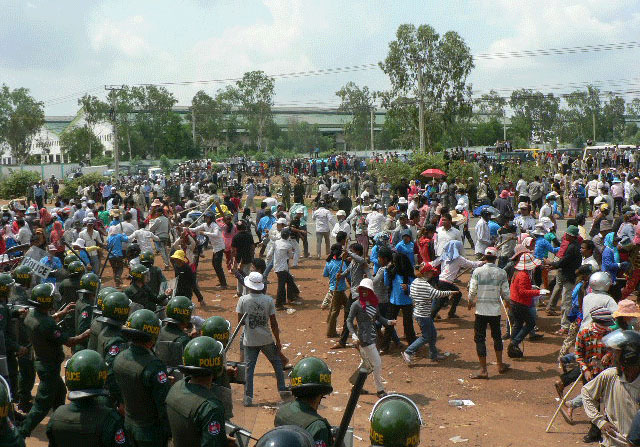
The ICJ criticized the Phnom Penh Municipal Court’s decision to deny bail to 23 people who were arrested and detained earlier this month following protests by garment factory workers seeking a higher minimum wage.
The detainees’ lawyers told the ICJ that the court denied bail for the first nine detainees, arrested on 2 January 2014, in order to “guarantee their presence for further legal proceedings”, “to preserve public order” and “to prevent instability that results from the commission of crimes”.
The remaining 13 detainees, arrested on 3 January 2014, were denied bail in order to “end crime”, “prevent new crime” and “ensure detainees are available for trial”.
The decision to deny bail to the 22 detainees followed the Court’s decision on 13 January 2014 to deny bail to Vorn Pao, President of the Independent Democracy of Informal Economy Association (IDEA).
Considering his application separately from the others, the court, similarly, provided the same reasons as in the case of the first nine detainees.
“International law is clear that pre-trial detention could only be exercised in exceptional situations, and avoided if suitable alternatives are possible,” said Sam Zarifi, ICJ’s Regional Director for Asia and the Pacific. “The reasons presented by the Court don’t justify holding these activists in prison right now.”
All 23 of those whose bail applications have been denied have been charged with causing intentional violence and damage to property. Three face additional charges for violent resistance against a public official, as well as a traffic offence.
They were arrested as part of the government’s response to striking garment workers and demonstrators protesting the 28-year-rule of Prime Minister Hun Sen (photo).
Security forces shot and killed at least four protesters on 3 January. The government has banned further protests.
Article 9(3) of the International Covenant on Civil and Political Rights (ICCPR), to which Cambodia is a party, guarantees the right to liberty. It states, “It shall not be the general rule that persons awaiting trial shall be detained in custody, but release may be subject to guarantees to appear for trial”. Such guarantees include bail.
“There are alternatives to the detention, such as bail or other conditions the court could impose on these 23 detained activists if the Court is concerned, on the basis of substantiated and objective grounds that there is a risk that each of them will abscond before the trial or interfere with the investigation,” said Zarifi. “In the absence of such proof and the serious consideration of alternatives the continued pre-trial detention of each of the 23 individuals would amount to arbitrary detention under international human rights standards.”
Vorn Pao’s lawyers filed an appeal on 14 January 2014 and the Court is expected to issue a decision on his appeal by 3 February 2014.
According to the Cambodian Centre for Human Rights, Vorn Pao appears weak and continues to suffer pain from the head injuries he sustained.
Lawyers for the other 22 detainees have also expressed their intention to appeal the Court’s decision to deny them bail.
Contact:
Sam Zarifi, ICJ Asia-Pacific Regional Director, (Bangkok), t:+66 807819002, e-mail: sam.zarifi(a)icj.org
Craig Knowles, ICJ Media & Communications, (Bangkok), t:+66 819077653, e-mail: craig.knowles(a)icj.org
Jan 22, 2014
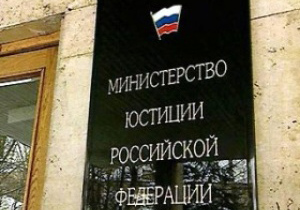
An ICJ legal opinion issued today concludes that recent Amendments to the NGO Law amount to an illegitimate interference with rights to freedom of association and expression protected in international human rights law.
Amendments to the NGO Law require a wide range of Russian non governmental organizations (NGOs) to register as “foreign agents” or else face severe sanctions.
Analyzing the law and its recent application in practice, the ICJ opinion describes the serious impact of the law on Russian civil society organizations that seek to contribute to public debate on issues such as the protection of human rights or the environment.
Under the law, NGOs that receive donations from foreign sources and engage in “political activity” must register as “foreign agents”.
Those NGOs that register as foreign agents are subject to additional burdensome administrative requirements. NGOs that fall within the definition of foreign agents but do not register are liable to heavy fines and other penalties.
Róisín Pillay, Director of the Europe Programme at the ICJ said: “This law confronts many NGOs with unacceptable choices. They may opt to stop receiving foreign funding, which may threaten their very viability and survival. They may withdraw from any activity that could be considered ‘political’, meaning that they cease to take action or voice their opinions on the issues of public concern that the NGO was formed to address. Or, they may register as a foreign agent, which is likely to impair the organization’s capacity to function effectively, if at all. Whichever route an NGO chooses, its freedom of association and expression will be detrimentally affected.”
The ICJ opinion concludes that the inherently vague scope of application of the law, and in particular the wide and unclear definition of “political activity” as well as of other terms in the law, mean that NGOs are unable to predict with any certainty whether or not they will be required to register as “foreign agents”, or when they will be liable to criminal or administrative penalties under the law.
It adds that the broad terms in which the law is formulated leave room for inconsistent or arbitrary application of the law by courts, contrary to international human rights law.
The opinion also notes that it is not clear that the restrictive measures introduced by the amendments serve any of the legitimate aims recognized by international human rights law on freedom of expression or freedom of association.
It finds that the severity of the punitive measures for NGOs that fail to register as “foreign agents” in accordance with the law, as well as the additional requirements imposed on those that do, cannot be justified as necessary and proportionate restrictions on rights.
Róisín Pillay added: “Given the wide range of NGOs directly affected by the law, and the even wider group on whose exercise of their freedom of association and expression the law is likely to have a chilling effect, it is clear to us that the measures are disproportionate to any aims to which they might be directed, and therefore violate international human rights law.”
Contact:
Róisin Pillay, Director, Europe Programme, t + 32 273 48 46, roisin.pillay(a)icj.org
Temur Shakirov, Legal Adviser, Europe Programme, t + 41 22 979 38 32, temur.shakirov(a)icj.org
Russia-NGO law amendments-analysis brief-2014 (download in pdf)
Russia-NGO law amendments-press release-2014-rus (download in pdf)
Russia-NGO law amendments-analysis brief-2014-rus (download in pdf)
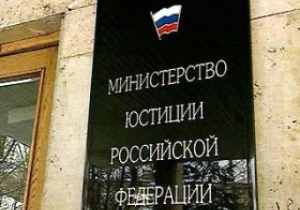
Jan 22, 2014 | Адвокаси, Краткий анализ, Новости, Пресс-релизы
В опубликованном сегодня юридическом заключении, МКЮ пришла к выводу, что принятые недавно изменения в Федеральный Закон “О НКО”, могут быть признаны незаконным вмешательством в право на свободу ассоциаций и свободу выражения мнений, защищаемых международным правом в области прав человека.
Настоящие изменения в ФЗ обязывают широкий круг российских некоммерческих организаций (НКО) зарегистрироваться в качестве “иностранных агентов” под угрозой, в случае неисполнения данного требования, быть подвергнутыми жестким санкциям.
Анализ положений Закона и практики его применения, приведенный МКЮ, демонстрирует серьезное влияние, которое оказал Закон на российские некоммерческие организации, цели создания которых направлены на развитие дискуссии по таким вопросам, как защита прав человека или защита окружающей среды.
В соответствии с изменениями в Закон, некоммерческие организации, получающие финансирование из иностранных источников и участвующие в “политической деятельности” должны зарегистрироваться в качестве “иностранных агентов”.
Организации, которые регистрируются в качестве иностранных агентов сталкиваются с дополнительными обременительными требованиями к их отчетности. Те организации, которые подпадают под определение иностранного агента, но не регистрируются в качестве такового, могут быть подвергнуты высоким штрафным санкциям и другим мерам наказания.
Роушин Пиллей, Директор Программы МКЮ по Европе завила: “Этот закон ставит многие неправительственные организации перед сложной дилеммой. Они могут отказаться от получения иностранного финансирования, что может поставить под угрозу их жизнеспособность и существование. Они могут прекратить любую деятельность, которая может рассматриваться как “политическая”, что означает прекращение проведения акций или высказывания своей позиции по вопросам, представляющим общественный интерес, для чего эти организации и были созданы. Или, они могут зарегистрироваться в качестве иностранного агента, что, в результате, скажется на их жизнеспособности и самом существовании. Какой бы путь организация не выбрала, её право на свободу ассоциаций и выражения мнений будет нарушено”.
В своем заключении МКЮ пришла к выводу, что отсутствие однозначной практики применения изменений в Закон, и, в частности, расширительное и нечеткое определение «политической деятельности», а также иных положений этих изменений по сути означает, что НКО не смогут прогнозировать с достаточной определённостью, будут ли они обязаны зарегистрироваться в качестве «иностранных агентов» или нет, а также в каких случаях они будут нести уголовную или административную ответственность предусмотренную изменениями в Закон.
Кроме того, нечеткая формулировка его положений создает предпосылки для непоследовательного и произвольного применения закона судами в нарушение международного права в области прав человека.
В заключении также отмечено, что из изменений в Закон не следует, что ограничения, предусмотренные ими, направлены на достижение одной из законных целей, предусмотренных в международном праве в области защиты свободы выражения мнений и свободу ассоциаций.
В тексте изменений также указывается, что санкции, установленные в отношении НКО, не зарегистрировавшихся в качестве «иностранных агентов», как того требуют изменения в Закон, а также дополнительные требования, предъявляемые к тем организациям, которые зарегистрировались в указанном качестве, не могут быть квалифицированы как необходимые и пропорциональные ограничения прав.
Роушин Пиллей добавила: “Учитывая широкий диапазон организаций, интересы которых затрагивают изменения в Закон, и ещё более широкий круг лиц, на которых изменения в Закон может оказать «охлаждающий эффект», нам очевидно, что рассматриваемые меры не являются пропорциональными ни одной из целей, на достижение которых они могут быть направлены, и, следовательно, принимаются в нарушение норм международного права в области защиты прав человека.”
Контакты:
Роушин Пиллей, директор Региональной программы МКЮ по Европе, roisin.pillay(a)icj.org
Тимур Шакиров, правовой советник Региональной программы МКЮ по Европе, temur.shakirov(a)icj.org
Russia-NGO law amendments-press release-2014-rus (пресс-релиз на русском, PDF)
Russia-NGO law amendments-analysis brief-2014-rus (полный анализ на русском, PDF)