Jan 13, 2014
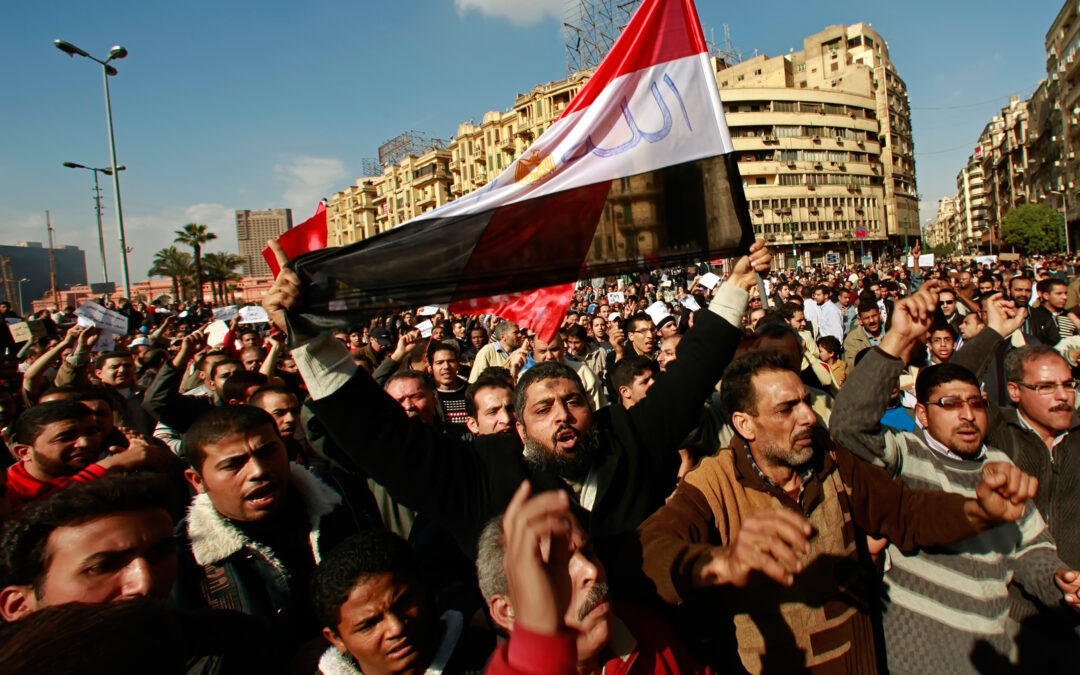
The ICJ today asserted that the draft Constitution to be voted on in a referendum on Tuesday and Wednesday is highly flawed and should be modified if it is to serve as a suitable basis for upholding the rule of law in a democratic Egypt.
The referendum campaign has taken place within a context of fear, intimidation, and repression, calling into question the fairness of the entire process, the ICJ says.
The deficiencies are manifested in the content of a number of the draft Constitution’s provisions and the procedure under which the draft was elaborated, which are incompatible with rule of law principles and international human rights standards, the Geneva-based organization adds.
If the draft Constitution is to be approved, the next elected House of Representatives should remedy these deficiencies by amending the Constitution and initiating legal and policy reforms in line with international standards.
In a position paper published today, the ICJ details how the process of adopting a new Constitution in Egypt contravenes basic principles of inclusive participation, representation, and transparency.
It says the manner of selection and the criteria upon which the members of the expert committee and the committee of 50 were chosen lacked any semblance of democratic legitimacy and representation.
The ICJ is also concerned that the draft Constitution resulting from this procedure reproduces most of the provisions and omissions of Egypt’s past Constitutions, and therefore does not serve as an appropriate foundation on which the rule of law can be established.
The draft Constitution would continue to shield the armed forces from accountability and civilian oversight, would not limit the jurisdiction of military courts to try civilians, provides few guarantees for judicial independence, and would subject various rights and freedoms to “the regulations of the law.”
The ICJ is concerned that such “regulations” might have the potential to erode the very essence of these rights.
For example, while Article 73 of the draft Constitution guarantees the right to freedom of assembly, Law 107 of year 2013 gives the authorities wide powers to ban public meetings and peaceful demonstrations if deemed a “threat to public order”.
The law also empowers the security services to forcibly disperse peaceful protests, including by using lethal force even when it is not strictly necessary to protect lives.
“The current constitution-making process resembles the muddled and highly flawed processes of 2011 and 2012 and is yet another missed opportunity to break with the practices of the past,” said Said Benarbia, Director of ICJ’s Middle East & North Africa Programme. “The Egyptian authorities should undertake a legitimate and participatory process to amend the draft Constitution to ensure its full compliance with international standards, including those guaranteeing independence of the judiciary, ensuring the accountability of the armed forces and their subordination to legitimate civilian authorities, and recognizing universally accepted human rights.”
Contact:
Said Benarbia, Director, ICJ Middle East and North Africa Programme, t: + 41 22 979 38 17, e-mail: said.benarbia(a)icj.org
Egypt-PolicyPaper new Constitution-advocacy-2014 (download position paper in pdf)
Photo: Carolyn Cole/Los Angeles Times/MCT
Jan 13, 2014
An opinion piece by Ben Schonveld, Director of ICJ’s South Asia Programme, and Govinda Bandi, an expert in constitutional and international law.
In a landmark decision last week, Nepal’s Supreme Court again demonstrated why it has been the most important bastion of hope for human rights in the country.
The ruling of 2 January struck down an executive Ordinance that represented an attempt by the country’s politicians to institutionalize impunity for the serious human rights violations and crimes of the past two decades.
It also laid down the gauntlet for the country’s political classes: political expediency cannot trump justice and accountability.
The Supreme Court’s ruling should put an end to much of the political argument around reconciliation and impunity.
It recognizes that reconciliation is an important goal in Nepal’s transitional process.
But the ruling also underlines that reconciliation cannot be built on a foundation of impunity for serious crimes and human rights abuses.
Allowing impunity for crimes under international law places certain categories of individuals above the law.
It leaves victims, who have been most affected by the conflict, with only a marginal role in the reconciliation process and in effect forces them to give up their right to justice, truth and reparation.
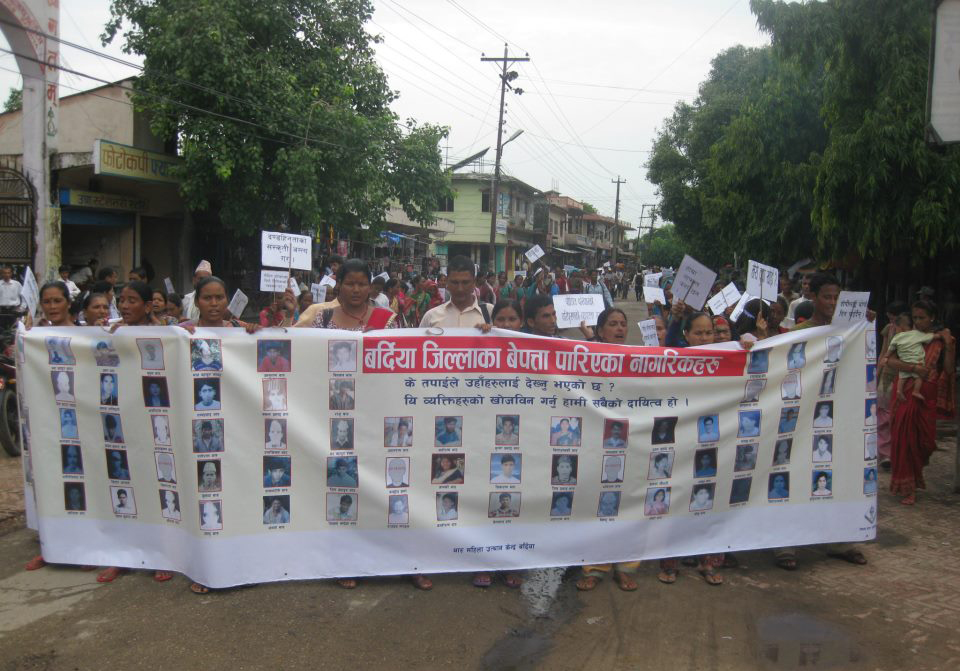
The case, Madhav Kumar Basnet v the Government of Nepal, was a response to a cynical effort by Nepali politicians to renege on their promise to the Nepali people to provide accountability and justice during the process of transition following the armed conflict.
Taking advantage of the absence of a legislature, an unlikely coalition of parties pushed for a sweeping amnesty from accountability under the misleading title of an Ordinance to establish a Commission of Inquiry on Disappeared Persons, Truth and Reconciliation.
Nepali civil society was not fooled by this benign title, and instead referred to the Ordinance as what it was: an amnesty for the perpetrators of years of human rights abuses.
Despite enormous criticism from a wide range of Nepali civil society and international human rights organizations, including the International Commission of Jurists, a slightly amended Ordinance received Presidential approval on 14 March 2013.
In response, civil society turned to the only branch of government that has sought to uphold the rights of Nepalis.
In a petition brought by a coalition of victims’ groups, with the assistance of the International Commission of Jurists, the Court was asked to consider the following: 1) whether or not the procedures and legal provisions of the Ordinance violated the Constitution, international human rights law and accepted principles of justice, and 2) if implemented in its present form, whether or not the Ordinance would achieve the goals of transitional justice.
In its landmark ruling of 2 January 2014, the Court held: 1) that the Ordinance was an obstacle to transitional justice and 2) that it violated Nepal’s Constitution, international human rights law and was contrary to previous rulings by the Supreme Courts and accepted principles of justice.
The Court also addressed the deficits of the Ordinance, including the absence of supporting legislation, and administrative reform that would be required for a credible transitional justice process.
On Amnesty
The Ordinance purported to give powers to the executive to grant amnesty for crimes under international law.
The Court held that such sweeping amnesties are an obstacle to truth, violate international law and the Court’s own prior decisions.
The court barred amnesty for such crimes, because they allow those suspected of criminal responsibility for crimes under international law, such as enforced disappearance, extrajudicial executions, torture and other ill-treatment, including rape and other sexual violence, to escape justice.
Statute of limitations
With regard to victims’ right to effective remedy, the Court rejected the Ordinance’s provision for a statute of limitations of 35 days for filing cases after the decision of the Commission.
The Court held that such a time limited statute of limitations “will create impunity” for international crimes.
Furthermore, the Court ruled that this limitation provided the Attorney General (AG) with excessive discretion, since any case that the AG was reluctant to pursue could be quashed simply through administrative delay.
On enforced disappearances
The Ordinance amalgamated what had been hitherto envisioned as two separate Commissions, one on truth and one designed to address the specific situation of enforced disappearances.
The Court ruled that a separate Commission of Disappearances was essential. The Court underlined that it had already ruled in the Rabindra Dhakal case that the Government must 1) criminalize the act of enforced disappearance as a continuous crime, not subject to the grant of amnesties; and 2) establish a separate commission, in accordance with international law and standards, to look into cases of enforced disappearance during the conflict.
Making transitional justice work
In addition to striking down sections of the Ordinance that contravened international law, the Constitution and prior rulings, the Court set forth a list of practical measures that need to be addressed to implement any future transitional justice mechanism. These measures include the following:
1) The need to legislate for the criminalization of human rights abuses constituting international crimes in Nepal. Currently enforced disappearance and torture are not criminal acts;
2) The Court also ruled that reparations to victims and their families for such abuses must be provided;
3) It ordered that a witness and victim protection program be established;
4) The Court ordered a vetting standard to ensure the impartiality of the Truth and Reconciliation Commission; and
5) The Court instructed the government to seek assistance from an ‘expert team’ to amend the Ordinance.
Truth as a replacement for justice
The International Commission of Jurists and many of its national and international partners have repeatedly called on Nepal’s past governments to ensure that legislation establishing transitional justice mechanisms – which must not replace judicial proceedings – conform to international standards.
Politicians in Nepal have repeatedly stressed the reverse. The Court has ruled that this debate too is at an end: transitional justice is a complement, not a replacement for criminal law.
Back to the drawing board
Nepal’s new government, once formed, now has to elaborate a substantial new legislation which will address the challenges of justice in transition.
The Court’s ruling has made it very clear that only laws that conform to international standards will be acceptable. And anything that falls below will inevitably be subject to legal challenge.
Yet successive governments have had a very poor record on implementing court judgments.
There remains a powerful resistance to ensuring accountability amongst many key political players, including the powerful military and many amongst the election victors.
This resistance reinforces a pattern of political interference with the criminal justice process and intersects with attempts to tackle corruption.
The extent of their influence can be seen in the weaknesses in the Ordinance that Nepal’s Supreme Court has now rejected.
Justice, truth and reparation for serious human rights violations were key demands of the people’s movement. They remain key demands of the Nepali people.
The Nepali Supreme Court’s decision is a landmark not just for Nepal but also for international law globally.
Is Nepal to be governed by the rule of law or continued political expediency? It is now over to the politicians.
Jan 10, 2014 | News
The ICJ calls on the Bangladeshi authorities to immediately and unconditionally drop ‘cybercrime’ charges against Nasiruddin Elan and Adilur Rahman Khan, President and Secretary of the human rights group Odhikar.
“These charges are a flagrant attempt to silence critical voices, and the Bangladeshi authorities must immediately and unconditionally drop all charges against the two human rights defenders,” said Sam Zarifi, ICJ’s Asia director.
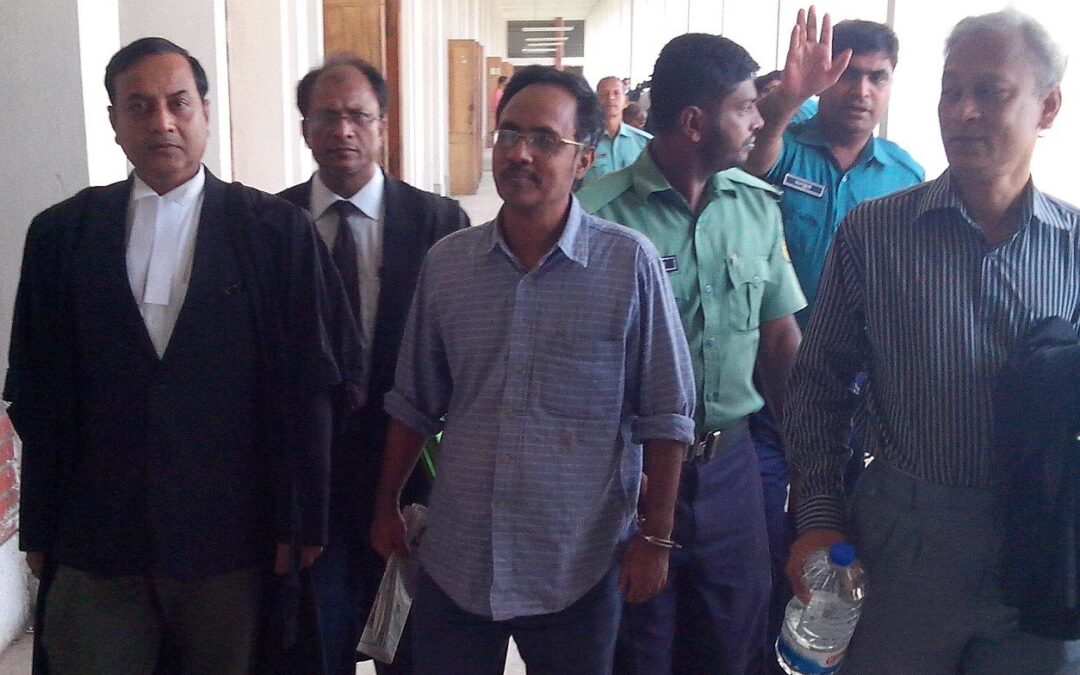
On 8 January 2014, a cyber crimes tribunal in Dhaka indicted Nasiruddin Elan (picture, on centre) and Adilur Rahman Khan under section 57 (1) and (2) of the Information and Communication Technology (ICT) Act, 2006, for publishing “fake, distorted and defamatory” information. Khan and Elan plead innocent to the charges.
The charges relate to a report by Odhikar that alleged that security forces had killed 61 people during a rally by the Islamist group Hefazat-e Islam in May 2013. The Government disputes the casualty numbers.
The trial is set to begin on 22 January 2014. Under the terms of the newly amended ACT the two human rights defenders face a minimum of seven and maximum of 14 years imprisonment.
“The ICJ has warned that the ICT Act can be used to attack freedom of expression in Bangladesh,” said Sam Zarifi. “As predicted, the Government is now using the newly amended law to silence political and public discourse through the threat of punitive sentences and deliberately vague and overbroad offences in clear violation of international law.”
In a briefing paper released on 20 November 2013, ICJ highlighted that provisions of the 2006 ICT Act (amended 2013), particularly section 57, violate Article 19 of the International Covenant on Civil and Political Rights (ICCPR), which Bangladesh ratified on 6 September 2000: the offences prescribed are poorly defined and overbroad; the restrictions imposed on freedom of expression go beyond what is permissible under Article 19(3) of the ICCPR; and the restrictions are not necessary and proportionate to achieve a legitimate purpose.
In addition, the UN Declaration on Human Rights Defenders underscores that States must take all necessary measures to protect human rights defenders “against any violence, threats, retaliation, de facto or de jure adverse discrimination, pressure or any other arbitrary action as a consequence of his or her legitimate exercise of his or her rights.”
Contact:
Sam Zarifi, ICJ Asia-Pacific Regional Director, (Bangkok), t: +66 807819002; email: sam.zarifi(a)icj.org
Ben Schonveld, ICJ South Asia Director, t: +61 422 561834; email: ben.schonveld(a)icj.org
Additional information
Adilur Rahman Khan was arrested his home on 10 August 2013 without an arrest warrant.On August 11, a Magistrate’s Court refused his bail application and remanded him for five days of custodial interrogation.
On August 12, the High Court Division of the Supreme Court stayed the remand order and directed that Adilur Rahman be sent back to jail, where he could be interrogated ‘at the gate of the jail.’
On 4 September 2013, the Detective Branch of Police filed a charge sheet against Adilur Rahman Khan and Odhikar’s Director, Nasiruddin Elan, under Section 57 of the International Communication and Technology Act 2006. On 30 October Adilur Rahman Khan was released on bail. On 6 November 2013, a Dhaka cyber crimes tribunal rejected Nasiruddin Elan’s bail application and ordered his detention in Dhaka Central Jail. Bail was granted on 24 November by the High Court. But the bail order was finally enforced after the appellate division’s order on 3 December 2013.

Dec 20, 2013
The ICJ has provided a submission to the UN Human Rights Committee (the Committee) for its consideration during the adoption of a list of issues for the examination of the Second and Third Periodic Reports of Malta under the International Covenant on Civil and Political Rights.
During its 110th session, from 10 to 28 March 2014, the Committee will prepare and adopt a List of Issues on Malta. These issues will be put to the Government of Malta for formal response ahead of the Committee’s full examination of Malta’s Second and Third Periodic Reports during the Committee’s 112th session, from 13 to 31 October 2014.
The ICJ’s submission raises matters and suggests concrete questions to be put to the Government of Malta concerning the following issues:
- the continuing necessity of Malta’s reservations to the Covenant;
- the compliance of Malta’s immigration laws, policies and practice with the State’s obligations under articles 6, 7, 9, 10 and 13;
- laws criminalizing abortion in the light of the State party’s obligations under articles articles 2, 3, 6, 7 and 26; and
- the enjoyment of Covenant rights in connection with sexual orientation and gender identity.
Malta-CCPR-ListOfIssues-LegalSubmission-2013 (download the submission)
Photo credit: © Jakob Breivik Grimstveit (the author of the picture has no involvement in nor does support this submission)