Dec 19, 2013 | News
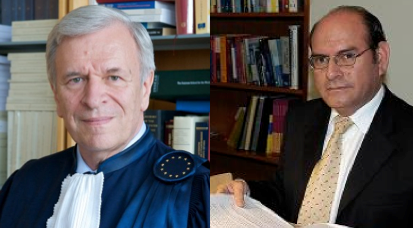
The ICJ is delighted to announce that two new Commissioners were elected in December 2013: Justice Sir Nicolas Bratza (UK) and Professor César Landa (Peru).
Justice Sir Nicolas Bratza is a former President of the European Court of Human Rights. His term on the court ended on 31 October 2012, and he resigned as a Justice of the High Court on 1 November 2012.
Professor César Landa is the Dean of the Faculty of Law at the Pontifical Catholic University of Peru. Prior to this, Processor Landa was the President of the Constitutional Court of Peru. He also served as a Judge on the Constitutional Court.
In a year of significant change within the ICJ Commission, Justice Bratza and Professor Landa are the 14th and 15th new members to join the Commission in 2013.
Biographies for all our Commissioners can be found here.
Dec 19, 2013 | Advocacy, News
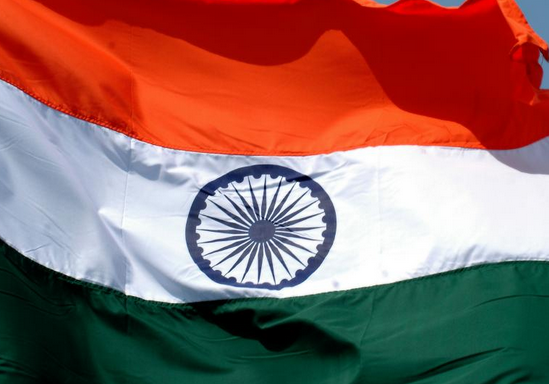
The ICJ is profoundly concerned at the judgment of 11 December 2013 of the Supreme Court of India, which effectively recriminalizes consensual same-sex sexual conduct between adults in private.
The decision by India’s highest court in Suresh Kumar Koushal and another v NAZ Foundation and others overturned the 2009 decision of the Delhi High Court.
That earlier judgment had held section 377 of the Indian Penal Code to be unconstitutional to the extent that it violated the rights to equality before the law, non-discrimination, life and personal liberty guaranteed by the Indian Constitution.
Section 377 criminalized certain consensual sexual acts in private between adults that are particularly associated with same-sex conduct.
The 2009 High Court’s ruling had the effect of decriminalizing such conduct between adults in private in India.
Its decision was based on an in-depth analysis of India’s obligations under international human rights law and standards, as well as international comparative law.
The High Court had examined the scope of the rights to equality, non-discrimination and personal liberty under the Indian Constitution and determined Section 377 to be unconstitutional.
Section 377, which was enacted in 1860, is a historical relic from colonial times bequeathed to India under the British empire; it made it an offence to voluntarily have “carnal intercourse against the order of nature” with any man, woman or animal.
Those convicted are liable to imprisonment for up to 10 years or for life and a fine.
The Supreme Court decision of 11 December reversed the High Court’s courageous and much celebrated decision.
Purporting to uphold the separation of powers, the judgment of the Supreme Court overturned the High Court by ruling that it acted in excess of its judicial review jurisdiction by failing to exercise restraint and to accord the necessary deference to the Indian legislature in its review of the constitutionality of section 377.
The Court effectively holds that the provision is not inconsistent with human rights and India’s obligations under international human right law, and that it is up to the Indian Parliament to amend or repealed it.
The ICJ is deeply troubled by the reasoning of the Supreme Court judgment.
It would appear to constitute an abdication of the essential role of the judiciary in safeguarding human rights.
In this case, the Court failed to uphold and protect the rights to equality and non-discrimination; equality before the law and equal protection of the law; dignity; privacy; freedom of expression and association; family life; and the highest attainable standard of health.
The judgment is inconsistent with India’s obligations under international human rights law.
The judgment also disconcertingly dismisses without apparent reason the wealth of evidence before the court documenting how the criminalization of same-sex sexual conduct leads directly to human rights violations.
Dec 19, 2013 | News
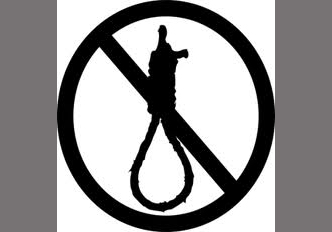
The ICJ deplores the death sentences handed down by the People’s Court of Hanoi on December 17 to two former shipping executives and urges the government of Viet Nam to desist from carrying out the planned executions.
Viet Nam National Shipping Lines (Vinalines) former chairman Duong Chi Dung and former general director Mai Van Phuc were found guilty of embezzling nearly USD $1 million from the state-owned company and sentenced to death.
“The announced death sentences fly in the face of encouraging human rights developments in Viet Nam, such as the State’s signing the Convention Against Torture and other Cruel Inhuman or Degrading Treatment or Punishment in November,” said Sam Zarifi, ICJ’s regional director for Asia and the Pacific. “This is a major setback at a time when it appeared Viet Nam was making progress towards ending capital punishment.”
The ICJ considers the death penalty to constitute a violation of the right to life and the right to be free from cruel, inhuman or degrading punishment.
Following the Human Rights Council’s Universal Periodic Review in 2009, Viet Nam agreed to revise its legislation on the death penalty in line with the country’s international obligations.
Since then it has reduced the number of crimes punishable by death, and changed its method of administering the sentence from firing squad to injection by lethal substance.
It is estimated that more than 600 people remain on death row in the country. Most were convicted on drug-related offences.
“At present, approximately two thirds of the world’s countries have already either abolished capital punishment or have moratoriums on executions,” said Zarifi. “It is regrettable that Viet Nam has chosen to exclude itself from this global trend.”
The ICJ calls on the Government of Viet Nam to immediately put in place a moratorium on its practice, with a view to abolishing the death penalty, as demanded by the United Nations General Assembly in repeated resolutions on the question.
CONTACT:
Sam Zarifi, ICJ Asia-Pacific Regional Director, (Bangkok), t:+66 807819002, e-mail: sam.zarifi(a)icj.org
Craig Knowles, ICJ Media & Communications, (Bangkok), t:+66 819077653, e-mail: craig.knowles(a)icj.org

Dec 18, 2013
Published today in Geneva the new study analyses the current state of the country’s judiciary in statutory courts and the legal profession, in light of international standards on the independence of judges and lawyers.
The 57-page report South Sudan: An Independent Judiciary in An Independent State? also makes concrete recommendations to relevant authorities in South Sudan.
The report is based on research conducted on and in South Sudan, including but not limited to a high-level fact-finding mission, a two-day National Consultation Conference on the theme of Judicial and Legal Professional Independence and Accountability, and the ICJ workshop on fair trial guarantees, all undertaken by the ICJ in Juba between September and October 2012.
The Republic of South Sudan became an independent State on 9 July 2011, after 50 years of almost continuous civil war with the North, rooted in deep cultural, ethnic and religious differences.
Since independence, South Sudanese authorities have taken some meaningful steps towards ensuring that the new-born country has institutions and a legal framework that complies with rule of law principles.
However, as far as the justice sector is concerned, significant institutional challenges remain and several gaps in the constitutional and legal order need to be addressed for South Sudan to comply with international human rights standards on the administration of justice.
Overall, the ICJ report seeks to ensure that ongoing justice reforms achieve the establishment of an independent and better-resourced statutory judiciary throughout the country, and secure the independence and competence of the legal profession, in accordance with international standards on the rule of law, human rights, the principle of separation of powers and the independence of the judiciary and the legal profession.
Based on its findings, the ICJ makes 40 recommendations to South Sudanese authorities pertaining to constitutional and legal reforms, South Sudan’s international human rights obligations, court structure, judicial independence in the statutory courts system, and the legal profession.
Contact:
Ilaria Vena, Associate Legal Adviser with the ICJ Centre for the Independence of Judges and Lawyers, t: +41 22 979 3827; email: ilaria.vena(a)icj.org
South Sudan-Report on independence of judiciary-publications-2013 (download in pdf)
Dec 14, 2013 | News
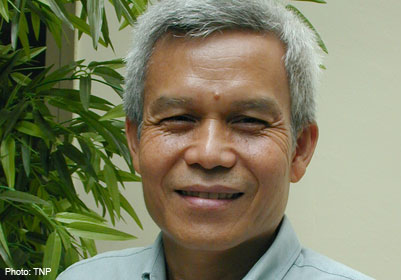
The ICJ today urged the Lao PDR government to reverse its inaction in determining the fate of community activist Sombath Somphone, who was allegedly subjected to enforced disappearance a year ago.
In a legal memorandum on the one-year anniversary of Sombath’s enforced disappearance, the ICJ called on the Lao authorities to fulfill their country’s obligations under international law and carry out a thorough and impartial investigation into his whereabouts.
It also said the government must cooperate with regional and international human rights mechanisms, particularly the ASEAN Intergovernmental Commission on Human Rights (AICHR) and the UN Working Group on Enforced and Involuntary Disappearances.
“It is deplorable that one year after Sombath Somphone was abducted after being stopped by traffic police, the public prosecutor has yet to institute formal
or criminal proceedings into his disappearance’’, said Sam Zarifi, ICJ Asia-Pacific regional director.
“The government of the Lao People’s Democratic Republic must immediately take effective measure to ensure animpartial and thorough investigation and bring justice to those responsible for crimes against Sombath Somphone,” he added.
Sixty-two-year old Sombath Somphone, Lao PDR’s most prominent community development advocate and a Ramon Magsaysay Award winner, was last seen on December 15, 2013, on a road in the capital Vientiane.
Closed circuit Television (CCTV) footage showed him being stopped at a police checkpoint, exiting his vehicle, getting into another vehicle with unidentified men and being driven away. He has not been seen since.
The Lao PDR government has denied any involvement in Sombath Somphone’s abduction. But reports released by police reveal a wholly inadequate investigation that lacks any credible explanation as to his fate or whereabouts.
In January this year, the ICJ called on the AICHR to play a proactive role in the case and to use the opportunity to address issues of enforced and involuntary disappearances in the region. To date, the AICHR has yet to take any meaningful action.
If the AICHR is to have any meaning, it must fulfill its mandate under Article 4, paragraph 1.11 of its Terms of Reference and develop a common position and strategy for tackling the widespread impunity of all acts of enforced disappearances in ASEAN, the legal memorandum said.
“An effective investigation, conducted in accordance with international standards, is essential in order that family members of Sombath Somphone and the public as a whole may discover the truth about his fate and whereabouts, and bring justice and reparation,’’ said Zarifi.
Background
Sombath Somphone is the founder and former director of the Participatory Development Training Center (PADETC), a non-governmental organization that supports holistic education and youth development as well as promoting eco-friendly technologies and micro-enterprises.
In October 2012, Sombath assisted the Lao government and non-governmental organizations convene an Asia-Europe People’s Forum (AEPF). The event was widely attended, drawing 948 participants from Lao PDR as well as other Asian countries.
It was the first time groups publicly criticized human rights abuses in Lao PDR, a Communist-run Southeast Asian country bordering Thailand, Cambodia, Vietnam, Myanmar and China.
The legal memorandum also covers the right of a family member to the right to information in such cases of enforced disappearances pursuant to both international standards as well as domestic laws in Lao PDR.
Recommendations
The key recommendations in the legal memorandum include:
(a) The public prosecutor, to launch a credible, prompt, thorough, impartial and effective investigation into the fate and whereabouts of Sombath Somphone. In the event that the public prosecutor fails to do so, an independent and credible authority should be established to undertake prompt, thorough and impartial investigation, consistent with international standards, into the alleged enforced disappearance as well as allegations of arbitrary detention, torture or ill-treatment;
(b) In furtherance of this investigation, the investigating authority should immediately seek and accept assistance from foreign experts on analysis of forensic evidence; and
(c) The investigating authority should provide relevant material and conclusions from any investigation to Sombath Somphone’s wife, to the extent compatible with the prosecution of the case.
CONTACT:
Sam Zarifi, ICJ Asia-Pacific Regional Director, (Bangkok), t:+66 807819002, e-mail: sam.zarifi(a)icj.org
Craig Knowles, ICJ Media & Communications, (Bangkok), t:+66 819077653, e-mail: craig.knowles(a)icj.org
Lao-Legal Memorandum-annex on the case of Sombath Somphone-advocay-2013 (download in pdf)