Jul 11, 2019 | Advocacy, Non-legal submissions
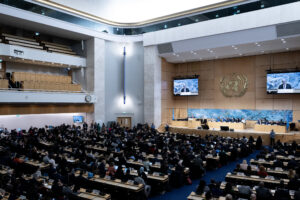
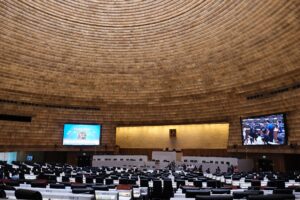
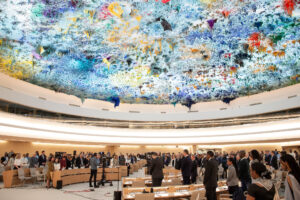
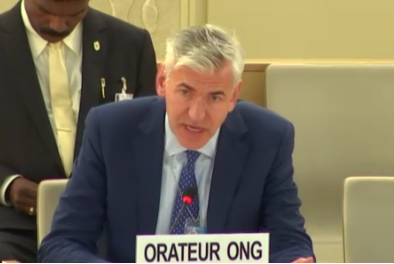
The ICJ today called on the Human Rights Council to seek to allow the International Commission Against Impunity in Guatemala (CICIG) to continue its essential work, and to promote similar initiatives elsewhere.
The statement, delivered during a general debate on technical cooperation, read as follows:
“The International Commission of Jurists (ICJ) welcomes the technical cooperation the United Nations has provided to the International Commission Against Impunity in Guatemala (CICIG).
For more than ten years, the CICIG has been essential to the fight against corruption and impunity in Guatemala. It has provided invaluable support to prosecutors and judges in the investigation and and trial of major crimes of corruption.
The combination of provision of technical assistance and actual participation in the proceedings as “querellante adhesivo” (“complementary prosecutor”) has been important to the CICIG’s effectiveness. For instance, the CICIG helped ensure that investigations took place into high-level officers from the Government and against people that had illegally financed their public campaigns. Several public officers have been brought to justice.
The ICJ therefore expresses its deepest concern that the Government of Guatemala has decided to allow the mandate of the CICIG to expire on the 3rd of September, despite its role remaining as essential as ever to the fight against corruption and impunity in the country.
We urge the Human Rights Council to seek to allow the work of the CICIG to continue, as well as to promote more generally the important potential of UN involvement in such mechanisms to strengthen the fight against impunity at the national level.”
Jul 9, 2019
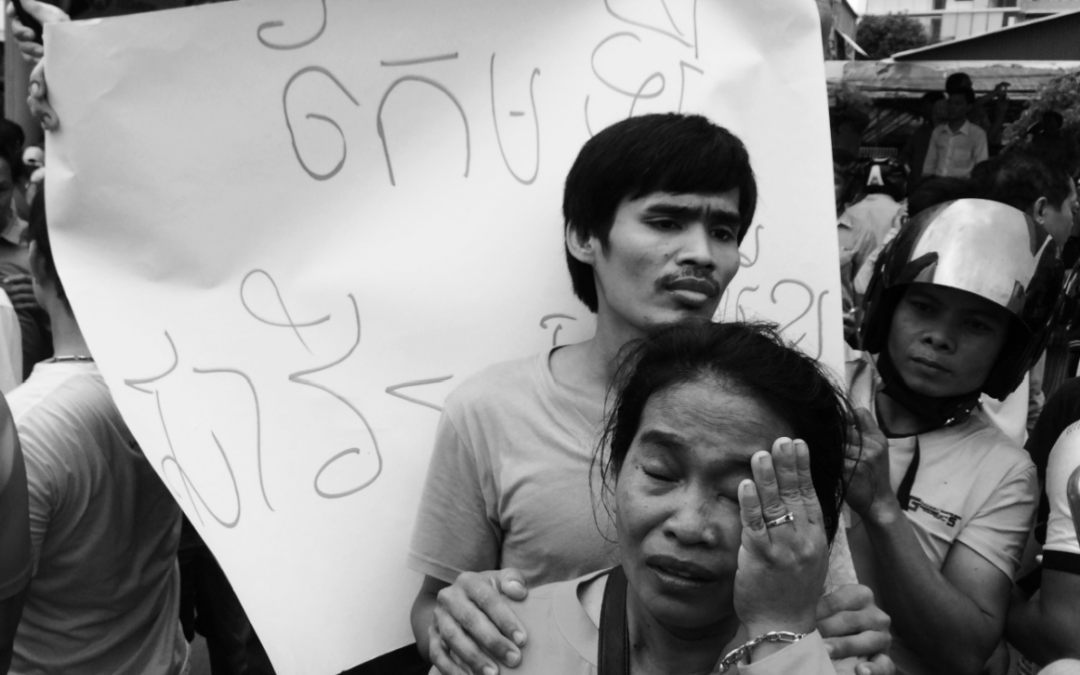
Today, on the third anniversary of the killing of prominent political commentator and human rights defender Kem Ley, the ICJ and 21 other civil society organizations renewed their call on the Cambodian government to establish an independent and impartial Commission of Inquiry to conduct a thorough and effective investigation into his killing.
“It has been three years since significant gaps were highlighted in the investigation and trial of Kem Ley’s case, which need to be remedied through an independent, impartial and effective investigation,” said Frederick Rawski, ICJ’s Director for Asia and the Pacific.
“The lack of progress reflects a clear lack of political will by the Cambodian government towards meeting its obligations under international law to fully and impartially investigate a potentially unlawful death and protect the rights to life and to effective remedy,” he added.
On 10 July 2016, Kem Ley was shot and killed while having a morning coffee at a gas station on Monivong Boulevard in central Phnom Penh. On 23 March 2017, after a half-day trial hearing, the Phnom Penh Municipal Court found Oeuth Ang – the suspect arrested by authorities who identified himself as “Choub Samlab” or ‘Meet to Kill’ – guilty of Kem Ley’s murder, and sentenced him to life imprisonment.
On 24 May 2019, Cambodia’s Supreme Court rejected Oeuth Ang’s appeal against his sentence and upheld his life imprisonment term.
On 23 March 2017, the ICJ, Human Rights Watch and Amnesty International highlighted eight specific issues that had been inadequately investigated during the trial of Oeuth Ang, and called for an investigation in line with international standards, including the International Covenant on Civil and Political Rights (ICCPR) and the Revised United Nations Manual on the Effective Prevention and Investigation of Extra-legal, Arbitrary and Summary Executions, known as the Minnesota Protocol (2016).
The upholding of Oeuth Ang’s sentence by Cambodia’s highest court in May 2019 – despite the failure of lower courts to sufficiently address shortcomings in his trial – also raises serious concern as to the lack of independence of the judiciary in Cambodia.
The lower courts that considered the case were the Phnom Penh Municipal Court and then the Court of Appeal, which rejected Oeuth Ang’s first appeal, before he then appealed to the Supreme Court, where his appeal against his sentence was also dismissed.
These courts did not address the clear shortcomings that had marred the investigation and the original trial before the municipal court.
In October 2017, an ICJ report found that the lack of independent judges and prosecutors was the “single largest problem facing the Cambodian justice system” – where “the rule of law is virtually absent” and political interference and corruption in cases are endemic.
Given the lack of trust and confidence in the impartiality, independence and competence of the Cambodian judicial system, the civil society organizations have urged the Cambodian authorities to request that an appropriate body with independent experts, such as a Commission of Inquiry, be established under the auspices of the United Nations into Kem Ley’s case.
Cambodia-Kem Ley 3rd year-Advocacy-open letter-2019-ENG (full call in PDF)
Read also
Cambodia: Commission of Inquiry into killing of Kem Ley should be established without further delay
Cambodia: request to create a commission of inquiry into the killing of Kem Ley
Cambodia: significant questions remain after guilty verdict in Kem Ley trial
Cambodia: Kem Ley’s killing demands immediate credible and impartial investigation
Contact
Kingsley Abbott, ICJ Senior Legal Adviser, e: kingsley.abbott(a)icj.org
Jul 9, 2019
The ICJ today published a legal briefing (3 pages in Burmese and 2 pages in English) on Myanmar’s Child Rights Bill, which is under consideration by the Union Parliament.
The stated objectives of the Child Rights Bill are welcomed, particularly the commitment to implement Myanmar’s obligations under the Convention on the Rights of the Child (CRC).
However, based on drafts of the Bill that the ICJ has reviewed, the organization is concerned that if passed into law as presently formulated, the Union Parliament would miss a significant opportunity to protect the rights of those children throughout Myanmar who face discrimination based on race or ethnicity, and who experience human rights violations as a result.
Because the Bill does not sufficiently protect the right of a child to acquire citizenship of Myanmar, the Bill fails to meet its stated objectives, and also fails to comply with and implement the State’s international human rights law obligations under the CRC.
The ICJ provides a recommendation for legislators to amend the Bill before it is passed into law, in order to sufficiently protect the rights of a child to acquire citizenship/nationality, and to implement the State’s obligations under the CRC.
Contact:
Sean Bain, Legal Adviser for the ICJ, sean.bain@icj.org
Myanmar-Child Bill-Advocacy-Analysis brief-2019-ENG (full analysis, English, in PDF)
Myanmar-ChildBill-Advocacy-Analysis brief-2019-BUR (full analysis, Burmese, in PDF

Jul 8, 2019 | Comunicados de prensa, Informes, Multimedia, Noticias, Publicaciones
Las autoridades venezolanas deben tomar medidas de inmediato para restaurar las instituciones democráticas y el funcionamiento del estado de derecho, lo que incluye disolver la Asamblea Nacional Constituyente y restaurar los poderes constitucionales de la Asamblea Nacional, dijo hoy la CIJ.
Sin lugar para la deliberación, el informe más reciente de una serie sobre derechos humanos y estado de derecho en Venezuela, aborda aspectos profundamente problemáticos con respecto a la creación, composición y funcionamiento de la Asamblea Nacional Constituyente de Venezuela, la cual actualmente detenta funciones legislativas, y su devastador efecto para el Estado de Derecho en ese país.
El reporte muestra que la Asamblea Nacional Constituyente, instalada el 4 de agosto en virtud un decreto ejecutivo del Presidente Nicolás Maduro, ha desplazado la autoridad de la constitucionalmente establecida Asamblea Nacional.
“La ANC fue creada unilateralmente por el Presidente, sin refrendación popular mediante un referendo, configurando una evidente violación a la Constitución, y desde entonces ha actuado como un cuerpo sin control o respeto por el estado de derecho,” dijo Sam Zarifi, Secretario General de la ICJ.
Inicialmente creada para redactar una nueva Constitución, la Asamblea Nacional Constituyente ha sido usada para usurpar funciones legislativas y así aprobar medidas de orden administrativo, electoral y legislativo en favor de la agenda del Poder Ejecutivo, establece el reporte.
El informe documenta cómo la Asamblea Nacional Constituyente adelantó elecciones presidenciales; levantó la inmunidad parlamentaria de diputados de la Asamblea Nacional para permitir su arresto y enjuiciamiento; designó a las autoridades de más alto nivel; y aprobó leyes discriminatorias que criminalizan la libertad de expresión y asociación.
Entre otras cosas, la CIJ recomienda a las autoridades venezolanas que tomen medidas para que:
- Cese el funcionamiento de la Asamblea Nacional Constituyente y se reestablezcan los poderes constitucionales de la Asamblea Nacional.
- Se permita a la Asamblea Nacional revisar los actos adoptados por la Asamblea Nacional Constituyente, a fin de dejarlos sin efecto total o parcialmente, de manera inmediata o condicional, en aras de preservar la seguridad jurídica.
Contactos:
Sam Zarifi: Secretario General de la CIJ; t +41 79 726 44 15; e sam.zarifi(a)icj.org
Santiago Martínez Neira: abogado consultor de la CIJ; e santiago.mn(a)gmail.com
Venezuela-Sin Lugar para la deliberacion-Publications-Reports- fact findings mission reports-2019-SPA (Informe, en PDF)
Video de un evento paralelo sobre la crisis de derechos humanos en Venezuela, organizado conjuntamente con Amesty International:
https://www.facebook.com/ridhglobal/videos/1206399322898690/

Jul 8, 2019
The Venezuelan authorities must take immediate steps to recover the country’s democratic institutions and the functioning of the rule of law, including disbanding the National Constituent Assembly and allowing the National Assembly to resume its Constitutional authority, the ICJ said today in a new report and at a webcast event.
No Room for Debate, the latest in a series of reports on human rights and the rule of law in Venezuela, addresses the deeply problematic aspects concerning the creation, composition and functioning of the National Constituent Assembly (NCA) of Venezuela, presently wielding legislative power, and its devastating effect on the rule of law in the country.
The report shows how the National Constituent Assembly, installed on 4 August 2017 pursuant to an executive decree by President Nicolás Maduro, has displaced the authority of the country’s constitutionally established legislature.
“The NCA was created unilaterally by the President, without popular endorsement through a referendum, in blatant violation of the Constitution, and ever since has acted in an unchecked manner and beyond the rule of law,” said Sam Zarifi, ICJ Secretary General.
Initially convened to prepare a new Constitution, the National Constituent Assembly has been used to usurp legislative functions in order to pass electoral, administrative and legislative measures in support of the Executive Branch’s agenda, the ICJ report says.
It documents how the National Constituent Assembly called early presidential elections; rescinded legislative immunity for National Assembly deputies to enable their arrest and prosecution; appointed top-ranking executive authorities; and adopted discriminatory measures that penalize freedom of expression and association.
Among several recommendations, the ICJ urges the State authorities to:
- Rescind the National Constituent Assembly and restore the Constitutional powers of the National Assembly.
- Allow the National Assembly to review the orders issued by the National Constituent Assembly, to render them totally or partially ineffective, immediately or conditionally, in the interest of ensuring legal certainty.
Contact:
Sam Zarifi, ICJ Secretary General, t +41 79 726 44 15 ; e sam.zarifi(a)icj.org
Santiago Martínez, ICJ Consultant; santiago.mn(a)gmail.com
Venezuela-No room for debate-Publications-Reports-Fact finding mission reports-2019-ENG (full report in PDF)
Watch the video (mostly in Spanish) of a side event on the human rights crisis in Venezuela, organized jointly with Amnesty International.
https://www.facebook.com/ridhglobal/videos/1206399322898690/