Sep 13, 2013 | Новости, Статьи
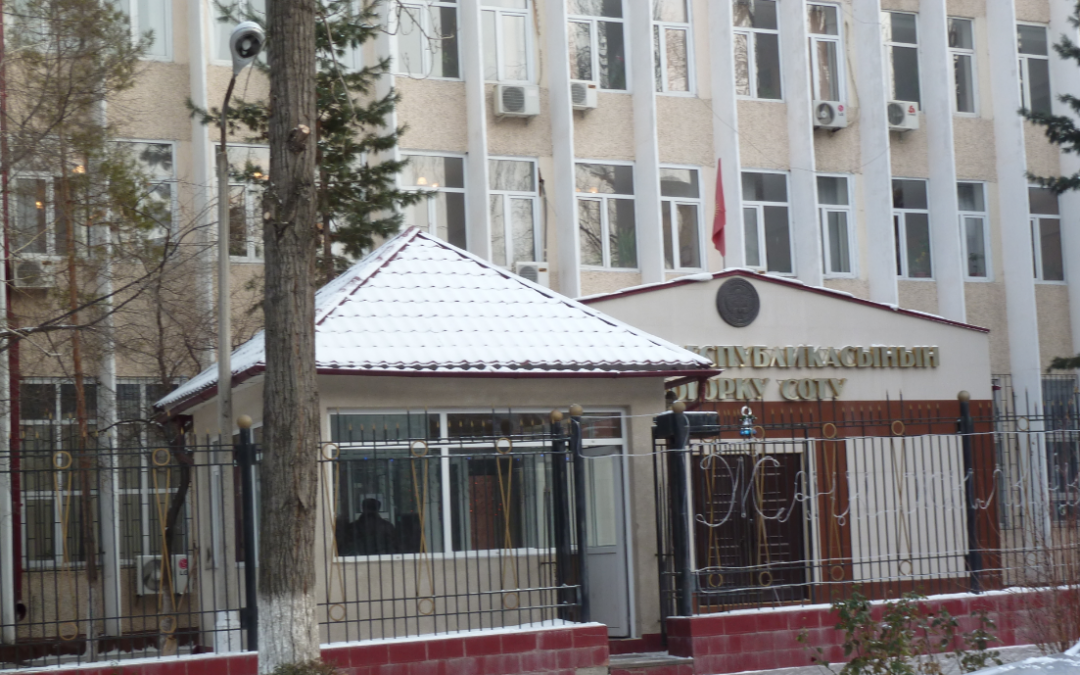
МКЮ приветствует решение Ошского областного суда об отмене частного определения о возбуждении дисциплинарного производства в отношении двух адвокатов, представляющих интересы жертвы сексуального насилия.
МКЮ направила миссию для наблюдения за сегодняшним слушанием. Миссия не обнаружила вопросов, вызывающих озабоченность в отношении наблюдаемого апелляционного процесса.
3 июля 2013 года, Ошский городской суд вынес частное определение о возбуждении дисциплинарного производства в отношении двух адвокатов, Валериана Вахитова , Хусанбая Салиева, за принятие ими процессуальных действий, предусмотренных законодательством Кыргызстана, включая, ходатайства в вышестоящие судебные инстанции или ходатайства об отводе судьи в ходе, а не не до начала судебного процесса.
Сегодня Ошский областной суд поддержал апелляцию и отменил решение о возбуждении дисциплинарного производства в отношении адвокатов. Дело касается обвинения учителя в религиозном учреждении в совершении половых актов с одним из своих учеников – девятилетним мальчиком.
Представители обвиняемого утверждают, что он не подлежит уголовной ответственности по причине невменяемости, что оспаривается адвокатами потерпевшего. Основное судебное разбирательство продолжается.
Наблюдение за судебным разбирательством осуществлялось миссией МКЮ: Олегом Левицким (Украина) и Алмазой Османовой (Кыргызская Республика).
Наблюдатели встретились с судом, прокурором, представителями потерпевших и подсудимого.
«Мы приветствуем решение об отмене постановление о возбуждении дисциплинарного производства в отношении адвокатов», – заявила Роушин Пиллей, директор Региональной программы МКЮ по Европе. «В соответствии с международными стандартами, обязанностью адвокатов является оказание помощи своим клиентам любыми надлежащими средствами, а также осуществление процессуальных действий для защиты их интересов. В этой связи, наказание адвокатов за их добросовестную работу противоречило бы обязательствам государства гарантировать, адвокатам возможность выполнения своих функций в обстановке, свободной от угроз, препятствий, запугивания или неоправданного вмешательства», – добавила она.
Контакты:
Роушин Пиллей, директор Региональной программы МКЮ по Европе, roisin.pillay(a)icj.org
Тимур Шакиров, правовой советник Региональной программы МКЮ по Европе, temur.shakirov(a)icj.org
Kyrgyzstan-Osh_Lawyers_Trial Observation-news-web story-2013-rus (полный текст, PDF)
Sep 13, 2013 | News
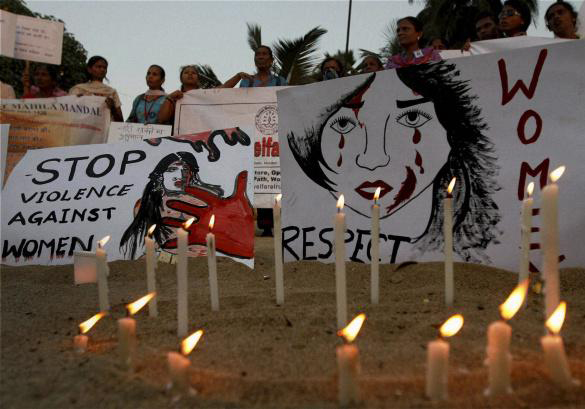
The ICJ denounced the death sentences handed down in the Delhi gang rape and murder case and urged the Indian Government to take steps to abolish the death penalty in law and practice.
A special fast-track court today sentenced to death four men convicted for the gang rape and murder of a 23-year-old student on 16 December 2012.
The fifth accused, who was a minor at the time he committed the crime, was convicted and sentenced to three years in a reform home by a juvenile court on 31 August 2013.
“Women’s rights groups in India have taken a firm stance against the death penalty and strongly believe that the death penalty is counterproductive in every way to preventing and curtailing sexual violence against women,” said Vrinda Grover, leading human rights lawyer and ICJ’s South Asia advocate.
The ICJ considers the death penalty to constitute a violation of the right to life and the right not to be subjected to cruel, inhuman or degrading punishment.
“Those who commit acts of violence against women must be prosecuted and brought to justice,” said Sheila Varadan, ICJ’s South Asia Legal Advisor. “But the sentence and the administration of the death penalty constitutes a perversion of justice.”
“Instead of giving in to the vengeful demand for killing the perpetrators of this horrific crime, the Indian Government must take concrete steps to prevent, investigate and punish acts of violence against women,” Varadan added.
A high level commission constituted to reform Indian law on violence against women, led by the late Chief Justice of the Indian Supreme Court Justice J.S. Verma, recommended that the death penalty should not be used in rape cases.
“In demanding and securing the death penalty, Indian authorities have created a spectacle that distracts from their responsibility for systemic change in the legal system which alone will create deterrence in law,” said Vrinda Grover.
The ICJ calls on India to join the great majority of States around the world in rejecting the use of the death penalty.
To that end, India should impose a moratorium on the practice and take steps towards its abolition, as prescribed by repeated United Nations General Assembly Resolutions, the ICJ says.
Contacts:
Sheila Varadan (Bangkok), ICJ South Asia Legal Advisor, t: +66 857 200 723 (mobile); email: sheila.varadan(a)icj.org
Ben Schonveld (Kathmandu), ICJ South Asia Director, t: +977 980 459 6661 (mobile); email: ben.schonveld(a)icj.org
Additional Information
The United Nations has adopted various instruments in support of the call for the worldwide abolition of the death penalty. In 2007, the UN General Assembly adopted a resolution emphasizing that ‘that the use of the death penalty undermines human dignity’ and calling for the establishment of a moratorium on the use of the death penalty ‘with a view to abolishing the death penalty.’ The resolution was reaffirmed in 2008, 2010, and most recently in December 2012, when a large majority of UN Member States voted in favor of a worldwide moratorium on executions as a step towards the death penalty’s abolition.
Currently, 150 countries worldwide, including 30 states in Asia and the Pacific region, have abolished the death penalty in law or in practice.
Rape and other forms of sexual violence against women are pervasive in India. According to the National Crime Records Bureau, 24,923 rape cases were registered in India in 2012. Experts believe that the actual number is much higher, as rape is vastly under-reported. In most cases, however, victims and survivors get no justice from a criminal justice system that has been widely characterized as gender-insensitive, under-resourced and corrupt.
Photo: PTI
Sep 12, 2013 | News, Uncategorized
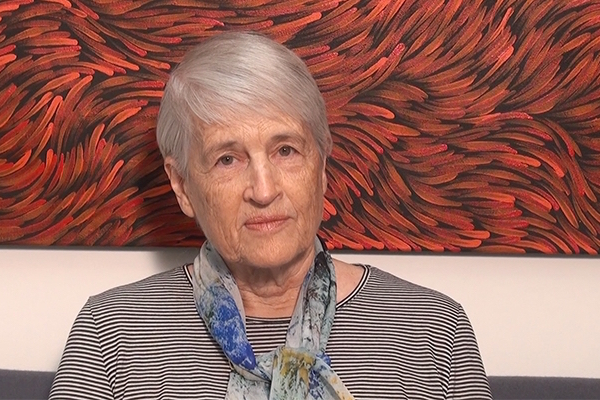
Justice Elizabeth Evatt AC (photo), will be observing the hearing of the appeal of Anwar Ibrahim’s case from 17 to 18 September 2013 at the Court of Appeal in Putrajaya.
Justice Evatt is the first female judge to be appointed to an Australian Federal Court, a former member of the United Nations Human Rights Committee, and a commissioner of the ICJ.
Anwar Ibrahim is a Malaysian politician and is currently the leader of the opposition party, Parti Keadilan Rakyat, and the opposition alliance known as Pakatan Rakyat.
The appeal hearing that Justice Elizabeth Evatt will be observing emerged from the 2008 charges filed against Anwar Ibrahim immediately after the general elections held that year.
He was charged for allegedly committing sodomy, which is a crime under Section 377B of the Penal Code and carries the penalty of up to 20 years of imprisonment and whipping.
The High Court acquitted Anwar Ibrahim on 9 January 2012.
This is the second time that Anwar Ibrahim is facing sodomy charges after his dismissal from the Malaysian Cabinet in 1998.
In 2004, The ICJ also sent a representative to observe the sodomy trial of Anwar Ibrahim, where the Federal Court overturned the High Court decision to convict him.
The ICJ called the Federal Court’s ruling “a step in the right direction in upholding the rule of law”.
Justice Evatt’s mandate as ICJ’s high-level observer to the appeal hearing includes monitoring the fairness of the proceedings against Anwar Ibrahim in the light of relevant international standards.
These standards include, among others the UN Basic Principles on the Independence of Judges, which set out standards on the independence and impartiality of judges, and the UN Guidelines on the Role of Prosecutors, which set out standards on the independence of prosecutors.
Justice Evatt will also be evaluating whether the prosecution under Section 377B of the Malaysian Penal Code is being used in this case to suppress political dissent, contrary to the right to freedom of expression.
“The right to observe trials stems from the general right to promote and secure the protection and realization of human rights. Trial observation is a key tool in monitoring the respect for human rights and the rule of law. It is an effective method to examine the level of independence and impartiality of a country’s criminal justice system,” said Emerlynne Gil, ICJ’s International Legal Adviser on Southeast Asia. “Trial monitoring also serves to promote better compliance with both domestic law and international standards that aim to ensure protection of human rights, including the rights to fair trial and due process.”
Contact:
Emerlynne Gil, International Legal Adviser for the ICJ Asia & Pacific Programme, t +662 6198477 ext. 206; email: emerlynne.gil(a)icj.org
Sep 12, 2013 | News
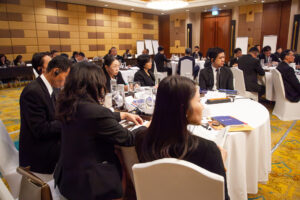
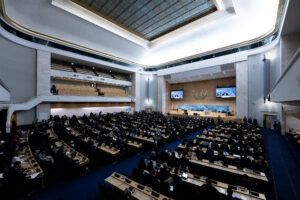
Yesterday, during the 24th session of the UN Human Rights Council, the ICJ and TRIAL (Swiss Association against Impunity) jointly held a parallel event on promoting accountability through human rights mechanisms in Geneva.
The event was co-sponsored by the Permanent Missions of Switzerland, Estonia and Costa Rica to the United Nations Office at Geneva.
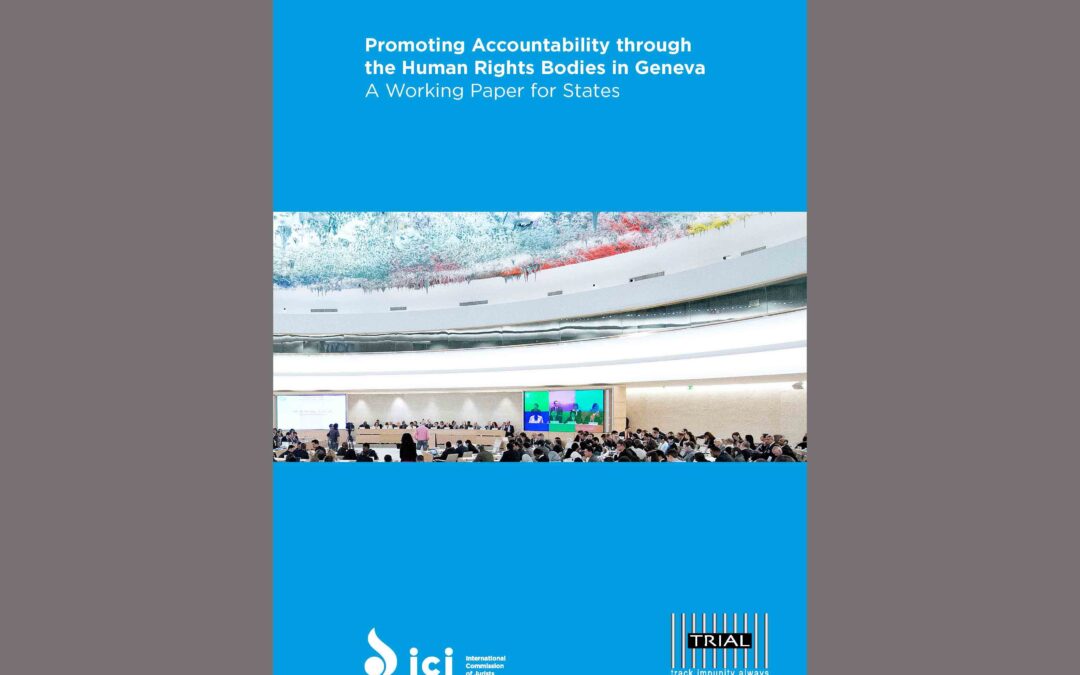
A corresponding report produced by ICJ and TRIAL was also launched at this event in two versions, one aimed at civil society and another aimed at States.
Panellists at this event included Ian Seiderman of the ICJ, Gabriella Citroni of TRIAL and Theo van Boven, former Special Rapporteur on torture and other cruel, inhuman or degrading treatment or punishment and ICJ Honorary Commissioner.
Mona Rishmawi of the Office of the High Commissioner for Human Rights (OHCHR) chaired the event.
The main topic of this event was the ICJ-TRIAL report, which reviews the legal framework for promoting accountability and suggests possible action by civil society and States to engage with the human rights mechanisms in Geneva to better promote and achieve accountability for human rights violations.
The role of national mechanisms, such as national human rights institutions, working in cooperation with the UN mechanisms was also highlighted.
The report focuses specifically on the Human Rights Council and its subsidiary bodies, such as the Universal Periodic Review and the special procedures mechanisms.
OHCHR’s role was further emphasised in regards to sharing best practices as well as ensuring follow-up to issues of accountability as they come to the attention to the UN.
Sep 11, 2013
TRIAL (Track Impunity Always) and the ICJ presented a new publication on the potentials of Geneva-based human rights bodies in the fight against impunity and in promoting accountability of individuals responsible for crimes under international law and gross human rights violations.
The publication Promoting Accountability through the Human Rights Bodies in Geneva focuses on bodies such as the Human Rights Council, the Universal Periodic Review (UPR), Special Procedures and Treaty Bodies.
The report proposes initiatives through which States, civil society and other stakeholders can better engage the Human Rights Council and other Geneva-based human rights mechanisms promoting better accountability. They include:
- Ensuring that the Human Rights Council focuses more consistently on accountability, for instance through the introduction of a periodic resolution on international justice and accountability and with greater attention given to international criminal law and the International Criminal Court;
- Ensuring that accountability-related action points are systematically taken up by the Human Rights Council in thematic and country-specific resolutions, as well as in recommendations made within the UPR mechanism;
- Ensuring that Special Procedures and Commissions of Inquiry engage on a deeper basis with accountability-related issues, formulating appropriate recommendations and conducting studies where needed and appropriate.
“Although the UN human rights system has made great strides over the years in the promotion and protection of human rights, one area in which it has fallen short of its potential is in the area of combating impunity,” said Ian Seiderman, ICJ’s Legal & Policy Director. “As long as perpetrators of gross human rights violations avoid facing justice, human rights can never be fully realized.”
Gabriella Citroni, TRIAL’s Senior Legal Adviser added: “promoting and mainstreaming issues related to the fight against impunity requires cooperation between all stakeholders, in particular States and civil society organizations. The publication aims at fostering joint efforts to make accountability a key issue in the discussions and activities undertaken by Geneva-based human rights bodies.”
Contacts
Gabriella Citroni, Senior Legal Adviser, TRIAL,: +41 22 321 61 10 ; email: gabriella.citroni(a)trial-ch.org
Ian Seiderman, Director, Legal & Policy, ICJ, t: +41 22 979 3837; email: ian.seiderman(at)icj.org
Universal-ICJTRIAL-Geneva bodies-impunity-Publications-report-2013 (full text of version for States in pdf)
Universal-ICJTRIAL-Geneva bodies-impunity-Publications-report.2013 (full text of version for NGOs in pdf)
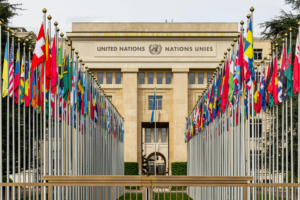
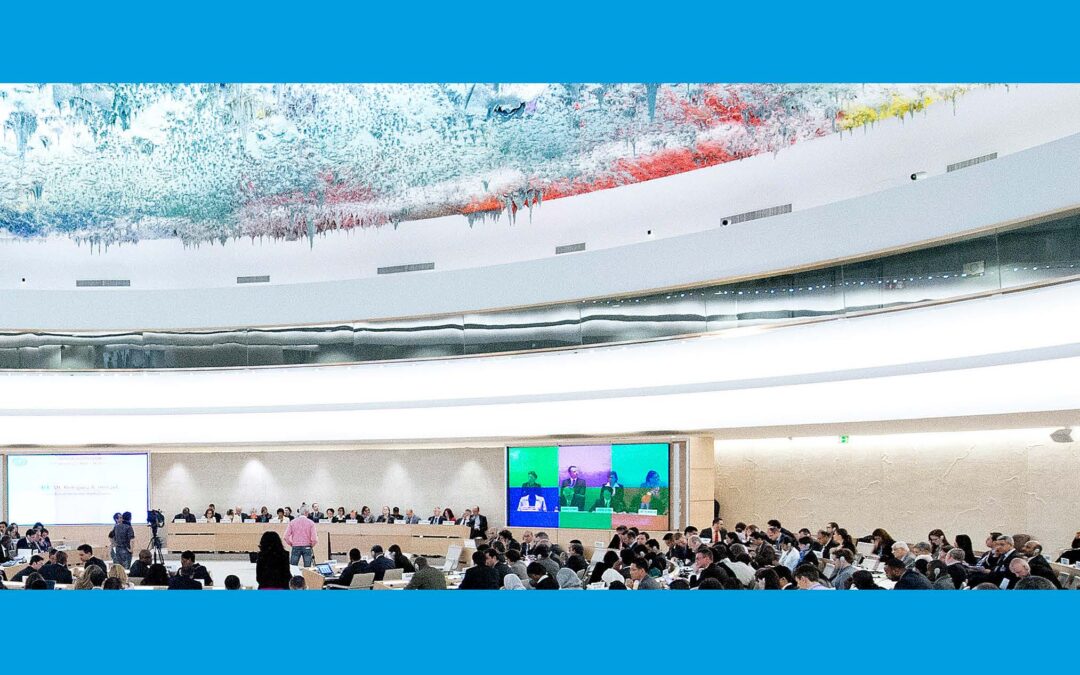
Photo: UN/Jean-Marc Ferré