Sep 17, 2013 | News
The ICJ said that the death sentence handed down today by Bangladesh’s Supreme Court against Abdul Quader Mollah is incompatible with international principles of fair trial.
If carried out, the sentence would violate his right to life and freedom from cruel, inhuman, or degrading punishment.
On 17 September 2013, the Appellate Division of the Supreme Court of Bangladesh upheld the prosecution’s appeal to impose the death sentence on Abdul Quader Mollah (photo), the assistant Secretary-General of Jamaat-I-Islami.
Abdul Quader Mollah had received a life sentence on February 5, when the International Crimes Tribunal (ICT) convicted him on five counts, including murder and rape.
“The prosecution’s appeal to impose the death sentence on Abdul Quader Mollah was based on a law that was not in force when he was first convicted, and applying that law retroactively, especially for the death penalty, violates international law,” said Sam Zarifi, ICJ’s Asia-Pacific Director.
On 17 February 2013, Parliament passed an amendment to the International Criminal (Tribunals) Act 1973 to enable prosecutors to appeal a life sentence and seek the death penalty.
Before this amendment, the prosecution was only allowed to appeal if the accused was acquitted.
The ICJ says the retrospective application of the amendment in Abdul Quader Mollah’s case is incompatible with Bangladesh’s obligations under the International Covenant on Civil and Political Rights (ICCPR), including Article 15, which prohibits the imposition of a heavier penalty than provided for at the time the criminal offence was committed.
“Judgments such as these highlight the serious problems with the war crimes tribunal that undermine its legitimacy,” Zarifi further said. “The wounds of war can only be healed through a fair and transparent trial process that meets international standards of fair trial and due process of law.”
“It is essential that those responsible for committing atrocities during the Bangladeshi war of liberation are prosecuted and brought to justice,” Zarifi added. “But the death penalty perpetuates the cycle of violence and is a perversion of justice, and all the more so when it is imposed in violation of due process.”
The ICJ considers the death penalty in all cases to constitute a violation of the right to life and the right not to be subjected to cruel, inhuman or degrading punishment.
The ICJ calls on Bangladesh to join the great majority of States around the world in rejecting the use of the death penalty.
To that end, Bangladesh should impose a moratorium on the practice and take steps towards its abolition, as prescribed by repeated United Nations General Assembly Resolutions.
Contacts:
Sam Zarifi, ICJ Asia-Pacific Regional Director, (Bangkok), t:+66 807819002; email: sam.zarifi(at)icj.org
Sheila Varadan, ICJ Legal Advisor, South Asia Programme (Bangkok), t: +66 857200723; email: sheila.varadan(a)icj.org

Sep 17, 2013
The ICJ today called on all States to bolster humanitarian relief efforts and extend the reach of such efforts inside Syria.
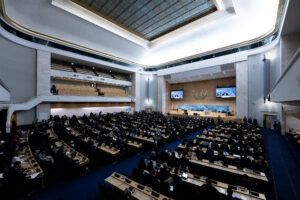
In an Interactive Dialogue with the Commission of Inquiry on the Syrian Arab Republic, the ICJ called on the Human Rights Council to continue to give attention to the situation in Syria, including by requesting the Security Council to urgently take effective measures aimed at the cessation of the large-scale loss of life in the country and to end the indiscriminate and disproportionate attacks on civilians and civilian objects, as well as any use of chemical weapons.
The Interactive Dialogue took place under Item 4 of the Human Rights Council’s agenda (human rights situations that require the Council’s attention) during the 24th regular session of the Council (9 to 27 September 2013).
Syria-HRC24-Item4-OralStatement-LegalSubmission-2013 (download full statement in PDF)
Sep 16, 2013 | News
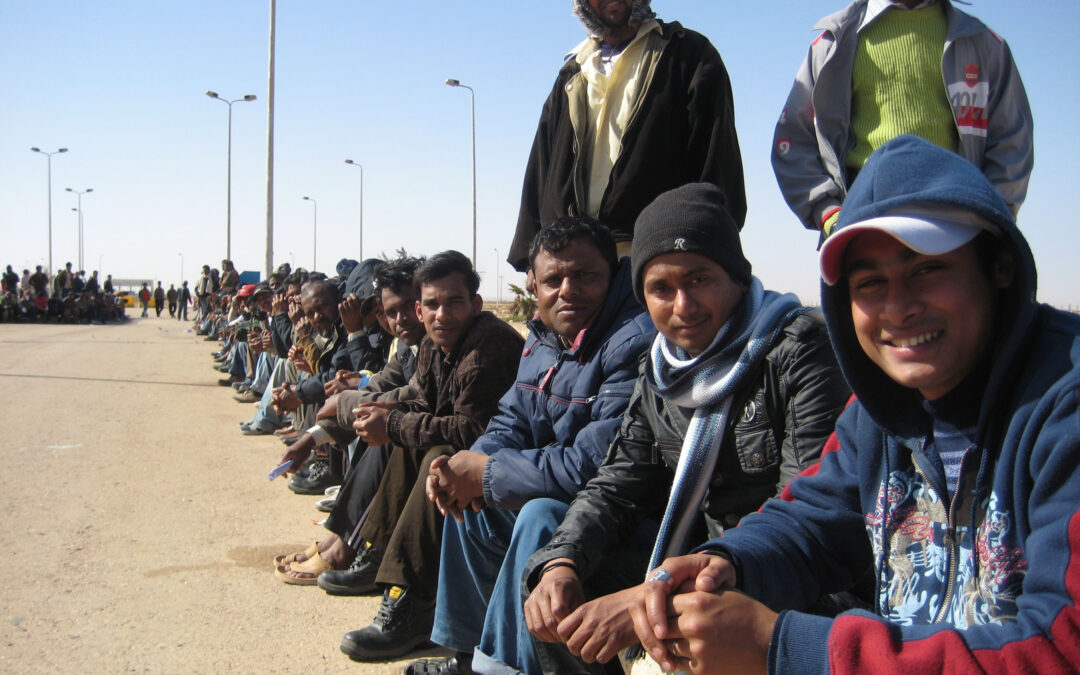
The ICJ, OSCE and Group 484 are holding a training on migration and international human rights law starting on Monday 16 September in Zlatibor (Serbia).
The training has been organized by the Organization for Security and Cooperation in Europe (OSCE) and the Serbian NGO “Group 484” and will be given by the International Commission of Jurists. It will focus on detention of migrants and human rights; economic, social and cultural rights of migrants; and access to international human rights mechanisms, drawing from the jurisprudence of the European Court of Human Rights, of the UN human rights systems and from EU law. The training will be centered on the ICJ Practitioners Guide no. 6: Migration and International Human Rights Law.
ICJJointSeminar-MigrationHumanRights-Agenda-Serbia-2013 (Download the agenda of the seminar)
Photo credit: © Stabilisation Unit/DFID (the DFID has no involvement in nor does support this event)

Sep 16, 2013
The ICJ today called on adherence by all States with the obligation to ensure effective and independent judicial supervision as a fundamental safeguard against arbitrary detention, and torture and other forms of ill-treatment.
Reflecting on the Secretary-General’s report on the protection of all persons deprived of their liberty, the ICJ’s statement was made during the General Debate under Item 3 of the Human Rights Council’s agenda (promotion and protection of all human rights) during the 24th regular session of the Council (9 to 27 September 2013).
HRC24-Item3-OralStatement-AdministrationJustice-LegalSubmission-2013 (download full statement in PDF)
A-HRC-24-28 (download Secretary-General’s report)
Sep 13, 2013 | News
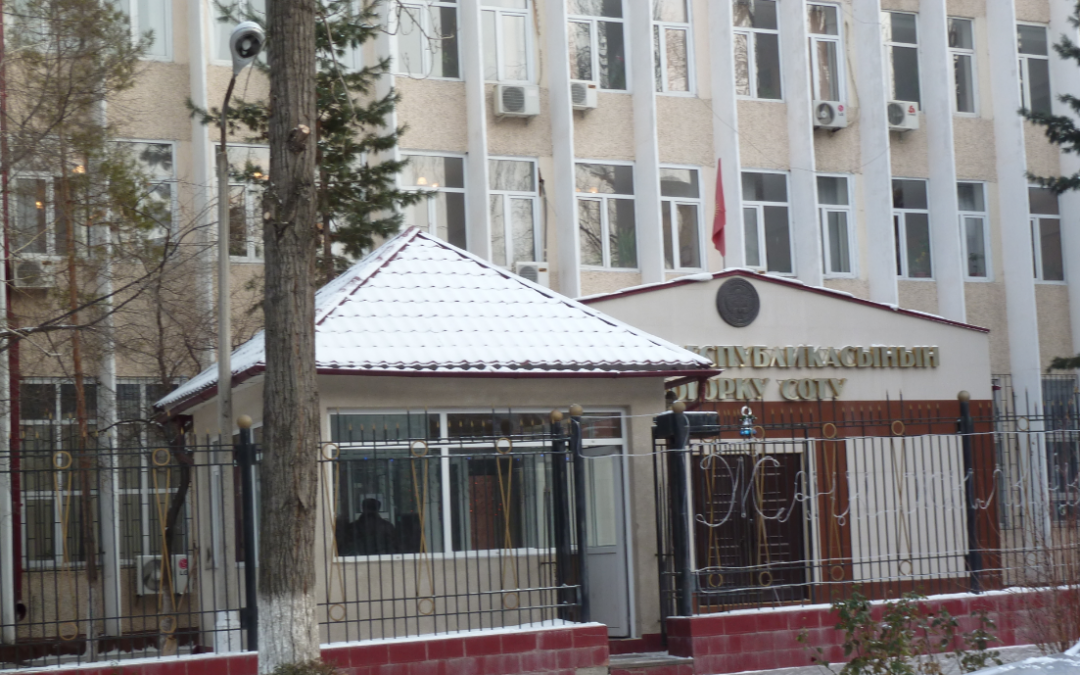
The ICJ welcomes the decision of the Osh Regional Court to overturn an intermediate ruling to initiate disciplinary proceedings against two lawyers representing the interests of a victim of sexual assault.
The ICJ sent a mission to observe today’s hearing. The mission raised no issues of concern regarding the conduct of the proceedings observed.
On 3 July 2013, the Osh City Court issued an intermediate ruling to initiate disciplinary proceedings against two lawyers, Valerian Vakhitov, Khusanbai Saliyev, for taking procedural steps provided for under Kyrgyzstan law, including filing motions to the upper judicial instances or filing motions to recuse the judge during and not before the trial.
Today, the Osh Regional Court upheld lawyers’ appeal and overturned the decision to initiate disciplinary proceedings against the lawyers.
The case concerns charges against a teacher in a religious institution for sexual acts with one of his students, a nine-year-old boy.
The representatives of the defendant alleged that he is not criminally responsible by reason of insanity – a proposition contested by the lawyers of the victim. The main trial is ongoing.
The trial was observed by an ICJ trial observation mission: Oleg Levytskyy (Ukraine) and Almaza Osmanova (Kyrgyz Republic).
The observers met with the court, the prosecutor, representatives of the victims and the defendant.
“We welcome the decision to overturn the ruling to initiate disciplinary proceedings against these lawyers,” said Róisín Pillay, Director of the ICJ Europe Regional Programme. “In accordance with international standards, it is the lawyers’ duty to assist their clients in every appropriate way and take legal action to protect their interests. Therefore punishing lawyers for their diligent work would run contrary to the obligation of the state to guarantee that lawyers can carry out their functions without intimidation, hindrance, harassment or improper interference.”
Contacts
Róisín Pillay, Director, ICJ Europe Programme, roisin.pillay(a)icj.org
Temur Shakirov, Legal Adviser, ICJ Europe Programme, temur.shakirov(a)icj.org
Kyrgyzstan-Osh_Lawyers_Trial Observation-news-web story-2013-rus (full text in pdf)