May 3, 2013 | Articles, Nouvelles, Plaidoyer
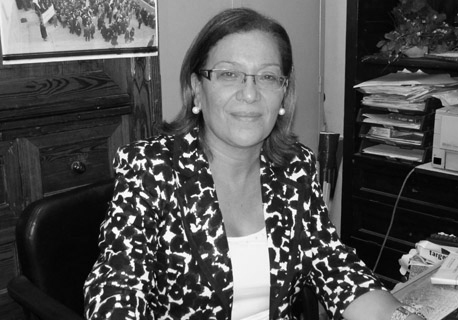
Aujourd’hui, la CIJ a adressé une lettre au ministre tunisien de l’intérieur et au ministre de la justice pour leur demander de prendre des mesures immédiates afin d’assurer la sécurité et l’intégrité physique du juge Kalthoum Kennou.
Le juge Kalthoum Kennou est un juge tunisien à la Cour de cassation, présidente de l’association tunisienne des magistrats et commissaire de la CIJ.
Cet appel intervient alors que le juge Kennou a reçu une lettre contenant de graves menaces de mort, exigeant son retrait de la magistrature.
Le juge Kennou est active dans la mise en place d’un pouvoir judiciaire indépendant ainsi que pour la protection des droits de l’Homme.
La CIJ condamne fermement ces menaces et tous les actes d’intimidation contre le système judiciaire et les défenseurs des droits de l’Homme en Tunisie.
La CIJ appelle également les autorités tunisiennes à ouvrir les enquêtes nécessaires pour trouver, poursuivre et punir les individus derrière ces menaces brutales.
Tunisia-Lettre Kalthoum Kennou – MoI-advocacy-2013 (Lettre complète en pdf)

Apr 30, 2013
The ICJ has submitted to the Human Rights Committee information in preparation for the Committee’s examination of the initial report of Malawi under the International Covenant on Civil and Political Rights (ICCPR).
During its session in July 2013, the Committee is to adopt a List of Issues for the examination in 2014 of the initial report of Malawi under the ICCPR. The ICJ’s submission raises issues and suggested questions to be put to the Government of Malawi in preparation for the examination in 2014. The ICJ’s submission addresses:
- Malawi’s obligation to give effect to the provisions of the ICCPR;
- The right to life;
- The prohibition against torture and other ill-treatment;
- Conditions of detention;
- Rights to privacy and non-discrimination, focusing on the situation of lesbian, gay, bisexual and transgender persons; and
- Right to family.
Malawi-HRCttee108-LOl-LegalSubmission-2013 (download submission in PDF)
Apr 29, 2013 | E-bulletin on counter-terrorism & human rights, News
Read the 72nd issue of ICJ’s monthly newsletter on proposed and actual changes in counter-terrorism laws, policies and practices and their impact on human rights at the national, regional and international levels. The E-Bulletin on Counter-Terrorism and Human...
Apr 29, 2013 | News
The Bahrain authorities must fully cooperate with the UN mechanisms and implement the recommendations of the Bahrain Independent Commission of Inquiry (BICI) set up by the Government of Bahrain in June 2011.
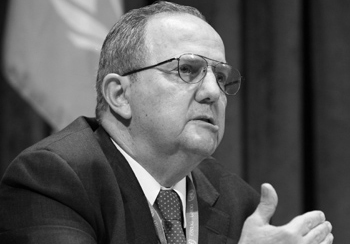
The ICJ further calls on the Bahrain authorities to ensure that the recommendations from the UN Universal Periodic Review process in September 2012 are implemented in full and in good faith and, to this end, immediately extend an invitation with specific dates to the UN Special Rapporteur on torture, Juan E. Méndez (photo).
The statement comes as the authorities in Bahrain effectively cancelled a visit of the Special Rapporteur for the second time, a previous visit in March 2012 also having been postponed at the last minute.
“As a former member of the BICI, I find it extremely disappointing that Bahrain has taken this decision for the second time. It keeps dangling the possibility of a visit when it is under pressure to do something about implementing the BICI recommendations,” said Sir Nigel Rodley, President of the ICJ. “One does not have to be a cynic to infer that once the pressure eases – for example, because the Human Rights Council has concluded its review of Bahrain’s human rights performance or the Formula One race is over – it can then withdraw its invitation. I hope the international community will take account of this pattern, when reacting to positive assurances from the authorities. Promises are no substitute for implementation.”
The report of the BICI, published in November 2011, documented numerous cases of torture and ill-treatment.
It further made crucial recommendations for reform so as to prevent these and other violations in the future, including effective investigations into all cases of torture and ill-treatment by an independent and impartial body; the establishment of a standing independent body to examine all complaints of torture or ill-treatment, excessive use of force or other abuses at the hands of the authorities; and the compensation and provision of remedies for all victims.
“The BICI’s recommendations included ones to address the serious problem of torture in Bahrain, a problem I had identified in the 1990s when I held the mandate Juan Mendez now discharges with consummate professionalism. One may perhaps be pardoned for considering that the only threat posed by the visit to the political situation is the fear of what information would be uncovered by the visit,” Sir Nigel Rodley concluded.
Contact:
Said Benarbia, ICJ Senior Legal Adviser of the Middle East and North Africa Programme, t: +41 22 979 3817, e-mail: said.benarbia(a)icj.org
UN Photo/Rick Bajornas
Apr 25, 2013 | News
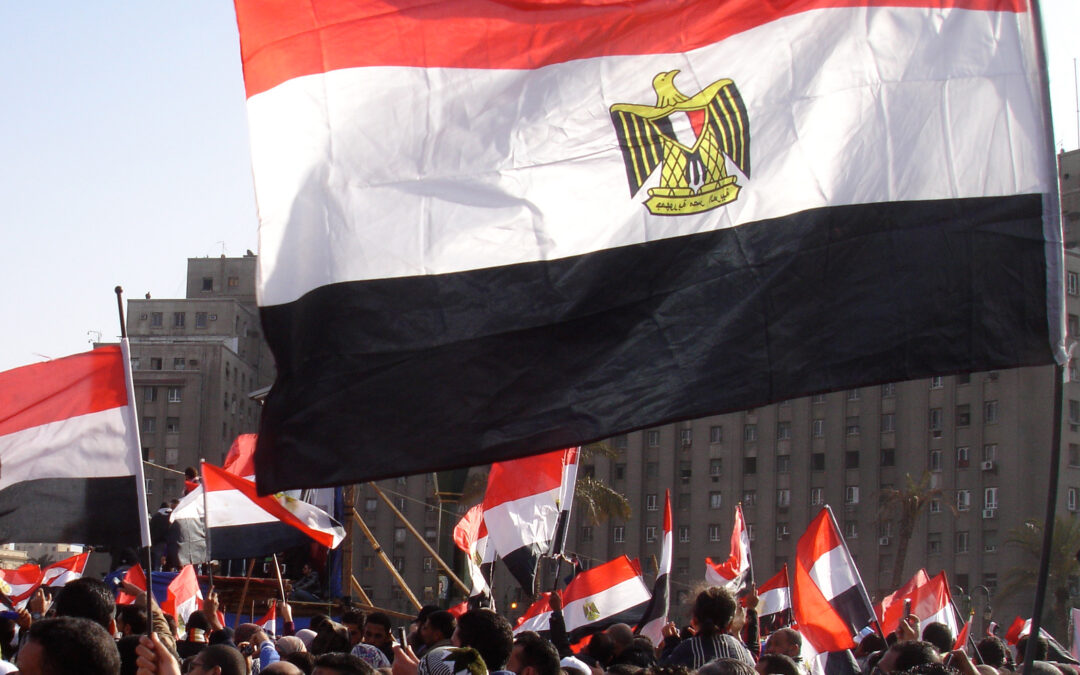
The ICJ calls on the Egyptian authorities to take immediate steps to guarantee the rights of victims of human rights violations to an effective remedy and to reparation for the serious harm many have suffered.
The authorities should initiate, as a matter of the highest priority, prompt, thorough, independent and impartial investigations into past and ongoing human rights abuses, including cases of arbitrary detention, torture and ill-treatment, and extrajudicial and other unlawful killings.
The statement comes as the ICJ concludes a high-level mission to address the human rights situation in Egypt and to examine the measures being taken by the authorities to address both the legacy of human rights abuses and to ensure accountability for them.
“The Egyptian authorities should ensure that the pattern of widespread and systematic human rights violations committed under the former regime is not repeated. This will involve the comprehensive reform of State institutions and the revision of the national legal framework with a view to ensuring that the rights of victims are safeguarded in line with international standards,” said Justice Kalthoum Kennou, ICJ Commissioner and member of an ICJ mission to Egypt. “Such reforms should target the police and security forces, the Office of the Public Prosecutor, the Forensic Medicine Office and the judicial system as a whole, including by restricting the jurisdiction of the military justice system to exclude civilians and all cases involving human rights violations.”
The ICJ notes that current reparation programmes, established by the government, have a restricted mandate, which has resulted in the arbitrary exclusion of numerous victims and their families from these programmes. They also do not ensure the accessibility of the range of reparations required under international law. Most importantly, such programmes have failed so far to ensure accountability for past and ongoing human rights violations.
“The very few proceedings against State officials have resulted in acquittals or sentences that are not commensurate with the gravity of the crimes committed. In order to end this cycle of impunity, the Egyptian authorities must hold those responsible for gross human rights violations accountable through criminal prosecutions,” said Alejandro Salinas, a Chilean lawyer and member of the ICJ mission. “They should also establish a transitional justice mechanism with sufficient guarantees of independence and with a comprehensive mandate to address the legacy of past and present human rights abuses, while ensuring that impunity does not become entrenched.”
The delegation was led by ICJ Commissioner, Justice Kalthoum Kennou, and Alejandro Salinas, and was supported by ICJ legal advisers, Alice Goodenough and Marya Farah. The delegation met with the then Minister of Justice, Ahmed Mekki, Justice Adel Omar Sherif of the Supreme Constitutional Court, the President and Secretary-General of the National Council for Human Rights, Hossam Al Gheryani and Abdallah El Ashaal, the Director of the National Council for the Care of the Revolution’s Martyrs, Families and Wounded, Khaled Badwy, the Vice President of the Court of Cassation and Secretary General of the High Judicial Council, Justice Mohamed Mahgoub, Chairman of the Human Rights Committee of the Shura Council, Ehab Kharrat, members of the judiciary, the legal profession and civil society, as well as a number of victims, and the families of victims of human rights violations committed before and after the departure of former President Mubarak.
Contact:
Said Benarbia, ICJ Senior Legal Adviser of the Middle East and North Africa Programme, tel: 41 22 979 38 17, e-mail: said.benarbia(a)icj.org
Egypt-ICJ calls auhorities-Press release-2013-Arabic (full text in PDF)