Jun 28, 2019 | News, Publications, Reports, Thematic reports
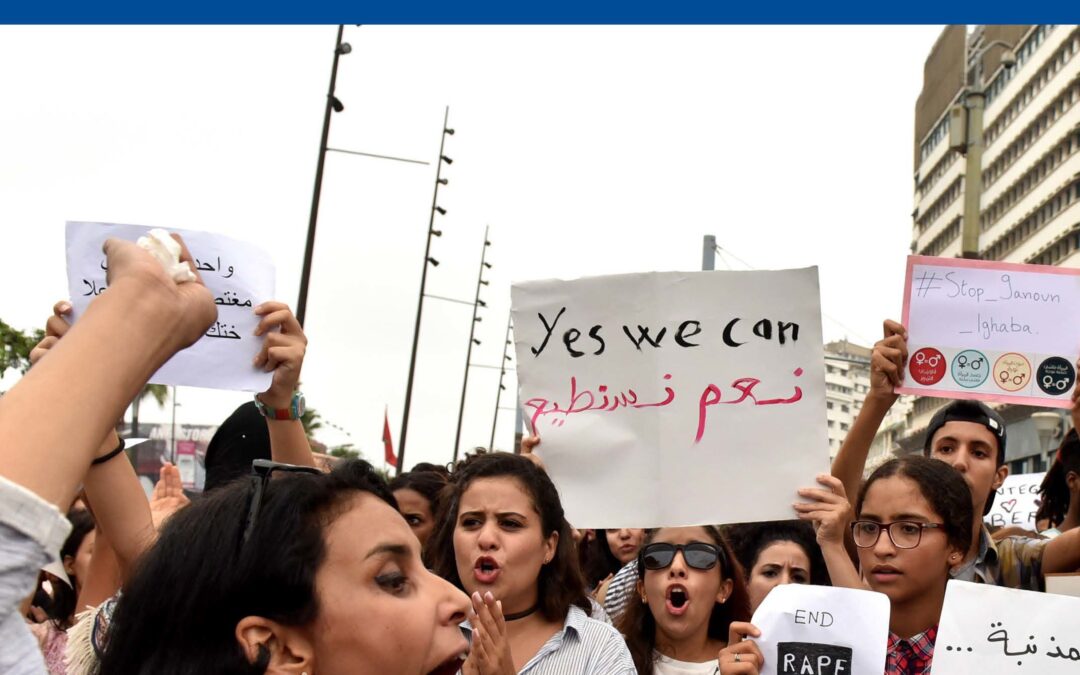
In a report released today in Rabat, the ICJ called for the removal and eradication of legal obstacles and discriminatory judicial attitudes hindering women’s and girls’ ability to seek justice and redress for sexual and gender-based violence (SGBV) in Morocco.
The ICJ’s report Obstacles to Women’s and Girls’ Access to Justice for Gender-based Violence in Morocco (available in English and Arabic) explores the various obstacles that women seeking justice in Morocco face, and addresses recommendations to the Moroccan government and judiciary with a view to improving access to justice and effective remedies for women and girls who are victims of SGBV.
“The Moroccan authorities should amend Law 103/13 and the Penal Code to ensure compliance with international human rights law and standards. Morocco’s Office of the Public Prosecutor and the country’s judicial authorities, including the High Judicial Council, should ensure that detailed guidelines on investigation and prosecution of SGBV crimes are developed and complied with, and that awareness-raising programmes be rolled out to counter judicial stereotyping and victim-blaming,” said Saïd Benarbia, Director of the Middle East and North Africa Programme at the ICJ.
Notwithstanding the recent adoption of Law 103/03 on combatting violence against women, SGBV has not been adequately addressed; it remains widespread in Morocco, with a profoundly detrimental human rights impact on victims and society at large. Law 103/3 fails to define rape in a manner consistent with relevant international law and standards, with the crime still addressed through the lens of morality and public decency, rather than as a violation of one’s bodily integrity and autonomy; Law 103/3 also fails to criminalize child and early marriage, lending support to this harmful practice.
In addition to discriminatory laws and procedures, women and girls seeking justice and redress as survivors of SGBV in Morocco have to face a judiciary that often harbours biased assumptions, and propounds negative gender stereotypes, including cultural norms rooted in patriarchy.
Against this background, the ICJ’s report analyses how exceedingly lenient sentences – for instance in cases of marital rape – and the heightened risk women and girls face of being charged with consensual extramarital sexual relations deter them from seeking justice and redress in case of physical and sexual abuse of which they may be victims, either at the hands of their husband or of individuals with whom they are not married.
To begin addressing women’s and girls’ predicament in these and other respects related to SGBV, the report calls on the Moroccan authorities to:
- Adopt legislation that recognizes one’s right to sexual autonomy, and that recognizes equal relationships as requiring free and full consent of both parties;
- Adequately define and fully criminalize through a gender-neutral definition acts of rape, including by criminalizing marital rape as a separate offence;
- Repeal Article 490 of the Penal Code criminalizing extramarital sexual relations, and ensure that Article 19 of the Family Code on the minimum age of marriage is stringently observed;
- Enact policies, legislative and procedural measures aiming at enhancing the effectiveness of judicial and other public sector services related to women’s access to justice, including enforcing spousal and child support, providing free legal assistance to victims of SGBV, granting protection orders, and adopting other urgent measures;
- Develop and enforce guidelines on investigating and prosecuting SGBV crimes;
- Develop a national protocol for SGBV-related medical, forensic examinations, and ensure forensic-testing services be available and affordable;
- Provide training and awareness-raising programmes aimed at countering judicial stereotyping, victim-blaming and other harmful practices.
Contact:
Saïd Benarbia, Director of the ICJ Middle East and North Africa Programme, t: +41.22.979.3817, e: said.benarbia(a)icj.org
Additional information:
ICJ Commissioner Martine Comte led the delegation that met with different Moroccan authorities, justice and civil society actors this week in Rabat in order to present ICJ’s report and discuss its findings and recommendations. The ICJ delegation met with Mr Mohamed Aujjar, Minister of Justice; Mr Taoufik El Maimouni, President of the Commission on Justice, Legislation, and Human Rights at the Chamber of Deputies; Mr Larbi Tabit, Secretary General at the Minister of Solidarity, Women, Family and Social Development; Ms Amina Bouayach, President of the National Human Rights Council and representatives of the judiciary and of the civil society.
Download:
Morocco-Obstacles GBV-Publications-Reports-Thematic report-2019-ENG (full report in English, PDF)
Morocco-Obstacles GBV-Publications-Reports-Thematic report-2019-ARA (full report in Arabic, PDF)
Morocco-Women HR report-News-2019-ARA (News story in Arabic, PDF)
Jun 28, 2019
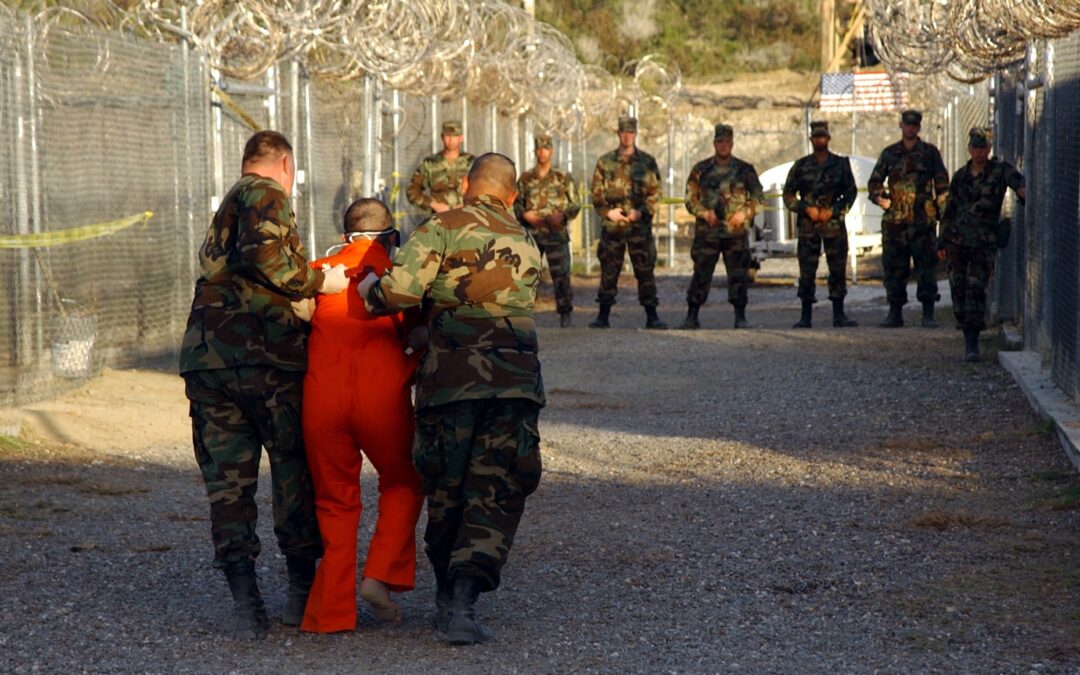
The ICJ and Amnesty International presented today a third party intervention in the case of al-Hawsawi v. Lithuania before the European Court of Human Rights.
The interveners made submissions to the Court in this case on complicity with the US-led rendition, secret detention and interrogation programme on:
- knowledge imputable to Contracting Parties, in particular, Lithuania, at the relevant times;
- enforced disappearance as a violation of Article 3 of the Convention;
- non-refoulement obligations;
- and post-transfer obligations under the Convention.
Mustafa al Hawsawi, a Saudi Arabian national currently detained at Guantanamo, was arrested in Pakistan in 2003 and subjected to rendition and secret detention. He was one of the many “high-level” persons subjected to torture following his rendition.
He was subject to treatment that could “easily approximate waterboarding”. He arrived in Guantánamo on 6 September 2006.
He is currently subject to proceedings before a military commission together with four other defendants; they are all charged with being involved in the 9/11 attacks.
The UN Working Group on Arbitrary Detention found that his right to liberty and to a fair trial had been violated and that the US has a duty to release him and provide him with compensation.
Several UN Special Rapporteurs raised serious concerns at the denial of medical treatment for Mr al Hawsawi, leading to a deterioration in his health, and the inhumane detention conditions.
The full intervention can be downloaded here: Al-Hawsawi-submission-2019-ENG
Jun 28, 2019 | Nouvelles, Publications, Rapports
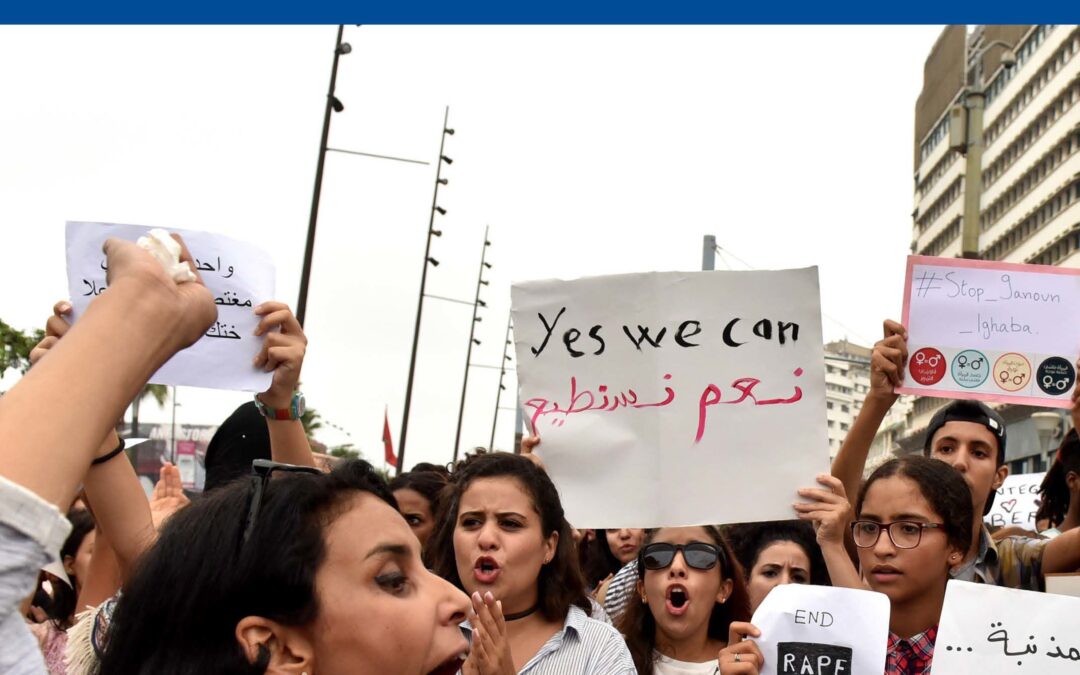
Dans un rapport publié aujourd’hui à Rabat, la CIJ a appelé à l’élimination et à l’éradication des obstacles légaux et attitudes judiciaires discriminatoires entravant l’habilité des femmes et des jeunes filles à demander justice et réparation pour violences sexuelles et basées sur le genre au Maroc.
Le rapport de la CIJ Obstacles to Women’s and Girls’ Access to Justice for Gender-based Violence in Morocco (disponible en anglais et en arabe seulement) explore les différents obstacles auxquels sont confrontées les femmes qui cherchent à obtenir justice au Maroc, et adresse des recommandations au Gouvernement et au pouvoir judiciaire marocains afin d’améliorer l’accès à la justice et à des voies de recours utiles pour les femmes et jeunes filles victimes de violences sexuelles et basées sur le genre.
« Les autorités marocaines devraient modifier la Loi 103/03 et le Code Pénal afin d’assurer leur conformité au droit et aux normes internationales relatives aux droits de l’homme. Le parquet et les autorités judiciaires marocaines, dont le Conseil Supérieur du Pouvoir Judiciaire, devraient assurer que des directives détaillées concernant l’enquête et la poursuite des crimes de violences sexuelles et basées sur le genre soient développées et respectées, et que des programmes de sensibilisation soient déployés afin de lutter contre les stéréotypes de genre et le blâme des victimes dans les procédures judiciaires », a déclaré Saïd Benarbia, Directeur du Programme Moyen-Orient et Afrique du Nord de la CIJ.
Malgré la récente adoption de la Loi 103/03 relative à la lutte contre les violences envers les femmes, la violence sexuelle et basée sur le genre n’a pas encore été correctement adressée; elle reste très répandue au Maroc et nuit profondément aux droits des victimes et à la société dans son ensemble.
La Loi 103/03 ne définit pas le viol de manière conforme au droit et aux normes internationales pertinentes: le crime est encore considéré au regard de la moralité et de la décence publique, plutôt qu’en tant que violation de l’intégrité physique et de l’autonomie corporelle d’une personne; la Loi 103/13 est également une opportunité manquée de criminaliser le mariage précoce et d’un enfant, soutenant cette pratique néfaste.
En plus de lois et procédures discriminatoires, au Maroc, les femmes et jeunes filles cherchant à ce que justice leur soit rendue pour les violences sexuelles et basées sur le genre dont elles ont été victimes doivent faire face à un système judiciaire souvent influencé par des présomptions biaisées, et qui véhicule des stéréotypes de genre négatifs, dont des normes culturelles ancrées dans le patriarcat.
Dans ce contexte, comme analysé dans le rapport de la CIJ, des peines excessivement clémentes – par exemple dans les affaires de viol conjugal – et les risques accrus pour femmes et jeunes filles d’être poursuivies en justice sur la base de relations extra-conjugales consentantes dissuadent femmes et jeunes filles de demander justice et réparation pour abus physiques et sexuels dont elle ont été victimes soit des mains de leur époux soit d’individus auxquels elles ne sont pas mariées.
Afin de commencer à adresser les obstacles à l’accès à la justice rencontrés par les femmes et jeunes filles victimes de violences sexuelles et basées sur le genre, le rapport invite les autorités marocaines à :
- Adopter une législation qui reconnaît le droit individuel à l’autonomie sexuelle, et qui reconnait qu’une relation égalitaire exige le libre et entier consentement des deux parties ;
- Définir de manière adéquate et criminaliser dans toutes ses formes et selon une définition neutre sur le plan du genre les actes de viol, y compris en criminalisant le viol conjugal comme une infraction autonome ;
- Abroger l’article 490 du Code Pénal selon lequel les relations sexuelles extra-conjugales constituent une infraction pénale, et assurer que l’article 19 du Code de la Famille concernant l’âge minimal requis pour se marier soit strictement respecté ;
- Promulguer des politiques, mesures législatives et procédurales ayant pour but d’améliorer l’efficacité du système judiciaire ainsi que des autres services du secteur public liés à l’accès à la justice pour les femmes, y compris en faisant appliquer les décisions concernant les pensions alimentaires au conjoint ou aux enfants, en fournissant une assistance juridique gratuite pour les victimes de violences sexuelles et basées sur le genre, en octroyant des ordonnances de protection et en adoptant toutes autres mesures urgentes ;
- Développer et appliquer des directives portant sur l’enquête et la poursuite de crimes de violences sexuelles et basées sur le genre;
- Développer un protocole national relatif aux examens médicaux et médico-légaux dans des cas de violences sexuelles et basées sur le genre, et garantir un service d’analyses médico-légales disponible et abordable ;
- Fournir des programmes de formation et de sensibilisation visant à combattre, au sein du pouvoir judiciaire, les stéréotypes, le blâme des victimes et autres pratiques néfastes;
Informations supplémentaires
Cette semaine à Rabat, une délégation de la CIJ dirigée par la Commissaire Martine Comte a présenté le rapport à plusieurs autorités marocaines, ainsi que des acteurs de la justice et de la société civile afin de discuter de se conclusions et recommandations. La délégation de la CIJ a rencontré M. Mohamed Aujjar, Ministre de la Justice ; M. Taoufik El Maimouni, Président de la Commission Justice, Législation et Droits de l’Homme à la Chambre des députés ; M. Larbi Tabit, Secrétaire Général au Ministère de la Solidarité, de la Femme et du Développement Social ; Mme Amina Bouayach, Présidente du Conseil National des Droits de l’Homme ; ainsi que des représentants du pouvoir judiciaire et de la société civile.
Morocco-Obstacles GBV-Publications-Reports-Thematic report-2019-ENG (rapport en anglais, PDF)
Morocco-Obstacles GBV-Publications-Reports-Thematic report-2019-ARA (rapport en arabe, PDF)
Jun 28, 2019 | News
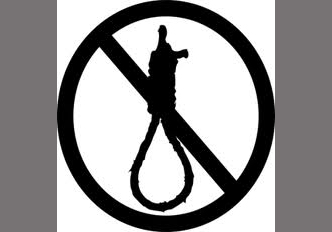
The ICJ categorically condemns Sri Lankan President Maithripala Sirisena’s endorsement of death warrants of four people convicted of drug-related offences.
Today, the ICJ urged the President to stop the imminent execution of these four convicts and to respect the de facto moratorium Sri Lanka has observed on capital punishment that over the past 43 years.
The ICJ has called on Sri Lanka to move toward full abolition of the abhorrent practice.
“President Sirisena’s resolve to resume executions would be a violation of Sri Lanka’s obligations under international human rights law and a disastrous for human rights in the country. It is also inconsistent with the global trend towards the abolition of the death penalty,” said Frederick Rawski, ICJ’s Asia-Pacific Director.
Speaking to the media on Wednesday June 26, President Sirisena announced that four execution warrants of those convicted of drug offences had been signed and that the dates for the execution had also been determined.
Those dates were left unspecified. With 1299 people on death row, the lives of at least 46 more prisoners, whose execution warrants have been prepared, are now under imminent threat.
Sri Lanka is a party to the International Covenant on Civil and Political Rights, under which it is not permitted to impose the death penalty for drug offences, the resumption of the death penalty after an extended is also incompatible with the ICCPR.
The ICJ opposes the death penalty in all circumstances without exception. The death penalty constitutes a violation of the right to life and the right not to be subjected to cruel, inhuman or degrading punishment.
The UN General Assembly has adopted repeated resolutions, most recently in December 2018, by overwhelming majority in calling for all retentionist States to observe an immediate moratorium with a view to abolition.
Sri Lanka voted in favour of a moratorium on the use of the death penalty in the 2018 UN GA Resolution.
The ICJ urgently calls on the Government of Sri Lanka to immediately halt all plans for execution and to do away with the capital punishment once and for all in keeping with its own commitment before the UN General Assembly for a global moratorium on the use of death penalty.
Instead of resuming executions, the Sri Lankan authorities should focus on effective, evidence-based approaches to crime prevention in manners that conform to international human rights law and standards.
Background
The UN Human Rights Committee, the supervisory body for the ICCPR, has made it clear that the imposition of the death penalty for crimes that are not of extreme gravity involving intentional killing, such as “drug offences” is incompatible with the Covenant as such offences do not meet the threshold of “most serious crimes”.
It has affirmed that that States parties that are not yet totally abolitionist should be on an irrevocable path towards complete eradication of the death penalty, de facto and de jure, in the foreseeable future.
The death penalty cannot be reconciled with full respect for the right to life, and abolition of the death penalty is both desirable and necessary for the enhancement of human dignity and progressive development of human rights.
It is contrary to the object and purpose of article 6 for States parties to take steps to increase de facto the rate and extent in which they resort to the death penalty, or to reduce the number of pardons and commutations they grant.
Contact
Frederick Rawski, ICJ Asia Pacific Region Director, e: frederick.rawski(a)icj.org, t: +66 644781121
Jun 27, 2019 | Advocacy, Non-legal submissions
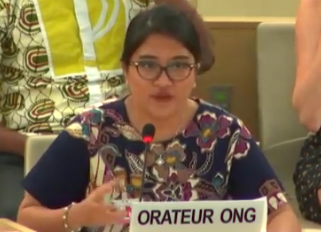
The ICJ highlighted the role of women in ensuring respect for human rights in relation to businesses, in a statement to the UN Human Rights Council today.
In an oral statement made during an interactive dialogue with the Working Group on Discrimination Against Women and the Working Group on the issue of human rights and transnational corporations and other business enterprises, the ICJ stated as follows (check against delivery):
The International Commission of Jurists (ICJ) welcomes the report of the Working Group on the issue of human rights and transnational corporations and other business enterprises, and agrees that despite years of progress, women continue to experience multiple forms of discrimination. Women’s voices continue to be unheard and they face insurmountable challenges as they use these voices to access justice on behalf of their communities.
We have seen numerous cases where women lead their communities in protesting abuses committed by business enterprises. Many of these communities are located in remote areas, far from courts or other mechanisms that could be used by them to seek justice. The women who lead these communities often do not identify as women human rights defenders. They see themselves as mothers protecting the health of their families or the land from which they grow their food and earn their living. Because of where these communities are located, local government authorities play a significant role on whether or not these women are heard or are able to access justice.
The women farmers of Kendeng in Indonesia, for instance, have been protesting the operation of a cement factory in their area, which contaminate their water and land. In 2016, the Supreme Court of Indonesia had already ruled in favor of these women farmers and their community, and ordered the revocation of the cement factory’s permit. To this day, however, the cement factory continues to operate, ignoring the final order of the Supreme Court. The Kendeng women farmers have raised the non-implementation of the Supreme Court’s order with the Governor of Central Java and the Indonesian government, but their voices remain unheard.
In the Philippines, the women community leaders of Pio V. Corpus, Masbate, have been protesting plans to establish a cement factory and a coal-fired power plant in their town. They allege that their local government leaders approved plans for this factory and power plant without consultation and in blatant disregard of the disastrous impact these would have on the environment and people’s health.
Mr. President, we join the Working Group in urging States and business enterprises to ensure meaningful participation of potentially affected women in all stages of human rights due diligence. We also urge States to take measures to ensure that women – wherever they may be located – are able to access justice for abuses committed by business. Finally, we recommend that local government authorities be made aware of the Guiding Principles and able to integrate the gender framework and guidance in discharging their human rights responsibilities.
Thank you.