Apr 16, 2013
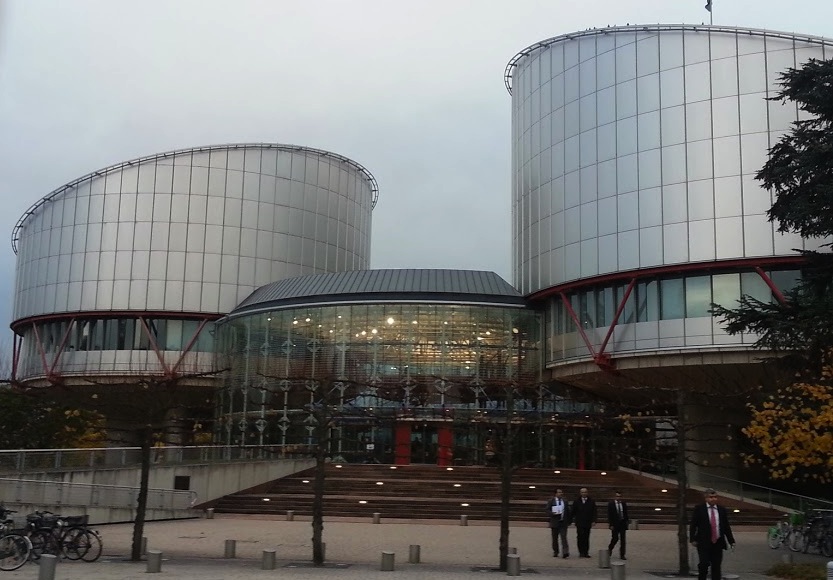 In view of the discussion by the Committee of Ministers, the ICJ and nine other NGOs wrote an open letter to all member states of the Council of Europe on draft Protocol 15 to the European Convention on Human Rights.
Amnesty International, the AIRE Centre, the European Human Rights Advocacy Centre (EHRAC), the Helsinki Foundation for Human Rights (HFHR), Human Rights Watch, Interights, the International Commission of Jurists (ICJ), JUSTICE, Open Society Justice Initiative and REDRESS wrote an open letter to all member states of the Council of Europe on Draft Protocol 15. In the letter, the organizations draw the states’ attention to a specific shortcoming in article 1 of the Protocol in relation to the insertion of a reference to the doctrine of the margin of appreciation in the Preamble to the Convention.
OpenLetter-Joint-CouncilofEurope-Protocol15-2013 (download the open letter)
Apr 16, 2013
The ICJ, FIDH and EMHRN call on the Moroccan authorities to comprehensively reform the judiciary and to bring it in line with international standards.
Reforms should be aimed at ending effective executive control over the Higher Judicial Council, reforming the statute of magistrates, ensuring the independence of prosecutors and removing the military court’s jurisdiction over civilians.
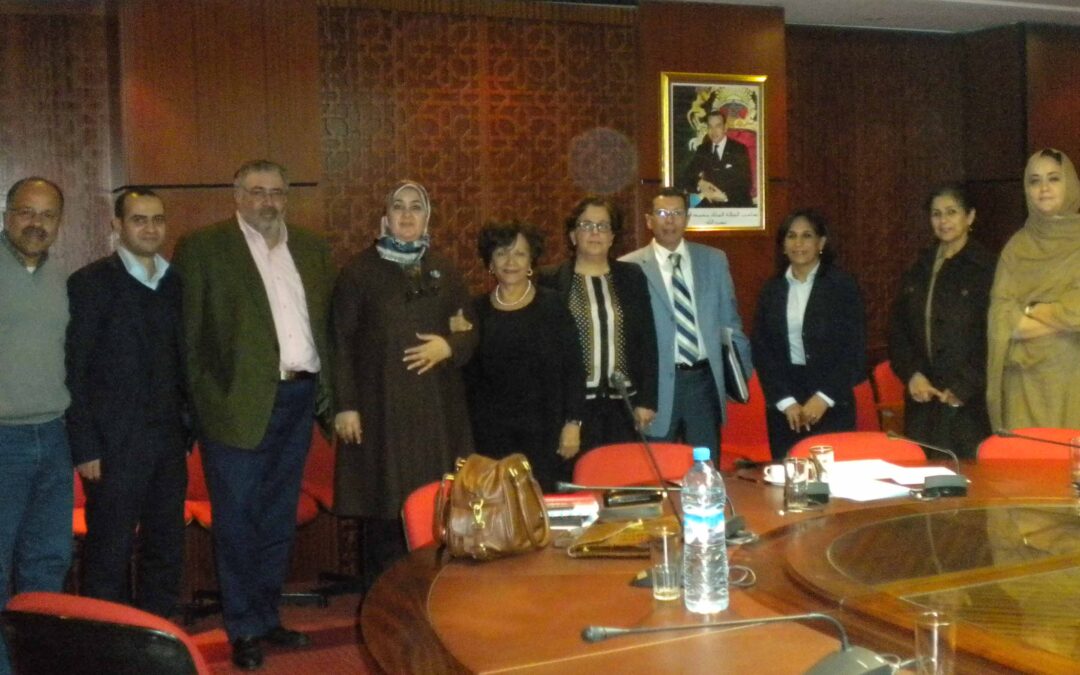
The call comes as the ICJ, the International Federation for Human Rights (FIDH) and the Euro-Mediterranean Human Rights Network (EMHRN) ended a high-level mission to Morocco to assess the current legal framework and its adherence to the principles of judicial independence, impartiality and accountability.
In a memorandum addressed to the Moroccan authorities, the three organizations formulated 20 specific recommendations for reform.
“The Moroccan authorities should amend the law to put an end to the comprehensive control the executive exercises over the career of judges, including their nomination, promotion and disciplinary proceedings against them, and should adopt a new law on the Higher Judicial Council”, said Souhayr Belhassen, FIDH president.
In addition, the Moroccan Military Code extends the jurisdiction of military tribunals to try civilians, in contravention of international law and standards. It fails to provide full guarantees of fair trial by a competent, independent and impartial tribunal, including the rights to defence and to appeal.
“The Moroccan authorities must end the use of military courts to try civilians and limit the jurisdiction of military tribunals to military offences and personnel only”, said Michel Tubiana, EMHRN president.
The organizations reiterated that the Moroccan authorities should also take immediate measures to end executive control over the Office of the Public Prosecutor.
“The subordination of Moroccan prosecutors to the Minister of Justice has had an adverse impact on the investigation and prosecution of human rights abuses. Moroccan authorities should act to ensure that prosecutors are able to carry out their duties independently, impartially and in defence of human rights”, said Said Benarbia, ICJ senior legal adviser for the Middle East and North Africa (MENA) programme.
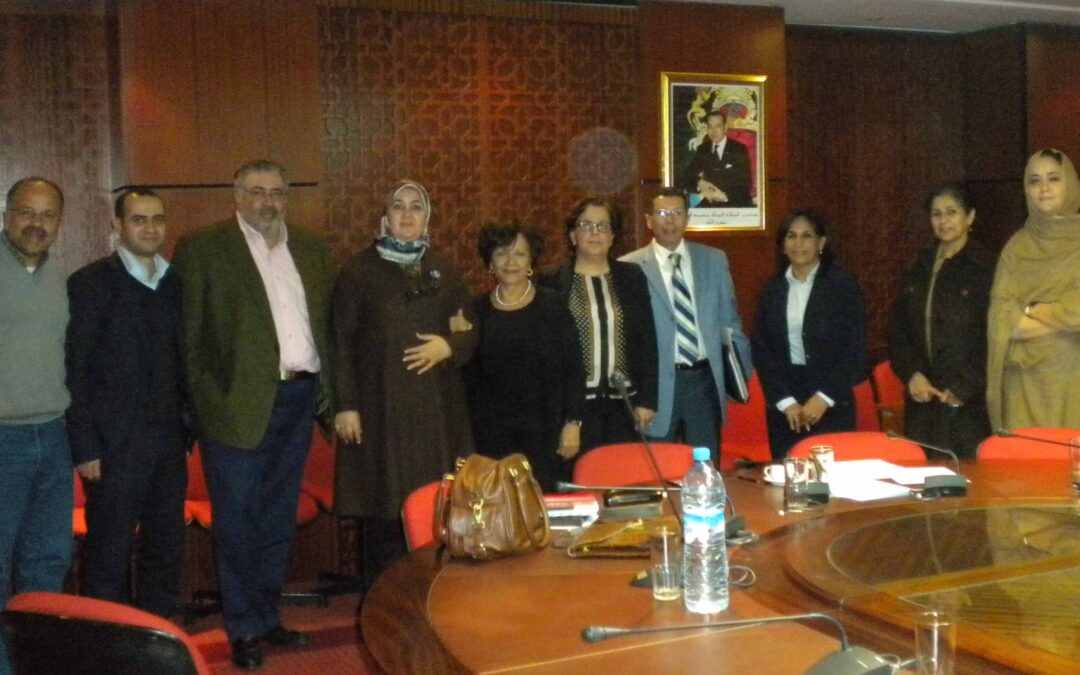
During the mission, the delegation met with Mr. Mustapha Ramid, Minister of Justice; Mr. Karim Ghallab, President of the Deputies Assembly; Mr. Omar Dkhil, President of the Justice and Legislation Commission of the Counsellors Assembly; Mr. Driss El Yazami, President of the National Council for Human Rights; the Parliamentarian Network against the Death Penalty; and civil society representatives, including human rights organisations. These organizations have persistently called upon the Moroccan authorities to reform the judicial system.
The delegation was composed of Souhayr Belhassen, FIDH president; Michel Tubiana, EMHRN president; and Said Benarbia, ICJ senior legal adviser for the MENA programme.
Contact:
Said Benarbia, ICJ Senior Legal Adviser of the Middle East and North Africa Programme, tel: 41 22 979 38 17, e-mail: said.benarbia(a)icj.org
Morocco-Mémorandum sur la réforme du pouvoir judicaire-mission report-2013-ar (full text in pdf)
Apr 16, 2013 | Communiqués de presse, Nouvelles
Aujourd’hui, la CIJ, la FIDH et le Réseau euro-méditerranéen des droits de l’Homme (REMDH) ont appelé les autorités marocaines à réformer le système judiciaire en profondeur et à le mettre en conformité avec les normes internationales.
Les réformes devraient viser à mettre un terme au contrôle effectif de l’exécutif sur le Conseil supérieur de la magistrature ; à réformer le statut des magistrats ; garantir l’indépendance des procureurs et retirer aux tribunaux militaires leur compétence pour juger des civils.
Cette déclaration intervient au terme d’une mission de haut niveau effectuée au Maroc par les trois organisations afin d’évaluer le cadre juridique actuel et son respect des principes relatifs à l’indépendance, l’impartialité et la responsabilité du pouvoir judiciaire. Dans un mémorandum adressé aux autorités marocaines, les organisations ont formulé 20 recommandations spécifiques portant sur la réforme.
« Les autorités marocaines devraient amender la législation afin de mettre fin au contrôle global exercé sur la carrière des juges, notamment leur nomination, promotion et les procédures disciplinaires à leur encontre, et devraient adopter une nouvelle loi portant sur le Conseil supérieur de la magistrature » a déclaré Souhayr Belhassen, Présidente de la FIDH.
Par ailleurs, le code militaire marocain étend la juridiction des tribunaux militaires pour juger des civils, et ce, en contradiction avec le droit et les normes internationales. Il ne prévoit pas de garanties à un procès équitable par un tribunal compétent et indépendant, notamment les droits à la défense et de faire appel.
Morocco-Independent Judiciary-press release-2013-Fr (Communiqué de presse complet en PDF)
Morocco-Mémorandum sur la réforme du pouvoir judicaire-mission report-2013-fr (Texte complet en PDF)

Apr 14, 2013 | News
 The Dalai Lama honoured ICJ Secretary General Wilder Tayler with the Light of Truth Award in recognition of ICJ’s consistent support of the Tibetan cause over six decades.
The Award was presented to Wilder Tayler at a ceremony in Fribourg, Switzerland, on Saturday 13 April 2013.
The International Campaign for Tibet (ICT) presented the Light of Truth Award to individuals and institutions who have made significant contributions to the public understanding of Tibet and the struggle for human rights and democratic freedoms for the Tibetan people.
The ICJ was awarded for its reports documenting the experience, trials and tribulations of Tibetan people at the hands of Chinese forces, and drawing attention to the rights of Tibetans.
“You cannot imagine the outpouring of emails I have received even from very old members of the ICJ and the pride and joy in receiving the recognition of the work of ICJ by the Tibetan community, by His Holiness, by the solidarity organizations. Really it has been so moving,” said ICJ Secretary General Wilder Tayler (photo). “This prize will be dedicated to the late Nick Howen, my immediate predecessor and very dear friend who passed away quite tragically three years ago. Nick was a devoted activist of the Tibet cause; he not only put a lot of hours, he actually put his life at risk when there was need of it in order to pursue the cause, to bring information out of Tibet.”
The award itself is an antique Tibetan butter lamp, symbolizing the light that each recipient has shed on the Tibet issue.In addition to the ICJ, the Light of Truth Award 2013 was given to four other honorees, including ICJ Honorary Member Theo van Boven.
Professor van Boven is a Dutch jurist and professor emeritus in international law, a former UN Rapporteur on Torture and served as ICJ Vice-President in the 1990s. He was awarded for putting the spotlight on Tibet within and beyond the United Nations system.
Other awardees include Professor Dr. Christian Schwarz-Schilling, former German Minister and Parliamentarian, who has been working in a low-key manner for many years on the issue of the Tibetan-Chinese relationship; Ms. Sigrid Joss-Arnd, the longest-standing member of the Swiss Red Cross officials who was involved in helping Tibetans in the diaspora from the early 1960s; and Mr. Robert Ford, CBE, for his tireless advocacy on Tibet for more than half a century. Mr Ford is the only Westerner who was given official ranking in the Tibetan government before 1950 and he was imprisoned by the Chinese authorities for nearly five years.
“All of you have been long-standing friends and supporters of Tibet, for which we are immeasurably grateful. As you know, the spirit of the Tibetan people is undiminished and the power of truth remains strong,” the Dalai Lama said at the ceremony.
The Light of Truth Award is the most prestigious award in the Tibet movement and has been presented by His Holiness the Dalai Lama, on behalf of the ICT, for many years.
Previous recipients include Archbishop Desmond Tutu, the late Václav Havel, Chinese scholar and writer Wang Lixiong, and film director Martin Scorsese.
Photo/Manuel Bauer
Apr 14, 2013 | News
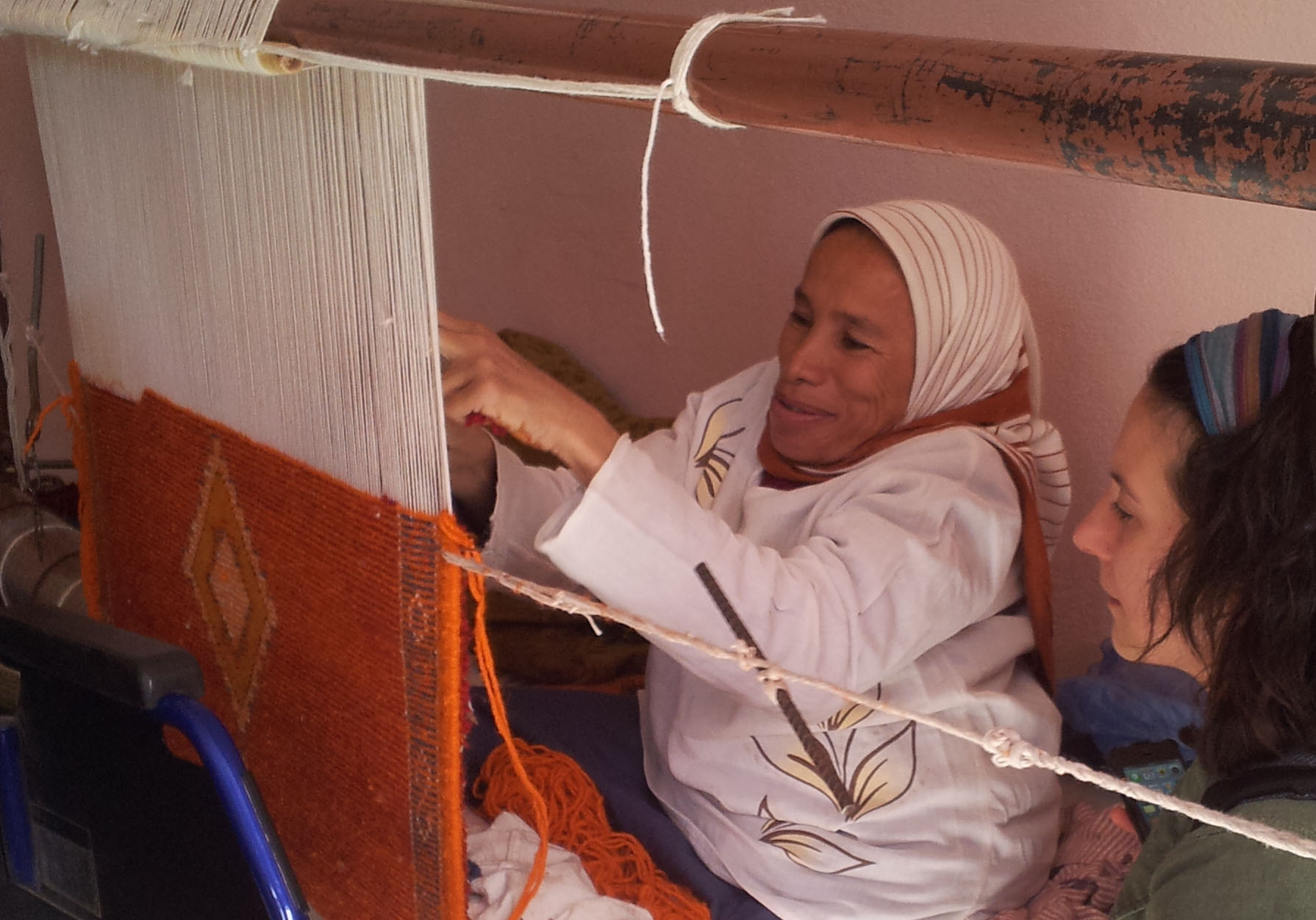 Du 7 au 13 avril 2013, la CIJ a organisé une mission de recherche sur l’accès à la justice pour les victimes de violations des DESC au Maroc.
Durant la mission, organisée par le Programme sur les droits économiques, sociaux et culturels en collaboration avec le Programme régional Afrique du Nord et Moyen Orient, la CIJ s’est entretenue avec un large éventail d’acteurs impliqués dans la protection des droits économiques, sociaux et culturels, notamment les Présidents des Chambres administrative, civile et sociale de la Cour de Cassation du Royaume du Maroc ; des membres du Conseil National des Droits de l’Homme ; des représentants de syndicats de travailleurs dont l’Union Marocaine du Travail (UMT) et la Confédération Démocratique du Travail (CDT), ainsi que des associations de protection des consommateurs telles que la Fédération Nationale des Associations du Consommateur (FNAC), la section UNICONSO de Casablanca ainsi que l’Association Marocaine de Protection et d’Orientation du Consommateur (AMPOC) à Kenitra.
La CIJ a également rencontré des représentants de la société civile marocaine, y compris l’Union d’Action Féminine (UDF) et l’Association Démocratique des Femmes du Maroc (ADFM) ainsi que des victimes de violations des DESC.
Les entretiens menés durant la mission ont permis d’identifier les avancées mais aussi un nombre d’obstacles tant juridiques que pratiques empêchant un accès efficace à la justice pour les victimes de violations des DESC ainsi que les causes profondes de ces violations.
Les personnes rencontrées ont principalement insisté sur le fait que malgré qu’une nouvelle Constitution progressiste ainsi que de nouvelles lois respectueuses des droits de l’homme aient été adoptées ces dernières années, leur application demeure problématique.
Cette mission a permis de récolter de nombreuses informations qui complèteront celles déjà compilées depuis juillet 2012 par le biais de recherche documentaires et ateliers, et permettront de publier un rapport sur l’accès à la justice pour les violations des DESC au Maroc, qui sera publié au courant de l’année 2013.
Contexte de la mission
Dans le cadre de projets nationaux tels que celui sur le Maroc, le Programme sur les droits économiques, sociaux et culturels de la CIJ vise à contribuer à l’amélioration de la responsabilité pour les violations de droits de l’homme et l’accès à la justice pour tous, notamment les victimes de violations et de menaces à l’encontre des droits économiques, sociaux et culturels.
La CIJ a démarré un processus de recherches au niveau national afin d’identifier les obstacles et les possibilités pour l’accès à la justice, ainsi qu’un processus de consultations et de collaborations avec ses partenaires locaux afin de déterminer des stratégies pouvant remédier aux manquements identifiés.
Selon les besoins identifiés, la CIJ appuiera la mise en œuvre de recommandations et interviendra à travers des actions telles des formations et des contributions juridiques.