Jun 24, 2019 | Advocacy, Non-legal submissions
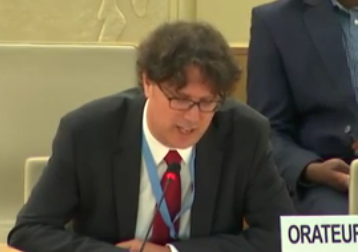
At the UN, the ICJ today highlighted the rights and duties of judges and prosecutors to exercise their freedoms of expression, assembly and association to defend the rule of law and human rights.
The oral statement was delivered in a Clustered Interactive Dialogue with the Independent Expert on Sexual Orientation and Gender Identity and the Special Rapporteur on the Independence of Judges and Lawyers, at the UN Human Rights Council in Geneva.
It read as follows:
“The International Commission of Jurists (ICJ) welcomes the report of the Special Rapporteur on the Independence of Judges and Lawyers on freedom of expression, association and peaceful assembly of judges and prosecutors.[1]
As the report acknowledges, exercise of these rights can be subject to restrictions arising from the fundamental need for judges and prosecutors to be perceived as independent and impartial. At the same time, as the report also emphasizes, any such restrictions must be provided by law and be demonstrably necessary to such legitimate aims, which in turn crucially requires proportionality.[2] These standards have been recognized both globally and in all regions of the world.[3] Any such restrictions on judges should be adopted and enforced by the judiciary itself.
We particularly welcome the recognition in the report that in situations where democracy and the rule of law are under threat, judges and prosecutors have not only the right, but potentially a duty, to speak out and organize in defence of democracy, the rule of law, and human rights, and that this can include participating in peaceful public demonstrations.[4]
Far too often in the ICJ’s work around the world, we see Executive and Legislative bodies, as well as compromised judicial hierarchies, arbitrarily or selectively targeting judges and prosecutors for removal, demotion or other disciplinary measures, precisely for exercising these rights to defend against threats to the rule of law. Examples highlighted in our submission to your study included Egypt, Morocco, Honduras, Hungary and Bulgaria.[5]
Mr. Rapporteur, how can judiciaries, governments, and civil society organisations (including international or regional legal professional associations) act internationally to support judges and prosecutors who are facing such abuse in another country?
The ICJ also welcomes the reports of the Independent Expert on protection against violence and discrimination based on sexual orientation and gender identity. We urge all States to strongly support the renewal of this essential mandate at the current session.
Thank you.”
[1] ICJ’s detailed submission to the Special Rapporteur’s consultation is available at: https://www.icj.org/judgesexpression2019/
[2] Paragraphs 39, 45, 46, 89.
[3] In addition to the global and European, Asian, and American standards cited in the report, see the African Commission on Human and Peoples’ Rights, Principles and Guidelines on the Right to a Fair Trial and Legal Assistance in Africa (2005), paras A(4)(s) and (t), and F(d) and (e).
[4] Paragraphs 61, 69, 90, 102.
[5] See for further information: https://www.icj.org/judgesexpression2019/
Jun 24, 2019 | News
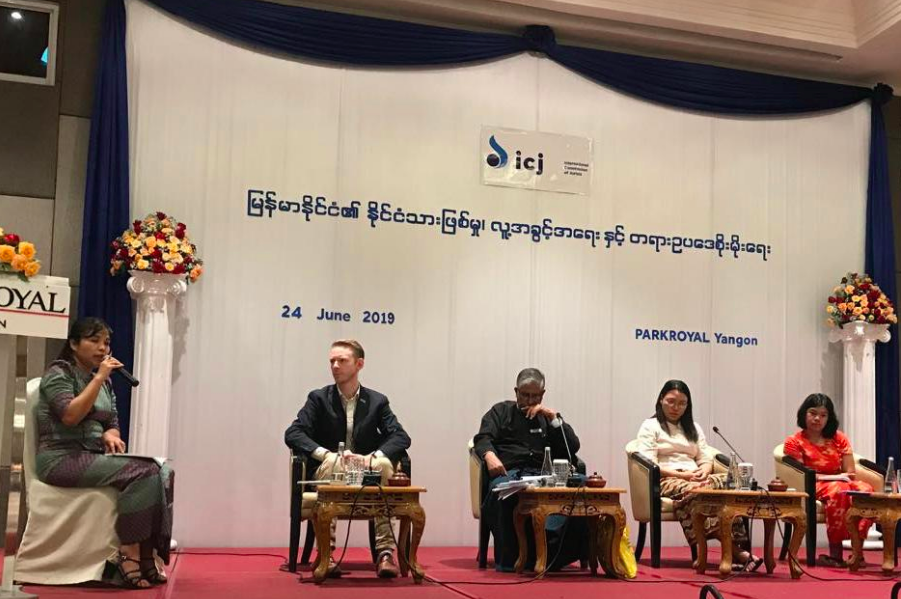
The ICJ convened a half-day panel discussion today in Yangon, Myanmar, to discuss national laws governing citizenship, and outline how, throughout the country, they have a discriminatory impact on people’s enjoyment of their human rights.
The event also provided the opportunity to introduce the ICJ’s new legal briefing Citizenship and Human Rights in Myanmar: Why Law Reform is Urgent and Possible
ICJ legal researcher Ja Seng Ing and legal adviser Sean Bain kicked off the event by noting that Myanmar’s legal framework for citizenship – enacted by unelected military governments – fuels widespread discrimination against members of ethnic minority groups throughout the country.
Bain highlighted the incompatibility of the domestic legal framework governing citizenship in Myanmar with core rule of law principles and with the State’s obligations under international human rights law, including the Convention on the Rights of the Child.
He presented the ICJ’s practical recommendations for law reform, outlined in the ICJ’s new legal briefing, including with respect to the 1982 Citizenship Law and the 2008 Constitution, and to the Child Rights Bill currently under consideration by Myanmar’s national parliament.
Senior Advocate U Ohn Maung, a lawyer with decades of experience supporting access for members of minority groups to the official documentation often necessary to obtain even basic services, emphasized that citizenship in Myanmar should be a more inclusive concept, reflective of its pluralistic, multi-ethnic demography.
Daw Zarchi Oo and Daw Su Chit shared the findings of independent civil society research.
They highlighted various groups including: migrants and migrant workers; individuals belonging to sexual and/or gender minorities; single mothers; the children of fathers who are foreign nationals or who are estranged from their fathers; and people living with disabilities, who are all adversely impacted by current legal arrangements for citizenship and by their discriminatory implementation.
Daw Zarchi Oo also spoke about her own past experience of being stateless, and Daw Su Chit elaborated on her work with civil society and others to develop a gendered analysis of the impact of discriminatory citizenship laws in Myanmar.
Around 60 participants, including from domestic civil society, the legal community, international non-government organizations, the Myanmar National Human Rights Commission, the diplomatic community and others joined this event, and participated in the discussions.
The 1982 Citizenship Law embedded the current narrow definition of citizenship, which generally links its acquisition to membership of a prescribed “national race.”
Many of the 2008 Constitution’s provisions on “fundamental rights” are restricted to citizens only, with a result being that the State generally does not recognize the human rights of persons who do not qualify as citizens under domestic law, or are otherwise excluded due to the laws’ discriminatory implementation.
The intentionally discriminatory character of the 1982 Law, and its discriminatory implementation, largely explains why many long-term residents of Myanmar lack a legal identity (more than 25 percent of persons enumerated in the 2014 Census).
The situation of Rohingya people, who the State generally does not recognize as citizens, is the most egregious example of the human rights violations associated with this system.
This event is part of the ICJ’s broader support to promote and protect human rights in Myanmar through research, analysis, advocacy and creating spaces for discussion.
See also:
ICJ convenes workshop on reforming 1982 Citizenship law
Jun 24, 2019 | Events, News
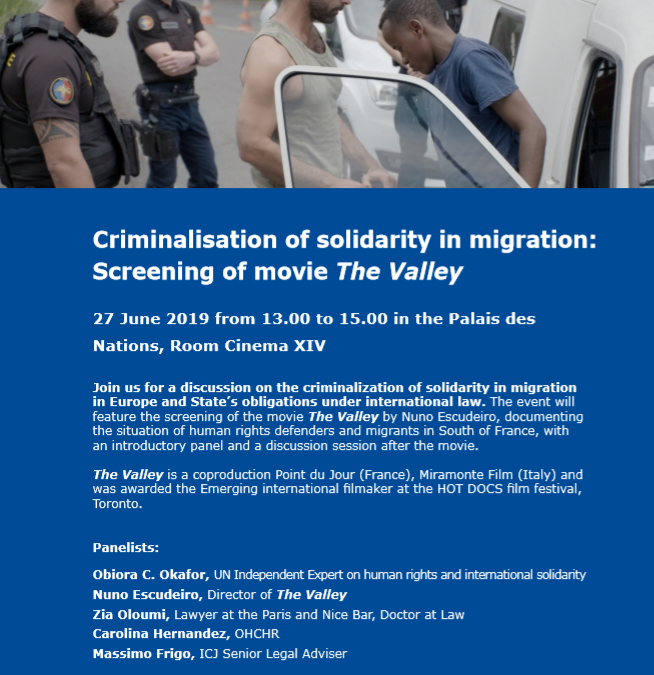
The OHCHR, ICJ and the Geneva Bar Association invite you to a discussion on the criminalization of solidarity in migration in Europe and State’s obligations under international law.
Thursday, 27 June, 13h00,
UN Cinema (Room XIV),
Palais des Nations, Geneva
The event will feature the screening of the movie “The Valley” by Nuno Escudeiro, documenting the situation of human rights defenders and migrants in South of France, with an introductory panel and a discussion session after the movie.
The Valley is a coproduction of Point du Jour (France) and Miramonte Film (Italy), and was awarded the Emerging international filmmaker at the HOT DOCS film festival, Toronto.
Panelists:
- Obiora C. Okafor, UN Independent Expert on human rights and international solidarity
- Nuno Escudeiro, Director of The Valley
- Zia Oloumi, Lawyer at the Paris and Nice Bar, Doctor at Law
- Carolina Hernandez, OHCHR
- Massimo Frigo, ICJ Senior Legal Adviser
If you do not already have a grounds pass to access the Palais des Nations, please send your name and surname at migration@ohchr.org before the end of Sunday 23 June.
For more information contact massimo.frigo(a)icj.org
A flyer for the event is avaiable here.
Jun 24, 2019 | News
The ICJ and the International Bar Association’s Human Rights Institute (IBAHRI) have jointly sent international observers to attend the first hearing of the criminal trial on the “Gezi Park” protest at the Silivri Prison Courthouse in Istanbul, scheduled to take place on 24 and 25 June 2019.
The International Observers who will be attending are Justice Ketil Lund, former judge of the Supreme Court of Norway and ICJ Commissioner, and Dr Mark Ellis, Executive Director of the International Bar Association.
Justice Lund and Dr Ellis will be observing a trial hearing before İstanbul 30th Assize Court with principal defendant Osman Kavala and 15 others: Ali Hakan Altınay, Ayşe Mücella Yapıcı, Ayşe Pınar Alabora, Can Dündar, Çiğdem Mater Utku, Gökçe Yılmaz, Handan Meltem Arıkan, Hanzade Hikmet Germiyanoğlu, İnanç Ekmekci, Memet Ali Alabora, Mine Özerden, Şerafettin Can Atalay, Tayfun Kahraman, Yiğit Aksakoğlu and Yiğit Ali Ekmekçi.
The observers will report directly to the IBAHRI and ICJ Secretariats on the proceedings following the mission.
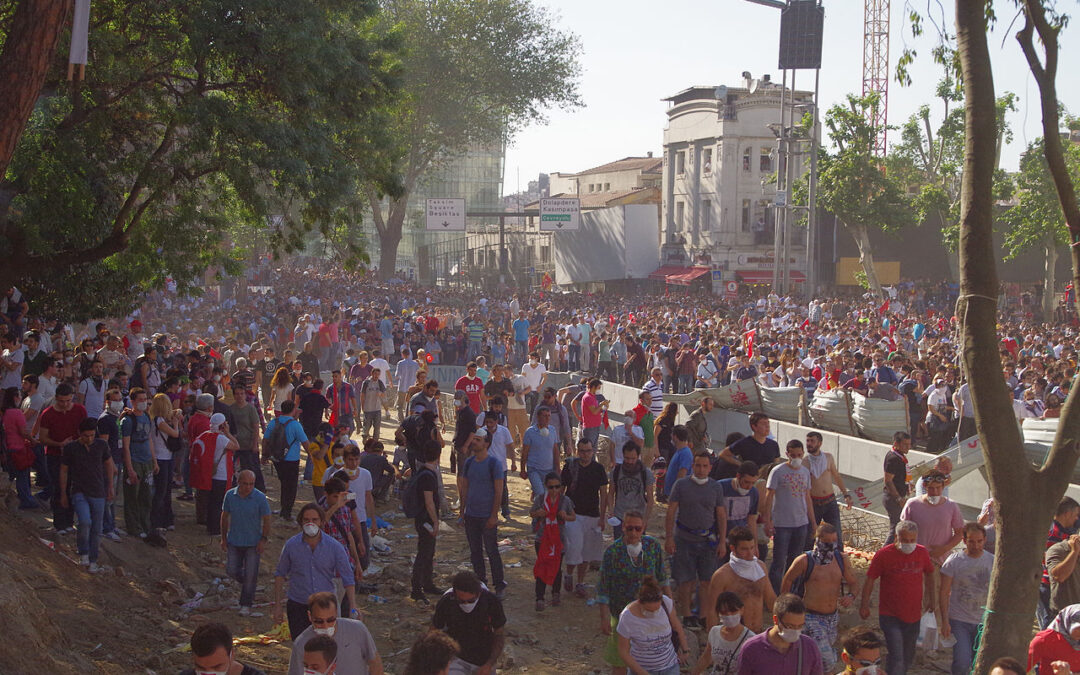
The Gezi Park protests began in May 2013 as an effort by a group of environmentalists to save a park in central Istanbul from being rezoned, but soon turned into nationwide demonstrations. The protest was quelled by police with the use of tear gas and water cannons against the protesters in Taksim Square.
Following a six-year investigation into the events, the 657-page indictment issued by the Istanbul Chief Public Prosecutor’s Office was accepted by the 30th A Court in Istanbul on 4 March 2019.
The defendants are to be charged under Turkish Criminal Code Article 312 (attempt to overthrow the Turkish Government or attempt to prevent it from fulfilling its duties), Article 151 (damage to property), Article 152 (qualified damage to property), Article 174 (possession or exchange of hazardous substances without permission), Article 153 (damaging places of worship and cemeteries), Article 149 (qualified robbery), Article 86 (intentional injury); crimes under the Law on Firearms, Knives and Other Tools no. 6136, and crimes under the Law on Protection of Cultural and Natural Assets no. 2863. The total sentence asked for by the prosecution for these offences amounts to approximately 47,520 years imprisonment.
Contact:
Massimo Frigo, Senior Legal Adviser, t: +41 22 979 38 05 – e: massimo.frigo(a)icj.org
Jun 23, 2019 | Events, News
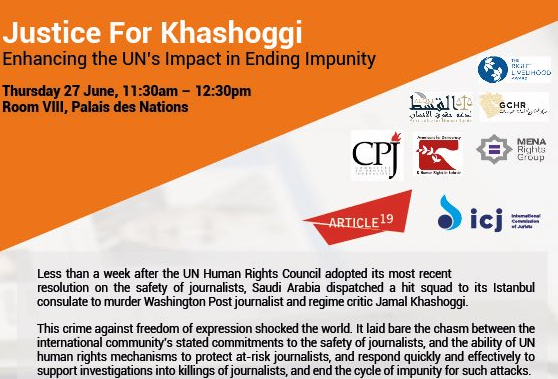
The ICJ joins other NGOs and UN experts in presenting a side event to the UN Human Rights Council, Thursday 27 June, 11:30am – 12:30pm, in Room VIII, Palais des Nations
Less than a week after the UN Human Rights Council adopted its most recent resolution on the safety of journalists, Saudi Arabia dispatched a hit squad to its Istanbul consulate to murder Washington Post journalist and regime critic Jamal Khashoggi.
This crime against freedom of expression shocked the world. It laid bare the chasm between the international community’s stated commitments to the safety of journalists, and the ability of UN human rights mechanisms to protect at-risk journalists, and respond quickly and effectively to support investigations into killings of journalists, and end the cycle of impunity for such attacks.
This human rights crisis is not limited to autocratic countries or nascent democracies – after several years in decline, the number of killings of journalists worldwide spiked in 2018, whilst impunity for historic cases remains troublingly high, fueling further violence. In Malta, a report by PACE Special Rapporteur Pieter Omtzigt into the killing of Daphne Caruana Galizia more than 18 months ago, highlighted serious concerns over national investigations, pointing to systemic rule of law failings in the country.
As the UN Special Rapporteur on extrajudicial, arbitrary or summary executions, Dr. Agnès Callamard, presents the findings of her independent investigation into the killing of Jamal Khashoggi to the 41st Session of the UN Human Rights Council, join us to discuss what recent attacks on journalists have taught us about gaps in prevention, protection and prosecution, and how to enhance the UN’s response to impunity.
| Panelists |
Dr. Agnès Callamard |
UN Special Rapporteur on extrajudicial, summary or arbitrary executions |
|
David Kaye |
UN Special Rapporteur on freedom of opinion and expression |
|
Hatice Cengiz |
Fiancée of Jamal Khashoggi |
|
Pieter Omtzigt |
Special Rapporteur, Council of Europe |
|
Rob Mahoney |
Deputy Executive Director, Committee to Protect Journalists |
|
Yahya Assiri |
Founder and Director, ALQST |
| Moderator |
Thomas Hughes |
Executive Director, ARTICLE 19 |