Jan 29, 2019 | News
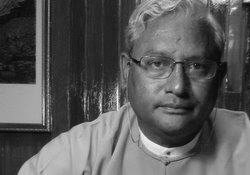
On the second anniversary of the killing of prominent lawyer U Ko Ni, in public view at Yangon International Airport, the ICJ repeats its calls for a thorough and impartial investigation with a view to establish the facts, to deliver justice and to deter the repetition of similar crimes.
“This brazen killing of a prominent democracy advocate demands a rigorous State response to show this type of crime will be fully punished,” said Frederick Rawski, the ICJ’s Director for Asia and the Pacific.
Despite an official investigation and reports of more than 100 court hearings, nobody has been held accountable for U Ko Ni’s death – criminally or otherwise – and the circumstances have not yet been satisfactorily explained.
“Myanmar simply cannot satisfy its international law obligations without conducting an impartial and independent investigation that is free of military influence. Such an investigation is a pre-requisite for conducting an effective prosecution in a fair trial setting,” added Rawski.
U Ko Ni was well known as a vocal advocate for human rights and democratic reform in Myanmar. As an adviser to the National Legal of Democracy party, he was involved in creating the position of State Counselor, which formalized a leadership role for Daw Aung San Suu Kyi, despite a constitutional provision barring her from the Presidency.
At the time of his death, it is understood that U Ko Ni was working on proposals to replace Myanmar’s 2008 Constitution, the source of law underpinning military power.
“A credible justice process is required not only for U Ko Ni and his family, but to demonstrate the State will protect the right to life of all people including democracy advocates,” said Sean Bain, legal adviser for the ICJ.
“A crime of this nature stifles participation in the democratic process and so an effective justice process is imperative to deter its repetition,” Bain added.
Myanmar has a particular obligation to ensure that lawyers and others acting as human rights defenders are protected in carrying out their work.
Any justice process must be timely, effective and shed light on the facts.
The investigation into U Ko Ni’s killing has been beset by obstacles, including the unknown whereabouts of a primary suspect, the incorrect identification of a deceased individual as a suspect and the arrest of a person with the same name, and reported military involvement in the police investigation. Lines of inquiry related to the political motivations for the killing, particularly considering the military links of many suspects, do not appear to have been pursued satisfactorily, nor impartially, given military involvement in the investigation.
Criminal proceedings in Yangon’s Northern District Court, and related proceedings in the Yangon High Court, have been sluggish. Observing lawyers and individuals including from the ICJ have noted multiple instances of admission into evidence of testimony that appears to be irrelevant, failures of key witnesses to appear, and the long drawn out process of court proceedings whereby weeklong delays are common while continuances over successive days are rare.
These issues are emblematic of challenges in Myanmar’s justice system previously identified by the ICJ in which police, prosecutors and courts generally lack the independence and or will to effectively administer justice, particularly in politically sensitive cases.
“Two years is an incredibly long time to get to the position we are in now, and in our experience this highlights broader problems with the administration of justice in Myanmar,” added Bain.
Contact
Frederick Rawski, ICJ Asia Pacific Region Director, e: frederick.rawski(a)icj.org
Sean Bain, ICJ Legal Adviser, e: sean.bain(a)icj.org
Download:
Myanmar-Ko Ni Statement-News-web stories-2019-ENG (full story with background information, PDF)
Myanmar-Ko Ni Statement-News-web stories-2019-BUR (full text in Burmese, PDF)
Read also:
Myanmar: reverse laws and practices that perpetuate military impunity – new ICJ report
Killing of lawyer U Ko Ni must be promptly and impartially investigated
Jan 25, 2019
The ICJ has issued “A primer on international human rights law and standards on the right to freedom of thought, conscience, religion or belief” in which the organization outlines and analyses international human rights law and standards relevant to the right to freedom of religion or belief.
The primer is part of a series of ICJ publications on this theme.
The right to freedom of thought, conscience, religion or belief is a wide-ranging right encompassing a large number of distinct, and yet interrelated entitlements.
International human rights law provides for and guarantees the right to freedom of thought, conscience, religion or belief broadly, encompassing the right to freedom of thought and personal convictions in all matters, and protecting the profession and practice of different kinds of beliefs, whether theistic, non-theistic or atheistic, and the freedom not to disclose one’s religion or belief.
International law also guarantees and protects the right not to have a religious confession.
Among other things, the Primer describes in detail certain key aspects of the right to freedom of religion or belief, including the freedom to adopt, change or renounce a religion or belief; the right to manifest a religion or belief; as well as the relationship between the right to freedom of religion or belief and other human rights, including the principle of non-discrimination, and the right to freedom of expression.
Finally, the primer concludes with a number of recommendations addressed to States in light of its analysis of international human rights law and standards on the right to freedom of religion or belief.
Download
To download the Executive Summary in English, click here.
To download the full primer in English, click here.
To download the full primer in Burmese, click here.
Jan 25, 2019 | Advocacy, Legal submissions
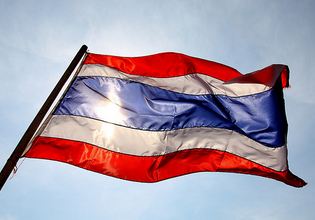
Today, the ICJ and Lawyers Rights Watch Canada (LRWC) submitted a joint amicus curiae in criminal defamation proceedings against human rights defenders Nan Win and Sutharee Wannasiri for bringing to light alleged labor rights violations at Thammakaset Company Limited.
The defamation charges relate to a 107-second film, produced by the non-governmental organization Fortify Rights, which documents previous defamation complaints brought by Thammakaset against 14 of its former migrant workers from Myanmar.
Nan Win was one of the migrant workers featured in the film. Sutharee Wannasiri, former Human Rights Specialist with Fortify Rights, was charged in connection with making three Twitter posts relating to the film.
The brief aims to clarify the nature and scope of Thailand’s international legal obligations relating to the right to freedom of expression and points out that the imposition of harsh penalties such as imprisonment or large fines on a human rights defender risks having a ‘chilling effect’ on the exercise of freedom of expression, which Thailand is bound to protect pursuant to its international legal obligations.
The preliminary examinations of Nan Win and Sutharee Wannasiri will begin on 4 February and 11 March 2019, respectively.
During the preliminary examination hearing, is the Court will consider the case before it to determine if it is a prima facie case.
The preliminary examination hearing is a mandatory proceeding in matters involving prosecution claims brought by private individuals or entities, such as in the case of Nan Win and Sutharee Wannasiri.
If the preliminary examination finds that the cases are prima facie, the court will admit to trial only the charges relating to the counts deemed prima facie.
If the court finds no prima facie case, it can rule that the charges be dismissed.
Read also:
Thailand: Drop defamation complaints against human rights defenders Nan Win and Sutharee Wannasiri (3 December 2018)
Download:
Thailand-Nan Win Kratik_Amicus-Advocacy-legal submission-2019-ENG (full amicus in PDF, English)
Thailand-Nan Win Kratik_Amicus-Advocacy-legal submission-2019-THA (full amicus in PDF, Thai)

Jan 23, 2019
The ICJ and Amnesty International–Canada, have intervened in appeal proceedings before the Supreme Court of Canada in the Case Araya et al versus Nevsun Resources Ltd on appeal from the British Columbia Court of Appeal.
This case concerns a civil suit by Eritrean refugees against Nevsun for its involvement in the commission of forced labour, slavery, torture and other serious breaches of international law against them and many other victim. It is being heard today (23 January).
The joint intervention sets out the basis of the right to an effective remedy under international law and the importance of giving effect to that right in the proceedings of the case and in the development of common law in Canada.
The proceedings before the Supreme Court originate in an appeal by the defendant company Nevsun Resources Ltd against the British Columbia Court of Appeal’s judgment of 2017 which upheld the rights of claimants to sue in Canada.
The company argues that the “act of State” doctrine precludes Canadian courts from sitting to judge the lawfulness or validity of sovereign acts of foreign states, in this case the implementation of Eritrean National Service Programme, within the territory of that state.
The alleged forced labour, slavery and torture had been committed in this context. The company also contends that the claimants’ suit is based on allegations of breach of customary international law rules applicable only to States and which are not recognized under Canadian tort law as applicable to companies.
The ICJ and AI-Canada argue that the development of common law doctrines of judicial abstention and causes of action should be consistent with the right to an effective remedy for human rights violations as protected by international law and the Canadian Charter of Rights and Freedoms. In this line, the company’s grounds of appeal should be rejected or, if accepted, should be made consistent with the full respect to the right of the claimants to an effective remedy.
The claim filed in 2015 argues that Nevsun Resources was involved in various ways in the practice of forced labour, slavery, torture, cruel, inhuman or degrading treatment, and crimes against humanity at the Bisha mine against hundreds of Eritreans who were conscripted into the Eritrean National Service Programe and forced to working in the mine operated jointly by Nevsun and Eritrean State companies.
The claimants, Gize Yebeyo Araya, Kesete Tekle Fshazion and Mihretab Yemane Tekle, three of those who were forced to work in the Bisha mine and fled the country to find refuge in Canada, sued Nevsun alleging private law torts and breaches of peremptory principles of international law (forced labour, slavery, torture, inhuman or degrading treatment, and crimes against humanity).
Contact:
Carlos Lopez, ICJ Senior Legal Adviser, t: +41 22 979 38 16 ; e: carlos.lopez(a)icj.org
Canada-Nevsun AB-Advocacy-Legal submissions-2019-ENG (full text of appeal, in PDF)

Jan 18, 2019 | News
A legal challenge to the violations of migrant children’s social rights on mainland Greece and its North Eastern Aegean islands has been lodged by the ICJ and the European Council on Refugees and Exiles (ECRE) before a European body specialized in the protection of social rights at the European level.
The legal action, taken in the form of a collective complaint to the European Committee on Social Rights, catalogues the numerous instances of Greece failing its child care and protection obligations towards migrant children by leaving them in conditions of squalor, insecurity and violence.
The complaint to the Committee, an impartial body which oversees the protection of certain economic and social rights by assessing the conformity of domestic law and practice with the European Social Charter, has been supported by the Greek Council for Refugees and includes reports from Médecins Sans Frontières on health and living conditions of migrant children in Lesvos.
Amongst the most blatant infringements of migrant children’s rights described in the complaint has been the systematic and ongoing absence of sufficient accommodation facilities and the lack of an effective guardianship system for unaccompanied children in Greece, exposing them to significant protection risks, including homelessness and placement in detention.
Such severe deficiencies in basic care facilities has led to dire living conditions which deprive children of their most fundamental rights.
Overcrowded, insalubrious and dangerous conditions prevail most obviously on the North Eastern Aegean islands where the standards of human dignity and special protection accorded to children by virtue of their particular status under international human rights law are repeatedly violated.
The complaint notes that the dearth in basic care facilities for migrants in Greece extends to medical services, particularly on the islands, which has a serious knock-on effect on hygiene, sanitation and substantive physical and mental health care and treatment for children.
In addition, mixed living arrangements, limited, if not non-existent security patrols and deficient guardianship systems have led to numerous reports of sexual abuse, violent assaults, harassment and humiliation of migrant children in camps on the Greek islands.
The consequences of the conditions listed in the complaint have been, in certain locations, children self-harming and even attempting suicide.
“Greece’s deference to the violations being committed against migrant children on its territory has gone on for far too long without any foreseeable improvement on the horizon.
Transfers of migrant children and vulnerable persons from the islands to the mainland are paralysed by a shortage of places on the mainland and administrative encumbrances.
All the while, children are left to languish in a forgotten environment of impoverishment and destitution.
This legal challenge to Greece’s indifference will hopefully pave the way for institutional condemnation and for substantive change in the protection of society’s most vulnerable” says Amanda Taylor, Senior EDAL Coordinator at the European Council on Refugees and Exiles.
“As signatory of the European Social Charter, Greece is under an international obligation to ensure that migrant children in its jurisdiction have access to basic economic and social rights. Particularly in the case of migrant children, who find themselves in a vulnerable situation, remaining even for a short period of time in such terrible conditions as currently exist in Greece, is likely to result in irreparable harm and injury and have a detrimental and non-reversible impact on their development,” said Karolína Babická, Legal Adviser for Europe and Central Asia with the ICJ.
“This complaint refers to two of the most pressing protection issues in Greece; the protection of unaccompanied minors and the conditions prevailing on the Greek islands after the launch of the EU-Turkey Statement, where migrant children are stranded. In December 2018, almost two out of three unaccompanied children in Greece were deprived of a place in long-term accommodation facility for minors. At the same time, 30% of the 14,600 persons remaining on the Greek islands were children. Thus, the procedure initiated before the European Committee of Social Rights can significantly contribute to guaranteeing the respect of migrant children’s rights in Greece,” said Alexandros Konstantinou, member of the Legal Unit of the Greek Council for Refugees.
The complaint awaits examination and determination by the European Committee on Social Rights.
As part of the complaint and in order to immediately alleviate the situation which migrant children face in Greece, ECRE and ICJ have urgently requested Greece to remove migrant children from unsuitable and overcrowded camps on the islands; to provide them with adequate and age-appropriate facilities, sufficient food, water and medical care, and with effective and competent guardians; and to remove unaccompanied migrant children from detention and place them in tailored accommodation suitable for their age.
Read the full complaint here.