Oct 10, 2023 | Advocacy, News
The International Commission of Jurists (ICJ) condemns the direct attacks against civilians in Israel, including deliberate killings of hundreds of civilians, the taking of hostages and the launching of indiscriminate rockets against civilians and civilian objects, perpetrated by Palestinian armed groups since 7 October 2023.
“I abhor the deliberate targeting of civilians and hostage-taking, and condemn the horrific escalation of violence in Israel and the Occupied Palestinian Territory,” said Santiago Canton, ICJ Secretary General. “These atrocities are crimes under international law and must stop immediately. Civilians held hostages should be released.”
The ICJ also condemns Israel’s retaliatory airstrikes against buildings in densely populated areas in Gaza, which have killed hundreds of Palestinian civilians, and the measures of collective punishment taken against civilians in Gaza, including a total siege on food, water, electricity and fuel.
“I urge the Israeli authorities to refrain from engaging in indiscriminate retaliations or any form of collective punishment against civilians and from using starvation as a method of warfare,” said Canton.
The ICJ calls on all parties to the conflict to respect their obligations under international humanitarian law to protect civilians caught up in the hostilities and for accountability for the crimes under international law that have been perpetrated.
The attack led by Palestinian armed groups began on 7 October 2023, with thousands of indiscriminate rockets fired on Israel as well as incursions in Israel of armed combatants shooting civilians en masse and taking hostages to Gaza.
Israel retaliated with attacks against the Gaza strip through waves of airstrikes targeting several residential buildings and a mosque.
The death toll reported as of this morning, 10 October, was of at least 900 Israelis and at least 700 Palestinians, with more than 2,600 Israelis and 3,700 Palestinians injured.
While Israel has already cut off electricity and fuel supplies to Gaza, on 9 October the Israeli Defence Minister announced a complete siege of Gaza, including food and water, adding “we are fighting human animals and we are acting accordingly.” On the same day, Hamas threatened to execute an Israeli captive for every Israeli bombing of a civilian building without warning.
Background
Israel has imposed an air, land and sea blockade on the Gaza Strip since 2007.
The ICJ has documented Israel’s systematic human rights violations against the Palestinians in the Occupied Palestinian territory, such as forced evictions and displacement, restrictions on freedom of movement and arbitrary deprivations of life and liberty.
The ICJ has further documented attacks by Israeli forces and Palestinian armed groups in the Gaza strip in violation of the prohibition against deliberate or indiscriminate attacks against civilians, including as a result of the launch by Palestinian armed groups of thousands of indiscriminate rockets into Israel.
In February 2023, the ICJ called on the Israeli authorities to stop all actions amounting to the war crime of collective punishment of the Palestinian people in the West Bank and East Jerusalem, including house and property demolitions, arbitrary revocation of residency and citizenship rights and forcible deportation of Palestinians from the Occupied Palestinian Territory.
The ICJ recalls that willful killing, willfully causing great suffering or serious injury to body or health, unlawful deportation and taking of hostages committed against civilians and members of armed forces placed hors de combat, as well as extensive destruction of property not justified by military necessity and carried out unlawfully and wantonly, are grave breaches of the Fourth Geneva Convention and Additional Protocol I to the Geneva Conventions and amount to war crimes under the Rome Statute and customary international law. Intentionally directing attacks against the civilian population and civilian objects and intentionally using starvation of civilians as a method of warfare by depriving them of objects indispensable to their survival, including willfully impeding relief supplies as provided for under the Geneva Conventions, as well as measures of collective punishment against protected persons, also amount to war crimes.
Contact:
Said Benarbia, Director of the ICJ’s Middle East and North Africa Programme, email: said.benarbia(at)icj(dot)org
Oct 10, 2023 | News
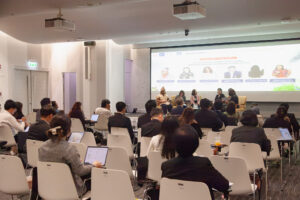
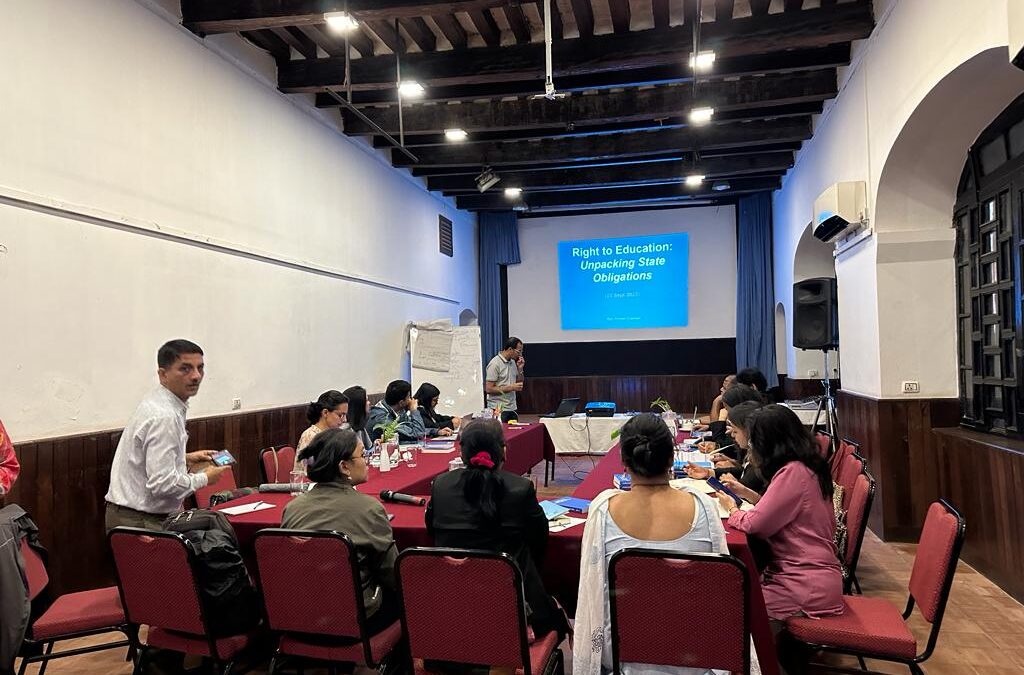
The International Commission of Jurists (ICJ), in partnership with the Economic, Social and Cultural National Network/Justice & Rights Institute Nepal (JuRI-Nepal), the Public Interest Litigation LawyersGroup (Nepalgunj), and the Privatisation in Education and Human Rights Consortium (PEHRC), has launched a mentorship program geared towards training young lawyers on international law and standards applicable to private actor involvement in education.
The 22 lawyers who will benefit from the programme are from Bagmati and Lumbini Province. To kick off the program, workshops were held on 23 September in Kathmandu and 28 September in Nepalgunj.
“We are delighted to initiate this mentorship program and are hopeful that it will be helpful to prepare a new set of human rights lawyers capable of and dedicated to advancing the realization of the right to education in Nepal in the context of burgeoning privatization,” said Karuna Parajuli, ICJ National Legal Adviser.
“The State has the primary role in guaranteeing access to education for all persons without discrimination of any kind. We hope that knowledge of their specific duties around will assist Nepali lawyers to identify issues and support their clients in enjoying their rights to education and ensuring effective and adequate regulation of private actors in education, added Parajuli.
Opening the workshop in Nepalgunj Judge Harka Bahadur Gurung emphasized the importance of these issues in the Nepali context:
“The current educational system in Nepal has segregated children as those going to high-fee private schools and others going to public schools with no basic infrastructure. Your litigation initiative should focus to remove this division and enable each student equal access to free and quality education”.
“The Constitution of Nepal guarantees education as a human right which is fully enforceable before Nepali Courts. This provides a strong avenue to initiate strategic litigation, which remains underutilized”, said ICJ’s Senior International Legal Adviser Mandira Sharma. “We encourage the mentees in this programme and Nepali lawyers more broadly to work towards crafting innovative advocacy strategies directed at fully realizing right to education in Nepal”, she concluded.
Contact
Dr Mandira Sharma, ICJ Senior International Legal Adviser, t: +9779851048475, e: mandira.sharma@icj.org
Karuna Parajuli, ICJ Legal Adviser, Nepal, t: +9779808431222, e: karuna.parajuli@icj.org
Further information
International law and standards on the right to education are spelled out in various treaties binding on Nepal such as the International Covenant on Economic, Social and Cultural Rights and the Convention on the Rights of the Child. Further detail on States’ obligations to restrict, regulate and monitor private actor involvement in education are further details in a range of standards including the general comments of UN Treaty Body Mechanisms and the Abidjan Principles on the human rights obligations of States to provide public education and to regulate private involvement in education.
Following the workshops, participants worked in groups to formulate an action plan for their mentorship period. They have been paired up with mentors (that include a senior advocate, senior litigating lawyers, and an ESCR expert). The mentorship program will run from October 2023 to March 2024.
The mentorship program is organized with the support of the Privatization in Education and Human Rights Consortium (PEHRC), an informal network of national, regional, and global organizations and individuals collaborating to analyse and respond to the challenges posed by the rapid growth of private actors in education from a human rights perspective and propose alternatives.
The main objectives of the mentorship program are to train young lawyers on how to utilize strategic litigation for claiming the right to education; expand their knowledge of international law (including Abidjan Principles) and share good practices on the right to education in other parts of the world.
Resources
https://www.icj.org/nepal-strategic-litigation-is-an-important-tool-to-ensure-compliance-with-international-human-rights-standards/
https://www.icj.org/late-as-usual-delayed-delivery-of-textbooks-infringes-the-right-to-education-of-nepali-students/
https://www.icj.org/nepal-icj-lawyers-workshop-discusses-strategic-litigation-to-enforce-the-right-to-education/

Oct 9, 2023 | Access to justice, Advocacy, Cases, News
Today, the International Commission of Jurists (ICJ), the AIRE Centre (Advice on Individual Rights in Europe), the Dutch Council for Refugees (DCR), and the European Council on Refugees and Exiles (ECRE), submitted a third-party intervention to the European Court of Human Rights in the case S.M.H. v Lithuania, concerning the deprivation of liberty of an asylum seeker.
S.M.H., an Iraqi citizen, who entered Lithuania irregularly and sought asylum, was subsequently arrested and detained in various centres. The applicant claimed that his detention was not justified, lacking both individualised assessment and effective legal assistance.
In its intervention, the ICJ and its partners focus on Article 5.1 and Article 5.4 of the European Convention of Human Rights (ECHR). In particular, the interveners analyse the requirements for lawful deprivation of liberty, the right to have the lawfulness of detention promptly examined by a Court, and the right to have effective legal assistance. The intervention considers both the EU and international law and standards related to deprivation of liberty and the right to an effective remedy against unlawful detention and material conditions of detention.
The key points of the intervention are as follows:
- The interveners submit that under Article 5.1 detention must not be arbitrary, and be prescribed by law both substantively and procedurally. The intervention highlights that detention must be a measure of last resort, it should follow an individualised and exhaustive examination, and it may be imposed only when less strict measures cannot be effectively applied.
- Regarding Article 5.4, the interveners clarify that an effective judicial review of detention prescribed by law and accessible in practice constitutes a safeguard against arbitrary detention. Legal aid and competent legal representation are essential elements in ensuring the accessibility and effectiveness of judicial review of the lawfulness of detention.
- Finally, the interveners stress that lack of access to clear information, lack of access to a lawyer, and lack of access to an effective remedy contravene the guarantees under Articles 3 and 13 ECHR, rendering them ineffective, theoretical, and illusory.
Read the full intervention here.
Oct 6, 2023 | Cases, Uncategorized
The International Commission of Jurists (ICJ), together with the AIRE Centre (Advice on Individual Rights in Europe), the Dutch Council for Refugees and the European Council on Refugees and Exiles (ECRE) submitted today a third party intervention in the Communicated case No. 193/2022, before the UN Committee on the Rights of the Child.
The case concerns immigration detention of an 11-year-old girl from Afghanistan together with her older sister and parents, pending transfer to another EU Member State according to the EU Dublin Regulation.
The interveners focus in their submission on the prohibition of immigration detention of children, including when accompanied by family members, the right to be heard, access to information and legal representation and age assessment in the migration context.
The full intervention can be read here.
Oct 5, 2023 | News
The ICJ condemns the recent prosecution of two lawyers, Dalila Msadek and Islem Hamza, who act as defence counsel in a high-profile case involving political opposition figures. On 29 September 2023, the Public Prosecutor of the Tunis Court of First Instance initiated criminal proceedings against Dalila Msadek and Islem Hamza, who are members of the legal team defending a number of political opponents of the regime of Tunisia’s President, Kais Saied, some of whom have been detained since February 2023 for their alleged involvement in the so-called conspiracy case based on charges related to “terrorism” and “State security”.
البيان باللغة العربية على هذا الرابط
The ICJ further condemns the prosecution of Ayachi Hammami, also acting as defence counsel in the “conspiracy case”, who is scheduled to appear before the investigating judge of the “counter-terrorism” specialized judicial unit on 10 October 2023. Ayachi Hammami was informed that he was being prosecuted in the “conspiracy case” on 3 May 2023.
The prosecutions of Dalila Msadek, Islem Hamza and Ayachi Hammami are emblematic illustrations of a pattern of judicial harassment of lawyers representing individuals involved in political cases in Tunisia where the lawyers themselves are targeted solely because of their legitimate professional activities, ultimately underming their ability to defend their clients’ human rights, free from intimidation, hindrance, harassment or improper interference.
“This growing pattern of judicial harassment of lawyers solely for their legitimate discharge of their professional duties violates their human rights, including to liberty and security of person, fair trial, work and freedom of expression, as well as their clients’ right to a fair trial, including the right to defend themselves and to legal representation and assistance,” said Said Benarbia, ICJ MENA Director.
Dalila Msadek and Islem Hamza face charges of “spreading fake news with the aim of threatening public security through audio-visual media”, pursuant to article 24 of Decree-law 2022-54 of 13 September 2022, and of “processing of personal data relating to criminal offences, their investigation, criminal proceedings, penalties, preventive measures or criminal records”, pursuant to articles 13 and 87 of Organic Law No. 2004-63 on the protection of personal data. Dalila Msadek and Islem Hamza are being prosecuted in connection with statements they made on the radio on 28 and 29 September 2023 in which they mentioned having requested that the investigating judge of the ”counter-terrorism” specialized judicial unit should hear the diplomats whom their clients allegedly met as part of the “conspiracy” of which the prosecution accuses them.
Since June 2023, Islem Hamza has also been prosecuted in a separate case, under article 24 of Decree-Law 54, following a statement she made on the radio, in her capacity as a defence lawyer of arrested political opponents, denouncing the conditions of transfer of detainees as inhumane. Similarly, Ayachi Hammami has been prosecuted since January 2023 in a distinct case pursuant to Decree-Law 54 based on a statement he made in his capacity as a defence lawyer of the dismissed judges.
The ICJ considers that, to prosecute Islem Hamza, Dalila Msadek and Ayachi Hammami, the prosecution authorities have latched onto statements that Islem Hamza, Dalila Msadek and Ayachi Hammami made in the legitimate discharge of their professional duties as lawyers towards their clients. In addition, their statements constitute the protected exercise of their right to freedom of expression and, as such, cannot be subject to criminal prosecution under general principles of criminal law and international human rights law and standards.
Islem Hamza, Dalila Msadek and Ayachi Hammami are not isolated cases: Abdelaaziz Essid is also being prosecuted based on a statement he made as a defence lawyer in the “conspiracy case”. Moreover, Ghazi Chaouachi and Rhida Belhaj, who were representing other defendants in the “conspiracy case”, are being prosecuted in that very same case before the “counter-terrorism” specialized judicial unit.
“After arbitrarily detaining peaceful political opposition members, the authorities are increasingly using the criminal law to harass and intimidate defence lawyers and disrupt the legitimate discharge of their professional duties,” said Said Benarbia. “In so doing, they are sending the chilling message that any lawyers who represent defendants in political cases expose themselves to the risk of being prosecuted on spurious criminal charges.”
The ICJ calls on the Tunisian authorities to drop all criminal charges against all lawyers currently prosecuted solely for the legitimate discharge of their professional duties and the peaceful exercise of their right to freedom of expression and to immediately end all practices that hinder the work of lawyers.
Background
Since 2022, State authorities have increasingly targeted Tunisian lawyers for their legitimate defence work and for exercising their human rights. On 26 May 2023, several mandate holders of the UN Human Rights Council Special Procedures expressed concern over some of these cases.
According to information available to the ICJ, at least 27 lawyers are facing or have faced criminal prosecutions since 2022 based on charges related to, among others, “terrorism” and “State security”, or based on public statements critical of the executive. Among these, three – Noureddine Bhiri, Ghazi Chaouachi and Rhida Belhaj, who began a hunger strike on 2 October 2023 along with other detainees in the “conspiracy case” – are currently in detention; three other defence lawyers – Abdelrazak Kilani, Mehdi Zagrouba and Seifeddine Makhlouf – have been tried and imprisoned by military courts; and 15 others have been banned from traveling, including Lazhar Akermi following his release from pre-trial detention.
Lawyers, like any other person, enjoy the right to freedom of expression, as protected under human rights treaties to which Tunisia is party. These include the International Covenant on Civil and Political Rights and the African Charter on Human and Peoples’ Rights.
The UN Basic Principles on the Role of Lawyers and the African Commission on Human Peoples’ rights’ Principles and Guidelines on the Right to a Fair Trial in Africa reaffirm this principle and state that governments shall ensure that lawyers are able “to perform all of their professional functions without intimidation, hindrance, harassment or improper interference”, and “to travel and to consult with their clients freely both within their own country and abroad.”
The UN Special Rapporteur on the Independence of Judges and Lawyers has urged public prosecutors “ to closely monitor situations and cases in which lawyers might be criminalized for performing their duties. When such circumstances arise, appropriate orders should be issued to prevent public prosecutors from maliciously prosecuting members of the legal profession who criticize State officials and institutions in the exercise of their independence and freedom of expression.”