Sep 26, 2023
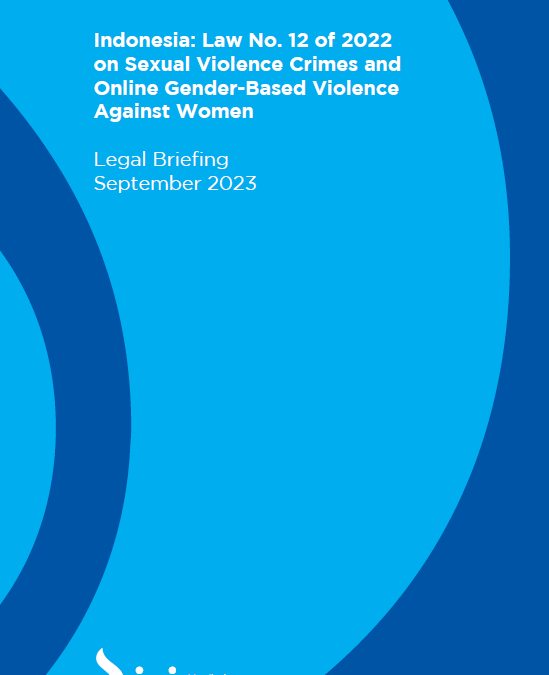
The Indonesian authorities should ensure that women are effectively protected against online gender-based violence (OGBV) by implementing Law No. 12 of 2022 on Sexual Violence Crimes (Law 12/2022) and by addressing its shortcomings in line with international human rights law, the International Commission of Jurists (ICJ) highlighted in a briefing paper published today.
In a thirty-page briefing paper analyzing Law 12/2022, the ICJ identified gaps in the recently adopted Law 12/2022 relating to OGBV, and addressed recommendations to the Indonesian authorities on how to enhance the country’s ability to fulfill its international human rights law obligations to prevent and punish acts of OGBV.
“While Law 12/2022 represents a step in the right direction with respect to preventing and punishing OGBV against women in Indonesia, much still needs to be done to effectively protect women against all forms of OGBV, and to ensure that victims/survivors are able to access justice and legal remedies,” said Daron Tan, ICJ Associate International Legal Adviser.
Law 12/2022 entered into force in May 2022. The law criminalizes acts of sexual violence, including certain manifestations of OGBV. Among other things, the legislation also guarantees legal protection and remedies for victims/survivors of certain acts of sexual violence.
The ICJ’s briefing paper underscores that acts of OGBV violate the human rights of victims/survivors guaranteed under international human rights law. Indonesia has international human rights law obligations to prevent acts of OGBV, and to investigate, prosecute and punish them when they occur.
The briefing paper identifies certain shortcomings in Law 12/2022 requiring improvement so as to more effectively address OGBV, including the limited scope of OGBV acts covered by the legislation and the need to ensure its gender-sensitive implementation.
“The Governmental Regulations to implement Law 12/2022, which are currently being formulated with the aim of adopting them before the end of 2023, present a great opportunity for the Indonesian authorities to ensure that Law 12/2022 may better address acts of OGBV in line with the country’s legal obligations under international human rights law and standards,” added Yogi Bratajaya, ICJ Legal Consultant.
The ICJ’s briefing paper also analyzes the human rights responsibilities of technological companies, such as Meta, X (formerly Twitter) and TikTok, to prevent and address acts of OGBV. These companies’ activities may risk enabling acts of OGBV against women, including through the algorithmic amplification of content amounting to or disclosing evidence of OGBV on their platforms.
The briefing paper provides concrete recommendations to the Indonesian authorities on how they can improve the provisions and implementation of Law 12/2022 in line with international human rights law to effectively protect women against OGBV. The briefing paper also provides recommendations to tech companies on how they can fulfil their responsibilities under international human rights standards to prevent acts of OGBV and effectively address them when they occur.
Briefing Paper Launch
The briefing paper was launched on 26 September 2023. The launch included a panel discussion, which drew together women’s rights organizations, journalists, lawyers and tech companies’ representatives to discuss the ongoing efforts in Indonesia to protect women against OGBV and ensure access to justice for victims/survivors.
The panelists at the launch were:
- Daron Tan, Associate International Legal Adviser, ICJ;
- Yogi Bratajaya, Legal Consultant, ICJ;
- Andy Yetriyani, Head of the National Commission on Violence Against Women (Komnas Perempuan);
- Uli Pangaribuan, Director of the Legal Aid Foundation of the Association of Women for Justice Jakarta (LBH APIK Jakarta);
- Endy Bayuni, Member of the Meta Oversight Board; and
- Nani Afrida, Editor in Chief, Independen.id
Download
The full briefing paper is available in English and Bahasa Indonesia (PDF). This press release is available in Bahasa Indonesia here.
Contact
Daron Tan, ICJ Associate International Legal Adviser, e: daron.tan@icj.org
Yogi Bratajaya, ICJ Legal Consultant, e: yogi.bratajaya@icj.org
Further reading
ICJ, “ICJ publishes guidance for laws to prevent and address online gender-based violence against women“, 19 May 2023

Sep 25, 2023 | News
The ICJ considers that revisions made to the draft of proposed anti-terrorism legislation, while positive, fail to sufficiently correct the deficiencies of the earlier draft and, if adopted, would risk serious human rights violations.
The revised bill, in its clause 3 continues to define acts of terrorism in a vague and overbroad matter and undercuts the inherent authority of the judiciary, as people may be detained for two months solely on order of the secretary of the Defence Ministry.
“The overbroad definition coupled with the restriction on the authority of magistrates to review initial Detention Orders is in contravention of fundamental rule of law principles and must be further revised if Sri Lanka is to deliver on its promise to protect the human rights of all of its inhabitants,” said Ian Seiderman, ICJ’s Legal and Policy Director.
The ICJ stresses that these provisions contravene article 13 of Sri Lanka’s Constitution, as well as article 9 of the International Covenant on Civil and Political rights, to which Sri Lanka is a party.
On 15 September 2023, the Ministry of Justice of Sri Lanka published the revised version of the Anti- Terrorism Bill (ATA), which would repeal and replace the Prevention of Terrorism (Temporary Provisions) Act No.48 of 1979 (PTA). A first draft of the Bill was published in March 2023 and according to government ministers the current revision was aimed at removing certain problematic provisions from the earlier draft. The ICJ had previously expressed concerns about that draft.
“Sri Lanka should dispense with special regimes like the ATA and instead address terrorism offences through criminal procedures that comply with the rule of law,” said Ian Seiderman. “At the very least, the Ministry of Justice must revise the present draft in line with international human rights law and standards before parliament takes action on it.”
Among the vague and overbroad provisions of the draft bill are the “encouragement of terrorism” (clause 10) and “dissemination of terrorist publications” (clause 11), under which persons can be detained for sharing or causing to be published statements which are interpreted by the authorities to be in support of terrorism or terrorism activities. The burden of proof for such offences would be unacceptably reversed under the bill, as the accused would be required to prove before the high court that they had not consented to or approved the utterance or publication of such statements.
The prescribed punishment for these offences is imprisonment up to 15 years and/or a fine up to one million rupees. Property owned by the accused may also be forfeited to the State.
The bill would provide the President with excessive powers to restrict the exercise of human rights, including to impose restriction orders on individual persons, proclaim curfews, designate prohibited places, and make regulations to implement “rehabilitation programmes” for persons regarding whom the Attorney-General has recommended a deferment or suspension of criminal action. Rehabilitation programmes in the past have served a punitive function, as accused persons have often been effectively coerced into accepting rehabilitation particularly in cases where the prosecutor has lacked evidence of criminal conduct.
The ICJ notes the several positive changes in the revised draft, including the removal of the death penalty as a possible punishment and removal of the power of the Deputy Inspector Generals (DIGs) of Police to issue Detention Orders (DO). The new draft would also allow the Magistrate to discharge suspects, in the absence of a DO, where the Magistrate determines that there is no justification for the arrest. DOs, which may only be issued by the Secretary to the Ministry of Defence would now allow for detention of two months without charge, as opposed to three months contemplated by the earlier draft of the bill. Finally, the revised bill removes mention of the Board of Review, which would have been empowered to hear appeals against DOs in the previous draft, and provides time limits for declarations of prohibited places by the President.
The revised draft also retains the improvements made to the PTA in the first draft including the removal of a provision which accepts “confessions” made before a police officer while in detention as evidence in courts; the issuance of a document by the arresting officer notifying arrest to a family member of the arrested person; employing women police to question or conduct searches of women detainees; access to translations in a language of the accused’s choice; and production before a magistrate every 14 days when a person is detained under a Detention Order (DO).
However, among its many flaws, the draft law is silent on compensation and redress mechanisms for those affected by abuse and misuse of the law. This is a significant shortcoming, as detainees have languished in custody for years under the PTA and have had the cases against them dismissed decades later.
Background
Past experience with the PTA has shown that provisions relating to ‘encouragement of terrorism’ or ‘dissemination of terrorist publications’ are open to abuse particularly against persons from minority communities including journalists. For instance, Ahnaf Jazeem ,whose book of poetry was spuriously identified as promoting “extremism”, was subjected to human rights violations, including arbitrary detention under the PTA. In May 2022, the UN Working Group on Arbitrary Detention stated that Sri Lanka had violated international human rights law by detaining Ahnaf Jazeem.
The ICJ has repeatedly called for the repeal of the Prevention of Terrorism Act, which has been used to arbitrarily detain suspects for months and often years without charge or trial, facilitating torture and other abuse. United Nations human rights bodies have also called on Sri Lanka to enforce a moratorium on the use of the Prevention of Terrorism Act and to repeal the Act.
Sep 22, 2023
Joint Oral Statement
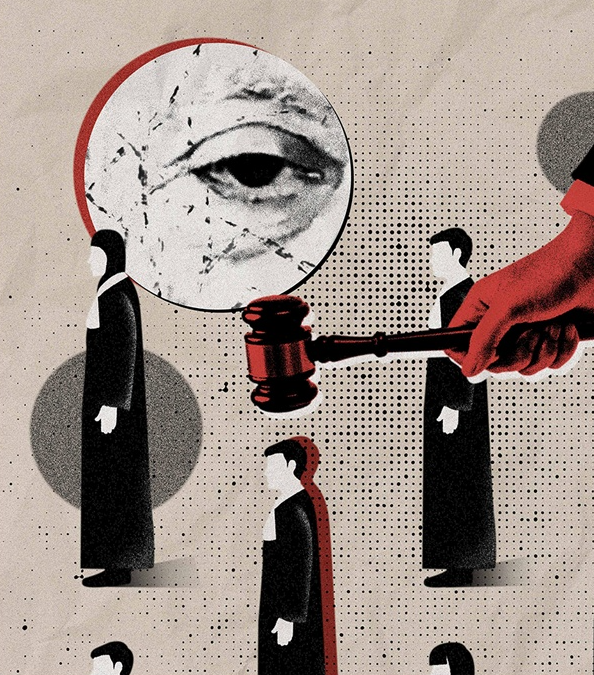
The International Bar Association’s Human Rights Institute (IBAHRI) and the International Commission of Jurists (ICJ) deplore the widespread and systematic human rights violations in Belarus. We condemn the escalating pattern of retaliation against lawyers for representing the political opposition and protesters and, upholding the rule of law.
Since 2020, over 100 lawyers have faced harassment and have been forced to flee the country. On 27 July 2023, prominent lawyer Yuliya Yurgilevich and journalist Pavel Mazheika were sentenced to six years’ imprisonment on spurious charges, including against Yurgilevich for publicizing her disbarment and disseminating information on political prisoners .
We remain concerned at the apparent enforced disappearance of political prisoners, including Maria Kalesnikava and Viktar Babaryka, detained without access to the outside world, including lawyers.
The recent presidential decree from 4 September, restricting Belarus nationals in exile from accessing consular services, is unacceptable. It jeopardizes the enjoyment of human rights for those exiled and their families including the right to freedom of movement, to work, health, education, and housing
We urge:
- Belarus to immediately release all arbitrarily detained individuals, including lawyers and other political prisoners, and to ensure that all detained person have access to lawyer, doctors and family and cease their persecution, immediately withdraw the presidential decree on consular services.
- Host States to provide all necessary assistance to protect the rights of exiled Belarus nationals and their families.
This statement was delivered by:
Francesca Restifo
Senior Human Rights Lawyer and UN Representative
International Bar Association’s Human Rights Institute (IBAHRI)
For further information please contact
Francesca Restifo, IBAHRI, francesca.restifo@int-bar.org
Sandra Epal Ratjen, ICJ, sandra.epal@icj.org
Sep 22, 2023 | Advocacy, News
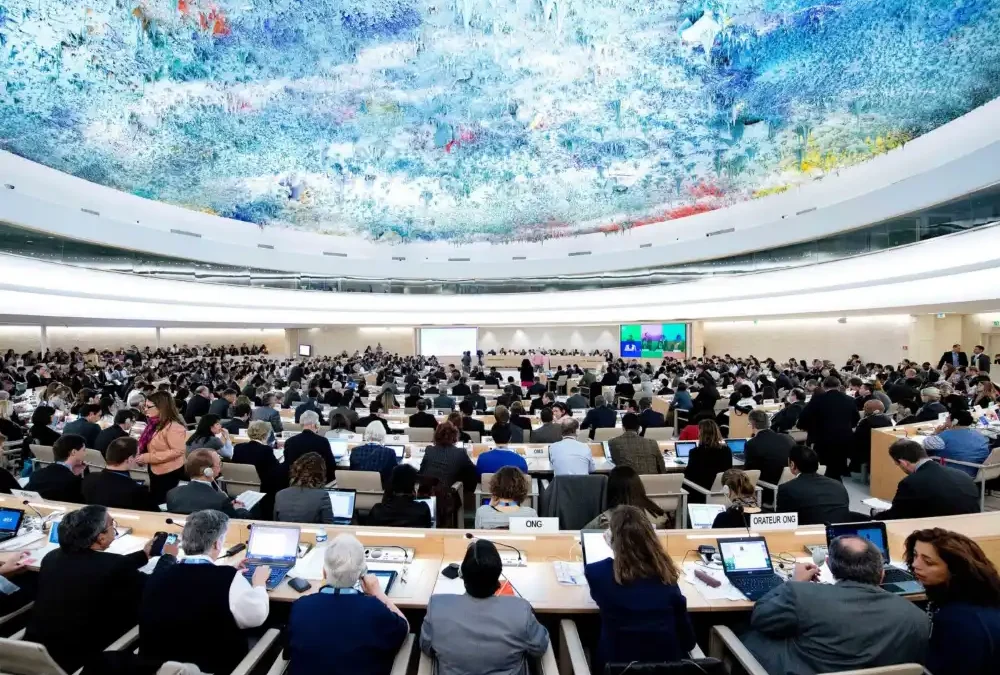
The International Commission of Jurists (ICJ) and International Bar Association Human Rights Institute (IBAHRI) called the Human Rights Council’s attention to the serious abuses amounting to crimes under international law linked to mercenary activities in the Sahel region of Africa, including allegations of unlawful killings, torture and ill-treatment, rape and other sexual violence, and enforced disappearances. Read the full statement below.
Oral Statement of the ICJ and the IBAHRI on the recruitment and activities of mercenaries and private military and security companies
“Mr President,
The International Commission of Jurists (ICJ) and the International Bar Association Human Rights Institute (IBAHRI) deplore the practices of predatory recruitment of people usually in vulnerable situations, such as detainees, and the harsh and risky conditions of service they endure as described in the report of the Working Group on the Use of Mercenaries (A/HRC/54/29).
The report describes opaque and deceitful contract terms, and orders to take direct part in hostilities in foreign countries without their prior consent. These practices sometimes amount to forced labour and debt bondage, in addition to human trafficking.
We remind the States with jurisdiction over persons and practices of their obligation to protect the human rights of persons in such vulnerable situations. ICJ and IBAHRI especially calls this Council’s attention to the serious abuses amounting to crimes under international law linked to mercenary activities in the Sahel region of Africa, including allegations of unlawful killings, torture and ill-treatment, rape and other sexual violence, and enforced disappearances.
We are deeply concerned at repeated allegations that some of these serious human rights abuses are committed by the so-called Wagner Group and call States concerned to promptly, thoroughly and impartially investigate these allegations and bring the perpetrators to justice.
ICJ and IBAHRI support the Working Group’s recommendations for renewal of the mandate of the Intergovernmental Working Group on an international regulatory framework on private military and security companies and call all States to constructively participate in its work (para. 42 g).
Thank you.”
For more information, contact:
Carlos Lopez Hurtado, ICJ Senior Legal Adviser, e: carlos.lopez@icj.org

Sep 21, 2023
For decades within its own borders, Russian authorities have undermined and attacked independent civil society, persecuted human rights defenders, activists, lawyers, and opposition and dissenting voices, banned independent media, silenced journalists, and have effectively outlawed any form of peaceful protest.
It has never been more dangerous to be a human rights defender in contemporary Russia. This environment, at least in part, enabled the Russian authorities to launch a renewed invasion of Ukraine on 24 February 2022. At the same time as the danger has increased, protections have decreased. The judiciary is not independent and cannot provide effective protection for human rights. Victims of Russian human rights violations no longer have the ability to bring their cases before the European Court of Human Rights, and Russia has even failed to turn up to United Nations Treaty Body reviews, specifically those of the Human Rights Committee, in 2022.
Ahead of the first Interactive Dialogue by the new UN Special Rapporteur on the situation of human rights in the Russian Federation at the Human Rights Council, this in-person side event at the 54th session allows for an opportunity to discuss critical updates on the human rights situation in Russia, as well as further action to respond to Russia’s human rights crisis and to the legitimate calls for support from domestic civil society.
The panel will focus on the following key questions:
¨ What are the most pressing human rights issues in Russia today?
¨ Why should the Human Rights Council look to renew the mandate of the Special Rapporteur during the 54th session?
Speakers
Mariana Katzarova
UN Special Rapporteur on the situation of
human rights in the Russian Federation
Violetta Fitsner
OVD-Info
Zhargal Budaev
Memorial Human Rights Defence Centre
Dmitry Gurin
European Prison Litigation Network
Closing statements
Oleg Kozlovsky
Amnesty International
Damelya Aitkhozhina
Human Rights Watch
Moderator
Dave Elseroad
Human Rights House Foundation