Jun 18, 2021 | Agendas, Events, News
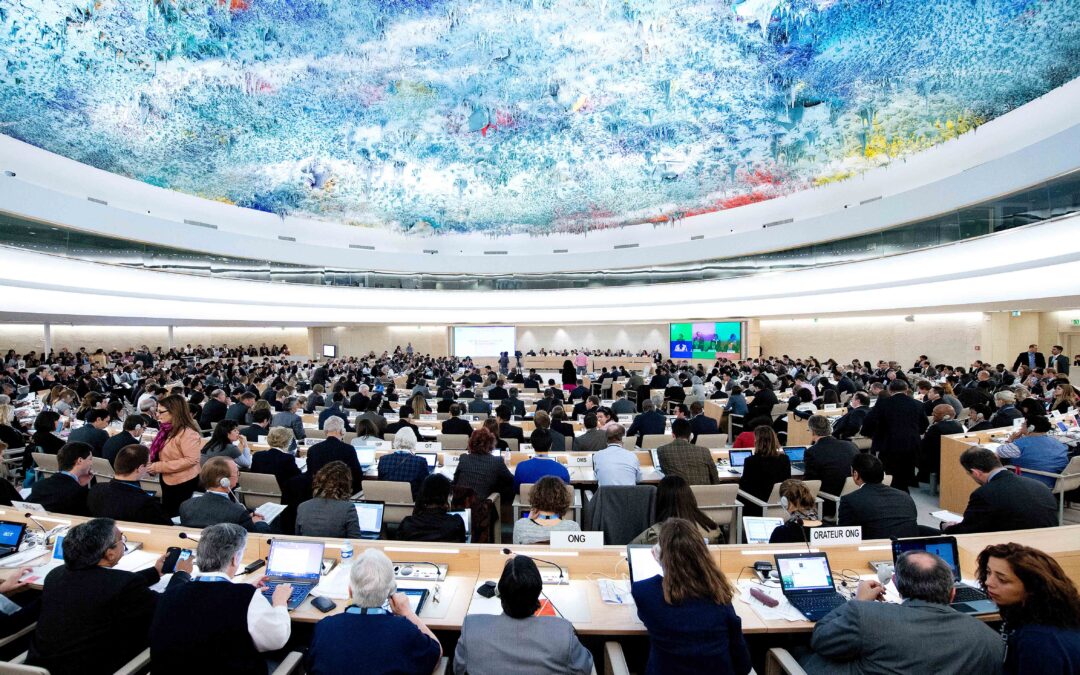
On 22 June, the ICJ, Human Rights Watch, the Cairo Institute for Human Rights Studies, the Center for Reproductive Rights and the International Planned Parenthood Federation, with the co-sponsorship of the Kingdom of Spain, organize an online event on the 10th anniversary of the Council of Europe’s Convention on preventing and combating violence against women and domestic violence (Istanbul Convention).
This side event at the margin of the 47th regular session of the UN Human Rights Council has convened expert speakers to illustrate the situation of human rights protection to combat and prevent violence against women in Europe, how the Istanbul Convention has crucially contributed to this goal and the obstacles to its effective implementation.
Preventing and combating violence against women, as well as its causes and consequences, are a priority of the UN Human Rights Council. While UN standards are central to achieving this goal, regional standards have to date provided a key contribution in this field. The Council of Europe’s Istanbul Convention is the most far-reaching international treaty specifically designed to counter violence against women.
On 11 May 2021, the Istanbul Convention turned 10 years old. It is now time to take stock of the achievements that this Convention has contributed to as well as the challenges ahead, including countering the spread of misinformation about the Convention and ensuring states continue to champion its principles and standards.
Women and girls are still suffering the aftermaths of the COVID-19 crisis. The pandemic effects have shown a worrying increase on violence against women. The universalization of the Istanbul Convention is more important than ever because the pandemic has unveiled the “permanent shadow pandemic” that women and girls are suffering around the world.
When: Tuesday June 22nd, 13:00 – 14:00 CEST
Where: Zoom
Language: English
Panelists
- María Isabel Sanchís, Senior Advisor, Office of the Commissioner on Violence against Women of the Government of Spain
- Dubravka Šimonović, UN Special Rapporteur on violence against women, its causes and consequences
- Dame Silvia Cartwright, former Governor General of New Zealand, former CEDAW member, Commissioner of the International Commission of Jurists
- Professor Feride Acar, former chairwoman of CEDAW and GREVIO
- Hillary Margolis, Senior Researcher, Women’s Rights Division, Human Rights Watch
Moderator Massimo Frigo, UN Representative, ICJ
To confirm your participation and receive connection details, please RSVP to Massimo Frigo, email: Massimo.Frigo@icj.org .
Event-Invitation-Side Event-IstanbulConvention-UN-HRC47-final-2021-eng (download the event leaflet)
Jun 18, 2021 | News
European Union affairs ministers should put the governments of Hungary and Poland on notice that there is no place for attacks on the rule of law in the EU and step up scrutiny of their human rights-abusive policies, the International Commission of Jurists (ICJ), Amnesty International, Human Rights Watch, the International Federation for Human Rights (FIDH), the Open Society European Policy Institute (OSEPI) and Reporters Without Borders (RSF) said today.
Ministers from EU member states meeting in the General Affairs Council session on June 22, 2021 will discuss the situations in Poland and Hungary under the Article 7 procedure. Article 7 is the mechanism provided for in the EU treaty to hold accountable governments whose actions threaten the bloc’s rule of law, human rights, and democratic principles.
“The EU should respond to the critical situation in Hungary and Poland by using the powers available to it under Article 7 TEU to defend human rights and the rule of law. We hope that EU Ministers will finally send a strong signal to Poland and Hungary next week that undermining these values cannot be accepted,” said Róisín Pillay, Director of the ICJ Europe and Central Asia Programme.
Resuming hearings on the situations in Hungary and Poland under Article 7 is a strong signal from the Council that violations of EU principles will not go unnoticed within the Union, the organizations said. But EU ministers have a responsibility to make up for the time lost and show readiness to take further action as the situations in both countries continue to deteriorate.
Read the full statement here: euart7june17-ENG-2021
Further information:
The European Commission invoked Article 7 in December 2017 for the first time since its creation in response to the dramatic erosion of judicial independence in Poland by the Law and Justice (PiS) Party government. But the EU Council, consisting of the member states, has not held a formal hearing regarding the situation since September 2018.
The European Parliament triggered article 7 in September 2018 for Hungary because of the repeated deliberate attacks on democratic institutions and human rights by the Fidesz-led government, but the Council has not convened a hearing on the matter since December 2019. EU officials contended that discussions related to Article 7 could not take place during the Covid-19 pandemic, allegedly because EU ministers could not meet in person during this period.
While EU action has stalled Poland’s government has continued to strengthen its grip on the judiciary. Many judges and prosecutors have faced arbitrary disciplinary proceedings for speaking up against problematic judicial reforms. The government has used a politically compromised Constitutional Tribunal to bypass parliamentary objections to its efforts to undermine independent institutions and erode rights across the board. The concerns over the functioning of the Tribunal include, in particular, mishandling of cases by its president and unlawful change in the composition of the already designated hearing benches.
In October 2020, at the behest of the Polish government, the Constitutional Tribunal severely undermined access to sexual and reproductive rights for women in Poland by extending the existing ban on abortion to include cases of “severe and irreversible fetal defect or incurable illness that threatens the fetus’ life”. In April, the government used the same tribunal to discontinue the mandate of the country’s human rights Ombudsman, despite the delays in the appointment of a successor. The government is also using the Constitutional Tribunal to seek decisions on the validity of the Istanbul Convention on preventing violence against women and to try to undermine the binding nature of decisions by the EU Court of Justice on Polish law.
In Hungary, the government used the Covid-19 pandemic as a pretext to intensify its attacks on the rule of law and public institutions, increase executive power, and limit human rights, including the rights to freedom of expression, information and peaceful assembly. Hungary finally abided by the June 2020 EU Court decision by repealing a 2017 law forcing civil society organizations receiving over 20,000 EUR per year in foreign funds to register as foreign-funded. But at the same time the government introduced a new bill requiring the national State Audit Office to conduct annual financial inspections of civil society organizations that report more than around 55,000 EUR, with the risk that it could create a new method to demonize and obstruct the work of watchdog groups. The draft bill leaves untouched the controversial 2018 law criminalizing groups giving assistance to asylum seekers.
In July 2020, the editor-in-chief of Hungary’s largest online independent daily, Index.hu, was fired as a result of a financial takeover of the company controlling its revenues by a person with close links to the country’s ruling party. In September, the Media Council, a broadcast regulator tied to the executive after controversial changes passed early in the decade, revoked the frequency for the independent Budapest radio station Klubradio, forcing it off the air. On June 9, the European Commission opened a new legal proceeding against Hungary on the basis that the decision to take Klubradio off the air was discriminatory and non-transparent.
Civil society groups in Poland, Hungary and elsewhere in the EU have criticized the European Council and European Commission for failing to uphold the bloc’s founding values of respect for human rights and the rule of law in countries that breach them.
In December, the EU established a new mechanism conditioning EU funding upon respect for the rule of law, but both the European Commission and the Council have succumbed to Hungary and Poland’s blackmailing and announced they would not start enforcing the measure until autumn. On June 10, the European Parliament took the European Commission to Court if it further delays the implementation of the mechanism.
European ministers should continue to convene regular hearings on the situations in Poland and Hungary and take all steps available under Article 7 to hold both governments to account for violating the EU’s core values. These should include adopting specific rule-of-law recommendations that Poland and Hungary’s governments should carry out by a set deadline and, absent any concrete steps toward compliance, work toward the required four-fifth vote to determine that there is a clear risk of a serious breach of the values protected by the EU treaty. Such a determination would open up the possibility of sanctions that the Council could adopt, by unanimity, to react to this breach.
For more information please contact:
Karolína Babická, +32475462067, karolina.babicka@icj.org

Jun 17, 2021
ICJ along with dozens of worker rights and human rights organizations released a letter expressing deep concern regarding Thailand’s draft Act on the Operation of Not-for-Profit Organizations.
If enacted, this Council of State drafted law would pose serious threats to the functioning of Thai civil society as well as have a deeply damaging impact on both donors and international non-governmental organizations working to address human trafficking and improve labor rights in Thailand.
For this reason, the signatories called on the U.S. State Department, and in particular the Office to Monitor and Combat Trafficking in Persons, to strongly advocate for the Thai government to withdraw this bill.

Jun 16, 2021 | News
The International Commission of Jurists (ICJ) called today on Turkish authorities to immediately drop charges of ‘propaganda for terrorism’ against Cihan Aydın, a lawyer and former President of the Diyarbakır Bar Association.
Cihan Aydın learned that he was the subject of a criminal investigation on May 26, apparently based on a statement of the Women Rights Centre of the Diyarbakir Bar Association in 2019 calling for an end to Turkish military action in Syria and calling for diplomatic resolution of the conflict.
Aydın, the President of Diyarbakır Bar Association until April 2021, is known for his human rights litigation and advocacy before domestic courts as well as the European Court of Human Rights including in high-profile and sensitive cases.
The charges amount to an unjustified interference with freedom of expression, the ICJ said.
“This criminal investigation is yet another case of the misuse of criminal proceedings to attack lawyers and human rights defenders in Turkey,” said Roisin Pillay, ICJ’s Europe and Central Asia Director. “The charge against Cihan Aydin of propaganda for terrorism, based on a call for peace by an institution within the Bar Association, is clearly arbitrary, in violation of freedom of political expression, and should be dropped. The criminal law should never be applied to suppress a call on the government to pursue a peaceful solution to conflict.”
Turkey has obligations under international human rights law, including under Article 10 of the European Convention on Human Rights (ECHR) and Article 19 of the International Covenant on Civil and Political Rights (ICCPR) to uphold freedom of expression, which can only be restricted to the extent strictly necessary and proportionate to a legitimate aim. Speech on matters of public interest, including political debate or criticism of government policy, must be particularly protected. Moreover, under Article 20 of the ICCPR, states have a duty to protect against war propaganda, and that duty is likely to be undermined if a state seeks to prohibit and punish views that may be critical of war.
Background
On 26 May 2021, Aydin was requested to give his statement about the accusation of “propaganda for terrorism”.
This prosecution follows other investigations against the Diyabakir Bar Association: following a statement about the statement on Armenian Genocide and a statement denouncing the Head of Religious Affairs Directorate for his comments about LGBTI.
The ICJ has extensively documented government persecution of lawyers in Turkey as well as improper restrictions on freedom of expression:

Jun 16, 2021 | Advocacy, News
Four years after the EU Directive on Combating Terrorism came into force, more effort is needed to ensure it is implemented in accordance with human rights law obligations, Amnesty International, the International Commission of Jurists (ICJ), the International Federation for Human Rights (FIDH), the European Centre for Not-for-Profit Law (ECNL) and the European Network against Racism (ENAR) said today. The organizations called for the European Commission’s review of the Directive’s implementation to prioritize scrutiny of its impact on human rights.
In assessing the value of the Directive on Combating Terrorism (Directive 2017/541) in the Member States, the European Commission must scrutinize how it has affected the human rights of victims, suspects, as well as the wider community and civil society, the organizations said.
The Directive, enacted in 2017 after an expedited legislative process, criminalizes a wide range of conduct related to terrorism. The Directive establishes an overly broad definition of terrorism and requires states to include in their criminal law offences that are often not closely linked to the perpetration of a terrorist act. These include offences of travel for the purpose of terrorism, participation in a terrorist group, and public provocation to commit acts of terrorism. Because the terms of the offences are so widely drawn, safeguards in national law and practice are essential to ensure that they are not applied where there is no clear link to a principal offence of terrorism and/or no intent to contribute to such a principal offence, to prevent arbitrary application, including action based on racial prejudices of perceived dangerousness.
However, the organizations are concerned that EU member states are applying national laws on counter-terrorism in ways that unnecessarily or disproportionately limit the exercise of human rights, including freedom of expression and association, and freedom of religion or belief, and that discriminate against some ethnic or religious groups, in particular Muslims.
The implementation of the Directive by member states is now being reviewed by the European Commission, including through a consultation process, which concludes today.
As the review of the Directive is taken forward, the organizations urge the European Commission to consider in particular:
- Whether and how the Directive can help to ensure effective accountability for internationally recognized crimes and the right to effective remedy and reparation for victims of terrorism, both within and outside of the EU;
- To what extent national authorities have applied international, EU, as well as domestic human rights law in their transposition and implementation of the Directive;
- What safeguards have been or should be introduced to prevent human rights violations in practice in the implementation of the Directive, in particular regarding freedom of expression, association, peaceful assembly, rights to respect for private and family life, freedom of religion or belief, freedom of movement and rights to political participation;
- How the right to a fair trial and the right to liberty are being upheld in the implementation of the Directive’s offences within the member states’ justice systems, and what measures are needed to strengthen protection for these rights;
- What safeguards have been or should be introduced to protect against the discriminatory application or impact of the Directive;
- Whether civil society, including those representing victims of terrorism and groups affected by counter-terrorism measures, have been meaningfully consulted in the implementation of the Directive.
Background
The EU Directive on Combating Terrorism (Directive 2017/541) came into force in April 2017 and was required to be transposed into member state law by September 2018.
The Commission is due to report to the European Parliament on the added value of the Directive, and whether it is fit for purpose, including on its impact on fundamental rights in October 2021.
Several of the NGOs have made submissions to the EU Consultation as part of its review.
The Fundamental Rights Agency is currently also working on a report on the impact of the EU Counter-terrorism Directive on human rights across the EU.
For further commentary on the Directive and on counter-terrorism and human rights in Europe, see:
ICJ, Counter-Terrorism and human rights in the courts: guidance for judges, prosecutors and lawyers on the application of EU Directive 2017/541 on Combatting Terrorism https://www.icj.org/eu-guidance-on-judicial-application-of-the-eu-counter-terrorism-directive/
ENAR, research on the impact of counter-terrorism and counter-radicalisation policies and measures: https://www.enar-eu.org/ENAR-research-on-the-impact-of-counter-terrorism-and-counter-radicalisation
ECNL, Civic space in the era of securitized Covid-19 responses, https://ecnl.org/publications/civic-space-era-securitised-covid-19-responses
Download the statement here: EU combating directive statement_160621_ENG-2021