Jun 15, 2021 | Human Rights Council, News, Work with the UN
To the Permanent Representatives of Member and Observer States of the United Nations Human Rights Council,
Excellencies,
We, the undersigned Lebanese and international organizations, individuals, survivors, and families of the victims are writing to request your support in the establishment of an international, independent, and impartial investigative mission, such as a one-year fact-finding mission, into the Beirut port explosion of August 4, 2020. We urge you to support this initiative by adopting a resolution establishing such a mission at the Human Rights Council.
هذه الرسالة متاحة باللغة العربية أيضاً
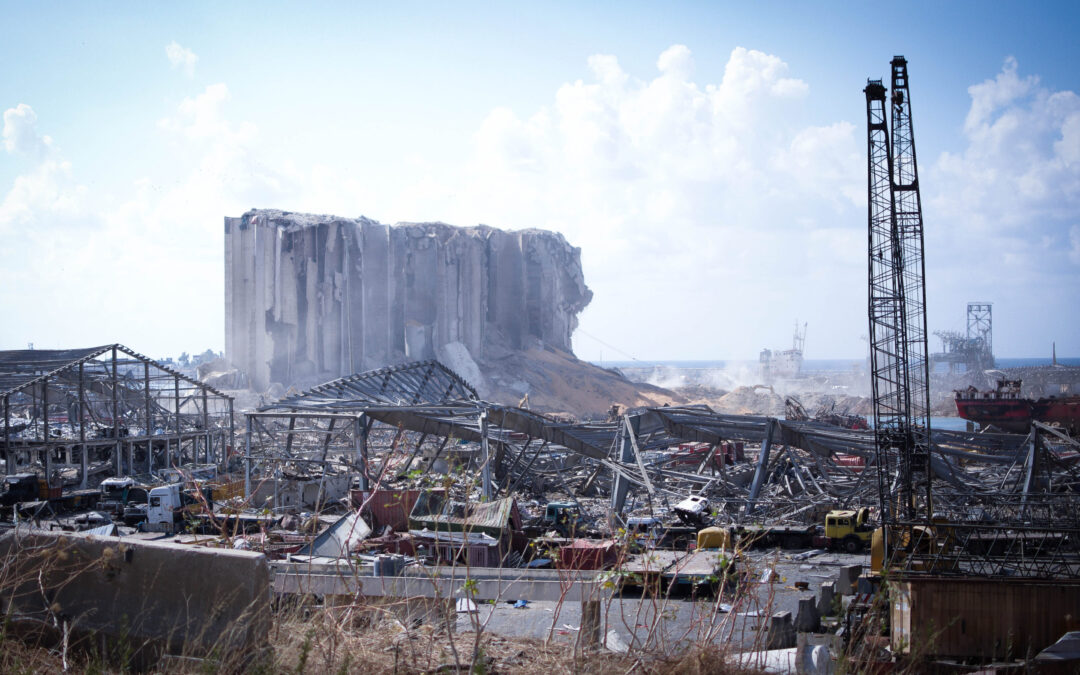
On August 4, 2020, one of the largest non-nuclear explosions in history decimated the port and damaged over half the city. The Beirut port explosion killed 217 people, including nationals of Lebanon, Syria, Egypt, Bangladesh, Philippines, Pakistan, the Netherlands, Canada, Germany, France, Australia, and the United States. It wounded 7,000 people, of whom 150 acquired a physical disability, caused untold psychological harm, and damaged 77,000 apartments, forcibly displacing over 300,000 people. At least three children between the ages of two and 15 lost their lives. Thirty-one children required hospitalization, 1,000 children were injured, and 80,000 children were left without a home. The explosion affected 163 public and private schools and rendered half of Beirut’s healthcare centers nonfunctional, and it impacted 56% of the private businesses in Beirut. According to the World Bank, the explosion caused an estimated US$3.8-4.6 billion in material damage.
The right to life is an inalienable and autonomous right, enshrined in the International Covenant on Civil and Political Rights (ICCPR) (article 6), which Lebanon ratified in 1972. The Human Rights Committee, which interprets the ICCPR, has stated that states must respect and ensure the right to life against deprivations caused by persons or entities, even if their conduct is not attributable to the state. The Committee further states that the deprivation of life involves an “intentional or otherwise foreseeable and preventable life-terminating harm or injury, caused by an act or omission.” States are required to enact a “protective legal framework which includes criminal prohibitions on all manifestations of violence…that are likely to result in a deprivation of life, such as intentional and negligent homicide.”
The facts as currently known suggest that the storage of more than 2,700 tons of ammonium nitrate alongside other flammable or explosive materials, such as fireworks, in a poorly secured hangar in the middle of a busy commercial and residential area of a densely populated capital city likely created an unreasonable risk to life.
Since the explosion, a number of official documents were leaked to the press, including official correspondence and court documents that indicate customs, port, judicial, and government officials as well as military and security authorities had been warned about the dangerous stockpile of potentially explosive chemicals at the port on multiple occasions since 2013.
Further, the Human Rights Committee General Comment No. 36 on article 6 states: “The duty to protect by law the right to life also requires States parties to organize all State organs and governance structures through which public authority is exercised in a manner consistent with the need to respect and ensure the right to life, including by establishing by law adequate institutions and procedures for preventing deprivation of life, investigating and prosecuting potential cases of unlawful deprivation of life, meting out punishment and providing full reparation.” The investigations into violations of the right to life must be “independent, impartial, prompt, thorough, effective, credible, and transparent,” and they should explore “the legal responsibility of superior officials with regard to violations of the right to life committed by their subordinates.”
The impact and aftermath of the explosion also likely violated Lebanon’s international human rights obligations to guarantee the rights to education and to an adequate standard of living, including the rights to food, housing, health, and property. More notably, Lebanon can only uphold its obligation to provide effective remedy to the victims on the basis of a credible, effective, and impartial investigation whose findings would then be the basis for any effective remedy plan.
In August, 30 UN experts publicly laid out benchmarks, based on international human rights standards, for a credible inquiry into the August 4, 2020, blast at Beirut’s port, noting that it should be “protected from undue influence,” “integrate a gender lens,” “grant victims and their relatives effective access to the investigative process,” and “be given a strong and broad mandate to effectively probe any systemic failures of the Lebanese authorities.”
The domestic investigation into the Beirut blast has failed to meet those international standards. The ten months since the blast have been marked by the authorities’ obstruction, evasion, and delay. Human Rights Watch, Amnesty International, Legal Action Worldwide, Legal Agenda, and the International Commission of Jurists have documented a range of procedural and systemic flaws in the domestic investigation that render it incapable of credibly delivering justice, including flagrant political interference, immunity for high-level political officials, lack of respect for fair trial standards, and due process violations.
Victims of the blast and their relatives have been vocal in calling for an international investigation, expressing their lack of faith in domestic mechanisms. They claim that the steps taken by the Lebanese authorities so far are wholly inadequate as they rely on flawed processes that are neither independent nor impartial. This raises serious concerns regarding the Lebanese authorities’ ability and willingness to guarantee victims’ rights to truth, justice, and remedy, considering the decades-long culture of impunity in the country and the scale of the tragedy.
As we approach the one-year anniversary of the explosion, the case for such an international investigation has only strengthened. The Human Rights Council has the opportunity to assist Lebanon to meet its human rights obligations by conducting an investigative or fact-finding mission into the blast to identify whether conduct by the state caused or contributed to the unlawful deaths, and what steps need to be taken to ensure an effective remedy to victims.
The independent investigative mission should identify human rights violations arising from the Lebanese state’s failure to protect the right to life, in particular whether there were:
- Failures in the obligation to protect the right to life that led to the explosion at Beirut’s port on August 4, 2020, including failures to ensure the safe storage or removal of a large quantity of highly combustible and potentially explosive material;
- Failures in the investigation of the blast that would constitute a violation of the right to remedy pursuant to the rights to life.
The independent investigative mission should report on the human rights violated by the explosion, failures by the Lebanese authorities, and make recommendations to Lebanon and the international community on steps that are needed both to remedy the violations and to ensure that these do not occur in the future.
The Beirut blast was not an isolated or idiosyncratic incident. In the weeks following the explosion, two fires broke out at the port in scenes reminiscent of the fire that resulted in the Beirut blast, terrorizing the public. In February 2021, a German firm tasked with removing tons of hazardous chemicals left in Beirut’s port for decades warned that what they found amounted to “a second Beirut bomb.” If these substances caught fire, Beirut would have been “wiped out”, the interim port chief said.
It is time for the Human Rights Council to step in, heeding the calls of the families of the victims and the Lebanese people for accountability, the rule of law, and protection of human rights. The Beirut blast was a tragedy of historic proportions, arising from failure to protect the most basic of rights – the right to life – and its impact will be felt for far longer than it takes to physically rebuild the city. The truth of what happened on August 4, 2020, is a cornerstone in redressing and rebuilding after the devastation of that day.
The thousands of individuals who have had their lives upended and the hundreds of thousands of individuals who have seen their capital city disfigured in a most irrevocable way deserve nothing less.
List of signatories:
Organizations:
Access Center for Human Rights (Wousoul)
Accountability Now
ALEF – Act for Human Rights
Amnesty International
Anti-Racism Movement
Arab NGO Network for Development
Arab Reform Initiative
Basmeh & Zeitooneh
Baytna
Cairo Institute for Human Rights Studies (CIHRS)
Centre d’accès pour les droits de l’homme (ACHR)
Committee of the Families of the Kidnapped and Disappeared in Lebanon
Dawlaty
Gherbal Initiative
Gulf Centre for Human Rights
Helem
Human Life Foundation for Development and Relief (Yemen)
Human Rights Research League
Human Rights Solidarity (HRS)-Geneva
Human Rights Watch (HRW)
Human Rights Without Frontiers (HRWF)
Impunity Watch
International Commission of Jurists
Justice and Equality for Lebanon
Justice for Lebanon
Khaddit Beirut
Kulluna Irada
Lebanese-Swiss Association
Legal Action Worldwide
Legal Agenda
Liqaa Teshrin
Mada Network
Media Association for Peace (MAP)
Meghterbin Mejtemiin (United Diaspora)
Mwatana for Human Rights
National Youth for Lebanon Movement
PAX (Netherlands)
Peace Track Initiative
Project on Middle East Democracy (POMED)
Refugees=Partners Project
Samir Kassir Foundation
SEEDS for Legal Initiatives
Syrian Center for Media and Freedom of Expression – SCM
The Alternative Press Syndicate Group
The Foundation for Human Rights and Freedoms and Humanitarian Relief (IHH)
The International Center for Transitional Justice
The Lebanese Center for Human Rights (CLDH)
The Lebanese Diaspora Network (TLDN)
Tunisian League of Human Rights defense (LTDH)
UMAM Documentation & Research
Individuals:
Christophe Abi-Nassif – Lebanon Program Director, Middle East Institute
Nasser Saidi – President Nasser Saidi & Associates; Former Lebanese Minister of Economy & Industry
Randa Slim – Senior Fellow and Director of the Conflict Resolution and Track II Dialogues Program at the Middle East Institute
Survivors and Families of the Victims:
Alexandre Ibrahimcha, lost his mother Marion Hochar Ibrahimcha
Anthony, Chadia, Ava and Uma Naoum
Antoine Kassab, lost his father
Aya Arze Salloum
Carine Farran Sacy
Carine Tohme
Carine Zaatar
Carole Akiki
Cecilia and Pierre Assouad
Cedric el Adm, lost his sister
Charbel Moarbes
Charles Nehme, lost his father
Cybele Asmar lost her aunt Diane Dib
Fouad Rahme, lost his father
Georges Zaarour, lost his brother
Jean-Marc Matta
Jihad Nehme
Joanna Dagher Hayek
Karine Makhlouf, lost her mother
Karine Mattar
Laura Khoury
Lyna Comaty
Mireille el Khoury, lost her son
Myrna Mezher Helou, lost her mother
Nadine Khazen, lost her mother
Nicolas and Vera Fayad
Nicolas Dahan
Olga Kavran
Patrice Cannan, lost his brother
Patricia Haddad, lost her mother
Paul and Tracy Naggear, lost their daughter Alexandra Naggear
Reina Sfeir
Rénié Jreissati
Rima Malek
Rony Mecattaf
Sara Jaafar
Sarah Copland, lost her son Isaac Oehlers
Tania Daou Alam, lost her husband
Tony Najm, lost his mother
Vartan Papazian, lost his daughter-in-law
Vicky Zwein
Zeina Sfeir
Families of the following firefighters:
Charbel Hetty
Charbel Karam
Elie Khouzamy
Joe Akiki
Joe Andoun
Joe bou Saab
Joe Noun
Joseph Merhy
Joseph Roukoz
Misal Hawwa
Najib Hetty
Ralph Mellehy
Ramy Kaaky
Sahar Fares
Contact:
Said Benarbia, Director of the ICJ’s Middle East and North Africa programme, email: said.benarbia@icj.org phone number: +41 79 878 35 46
Asser Khattab, Research and Communications Officer at the ICJ’s Middle East and North Africa programme, email: Asser.khattab(a)icj.org
Jun 5, 2021 | Noticias
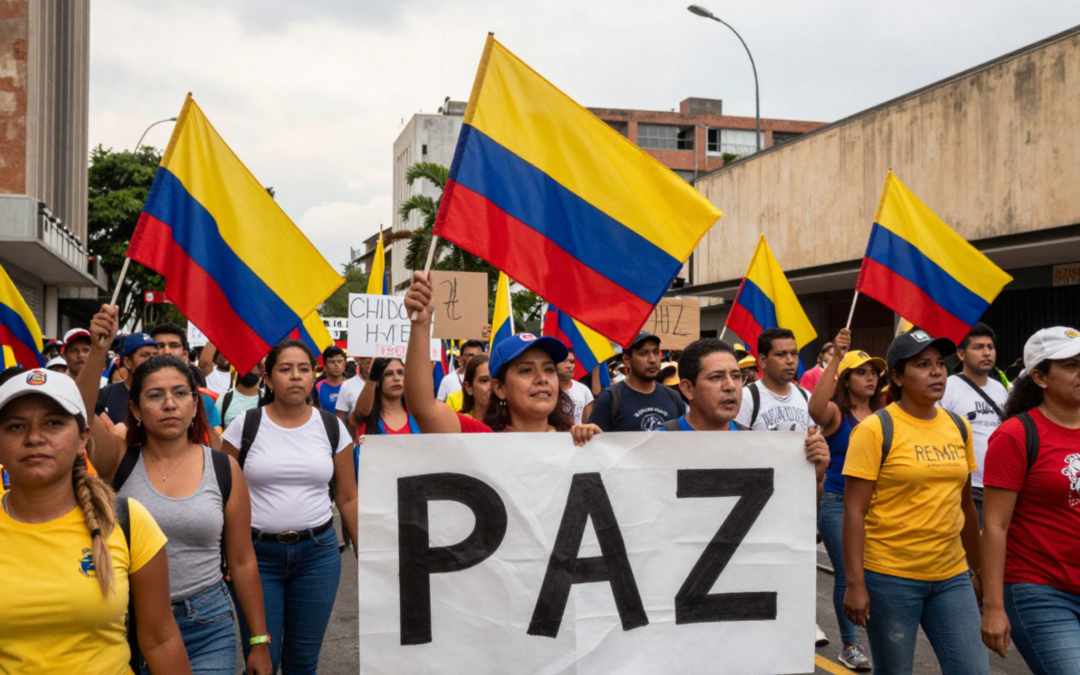
Las autoridades colombianas deben impedir de manera inmediata que los funcionarios encargados de hacer cumplir la ley utilicen fuerza excesiva en respuesta a las protestas. Además, deben retirar las funciones de mantenimiento del orden público que se les han asignado a las fuerzas militares, dijo hoy la CIJ.
Durante el transcurso de las actuales protestas, que se siguen en contra de las actuales condiciones sociales y culturales, múltiples organizaciones de derechos humanos y de la sociedad civil han documentado violaciones masivas a los derechos humanos, incluidos casos de tortura y malos tratos, violencia sexual, ejecuciones extrajudiciales y desaparición forzada.
“Los reportes de violencia y uso excesivo y, frecuentemente innecesario, de la fuerza por parte de los agentes encargados de hacer cumplir la ley, son parte de un fracaso más amplio de las autoridades de adoptar medidas efectivas para proteger y garantizar el derecho a la vida y el derecho a la protesta pacífica”, dijo Carolina Villadiego, Asesora Legal de la CIJ para América Latina.
Según Indepaz una organización no gubernamental local, al 30 de mayo de 2021, al menos 71 personas habían muerto, posiblemente de manera ilícita, en el marco de las protestas. La situación es particularmente grave en Cali. En esta ciudad, en un solo día, el 28 de mayo de 2021, fue reportado que al menos 13 personas murieron.
Adicionalmente, en Cali, se ha documentado que individuos armados hicieron disparos y usaron fuerza letal contra manifestantes, incluyendo a manifestantes pertenecientes a grupos étnicos. En al menos un incidente, múltiples videos muestran que oficiales de policía estuvieron presentes cuando particulares dispararon armas de fuego sin que hubieran tomado medidas para evitar los disparos o arrestar a los individuos armados.
“Las autoridades deben adelantar investigaciones prontas, exhaustivas e imparciales por estas violaciones, con miras a enjuiciar a los responsables de los hechos”, dijo Carolina Villadiego.
La CIJ también está profundamente preocupada con la militarización de varias regiones del país, como respuesta a la protesta. El 28 de mayo de 2021, el presidente Duque expidió el Decreto 575 de 2021.
Este Decreto autoriza la intervención de las fuerzas militares en al menos ocho de los treinta y dos departamentos del país con el fin de levantar los bloqueos de vías e impedir la instalación de nuevos bloqueos por partes de los manifestantes.
El Decreto omite incorporar limitaciones al uso de la fuerza por parte de las fuerzas militares, que es fundamental de acuerdo con estándares internacionales como los Principios Básicos sobre el Empleo de la Fuerza y de Armas de Fuego.
Adicionalmente, el Decreto establece un amplio margen de maniobra para las actuaciones de las fuerzas militares en actividades de mantenimiento del orden público en escenarios de protestas y manifestaciones. Lo anterior, a pesar de que estas fuerzas no han sido diseñadas ni entrenadas para proteger a los civiles o hacer labores de vigilancia durante las protestas o escenarios de alteración del orden público.
La CIJ urge a las autoridades colombianas a que den fiel cumplimiento a lo establecido en los Principios Básicos sobre el Empleo de la Fuerza y de Armas de Fuego y otros estándares internacionales relacionados con el uso de la fuerza y con la intervención de las fuerzas militares para el control de protestas y manifestaciones. En este tema, el gobierno debe dar fiel cumplimiento a lo establecido por la Corte Suprema de Justicia en su sentencia de septiembre de 2020 sobre medidas para garantizar la protesta pacífica.
En dicha sentencia, la Corte Suprema identificó serias violaciones en la intervención de agentes encargados de hacer cumplir la ley, especialmente la Policía Nacional, en las protestas y manifestaciones. La Corte identificó violencia sistemática contra los manifestantes, la existencia de estereotipos y prejuicios en contra de quienes han criticado las políticas del gobierno y una falta de mecanismos de rendición de cuentas de los funcionarios públicos.
En consecuencia, la Corte ordenó varias medidas para hacer frente a la situación y garantizar el derecho a la protesta pacífica. Entre estas medidas, la Corte ordenó la adopción de un protocolo para regular el uso de la fuerza durante las protestas, el cual debe estar en concordancia con los estándares internacionales en materia de derechos humanos.
La CIJ llama al Gobierno colombiano a garantizar el derecho a la protesta pacífica. De acuerdo con lo mencionado por el Comité de Derechos Humanos, el derecho a la protesta puede generar perturbaciones o bloqueos al movimiento peatonal o vehicular, que pueden dispersarse “por regla general, solo si la perturbación es “grave y sostenida””.
La CIJ también urge al Gobierno Nacional a cooperar completamente con la misión de la Comisión Interamericana de Derechos Humanos (CIDH) que tendrá lugar entre el 8 de junio al 10 de junio de 2021. El Gobierno debe respetar y asegurar la independencia e imparcialidad de la CIDH durante la visita.
Finalmente, si bien la gran mayoría de los manifestantes han actuado de manera pacífica, han existido algunos incidentes violentos. La CIJ llama a todas las personas a evitar la violencia durante las protestas y condena los crímenes cometidos contra algunos oficiales de policía, incluyendo el homicidio de dos oficiales, las heridas graves que sufrió un oficial luego haber sido impactado por una bomba Molotov y el ataque sexual del cual fue víctima una oficial.
La CIJ también deplora que algunos bloqueos de las vías hayan afectado el suministro de servicios médicos esenciales y rechaza el incendio del Palacio de Justicia de Tuluá y de otros edificios públicos. Cualquier persona involucrada en acciones delictivas debe ser investigada por un órgano independiente, y de ser hallada culpable en un juicio imparcial, debe ser debidamente sancionada.
Contactos:
Carolina Villadiego Burbano, Asesora Legal para América Latina de la CIJ. Email: carolina.villadiego@icj.org
Rocío Quintero M, Asesora Legal para América Latina de la CIJ. Email: rocio.quintero@icj.org
Jun 4, 2021 | News
Colombian authorities should immediately stop law enforcement officials from using excessive force to respond to protests and withdraw the military from law enforcement functions, said the ICJ today.
Over the course of ongoing protests, largely against economic and social conditions, multiple human rights and other civil society organizations have documented widespread human rights violations, including instances of torture and ill-treatment, sexual violence, extrajudicial killings, and enforced disappearances.
“The reports of violence and excessive and often unnecessary use of force by law enforcement officials are part of a wider failure of the authorities to adopt effective measures to protect and guarantee the right to life and the right to peaceful protest” said Carolina Villadiego, ICJ legal adviser for Latin America.
According to Indepaz, a local Non-Governmental Organization, as of 30 May 2021, at least 71 people had been killed, likely unlawfully, in the context of the protests. The situation is particularly dire in Cali where in just one day, 28 May 2021, 13 people were reportedly killed. In addition, it has been documented that firearms and lethal force have been deployed against protestors, including indigenous persons, by armed individuals in Cali. In at least one incident, multiple video recordings show police officials were present during the shootings and took no action to stop the shootings or apprehend the armed individuals.
Police and other law enforcement officials have the obligation to defend the rights of people, including their right to protest, and to protect them from violence by others. Colombian law enforcement officials have not only violated their obligation to avoid use of unnecessary or excessive use of force against people, but in Cali, they seem to have failed to prevent criminal violence by armed individuals as well.
“There must be a prompt, thorough and impartial investigation into these violations with a view to holding accountable those responsible”, said Carolina Villadiego.
The ICJ is also deeply concerned with militarization of the response to the protests. On 28 May 2021, President Duque issued Decree 575 of 2021 that authorizes the intervention of military forces in at least eight departments out of thirty two in the country, to assist in the lifting of any kind of roadblocks and to prevent the installation of new blockades by protesters. The Decree fails to consider any limitation of the use of force by military forces in line with international law standards such as the UN Basic Principles on the Use of Force by Law Enforcement.
Additionally, the sweeping and overbroad scope of the Decree to involve the military forces in what are inherently law enforcement functions does not consider that they are not trained or designed to protect civilians during protests or scenarios of public order disruption.
The ICJ urges the Colombian Government to fully respect the UN Basic Principles and other international standards on the use of force and the intervention of military forces to control protests and demonstrations. In this regard, the Government must fully comply with the September 2020 ruling on measures to guarantee peaceful protests issued by the Colombian Supreme Court.
In the ruling, the Supreme Court identified serious violations regarding the intervention of law enforcement officials, especially police officials, in protests and demonstrations. The Court identified systematic violence against demonstrators, the existence of stereotypes and prejudice against those who criticize the government’s policies, and a lack of mechanisms to hold the officials accountable.
Consequently, the Court ordered several measures to address this situation and guarantee the right to peaceful protest, including adopting and implementing a protocol to regulate the use of force during protests and manifestations, in accordance with international human rights standards.
The ICJ also calls on the Colombian Government to guarantee the right to peaceful protest. As the UN Human Right Committee has clearly affirmed, the right to peaceful protest may entail the disruption of vehicular or pedestrian movement, which “may be dispersed, as a rule, only if the disruption is “serious and sustained””.
While the vast majority of protestors have acted peacefully, there have been some instances where they have not. The ICJ calls on all persons to avoid violence during the protests and condemns the crimes committed against police officials, including the killing of at least two police officers, the serious injuries suffered by one police officer after being hit by a Molotov cocktail, and the sexual violence suffered by a police woman.
The ICJ deplores the particular use of some roadblocks that have affected the delivery of essential medical services, as well as the fires at the courthouse in Tuluá and other public buildings. Any individual engaging in criminal behaviour must be impartially investigated and, if found guilty in a fair trial, brought to account.
Finally, the ICJ also urges the National Government to fully cooperate with the mission of the Inter-American Commission on Human Rights (IACHR) to Colombia that will take place from 8 June to 10 June 2021. The Government should respect and ensure the IACHR’s independence and autonomy during the visit.
Contacts:
Carolina Villadiego Burbano, Latin American Legal and Policy Adviser, email: carolina.villadiego(a)icj.org
Rocío Quintero M, Latin American Legal Adviser, email: rocio.quintero(a)icj.org

Jun 4, 2021 | Advocacy, Open letters
In May 2021 the ICJ wrote to The MultiChoice Group in South Africa urging it to suspend Emmanuel TV on any of the DSTV platforms for broadcasting televangelist Pastor TB Joshua’s multiple video clips ostensibly depicting violent ‘conversion therapy’ and hate speech against LGBT persons amounting to discrimination and human rights abuses. MultiChoice responded that it has “no editorial control or oversight” over Emmanuel TV as it is a “third-party channel” and therefore MultiChoice cannot investigate the incident further or take any remedial action.
MultiChoice claims on their website to “entertain, inform and empower African communities”. In addition to this, their entertainment platforms are a hub for approximately 14 million people across 50 countries. MultiChoice has a huge reach into African countries and in the homes of millions of people living in Africa. As a result, they have a responsibility to act in a way which does not promote harmful practises.
In response to ICJ’s letter, MultiChoice stated that it does not review the content broadcast on third-party channels such as Emmanuel TV prior to its broadcast. In place of a thorough investigation, the entertainment group said that it contacted Emmanuel TV and the latter stated that the ‘conversion therapy’ clips were not broadcast in April 2021. It is significant to note that Emmanuel TV did not deny that the clips were aired at all. Rather, MultiChoice alleged that it was simply “unable” to independently verify that the clip was broadcasted in April 2021 or at all.
Contrary to the impression given in its letter to the ICJ, MultiChoice is not limited to investigating offensive broadcasts that are aired within a specific time period. Additionally, while the ICJ notes MultiChoice’s assertion that Emmanuel TV is a third-party channel and consequently MultiChoice has no editorial control or oversight over the content of the channel, the ICJ believes that MultiChoice has a duty to not broadcast material that is discriminatory and in contravention of the South African Constitution.
MultiChoice has a responsibility to conduct a serious investigation into this matter and take the necessary remedial action. Consequently, we do not find that Emmanuel TV’s confirmation to MultiChoice, that the clip was not broadcast during April 2021 is sufficient; and MultiChoice’s inability to verify whether this program was broadcast at all, is unsatisfactory.
The UN Independent Expert on protection against violence and discrimination based on sexual orientation and gender identity, under the umbrella of the United Nations Human Rights Commission, has concluded in May 2020, that conversion therapy amounts to torture and ill-treatment and has called for a global ban on such practices.
In light of this, the ICJ is of the view that MultiChoice has a greater responsibility to the African audience to refrain from participating in the broadcast of such harmful practices, and must publicly take a stance against facilitating the airing of such broadcasts. The ICJ believes that MultiChoice’s responsibility as Africa’s “leading entertainment company” is not to pay “lip service” to the values of the South African Constitution, but rather to hold itself to higher thresholds of accountability.
ICJ has consequently urged MultiChoice to:
- Independently investigate this and other discriminatory and potentially unlawful broadcasts by Emmanuel TV and take appropriate remedial measures.
- Undertake to exclude Emmanuel TV as part of MultiChoice’s package to the public, or alternatively, to heavily condition its contract with Emmanuel TV to disallow the broadcast of offensive materials; should the investigation lead to the conclusion that the clip was broadcasted by them.
- Ensure that such offensive materials are not broadcast on any MultiChoice channels, irrespective of their status as third-party channels.
- Offer an apology from Multichoice Group to the LGBT persons, unless MultiChoice is able to demonstrate independently that the clip was not broadcast at all on their platform, neither by Emmanuel TV nor by any other third-party channel.
- Undertake an updating of the MultiChoice Group’s internal policies to bring them in line with human rights standards, the South African Constitution, and local laws on non-discrimination. This includes contractual arrangements with third party channels like Emmanuel TV which may broadcast discriminatory content.
Contact
Kaajal Ramjathan-Keogh, ICJ Africa Director, Kaajal.Keogh(a)icj.org
Tanveer Jeewa, Legal and Communications Officer, Tanveer.Jeewa(a)icj.org