
Jun 4, 2021 | News
(Istanbul, June 4, 2021) – The Council of Europe should insist that Turkey comply immediately with judgments from the European Court of Human Rights (ECtHR), or face infringement proceedings, a group of leading nongovernmental organizations working on human rights in Turkey said today.
An upcoming Council of Europe Committee of Ministers meeting on June 7-9, 2021, will review the Turkish government’s failure to implement two leading ECtHR judgments that ordered the immediate release of the human rights defender Osman Kavala and the Kurdish politician Selahattin Demirtaş. Human Rights Watch, the International Commission of Jurists, and the Turkey Human Rights Litigation Support Project urged the committee to use all available measures to require Turkey to rectify its flagrant non-compliance with its obligations, the court judgments, and the committee’s decisions on this matter.
“The Committee of Ministers should be using every means it has to push Turkey to implement the Kavala and Demirtaş judgments,” said Aisling Reidy, senior legal adviser at Human Rights Watch. “That means that the committee should be prepared to trigger infringement proceedings against Turkey if it persists with its defiance of the European Court’s binding judgment in favor of Kavala, and to call for the immediate release of Demirtaş with a commitment to escalate measures if it does not happen.”
The three groups repeated their March 2021 call for the committee to commence infringement proceedings against Turkey for flouting its decisions requesting Kavala’s release and urged the committee to issue a second decision for Demirtaş’s immediate release. The committee should also make clear that if Demirtaş is not released, it will take further action at its September session.
The ECtHR ruled on December 10, 2019, that by holding Kavala in pretrial detention since November 2017 and prosecuting him on the basis of his human rights activities, the Turkish authorities had “pursued an ulterior purpose, namely to silence him as a human rights defender.”
Similarly, the ECtHR ruled on December 22, 2020, that by holding Demirtaş in pretrial detention since November 2016 and prosecuting him for his activities and speeches protected under the European Convention on Human Rights (ECHR), the Turkish authorities had pursued an ulterior purpose of preventing him from carrying out his political activities, depriving voters of their elected representative, and “stifling pluralism and limiting freedom of political debate: the very core of the concept of a democratic society.”
In both cases, the Court found that by using detention for political ends, Turkey had violated the right to liberty and other rights, and had misused the discretion given to governments to impose limitations on rights for illegitimate purposes (articles 5 and 18 of the ECHR respectively). The Court took the rare step of ordering their immediate release.
Despite the fact that the landmark judgments are legally binding, the Turkish authorities have snubbed the Strasbourg court and ignored the Committee of Ministers’ decisions calling for the men’s release.
“Turkish prosecutors and judges have sought to circumvent the authority of the European Court by adopting the tactic of opening new criminal proceedings against Kavala and Demirtaş based on the reclassification of the same facts,” said Helen Duffy of the Turkey Human Rights Litigation Support Project “This cynical non-compliance with the court’s judgments requires a robust response from the Committee of Ministers.”
On May 21 when the retrial of Kavala for his alleged role in the 2013 Gezi Park protests opened, Turkish authorities merged that case with another concerning his alleged involvement in the 2016 coup attempt and espionage. The Istanbul 30th Assize Court hearing the case extended his detention. The next hearing against Kavala is scheduled for August 6.
In Demirtaş’s case, Ankara 22nd Assize Court on April 19 merged an existing case against him with a new case before it despite the fact that it involved the same or similar facts, which the European Court had held consisted of peaceful political speeches and activities protected under the ECHR. In the new case, the facts used as the evidence have been reclassified under different charges.
The indictment now charges Demirtaş and 107 co-defendants with crimes that include attempting to undermine the unity and territorial integrity of the state, murder, and robbery, all on the basis of tweets and political speeches they made in the period before deadly protests that took place in southeast Turkey from October 6-8, 2014. Demirtaş’s co-defendants include current and former members of parliament from the Peoples’ Democratic Party (HDP). The first hearing of the merged cases against Demirtaş took place on April 26. The next hearing is scheduled for June 14.
Read the full press release here: Turkey Flouts European Court Judgments_press release_2021_ENG

Jun 4, 2021
An opinion piece by Massimo Frigo, ICJ Senior Legal Adviser, Europe and Central Asia Programme.
On 25 May 2021, the Grand Chamber of the European Court of Human Rights issued a landmark ruling on the compatibility of systems of mass surveillance with the European Convention on Human Rights (ECHR), the essential elements of which were first brought to public light by the revelations of whistleblower Edward Snowden in 2013.
The judgment in the case brought against the United Kingdom, challenged both the system of bulk interception of cross-border communications set up by the UK, such as the Tempora programme, and the cooperation in bulk interception and surveillance with other countries. Most importantly among these countries are the so-called ‘Five Eyes’, i.e. the United States (using programmes such as UpStream and PRISM), Canada, Australia, New Zealand and the UK.
Given the complexity of the judgment, this blog article will limit itself to conveying the gist of the Strasbourg judges’ ruling with regard to its findings on compatibility with Article 8 ECHR protecting the right to privacy, and to setting out some first impressions.
Overall, while the Court has provided some useful standards in relation to mass surveillance online, the judgment is affected by some key deficiencies that unfortunately limit considerably its contribution to provide a solution for the current human rights challenges in the digital sphere.
The importance of metadata for today’s surveillance practices
This much awaited judgment is a landmark ruling because the Court, for the first time, addresses the challenges of mass surveillance carried out not only on data but also on metadata. Metadata includes information left in the Internet such as the author of the information, the location, the subject, and other identifiers.
The Court recognizes that its jurisprudence of ten years ago or more, most of which is based on targeted surveillance on individual communications, cannot stand the test of the internet revolution, in which “lives are increasingly lived online” (para. 341). The Court recognises the centrality of metadata when dealing with the Internet, when it finds that “any intrusion occasioned by the acquisition of related communications data will be magnified when they are obtained in bulk.” (para. 342).
The consequence of this finding, for the majority of the Grand Chamber, is that end-to-end safeguards are needed, i.e. from the moment of collection of the data or metadata until the moment of cessation of the surveillance activity on a given set of information. Further, these safeguards should increase as bulk interception progresses, based on the assumption that the more advanced it becomes, the closer it gets to the individual and to the content, hence to “traditional” surveillance.
Based on this reasoning, the Grand Chamber looks at “whether the domestic legal framework clearly define[s]:
- the grounds on which bulk interception may be authorised;
- the circumstances in which an individual’s communications may be intercepted;
- the procedure to be followed for granting authorisation;
- the procedures to be followed for selecting, examining and using intercept material;
- the precautions to be taken when communicating the material to other parties;
- the limits on the duration of interception, the storage of intercept material and the circumstances in which such material must be erased and destroyed;
- the procedures and modalities for supervision by an independent authority of compliance with the above safeguards and its powers to address non-compliance; and
- the procedures for independent ex post factoreview of such compliance and the powers vested in the competent body in addressing instances of non-compliance.” (para. 361)
Sharing surveillance: how and when
The Court affirmed that “the transmission by a Contracting State to foreign States or international organisations of material obtained by bulk interception should be limited to such material as has been collected and stored in a Convention compliant manner and should be subject to certain additional specific safeguards pertaining to the transfer itself” (para. 362). These are circumstances clearly set out in domestic law; ensuring that the transferring State has in place safeguards against abuse; heightened safeguards for material requiring special confidentiality; and independent control.
However, contrary to the standard set out in EU law and by the Court of Justice of the EU, “[t]his does not necessarily mean that the receiving State must have comparable protection to that of the transferring State; nor does it necessarily require that an assurance is given prior to every transfer” (para. 362).
Finally, where intelligence surveillance concerns the UK’s request to obtain information or to search for information in the data or metadata acquired and stored by a third country, the Court forcefully stresses that these systems must not result in any circumvention of the requirements it has set out (para. 497).Therefore, requests can only be made if there is a basis in domestic law, which must be accessible and foreseeable and with clear rules “which give citizens an adequate indication of the circumstances in which and the conditions on which the authorities are empowered to make such a request … and which provide effective guarantees against the use of this power to circumvent domestic law and/or the States’ obligations under the Convention” (para. 497). In addition, there should be independent supervision and ex post facto review. Once the information is received, the standards set out by the Court for surveillance carried out by a Contracting Party to the ECHR must be applied.
Big Brother must work
As is evident, the Court has set some innovative standards to apply the Convention’s rights, in particular the right to privacy under article 8 ECHR, to the bulk interception of communications.
However, a closer analysis of the judgment – and in particular the separate opinions – shows that this landmark ruling misses the mark in the era of Big Data.
First, the judgment is vitiated by an implicit but excessive trust in the intelligence services and in the Government’s assessment that interception, storage, analysis and surveillance of data and metadata is essential to protect national security. The Grand Chamber’s majority does not attempt to assess the veracity of this sweeping assertion by the UK, with an application of the tests of necessity and proportionality, but relies blindly on it. This is a conceptual weakness, because once this premise is accepted, the judges’ reasoning builds on the primary need to make mass surveillance work.
Secondly, while the criteria established are useful and in part an improvement on its previous requirements, the Court has mostly conducted an assessment of the UK regulatory framework than of its actual, to the point that the Court found the existence of a legislation merely prohibiting the “circumvention of guarantees” to be an effective system to ensure that there is no circumvention of guarantees (see, para. 513).
Thirdly, it is problematic that some of the Court’s criteria for allowing for bulk interception can be overridden if, “when viewed as a whole, sufficient guarantees against abuse are built into the system to compensate for this weakness” (para. 370). This exception brings a degree of unpredictability to the system that in itself defeats the need to set out clear grounds for bulk interception. Both States and the Court are therefore allowed to carry out a case-by-case assessment for any kind of surveillance.
Fourth, one of the requirements of the legal framework gives up an essential guarantee of human rights protection, namely the oversight by the judiciary. While requiring that an independent authority be involved in the authorisation and ex post control processes, the Grand Chamber’s majority explicitly excludes that this must be a judicial authority and allows for “internal” authorities to be envisaged, even if they must be, at least on paper, “independent of the executive” (para. 359). On this specific point, the Court of Justice of the EU took a stronger position requiring the involvement of a judicial authority (see, Schrems II judgment, paras. 186-194).
With regard to foreign intelligence– whether the UK allows foreign intelligence services to obtain communications UK or the UK obtains or requests communications from foreign services – the Court applies lower standards and does not adopt the protection equivalency system that is provided by EU law. This means that it will be easier for the UK to request information from, for example the US National Security Agency, than to acquire it itself, with the only defence for privacy being an a priori faith in the letter of UK law, which states that “circumventing” national procedure is prohibited.
Finally, the Strasbourg judges have clearly avoided the central question of how to regulate forms of close transnational surveillance cooperation, such as that of the Five Eyes, that nurture and dispose of entire databases containing a high amount of the data produced on the Internet.
Too late and too little
In conclusion, although the Grand Chamber’s ruling made modest advances in protecting human rights on the internet, overall it missed the opportunity presented by this case to address the technological revolution of the last decade, namely Big Data.
The Court has recognised the danger, but the solutions it has posited are still based on the logic of targeted surveillance systems, according to which the level of human rights protection should increase the more the surveillance is closer to the individual. Based on this logic, the more a CCTV camera closes on you the more guarantees you should have to protect your right to privacy.
However, the current Big Data system resembles more to an infinite set of cameras installed in everyone’s houses, which intelligence services can access on demand.
The failure by the Court to recognise and effectively regulate the moment of data gathering risks being fatal to the capacity of the guarantee established by the Court to effectively protect the human rights of people subject to this kind of surveillance.
It is to be hoped that the Court will revisit its jurisprudence in future cases to more effectively ensure that its jurisprudence provides effective protection to human rights in relation to the challenges brought by the technologies of today and not those of the past.
Disclaimer: This op-ed has first appeared on Volkerrechtsblog . The ICJ has intervened as a third party in the proceedings described.

Jun 4, 2021 | Agendas, Events, News
Scuola Superiore Sant’Anna, in collaboration with the International Commission of Jurists (ICJ), is organizing an online Summer School on the “Family life and rights of migrant children in the European Union” on 23-25 June, 15-16 and 19-20 July 2021.
It will provide training on the right to private and family life of migrant children within the international and regional framework of human rights and EU law, and current challenges in protecting the rights of migrant children, including in the context of Covid-19. The lectures of the Summer School will also touch upon the EU’s Pact on Migration and Asylum of 2020 and the EU Strategy on the Rights of the Child 2021-2024.
The Summer school will be held in English and is open to professionals, academics, and students who would like to deepen their knowledge of the topic. Participants will be provided with relevant teaching materials which were developed in the FAIR project coordinated by the ICJ on fostering migrant children’s access to rights.
Enrolment must be made by application submitted online by 15 June 2021 and is limited to 40 participants. An early bird discount applies to candidates who register before 6 June 2021, while an exemption from enrolment fees applies to 5 foreign students who are beneficiaries of international protection (refugees and subsidiary protection holders).
See more details and the full agenda here: MARS summer school_brochure
Jun 3, 2021 | News, Uncategorized
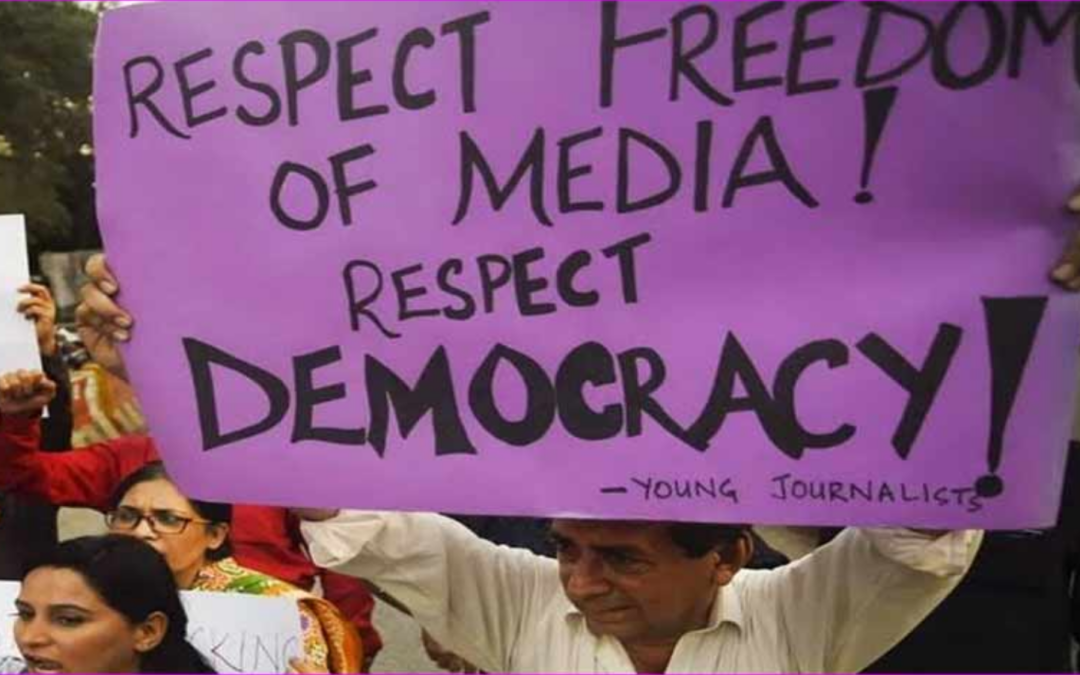
A recent series of attacks and growing pressure on journalists who criticize the Pakistan government is a cause for serious concern, Human Rights Watch, Amnesty International and the ICJ said today. Those suspected of criminal responsibility should be promptly and fairly prosecuted.
The Pakistan government should conduct prompt, impartial and effective investigations into the recent number of attacks on journalists. The government should rescind official policies that protect the authorities from criticism and instead promote space for public debate and free expression, in the face of threats from extremist groups and government officials.
“The frequency and audacity with which journalists are being attacked in Pakistan is appalling,” said Brad Adams, Asia director at Human Rights Watch. “The Pakistani authorities should bring those responsible for these attacks to justice and ensure that all journalists can do their jobs without fear of intimidation or reprisals.”
On May 25, 2021, Asad Ali Toor, a journalist, was assaulted by three unidentified men who forcibly entered his apartment in Islamabad. They bound and gagged Toor and severely beat him. Toor said that they identified themselves as being from a security agency, interrogated him about the “source of his funds,” and took away his cell phone and other electronic devices. The government ordered an investigation into the incident. In September 2020, the authorities charged Toor with sedition for comments made on social media “maligning state institutions.” A court later dismissed the charges.
On April 20, an unidentified assailant shot and wounded Absar Alam, a television journalist, outside his house in Islamabad. Alam has been a prominent critic of the government. In September 2020, the authorities charged Alam with sedition and “high treason” for using “derogatory language” about the government on social media.
On July 21, 2020, an unidentified assailant abducted another journalist, Matiullah Jan, in Islamabad the day before he was to appear before the Supreme Court for allegedly “using derogatory/contemptuous language and maligning the institution of judiciary.” Jan was released after a few hours. He alleged the abduction was an attempt to intimidate him. A criminal case was registered for Jan’s abduction, but, no suspects have been arrested.
“It is disturbing to see the space for dissent and providing information of public importance rapidly shrink in Pakistan, with journalists as well as human rights defenders particularly at risk of censorship, physical violence, and arbitrary detention,” said Sam Zarifi, secretary general of the ICJ.
Pakistani journalists have long faced serious obstacles to their work, including harassment, intimidation, assault, arbitrary arrest and detention, abduction, and death. As these threats have escalated, Pakistani authorities have also increasingly pressured editors and media owners to shut down critical voices. On May 29, the news channel, Geo, “suspended” Hamid Mir, one of Pakistan’s best-known television talk show hosts, after Mir spoke at a protest in solidarity with Asad Toor.
Other media outlets have come under pressure from authorities not to criticize government institutions or the judiciary. In several cases in recent years, government regulatory agencies blocked cable operators and television channels that had aired critical programs. In 2020, Pakistan ranked ninth on the Committee to Protect Journalist’s annual Global Impunity Index, with at least 15 unsolved killings of journalist since 2010.
In July 2020, the Pakistan Electronic Media Regulatory Authority (PEMRA) ordered 24NewsHD, a television news channel, off the air indefinitely for the alleged “illegal transmission of news and current affairs content.” Journalists and opposition activists alleged that the channel was being punished for airing criticism of the government.
In August 2020, a group of leading women journalists issued a statement condemning a “well-defined and coordinated campaign” of social media attacks, including death and rape threats against women journalists and commentators whose reporting has been critical of the government.
“If the authorities are committed to uphold their human rights obligations, they must take decisive steps against censorship, harassment and violence against journalists,” said Dinushika Dissanayake, South Asia deputy regional director at Amnesty International. “For that, continued impunity must be dismantled.”
Contact
In Brussels, for Human Rights Watch, Patricia Gossman: +32-472-982-925; or +1-347-322-8638 (WhatsApp); or gossmap@hrw.org. Twitter: @pagossman
In Geneva, for the International Commission of Jurists, ICJ Asia-Pacific Communications Officer, asiapacific(a)icj.org
In London, for Amnesty International, Michael Parsons: michael.parsons@amnesty.org
Jun 2, 2021 | Agendas, Events, News
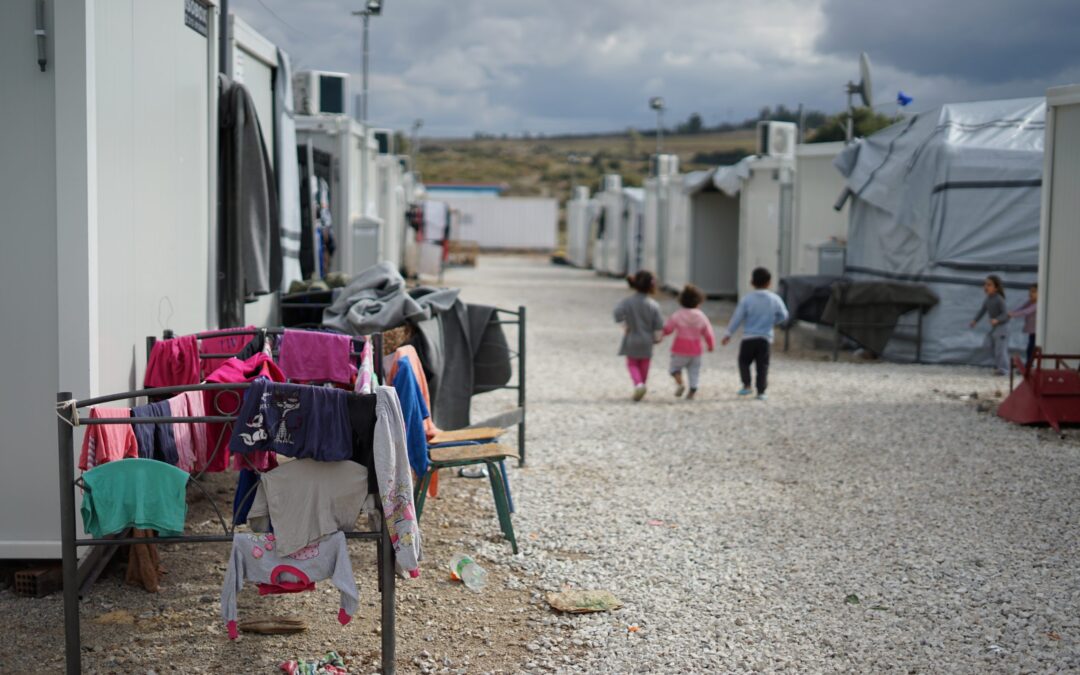
On Thursday 3 June 2pm CET, the International Commission of Jurists (ICJ) together with Saskia Bricmont, Greens/EFA MEP, will hold an online event on immigration detention of children in the EU, the current situation and implementation of the legal framework in EU countries. The event will consider ways forward and alternatives to detention, including in light of the new proposals of the EU Pact on Migration and Asylum and EU strategy on the rights of the child.
The event is organised on the occasion of the launch of the CADRE project (“Children’s Alternatives to Detention protecting their Rights in Europe”), seeking to promote the expansion, implementation and improvement of viable and effective alternatives to detention for migrant children in full respect of their rights in the EU, co-ordinated by the ICJ in partnership with seven national and international partners:
See the full agenda of the event here: CADRE_public launch event agenda
To register please fill in the form online here. Registration closes 3 pm CET 2 June.