May 12, 2021
An opinion piece by Jenny Domino, Associate Legal Adviser, ICJ Asia-Pacific Programme.
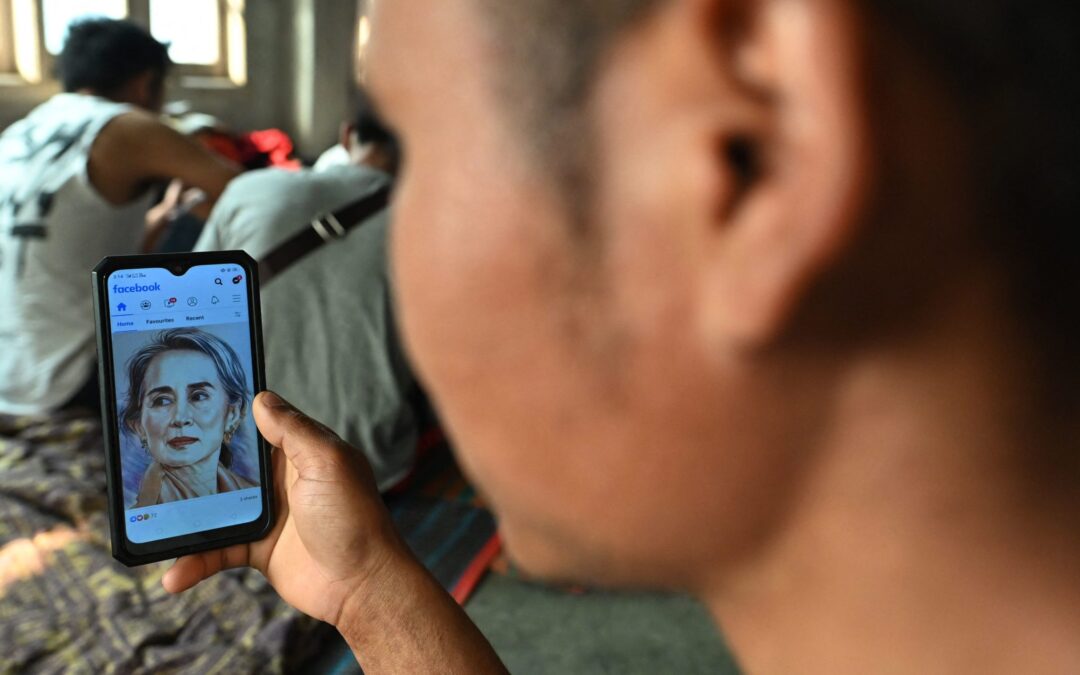
On Feb. 24, 2021, three weeks after Myanmar’s military (the Tatmadaw) staged the coup that changed the course of Myanmar’s future, Facebook announced it was banning all “remaining” military and military-controlled state and media entities from Facebook and Instagram, including ads from military-linked commercial entities. To this end, Facebook said it would use the United Nations Fact-Finding Mission on Myanmar’s (FFM) 2019 report on the military’s economic interests in identifying relevant commercial entities. Though Facebook had removed military accounts and pages in the past for their involvement in human rights violations– most notably the account of State Administration Council chairperson, Senior-General Min Aung Hlaing, in 2018– the company’s 2021 decision went much further by indefinitely suspending military and military-related accounts and pages regardless of content or behavior.
In other words, contrary to popular opinion, former President Trump’s account was not the first high-profile account to be indefinitely suspended by Facebook. Commander-in-Chief Min Aung Hlaing’s de-platforming was described as “unprecedented” in 2018, but outside of Myanmar watchers, it garnered little global attention, much less debate.
The 2021 de-platforming of the Tatmadaw offers a renewed opportunity to engage with how Facebook – and other powerful platforms – should do their part to deal with authoritarians and human rights-violating institutions like the military in Myanmar. Facebook’s act to de-platform the Tatmadaw was the culmination of incremental steps taken by the company in response to the “emergency situation” unfolding in Myanmar since the coup. For example, on Feb. 11, Facebook decided to “significantly reduce” the distribution of false content emanating from military accounts and pages still operating on the platform, but stopped short of an immediate outright ban. And it had previously declined to ban the entire military’s presence on its platform despite it being implicated in the Rohingya human rights crisis. At each of these moments, Facebook took action too late, and too incrementally, to avert harm – harm that the platform knew was imminent and which its very design facilitated. Facebook’s history in Myanmar highlights the broader problems with content moderation in vulnerable contexts, and it should serve as a cautionary lesson to companies that wish to prevent their platforms from facilitating atrocities.
A Dance of De-Platforming and Platforming
The coup was not made overnight. Experts observed that the groundwork had been carefully laid months before the coup to delegitimize the results of Myanmar’s November election. The Tatmadaw’s social media presence formed a key part of the plan to control the narrative surrounding the poll, one the Tatmadaw later invoked to justify the power grab.
Facebook’s latest de-platforming decision removed the infamous “Tatmadaw True News Information Team,” which was the military’s official Facebook page, and Major General Zaw Min Tun, the military’s spokesperson. It also included the MRTV and MRTV Live “news” pages. According to Facebook, these pages repeatedly violated its prohibition on incitement to violence and coordinating harm.
As was locally reported last year, the Tatmadaw set up the “True News” page in June 2020 to provide “accurate news” ahead of the November election. This factor is crucial for analyzing the present, as the military has alleged voter fraud as a pretext for the coup. The Tatmadaw has so far attempted to justify its actions – including the unlawful use of lethal force, arbitrary arrests of protestors, democratically elected leaders, journalists, and celebrities, shutdown of independent media, and denial of the nationwide calls to respect the people’s vote – ironically under the guise of protecting “democracy.” The pages most recently banned by Facebook were used to disseminate the Tatmadaw’s false narrative on election fraud and enabled it to lay the groundwork for the coup.
One may wonder why the Tatmadaw True News Information Team and Zaw Min Tun were allowed on Facebook in the first place. Indeed, I asked this question here last year upon the creation of the page. To recall, Facebook banned Min Aung Hlaing and other generals in 2018 for their involvement in serious human rights violations in Myanmar. As found by the FFM then, the Rohingya and other ethnic minorities suffered the brunt of these violations, some of which constituted crimes under international law. As regards speech that could be expected to incite violence or discrimination, the FFM specifically found that Facebook, along with other forms of media, “enabled the spread of … hateful and divisive rhetoric” targeting the Rohingya in a country where, as the FFM observed, “Facebook is the Internet” (para. 1345). Given the platform’s dominance in the country, the FFM found it “unsurprising that propagators of hate speech resort[ed] to Facebook to wage hate campaigns, amplify their message, and reach new audiences.” The platform was also “widely used to spread misinformation … by government officials and the Tatmadaw” (para. 1346).
As I explained last year, Facebook neither attributed its 2018 de-platforming decision to the 2018 FFM report or any of its Community Standards, despite the latter supposedly being the governing law on the platform. Moreover, although select military officials were de-platformed, civilian government officials equally found by the FFM to have disseminated hate speech against the Rohingya were still allowed to remain on the platform with apparently little to no consequence. More importantly in the present context, only select military accounts were permanently suspended rather than the entire military, without any explanation for this particular strategy. The Tatmadaw television network, Myawaddy, was in fact banned in 2018 but allowed to reappear until banned again in the wake of the coup. It was at least in part as a result of these gaps that the Tatmadaw was able to set up accounts such as the Tatmadaw True News Information Team. Even now, Facebook has inexplicably decided to allow at least 23 other pages and profiles “controlled and/or operated by the Tatmadaw” (without specifying which ones) to continue operating, only opting to significantly reduce the distribution of their content.
What Is Proportionate?
It is apparent by now that Facebook’s lack of clarity and consistency in its 2018 de-platforming decision has returned to haunt it in 2021. Both Zaw Min Tun and the Tatmadaw True News Information Team that Facebook platformed in 2020 figured prominently in the coup that has derailed Myanmar’s fragile path to democracy. And Zaw Min Tun remains the military junta’s spokesperson, now leading the Information Team of the State Administration Council.
As a non-State actor, Facebook has the corporate responsibility to respect human rights under the U.N. Guiding Principle on Business and Human Rights (UNGPs), which includes adherence with the International Covenant on Civil and Political Rights (ICCPR). Article 19 of the ICCPR requires the application of the principles of necessity and proportionality to any measure limiting the right to freedom of expression. This would mean imposing the least intrusive yet necessary means in regulating expression to achieve a legitimate aim. The aims that are legitimate are themselves narrow, including the protection of national security, public health and morals, public order, and the rights of others. The application of these standards to social media platforms seeking to regulate users’ speech, including State actors’ speech, has generated robust debate, but the U.N. Special Rapporteur on freedom of expression notes that platforms have an arsenal of tools to proportionately address problematic content. De-platforming or permanent account suspension of a user is the most extreme response.
In March this year, Facebook released its Corporate Human Rights Policy, wherein it formally committed to respect human rights as laid out in key international instruments. The non-profit BSR recommended adopting such a policy in 2018 in its human rights impact assessment of Facebook’s operations in Myanmar. An important component of this commitment is a clarification on Facebook’s de-platforming approach to world leaders of illiberal and authoritarian regimes, as I initially raised here and here. Such a commitment also demands ongoing human rights due diligence to enable understanding of the wider history and context of the places where Facebook operates, instead of only considering the immediate circumstances surrounding a tragic event. This contextual familiarity is critical to inform questions of risk and to apply the standards of legitimacy, proportionality, and necessity, which are necessarily fact-based.
In the context of Myanmar, a comprehensive ban on military and related accounts appears to have been warranted for some time, given the well-documented and egregious violations with which these accounts have been associated. The FFM reports in 2018 and 2019, Facebook’s own de-platforming decision in 2018, years of widely documented human rights violations in Myanmar, the assortment of international legal proceedings concerning these human rights violations, the prevalence of military-controlled state media, the state of censorship in the country, and other considerations all support a blanket ban on military-linked accounts. Facebook has in fact been moderating Myanmar military-linked accounts under its Coordinated Inauthentic Behavior policy continuously since its initial 2018 actions.
Instead, Facebook’s decisions to (i) platform the Tatmadaw True News Information Team and Zaw Min Tun in 2020, (ii) belatedly reduce distribution of military-related content ten days after the coup, and (iii) wait until the third week of the coup to indefinitely suspend military and related accounts do not seem to be a sufficient response. Facebook justified the indefinite ban in the third week of the coup by invoking four factors:
The Tatmadaw’s history of exceptionally severe human rights abuses and the clear risk of future military-initiated violence in Myanmar, where the military is operating unchecked and with wide-ranging powers.
The Tatmadaw’s history of on-platform content and behavior violations that led to us repeatedly enforcing our policies to protect our community.
Ongoing violations by the military and military-linked accounts and Pages since the February 1 coup, including efforts to reconstitute networks of Coordinated Inauthentic Behavior that we previously removed, and content that violates our violence and incitement and coordinating harm policies, which we removed.
The coup greatly increases the danger posed by the behaviors above, and the likelihood that online threats could lead to offline harm.
Factors 1 and 2 were true long before the coup, while Factors 3 and 4 were true in the first week of the coup as much as in the third week. This is also not the first time that the Tatmadaw disregarded the people’s vote. Further, rumors of a coup spiked in late Jan. this year, prompting diplomatic missions in Myanmar to release a joint statement urging the military to recognize the election results.
Facebook’s responses had also been partially preempted: By Feb. 24, Facebook and other social media platforms were already banned in Myanmar as part of the military junta’s series of network disruptions which, since the coup on Feb. 1, has involved internet and mobile network shutdowns and social media and website bans. Despite the local social media ban, however, Facebook’s decision still carried weight as many people within Myanmar continue to access the platform through virtual private networks (VPN).
Overall, Facebook’s response particularly pales in comparison to its relatively swift action to de-platform former President Trump soon after the U.S. Capitol riots and then refer the matter to the Facebook Oversight Board. Although abhorrent, the violence at the U.S. Capitol was mild compared to the scale of violence called for and facilitated by military-linked Facebook accounts in Myanmar. And the threat to democracy posed by the Jan. 6 insurrection was dwarfed by the actual overthrow of democracy on Feb. 1 in Myanmar and the international crimes several years earlier during the Rohingya crisis. These contrasts reveal a broader problem with Facebook’s approach to content moderation in the most fragile contexts.
A Global Conversation Centered On At-Risk Populations
Facebook’s inconsistent and often-belated de-platforming approach in Myanmar should invite deeper reflection on the parameters of social media access provided to world leaders of illiberal and authoritarian regimes. In its decision on the Trump ban, the Facebook Oversight Board made a policy recommendation to Facebook to “publicly explain” the applicable rules when imposing account-level sanctions against influential users, including its strikes and penalties process. Facebook should take up this recommendation and clarify how it enforces such policies abroad. This problem is also not unique to Facebook. Other platforms such as TikTok and YouTube have respectively moderated Tatmadaw soldiers and video channels for violent content, but have been vague about these content decisions.
Further, beyond formally committing to provide access to remedy in line with the UNGPs, social media companies should explore how various forms of remedy and reparation (including compensation, rehabilitation, and satisfaction in the form of public apologies, memorials, and truth-telling) ought to be made available to communities in Myanmar affected by the adverse human rights impacts that their technology or business operations have engendered. As suggested by Rohingya refugees in Bangladesh, this would include engaging with human rights victims, responding clearly and promptly to requests, providing free internet access to refugee camps, and using their influence to promote an open internet, especially in the region where majority of their users are located.
The U.S. government can also play an important role by considering the global impact of domestic legislation applicable to American platforms before such companies are implicated in atrocities elsewhere. For instance, as I suggested here, talks of reforming Section 230 of the Communications Decency Act would be benefitted by discussions on how the safe harbor provision affects users in varying political contexts, which, in turn, can affect U.S. foreign policy.
As the world ruminates on the Facebook Oversight Board’s recent decision on Trump’s de-platforming, the international community must realize that other countries have needed this kind of intervention long before de-platforming became an issue in liberal democracies. As news from Myanmar continues to shock and inspire, it is time to center the lived experience of at-risk populations, caught between a rock and a hard place, in conceptualizing how online speech ought to be governed in an interconnected world. Let’s not wait for democracy – no matter how imperfect – to unravel before noticing the signs.
First published in Just Security on 11 May: https://www.justsecurity.org/76047/beyond-the-coup-in-myanmar-the-other-de-platforming-we-should-have-been-talking-about/
May 11, 2021 | News
The International Criminal Court (ICC) must immediately investigate the forced eviction of Palestinian families and residents in Sheikh Jarrah and other neighbourhoods in East Jerusalem, as well as any indiscriminate and disproportionate attacks against civilians in the Gaza Strip, the ICJ said today.
The investigation must establish whether any serious violation of international humanitarian law, such as indiscriminate or disproportionate attacks against civilians, the forced deportation of Palestinians and the transfer of Israeli settlers into occupied East Jerusalem, as well as the extensive destruction and appropriation of property, have taken place in Sheikh Jarrah and in Gaza. Following the opening of an investigation by the ICC Office of the Prosecutor, if warranted, Israeli officials should be prosecuted for such crimes to ensure accountability. As confirmed by the ICC Pre-Trial Chamber I, the Court’s territorial jurisdiction “extends to the territories occupied by Israel since 1967, namely Gaza and the West Bank, including East Jerusalem.”
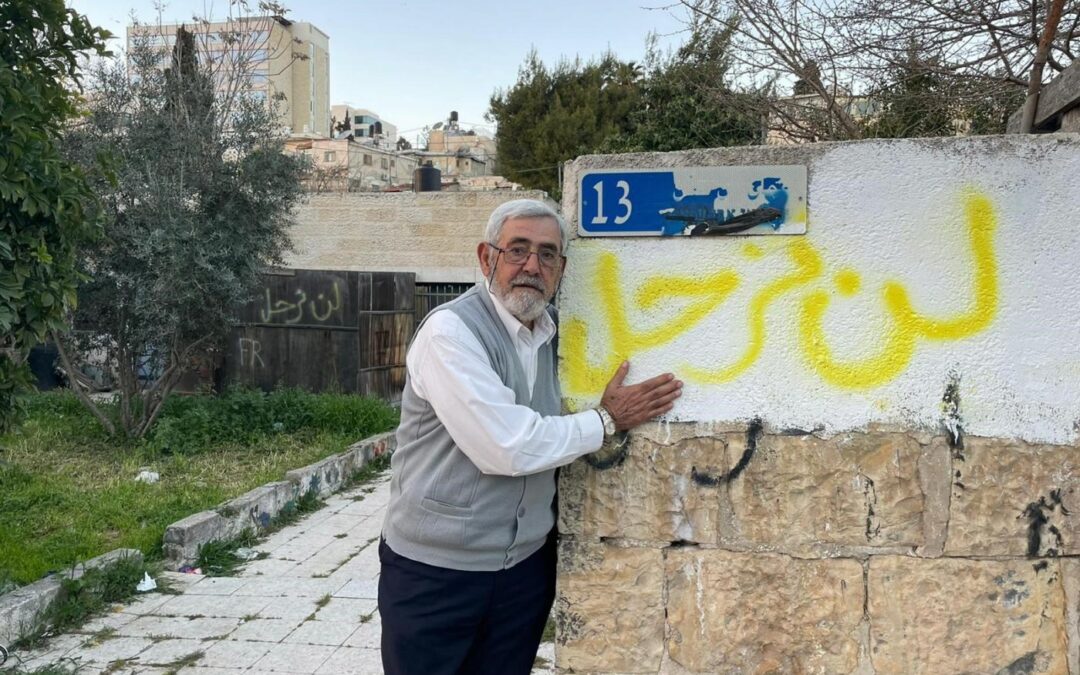
Evictions against Palestinians in Sheikh Jarrah were ordered by the Jerusalem District Court following legal proceedings initiated by Israeli settlers organizations under Israeli law. The Supreme Court was due to rule on 10 May 2021 on challenges against evictions brought by Palestinian families, yet, it decided to postpone the hearing at the request of Israel’s Attorney-General.
“Evictions in Sheikh Jarrah are part of a cynical campaign by the Israeli authorities to purge occupied East Jerusalem from its Palestinian civilian population,” said Said Benarbia, the ICJ MENA Director.
The ICC must also ensure accountability for unlawful attacks targeting civilians and civilian objects in connection to the hostilities between Israel and Palestinian armed groups in Gaza. Since 2007, Israel has imposed a full closure on Gaza, which has resulted in a major humanitarian crisis, and has led to significant escalation of hostilities in 2008-09, 2012 and 2014, where thousands of Palestinians have been killed and injured. On 10 May 2021, Hamas started firing rockets against Israel following a crackdown on Palestinian worshippers in the al Aqsa compound in Jerusalem. In response, Israel has carried out multiple airstrikes in Gaza, which have reportedly caused the death of at least 24 people, including nine children. All parties to the conflict are prohibited from conducting indiscriminate and disproportionate attacks, which may amount to war crimes under the Rome Statute.
“The ICC must ensure that all those responsible for ordering and carrying out these attacks be held criminally accountable,” Benarbia added.
Since April 2021, Palestinians peacefully demonstrating against the evictions in Sheikh Jarrah, a decades-long legal battle, have been subjected to violence by Israeli settlers and Israeli security forces. Earlier this year, the Jerusalem District Court ordered that several Palestinian families be evicted from the neighborhood. According the UN Office of the High Commissioner for Human Rights, “at least 218 Palestinian households in East Jerusalem, including the families in Sheikh Jarrah, have eviction cases filed against them”, and overall “970 people, including 424 children, [are] at risk of displacement.”
As part of the Israeli crackdown on Palestinians, Israeli security forces have also been firing tear gas and employing other less-lethal weapons against people praying at the Al Aqsa mosque in Jerusalem purportedly in crowd-control operations. According to the Palestinian Red Crescent, more than 200 demonstrators have been injured as a result of the use of such less-lethal weapons.
Israeli forces have also been preventing gatherings of Palestinians at Damascus Gate in East Jerusalem during the night hours of the month of Ramadan when many Muslims gather for prayer and breaking of the fast at sunset, and have responded with excessive force to the ensuing demonstrations.
Israel has a duty to respect the right to peaceful assembly and freedom of religion of Palestinians in East Jerusalem. Israel’s use of excessive force against Palestinian demonstrators and the crackdown on Palestinian worshippers violate its obligations under international human rights law
“Israeli authorities must respect and ensure the right of Palestinians to protest and challenge decades of prolonged unlawful occupation and related abusive practices, and immediately end the use of disproportionate and unlawful force to disperse protesters”, Benarbia said.
Contact
Said Benarbia, Director, ICJ Middle East and North Africa Programme, t: +41-22-979-3817; e: said.benarbia(a)icj.org
Asser Khattab, Research and Communications Officer, ICJ Middle East and North Africa Programme, e: asser.khattab(a)icj.org
You can read this press release in Arabic here or download a PDF version of it in English here.
May 9, 2021 | News
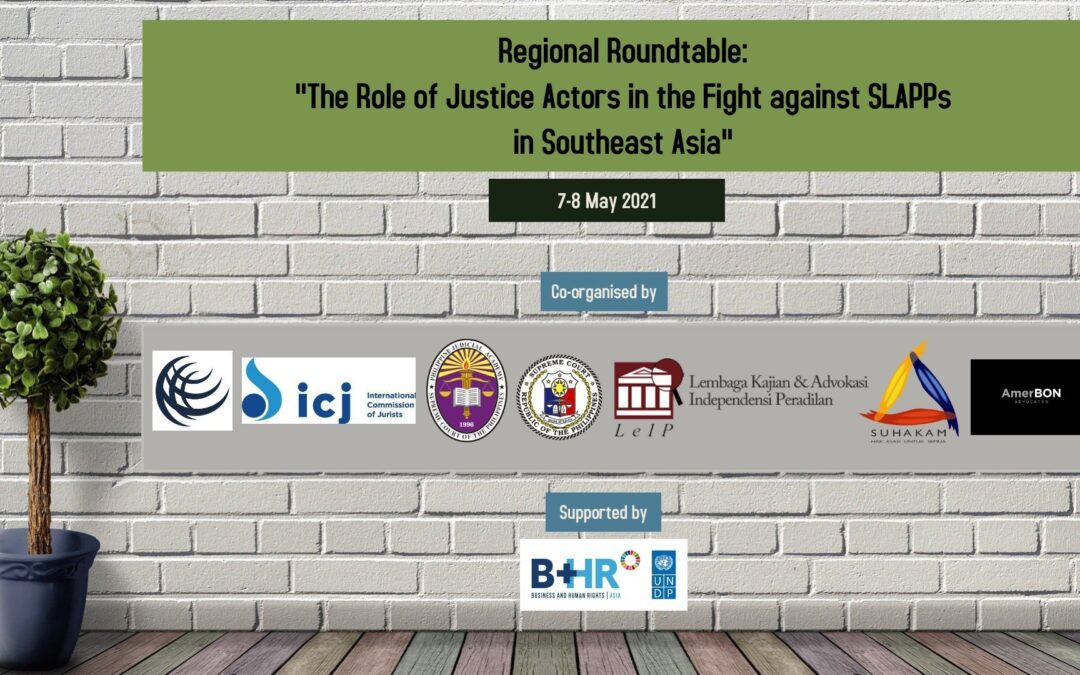
Southeast Asian governments must diminish the misuse of lawsuits to harass and silence civil society, so-called SLAPP suites, said more than 70 international experts, judges, public prosecutors, lawyers, members of civil society organizations, academics, and members of executive and State institutions from Indonesia, Malaysia, the Philippines, and Thailand at a discussion convened by the ICJ and partners on 7 and 8 May.
The participants at the regional dialogue on “The Role of Administration of Judicial Authorities and Legislators in the Fight against Strategic Lawsuits Against Public Participation (SLAPPs) in Southeast Asia” addressed the proliferation of SLAPP suits, which SLAPP suits are undertaken with the principal objective of curtailing or deterring public criticism or opposition to certain activities by the entity initiating the legal action. SLAPP lawsuits typically have a “chilling effect” on the exercise of freedom of expression and other human rights and fundamental freedoms, including freedom of opinion and expression (article 19 of the International Covenant on Civil and Political Rights); freedom of peaceful assembly (article 21); and the right to take part in the conduct of public affairs (article 25).
Irene Khan, Special Rapporteur on the promotion and protection of freedom of opinion and expression, stated that it is necessary to bring exiting laws in compliance with international law and standards, including with the principles of legality, proportionate, necessity, legitimate purpose, and non-discrimination, and called for defamation laws to be decriminalized.
Prof. Surya Deva, Vice-Chairperson, the Working Group on the issue of human rights and transnational corporations and other business enterprises, referred to several anti-SLAPP provisions that, in his view, are inadequate, including section 161/1 and 165/2 of Thailand’s Criminal Procedure Code. He pointed out that while the legal reform needed, States also need to train relevant stakeholders who will make use of these. Internal or soft guidance can also be a helpful guideline on how to exercise discretion, and more resources should be allocated to raise awareness.
Several participants, while noting their duties to protect rights to access to justice and the power imbalance between the parties in SLAPP lawsuits, called for a robust legal frameworks and policies that prevent the filing SLAPPs in the first place and allow relevant authorities to identify, call out and dismiss them as soon as they are filed.
In the jurisdictions where such mechanisms exist, participants highlighted the need to address certain gaps to allow authorities to promptly and effectively exercise their power, and the importance of guidelines that can guide the relevant authorities on how to handle and proceed with SLAPPs in a coordinated effort to raise awareness among justice sector actors on this topic.
In the absence of a specific Anti-SLAPP legislation, participants also shared their experience using existing tools in their domestic laws as a basis in combating SLAPPs, including several provisions of the constitutions, other early dismissal mechanism provided in procedural laws, provisions under international laws, and encouraged their peers to think out of the box.
Reforming individual causes of action that commonly form the basis of SLAPPs, such as defamation, to ensure their compliance with international law and standards were also discussed by participants as another approach that the governments should consider, in combination with other measures.
Remedies for persons negatively affected by SLAPP lawsuits were encouraged.
The Workshop was conducted in collaboration with Business & Human Rights Resource Centre (BHRRC); Philippine Judicial Academy; the Supreme Court of the Republic of the Philippines; Lembaga Kajian dan Advokasi Independensi Peradilan (Indonesian Institute for Independent Judiciary or LeiP); Human Rights Commission of Malaysia (SUHAKAM) and AmerBON Advocates.
The speakers at the workshop were: representatives of all partner organizations; Nikhil Dutta, Global Programs Legal Advisor of the International Center for Not-for-Profit Law (ICNL); Joel Hernández García, Inter-American Commission on Human Rights’ Rapporteur on the Rights of Human Rights Defenders and Justice Operators; Irene Khan, Special Rapporteur on the promotion and protection of freedom of opinion and expression; and Prof. Surya Deva, Vice-Chairperson, the Working Group on the issue of human rights and transnational corporations and other business enterprises.
May 7, 2021 | News
As the European Union and India prepare for a meeting of their leaders on 8 May they should jointly commit to a strategy for protecting all people in India from the devastating second wave of the Covid-19 pandemic now ravaging the country, said the ICJ today.
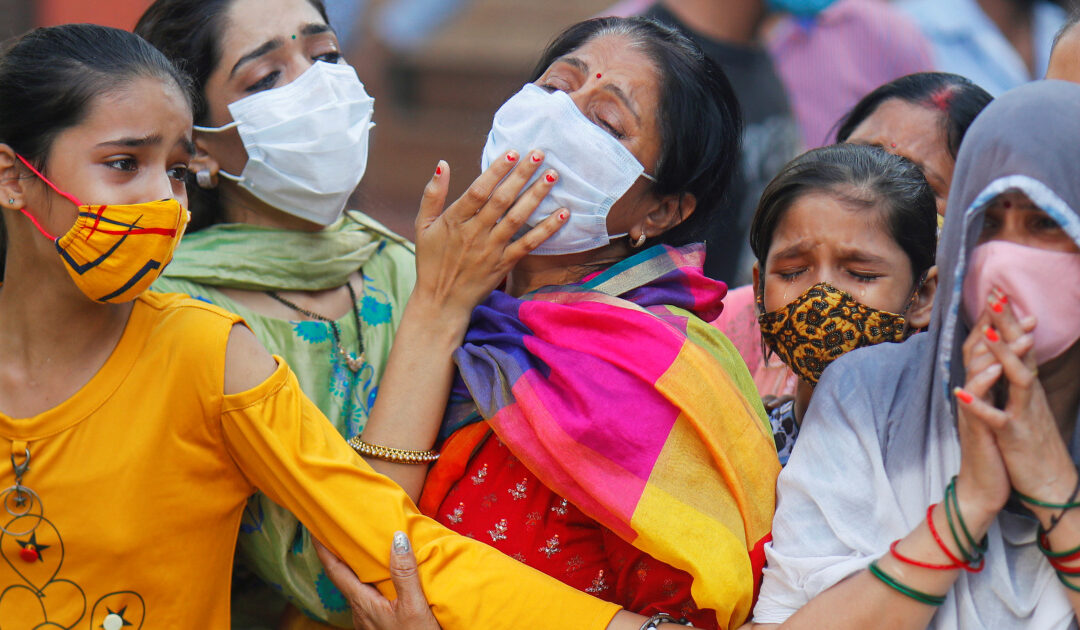
India has faced unprecedented impact from the pandemic since 15 April, with some 400,000 daily cases and a daily death toll now officially around 4,000 and likely even higher. India’s healthcare system and infrastructure has strained to meet the needs of people for oxygen, medicines, testing, hospital beds, ambulances, and doctors. India, a vaccine-production powerhouse globally, has only vaccinated just over two percent of its population and is now facing severe shortage of vaccines.
“The scenes emerging from India are horrifying but unfortunately not unexpected. This global pandemic demands global cooperation and national competence and this is the moment for the EU and India to demonstrate cooperation and competence. The Indian government was lecturing the world about its performance instead of preparing for the predictable resurgence of the pandemic, and now it is busy silencing people demanding help or criticizing the government’s poor performance,” said Sam Zarifi, ICJ’s Secretary-General.
The ICJ added that the performance of the EU and its Member States in international cooperation to tackle COVID globally left much to be desired, particularly as they have resisted supporting a loosening of intellectual property restrictions that have hampered efforts at wider vaccine production and distribution.
“At the same time, the proposal by India and South Africa for removing global patent restrictions for vaccine protection was rejected by some of the wealthiest governments, including the EU, who seem more focused on economic interests rather than global responses to a global pandemic,” said Zarifi.
The EU has already agreed to assistance to India through its Civil Protection Mechanism and individual EU countries have delivered some needed supplies and vaccines.
“The EU and Member States should increase aid efforts to India and immediately reverse their opposition to waiving intellectual property restrictions to vaccine production under the World Trade Organization TRIPS agreement, especially now that the United States has indicated it would end its obstructionism. The EU should not be on the wrong side of history as the last obstacle to global vaccine production,” Zarifi said.
The ICJ also urged the EU to remind the Indian government of its obligations under international law and guarantees of the Indian Constitution to protect the rights of people in India to life and to health.
“The summit between the European Union and India brings together powerful States who should use this opportunity to align their actions at the global, regional, and national levels to protect people from the pandemic,” said Zarifi. “International law provides the framework for cooperation and both the EU and India must do a better job of complying with their international legal obligations.”
Additional Information
India’s judiciary has at various levels has severely criticized the Indian Central and State governments and issued orders for urgent remedial responses.
In particular, the Indian Supreme Court has ordered the central government to:
- ensure adequate supply of oxygen through provision of emergency buffer stock by the central government in collaboration with state governments;
- develop a national policy on admission to hospitals and in the interim ensure that no patient is denied access to hospitals or essential drugs; and
- recognize vaccines as a “valuable public good”.
The Supreme Court has also questioned the constitutionality of India’s vaccine policy due to differential pricing for state governments, the central government and private hospitals, stating that the government needs to revisit the policy so that it “withstands the scrutiny of Articles 14[right to equality] and Article 21[right to life] of the Constitution”.
Additionally, the Supreme Court has suggested that the Central Government take steps to ensure access to essential drugs as well as to enhance its healthcare workforce as needed, in line with India’s constitution and its international legal obligations.
As party to the International Covenant of Economic, Social and Cultural Rights, India is required to take all necessary measures to ensure the “prevention, treatment and control of epidemic” and to create conditions “which would assure to all medical service and medical attention in the event of sickness”. Further, these obligations, as stressed by the UN Committee on Economic, Social and Cultural Rights entail removing any discrimination in vaccine access; guaranteeing affordability and economic accessibility of vaccines for all people; prioritizing physical accessibility to vaccines, especially for marginalized groups and people living in remote areas; and guaranteeing access to relevant health information.
Additional Reading
EU: prioritize rights at India Summit, provide essential medical supplies, urge India to free rights defenders, address abuses – ICJ Press Release, 3 May 2021
Indian Government Fails to Protect Right to Life and Health in Second Wave of COVID-19 Pandemic – ICJ Press Release, 29 April 2021
Contact
Osama Motiwala, ICJ Asia-Pacific Communications Officer, t: +66-62-702-6369; e: osama.motiwala(a)icj.org
May 7, 2021 | News
The Colombian Commission of Jurists (CCJ) and the ICJ have called upon national and local authorities to respect the right of peaceful assembly and cease all use of unlawful force against protestors immediately.
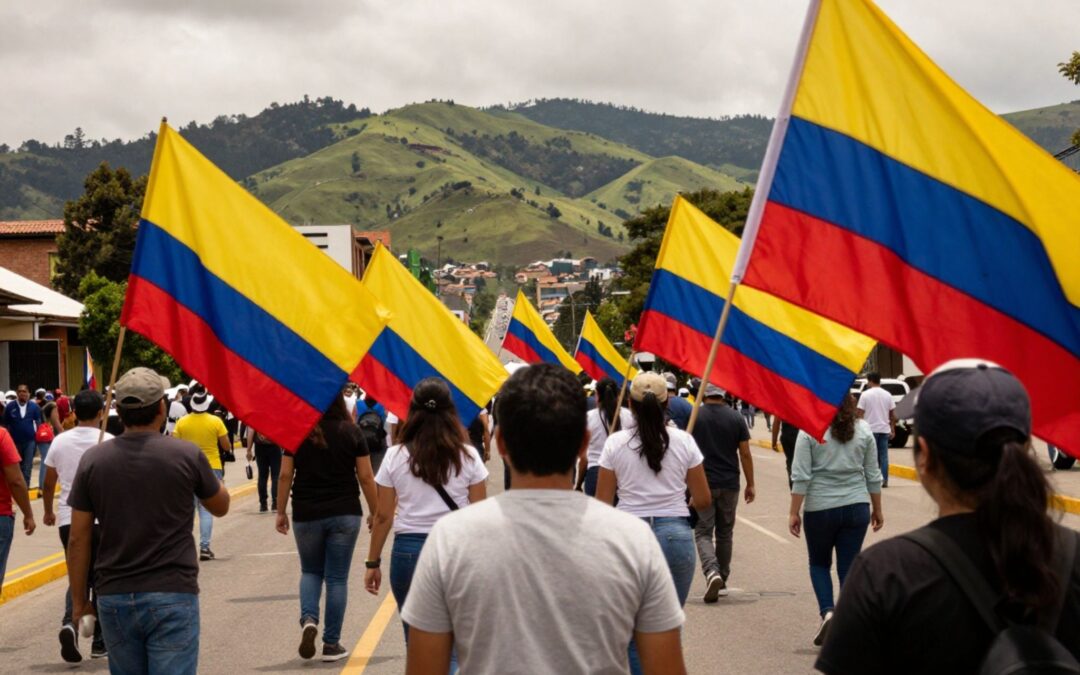
Beginning 28 April, thousands of people have taken to the streets in towns and cities throughout Colombia to protest and the social and economic policies of the current national government. As of this writing the protests continue.
The CCJ and the ICJ have expressed their concern about widespread and serious human rights violations committed during the protests.
There are multiples reports from civil society organizations that document incidents where police officials have opened fire with live ammunition against protestors.
Although full and precise figures are unavailable, as of 6 May 2021, according to the Ombudspersons’ Office at least 26 people had lost their lives. In at least 11 cases, police officials were allegedly responsible for the killings.
The NGO Temblores has documented 37 killings and the NGO Indepaz has information of more than 1.200 people injured during the protests. In addition, a number of cases of sexual violence have been reported.
The organizations are especially concerned that there are substantial number of people whose whereabouts are unknown. Complete figures on possible disappeared persons are not available. Even more worrisome, there are substantial differences among the figures provided by different sources.
In this regard, for instance, the Ombudspersons’ Office said that it has received information about the possible disappearance of 145 people. The Ombudspersons’ Office has established the whereabout of 55 people.
For its part, the civil society platform Mesa de Trabajo sobre Desaparición Forzada en Colombia has informed that it has information of 471 potential cases of enforced disappearances. According to the platform, the whereabout of 92 people have been determined.
The violent acts committed in Valle del Cauca are particularly serious. In this region, it has been reported that at least 17 people have died, and an undetermined number of people are seriously wounded.
Similarly, in Cali, some members of human rights organizations and the Office of the United Nations High Commissioner for Human Rights in Colombia alleged that they had been subject to verbal attacks and physical assault when there were verifying the situation of detained people.
The CCJ and the ICJ urge Colombian authorities to acknowledge act to address the allegations of human violations committed during the protests. They must conduct, independent, impartial, prompt, thorough, effective, and transparent investigations in accordance with Colombian law and its obligations under the International Covenant on Civil and Political Rights.
Furthermore, the investigation must take place within the ordinary criminal jurisdiction and under no circumstances should there be resort to military jurisdiction. Under international law and standards, cases that may constitute arbitrary deprivation of life or enforced disappearances cannot be considered to be connected with military duties.
Additionally, there is information that some police officials have been wounded, and at least one was allegedly unlawfully killed. The CCJ and the ICJ condemn these and other violent acts and urge judicial authorities to investigate and sanctions those responsible.
On the other hand, the CCJ and the ICJ recall that the use of force by police officials should must only be deployed in accordance with international standards. In particular, any such action must comply with the UN Basic Principles on the Use of Force and Firearms by Law Enforcement Officials.
These Principles establish that the use of force should be exceptional, necessary and proportional. Especially, authorities should faithfully comply with principle 9 that sets out that lethal force should be not used “except in self-defence or defence of others against the imminent threat of death or serious injury”.
Finally, the CCJ and the ICJ express their great concern about the national government’s decision to involve the military forces for the contention of the violence under the legal figure of “military assistance” (asistencia militar). The decision does not respect the international human rights law standards on the use of force and the right of peaceful assembly.
It should be remembered that military forces are not trained or designed to protect and control civilians during protests or scenarios of disruption of public order.
Therefore, the participation of military forces should be exceptional in situations of necessity, for example to confront immediate extreme violence and temporally limited, as affirmed by international bodies such as the UN Committee on Human rights and the Inter-American Court of Human Rights.
Contacts:
Ana María Rodríguez, Deputy Director of the Colombian Commission of Jurists, anarodriguez(a)coljuristas.org
Rocío Quintero M, Latin American Legal and Policy Adviser, International Commission of Jurists, rocio.quintero(a)icj.org