May 12, 2021 | Advocacy, News
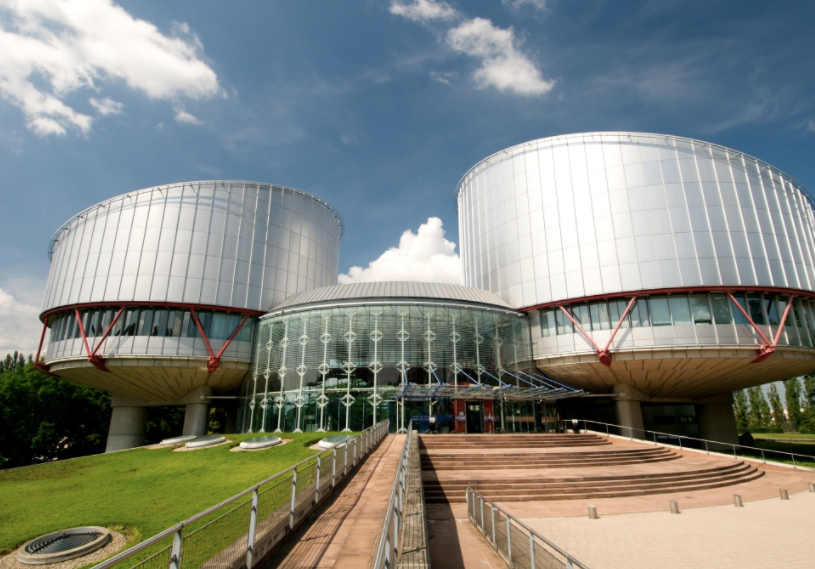
The International Commission of Jurists (ICJ), the Turkey Litigation Support Project (TLSP) and Human Rights Watch (HRW) have intervened before the European Court of Human Rights in a case concerning the arrest and pre-trial detention of Turkish opposition politician Selahattin Demirtaş, on a series of charges relating to the exercise of his freedom of political expression. The applicant alleges that his pre-trial detention was arbitrary and unlawful.
In the intervention, the organisations underline that restrictions on freedom of expression, widespread detention and criminal prosecution under expansive anti-terrorism laws, and the impact on democratic debate and rights protection are now well documented in Turkey. This is particularly striking, and the repercussions serious, when opposition politicians are targeted for their expressions of opinion and engagement in democratic debate.
The interveners address:
- the nature and application of anti-terror criminal laws in Turkey and the implications for protection of the right to liberty (Article 5(1) of the European Convention on Human Rights (ECHR)) and freedom of expression (Article 10 ECHR) and for the limitation on use of restrictions on rights (Article 18 ECHR); and
- the effectiveness of the individual application procedure to the Turkish Constitutional Court as a remedy in detention cases, in particular in cases concerning the exercise of freedom of expression, in light of delays, the erosion of the independence and impartiality of the judiciary, and non-compliance of lower courts with the Constitutional Court’s decisions that protect Convention rights.
Full text of the intervention can be downloaded here.
May 12, 2021
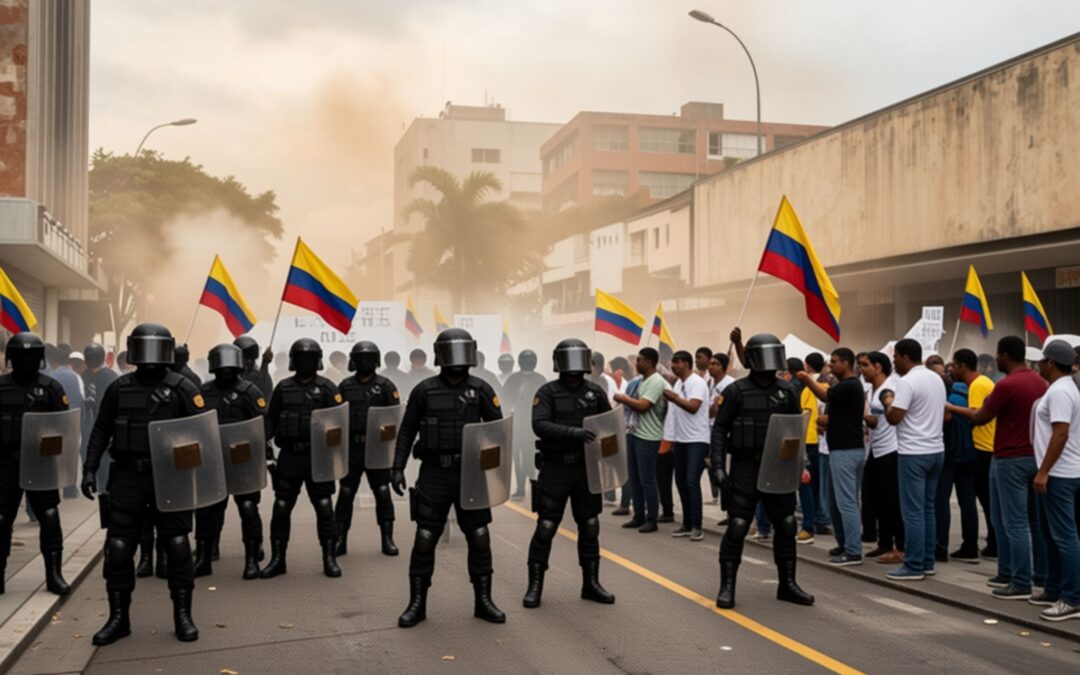
An opinion editorial by ICJ’s Commissioner, Rodrigo Uprimny. He presents seven measures to overcome the serious crisis Colombia is facing. He argues that authorities must make efforts to de-escalate violence and, in turn, escalate the protection of human rights.
The current crisis is severe. In a few days, more than 30 people have died, several of them from police bullets. There are also numerous disappeared persons. And there have been acts of extreme criminal vandalism, such as the attempt to incinerate several police officers inside a police station.
Apart from the severity, the crisis is complex. It is a result of a combination of old and new tensions, which have been accumulated and exploded due to a tax-reform bill proposal. But despite the complexity and severity, which make the crisis challenging to resolve, or perhaps precisely because of that, it is necessary to take measures to prevent the situation from getting worse.
The Government and political and social leaders must make efforts to deescalate violence. This requires escalating human rights, putting them at the centre of crisis management. So I propose seven measures oriented in that direction.
First, the president and, in general, all high-level government official must unequivocally condemn abuses by law enforcement officials. They must state that these acts will not be tolerated and will be investigated and punished. Unfortunately, those statements have not occurred.
Second, the organizers of the protests and those of us who share the protests must condemn not only the police abuses but also the acts of violence in the protests.
Third, the Office of the Ombudsperson and the Office of the Inspector General must remember that they are independent from the Government. They must take their independent role seriously. They must fulfil their constitutional function of defending human rights and denouncing abuses committed by authorities.
Unfortunately, despite the commitment of their officials, the interventions of these organizations have been weak due to the closeness of the Ombudsman and the Inspector General to the Government.
Fourth, authorities must identify and punish those who commit vandalism in the protests, especially against other people. At the same time, they must guarantee the right to peaceful protest, without stigmatizing the protest, and avoiding any excess in the use of force.
Thus, fifth, the Government and law enforcement officials must strictly comply with the ruling of the Supreme Court handed down in September 2020. In the ruling, the Supreme Court protected the right to peaceful protest and ordered authorities to refrain from stigmatizing the social protest and to adopt protocols to avoid excesses in the use of force.
Nevertheless, the ruling has not been applied in the ongoing protests. That is why several human rights organizations, including Dejusticia, filed a formal petition (incidente de desacato) against the Government.
Sixth, the Office of the General Prosecutor must investigate all violence committed during these protests, including those committed by the police, because if the crime is clearly contrary to the constitutional function of the law enforcement agencies, the case must go to the ordinary jurisdiction, in accordance with constitutional jurisprudence and with article 3 of Law 1407.
Seventh, the support of international human rights organizations should be sought. Consequentially, instead of obstructing the verification work of the Office in Colombia of the United Nations High Commissioner for Human Rights, as the Deputy Foreign Minister tried to do, the Government should facilitate the presence of other international bodies, such as the Inter-American Commission on Human Rights.
These measures and others of a similar nature, which put human rights at the centre of the crisis management, would help de-escalate the ongoing violence. At the same time, these measures would facilitate the necessary conversations to reach genuine national agreements on the ways to confront the underlying problems and tensions that fuelled the protests.
Notes:
Commissioner Uprimny is also Researcher at Dejusticia and member of the UN Committee on Economic, Social and Cultural Rights.
This op-ed was first published in Spanish in El Espectador on May 9, 2021

May 12, 2021 | Editorial, Noticias
En esta columna de opinión, el Comisionado de la CIJ, Rodrigo Uprimny, presenta siete medidas para superar la grave crisis que atraviesa Colombia, y para que el Gobierno y los líderes políticos hagan esfuerzos por desescalar la violencia y, a su vez, escalar la protección de los derechos humanos.
Esta crisis actual es muy grave. En pocos días han muerto más de 30 personas, varias de ellas por balas de la policía. Hay además numerosos desaparecidos. Y ha habido actos de vandalismo criminal extremo, como el intento de incinerar en un CAI a varios agentes de la policía.
Además de grave, esta crisis es compleja pues resulta de una combinación de tensiones viejas y nuevas, que se han acumulado y explotaron con ocasión del proyecto de reforma tributaria. Pero a pesar de su complejidad y gravedad, que hacen que la crisis sea difícil de resolver, o tal vez precisamente por eso, es necesario tomar medidas para evitar que se agrave más.
El Gobierno y los líderes políticos y sociales deben hacer esfuerzos por desescalar la violencia, para lo cual es necesario escalar los derechos humanos, poniéndolos en el centro del manejo de la crisis. Propongo entonces siete medidas orientadas en esa dirección.
Primero, el presidente y en general todo el alto Gobierno deben condenar inequívocamente los abusos de la Fuerza Pública y señalar que esos actos no serán tolerados y serán investigados y sancionados. Infortunadamente esas declaraciones no han ocurrido.
Segundo, los promotores del paro y quienes compartimos la protesta debemos condenar no sólo los abusos policiales sino también los actos de violencia en las protestas.
Tercero, la Defensoría y la Procuraduría deben recordar que son instituciones independientes del Gobierno y que deben tomar en serio y cumplir su función constitucional de defender los derechos humanos y denunciar los abusos de las autoridades. Infortunadamente, a pesar del compromiso de sus funcionarios, las intervenciones de esos organismos han sido débiles por la cercanía de sus jefes con el Gobierno.
Cuarto, las autoridades deben detectar y sancionar a quienes en las protestas comenten actos vandálicos, especialmente contra otras personas, pero garantizando la protesta pacífica, sin estigmatizarla, y evitando cualquier exceso en el uso de la fuerza.
Por esa razón, quinto, el Gobierno y la Fuerza Pública deben cumplir estrictamente la sentencia de tutela de la Corte Suprema de septiembre 2020, que al amparar el derecho a la protesta pacífica ordenó a las autoridades que se abstuvieran de estigmatizar la protesta y que adoptaran protocolos para evitar excesos en el uso de la fuerza.
Pero esa sentencia no ha sido cumplida en estas protestas, por lo cual los peticionarios de esa tutela, que fue apoyada por varias organizaciones de derechos humanos, entre las cuales está Dejusticia, presentaron un incidente de desacato contra el Gobierno.
Sexto, la Fiscalía debe investigar todas las violencias ocurridas en estas protestas, incluidas las de la policía, pues si el delito es claramente contrario a la función constitucional de la Fuerza Pública, el caso debe ir a la justicia ordinaria, conforme a la jurisprudencia constitucional y al artículo 3 de la Ley 1407.
Séptimo, debemos buscar el apoyo de organismos internacionales de derechos humanos. Por eso, en vez de obstruir la labor de verificación de la Oficina en Colombia de la Alta Comisionada de Derechos Humanos de Naciones Unidas, como intentó hacer la viceministra de Relaciones Exteriores, el Gobierno debería facilitar la presencia de otras instancias internacionales, como la Comisión Interamericana, para que nos ayuden a enfrentar la crisis.
Esas medidas y otras del mismo carácter, que ponen los derechos humanos en el centro del manejo de la crisis, ayudarían a desescalar las violencias, lo cual facilitaría al mismo tiempo los necesarios diálogos en la búsqueda de acuerdos nacionales genuinos para enfrentar los problemas y las tensiones subyacentes que alimentaron estas protestas.
Notas:
El Comisionado Uprimny también es Investigador en Dejusticia y miembro del Comité de Derechos Económicos, Sociales y Culturales.
Esta columna se publicó por primera vez en El Espectador el 9 de mayo de 2021.
May 12, 2021
Peru has persistently failed to deliver accountability for enforced disappearances and extra-judicial killings, found the ICJ in a report released today.
The baseline study Perú: Desapariciones Forzadas y Ejecuciones Extrajudiciales, Estudio de línea de base (published in Spanish) identifies key obstacles to accountability for serious human rights violations in Peru, particularly for crimes under international law committed during the country’s internal armed conflict (1980-2000).
“There can be no sustainable peace without justice, and providing accountability and ending impunity demand committed implementation of judicial and non-judicial mechanisms”, said Sam Zarifi, Secretary General of the ICJ.
“It is worrisome that the human rights agenda is not a priority for the national government or the justice system. Considering that a new president will be elected soon, it is crucial that the new national government takes measures to prioritize human rights among the public policies. In particular, measures to improve criminal accountability and to provide full and effective reparation to victims should be adopted by the new government as an urgent matter,” he added.
Against a backdrop of ongoing impunity in the country, the ICJ found victims’ rights are not upheld despite the fact they are recognized under the domestic legal framework.
The justice system has handed down less than 100 criminal verdicts on human rights cases related to the armed conflict. The figure is surprisingly low considering that human rights violations and abuses were widespread and systematic during the armed conflict.
In relation to extrajudicial killings alone, the Truth Commission (Comisión de la Verdad y Reconciliación) documented 7,334 cases. In the case of enforced disappearance, the General Direction for the Search for Disappeared Persons (Dirección General de Búsqueda de Personas Desaparecidas) has documented 21,793 cases.
The study also examined other challenges such as the lack of implementation of reparation programmes, the slow progress in the search for the disappeared, and inadequate domestic legislation on the use of force by law enforcement officers.
Among others, the study recommends Perú should take the following steps:
- Improve the investigation and prosecution of serious human rights violations. To do so, among other measures, Perú should appoint judges and prosecutors exclusively dedicated to these crimes. Similarly, the Prosecution Office should consider not taking a case-by-case approach to investigations. Rather, it should follow a more systematic approach to identifying criminal patterns.
- Guarantee victims’ rights during criminal proceedings. Judicial authorities should ensure that victims can participate in each stage of the criminal proceedings. This is particularly important for videoconferencing hearings. Similarly, victims should have effective access to legal advice from the early stages of the criminal justice process.
- Improve the search for the disappeared. The national government must provide sufficient human and financial resources to ensure that the General Direction for the Search for Disappeared Persons may perform its mission adequately. At the same time, better coordination between the General Direction and the Prosecution Office is necessary. In addition, more effort should be applied to improve victims’ understanding of the Law on the search for disappeared persons (Law 30470).
Background
The baseline study was produced as part of the ICJ’s regional project addressing justice for extrajudicial killings and enforced disappearances in Colombia, Guatemala and Perú, sponsored by the European Union. The baseline study is available in Spanish.
The ICJ has long been monitoring laws, policies and practices concerning the investigation and prosecution of serious human rights violations and abuses in Perú, including enforced disappearances and extrajudicial killings, as part of its efforts to promote accountability, justice and the rule of law around the world.
The project is implemented under the ICJ’s Global Accountability Initiative, which has also produced baseline studies for Colombia, Eswatini, Nepal, Myanmar, Venezuela, Cambodia, Tajikistan and Tunisia.
Contacts:
Kingsley Abbott, Director of Global Accountability & International Justice. Email: kingsley.abbott(a)icj.org
Carolina Villadiego Burbano, Legal and Policy Adviser, Latin America, and Regional Coordinator of the Project. Email: carolina.villadiego(a)icj.org
Rocío Quintero M, Legal Adviser, Latin America. Email: rocio.quintero(a)icj.org
Download
Peru-GRA-Baseline-Study-Publications-Reports-Thematic-reports-2020-SPA (full report in Spanish, PDF)
May 12, 2021
La CIJ ha encontrado que Perú ha fallado de manera persistente en la investigación, judicialización y sanción de los responsables de desapariciones forzadas y las ejecuciones extrajudiciales que se han cometido en el país, según los hallazgos contenidos en un informe que hoy se publica.
El estudio de línea de base Perú: Desapariciones Forzadas y Ejecuciones Extrajudiciales, Estudio de línea de base identifica obstáculos que impiden la rendición de cuentas penal en casos de graves violaciones de derechos humanos en Perú, en particular por crímenes internacionales cometidos durante el conflicto armado interno (1980-2000).
Al respecto, el Secretario General de la CIJ, Sam Zarifi, afirmó que “no puede haber paz sostenible sin justicia y rendición de cuentas. Acabar con la impunidad requiere la implementación decidida de mecanismos judiciales y no judiciales”.
De igual manera, Zarifi remarcó que “es preocupante que la agenda de derechos humanos no sea una prioridad para el gobierno nacional o para el sistema de justicia. Por esto, dado que pronto habrá elecciones presidenciales, es crucial que el nuevo gobierno adopte medidas para priorizar los derechos humanos en las políticas públicas, particularmente aquellas encaminadas a mejorar la rendición de cuentas en materia penal, así como la reparación plena y efectiva de los derechos de las víctimas”.
En el informe, la CIJ concluyó que, en el contexto de impunidad por las graves violaciones de derechos humanos que existe en Perú, los derechos de las víctimas no son garantizados a pesar de estar reconocidos en el marco jurídico nacional. En efecto, el sistema de justicia penal ha dictado menos de 100 sentencias en casos de violaciones de derechos humanos relacionados con el conflicto armado.
La cifra es sorprendentemente baja dado que las violaciones y los abusos fueron generalizados y sistemáticos durante el conflicto. Por ejemplo, solo en relación con las ejecuciones extrajudiciales, la Comisión de la Verdad y Reconciliación documentó 7.334 casos. Y en el caso de la desaparición forzada, la Dirección General de Búsqueda de Personas Desaparecidas ha documentado 21.793 casos.
La Línea Base también expone otros desafíos, como la falta de implementación de los programas de reparación, el lento avance en la búsqueda de personas desaparecidas y el deficiente marco jurídico nacional respecto de la regulación del uso de la fuerza por parte de la Policía.
Adicionalmente, el documento ofrece recomendaciones para que se mejore la protección de los derechos de las víctimas por parte de las autoridades. Entre estas recomendaciones están:
- Mejorar la investigación y el enjuiciamiento de las graves violaciones de derechos humanos. Para ello, entre otras medidas, Perú debe designar jueces y fiscales dedicados exclusivamente a la investigación y el juzgamiento de estos delitos. Además, la Fiscalía debería considerar un enfoque de investigación más sistemático que le permita identificar patrones delictivos, en lugar de un enfoque caso por caso.
- Garantizar los derechos de las víctimas durante el proceso penal. Las autoridades judiciales deben garantizar que las víctimas puedan participar en cada etapa del proceso penal. Esto es particularmente importante en las audiencias virtuales. De manera similar, las víctimas deben tener acceso efectivo a asesoría legal desde las primeras etapas del procedimiento penal.
- Mejorar la búsqueda de personas desaparecidas. El gobierno nacional debe proporcionar recursos humanos y financieros suficientes para que la Dirección General de Búsqueda de Personas Desaparecidas cumpla con su misión de manera adecuada. Al mismo tiempo, la Dirección y la Fiscalía de la Nación deben fortalecer sus acciones de coordinación. Igualmente, se deben realizar mayores esfuerzos de promoción y divulgación de los contenidos de la Ley de búsqueda de personas desaparecidas (Ley 30470) entre las víctimas.
Antecedentes
Este informe se produjo como parte del proyecto regional de la CIJ “Promoviendo justicia para ejecuciones extrajudiciales y desapariciones forzadas en Colombia, Guatemala y Perú”, patrocinado por la Unión Europea. El informe está disponible en español.
La CIJ ha monitoreado durante varios años las leyes, políticas y prácticas relacionadas con la investigación y el enjuiciamiento de graves violaciones y abusos de los derechos humanos en el Perú, incluidas las desapariciones forzadas y las ejecuciones extrajudiciales. Lo anterior como parte de su esfuerzo para promover la rendición de cuentas, la justicia y el estado de derecho en el mundo.
El proyecto se implementa bajo la Iniciativa de Rendición de Cuentas de la CIJ, que también ha producido informes para Colombia, Eswatini, Nepal, Myanmar, Venezuela, Cambodia, Tajikistan y Tunisia.
Contacto:
Kingsley Abbott, Director de la Iniciativa Global de Rendición de cuentas de la CIJ. Email: kingsley.abbott@icj.org
Carolina Villadiego Burbano, Asesora Legal para América Latina y Coordinadora regional del proyecto. Email: carolina.villadiego@icj.org
Rocío Quintero M, Asesora Legal para América Latina de la CIJ. Email: rocio.quintero@icj.org
Peru-GRA-Baseline-Study-Publications-Reports-Thematic-reports-2020-SPA