Jun 26, 2015 | Advocacy, Cases, Legal submissions, News
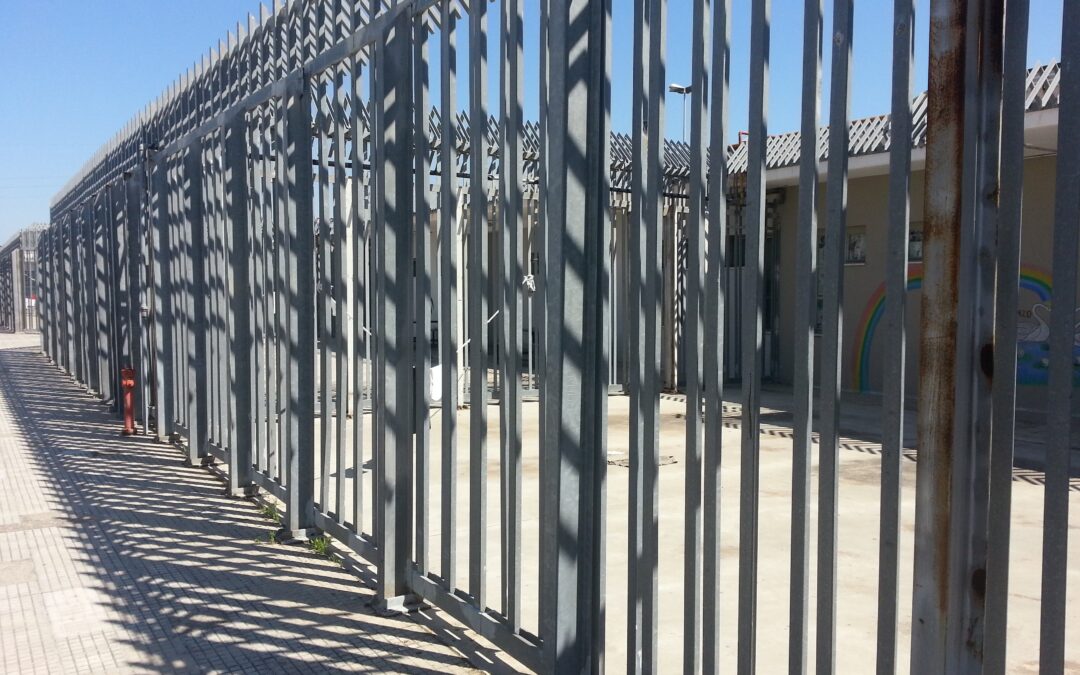
The ICJ submitted today a third party intervention before the European Court of Human Rights in the case of Richmond Yaw and others v. Italy regarding the detention of four migrants in Italian Centres for Identification and Expulsion.
The case raises issues related to the lawfulness of their detention in immigration centres, and the compliance of the mechanisms of judicial review and compensation for unlawful detention with the European Convention on Human Rights.
Taky Berko Richmond Yaw, Yaw Ansu Matthew, Darke Isaac Kwadwo, and Dominic Twumasi, nationals of Guinea, had been detained in the Centre for Identification and Expulsion of Ponte Galeria (Rome).
In these submissions, the ICJ presented the Court with a summary of its findings regarding the law and practice of detention of migrants and the related judicial guarantees in Italy, in its 2014 report, “Undocumented” Justice for Migrants in Italy.
Furthermore, the ICJ presented an analysis of the principles that apply in regard to arbitrary detention of persons detained for the purposes of immigration control under article 5.1.f. ECHR, in particular:
- The principle of legality, including the fact that the basis, procedures and conditions for detention must be provided by law, and the principle that detention must be carried out in good faith; and the due process guarantees related to these principles;
- The requirement that detention be undertaken only pursuant to the permitted purposes of article 5.1.f ECHR, and the need for strict construction of this requirement, and ongoing scrutiny of compliance with it, in particular in the context of long periods of detention;
- The requirements of access to an effective judicial mechanism to secure the right to habeas corpus and review of the legality, necessity and proportionality of the detention of migrants, under article 5.4. ECHR;
- The requirements of an effective remedy and reparation mechanism for unlawful deprivation of liberty under article 5.5 ECHR.
ECtHR-AmicusBrief-Yaw&others v Italy-Advocacy-Legal Submission-2015-ENG (download the third party intervention)

Apr 7, 2015 | News
Venezuela is intimidating and harassing human rights defenders, and making unsubstantiated allegations that they are seeking to undermine Venezuelan democracy, 28 international and Latin American human rights organizations, including the ICJ, said today.
The authorities’ allegations concern the groups’ legitimate functions of documenting abuses and representing victims before international human rights bodies.
Venezuelan authorities should cease this tactic immediately, the groups said.
Governments participating in the Summit of the Americas in Panama on April 10-11, 2015, should press the administration of Nicolás Maduro to ensure that human rights defenders can do their job without fear of reprisals, the organizations said.
The government harassment is clearly intended to discredit and intimidate groups that document human rights violations, the groups said.
On February 12, Diosdado Cabello, president of the National Assembly and member of the governing party, stated on the website of his weekly TV show, Con el Mazo Dando, aired on the state-run Venezolana de Televisión, that “NGO representatives from the Venezuelan extreme right” would participate in hearings before the Inter-American Commission on Human Rights (IACHR) in March.
Cabello had previously criticized Venezuelan human rights defenders who participated in the country’s review by the UN Committee Against Torture in Geneva, or traveled abroad to conduct advocacy meetings.
On March 18, during his show, Cabello read a list of names of individuals and organizations who had traveled to Washington, DC, to participate in the IACHR hearings.
The list included leading human rights groups such as Provea, Espacio Público (Public Space), Observatorio Venezolano de Prisiones (Venezuelan Observatory of Prisons), Transparencia Venezuela (Transparency Venezuela), Cofavic, Codevida, and Observatorio Venezolano de Conflictividad Social (Venezuelan Observatory of Social Conflicts).
Cabello accused them of receiving instructions from the US Embassy in Caracas before traveling to the hearings.
Cabello contends that the information presented on the show had been provided by anonymous “patriotic informants” (patriotas cooperantes).
Twelve human rights defenders who arrived in Caracas on various flights between March 20 and 22 have said that they were followed by unidentified men from when they landed until they left the airport, were filmed or photographed, and/or that officials irregularly searched their bags.
On March 23, María Alejandra Díaz, a lawyer who represented the government at the IACHR hearings, said on Venezolana de Televisión that “The issue of human rights is just a façade” and that nongovernmental groups that participated in the hearings “say they are Venezuelan” but “play the imperialist game” and “lie in front of the IACHR to make Venezuela look like the devil.”
An article published on April 3 in the official newspaper Correo del Orinoco accused two well-respected human rights defenders of being part of the US Central Intelligence Agency’s “Venezuelan delegation” at the Summit of the Americas.
Their objective is to “legitimize destabilization actions” in Venezuela, the article says.
Under international law, governments must ensure that human rights defenders are allowed to pursue their legitimiate activities without reprisals, threats, intimidation, harassment, discrimination, or unnecessary legal obstacles.
The Inter-American Court of Human Rights held in 2003 that “[r]espect for human rights in a democratic state depends largely on human rights defenders enjoying effective and adequate guarantees so as to freely go about their activities.”
The rights to freedom of expression and association may be subject to limitations, but the limitations must adhere to strict standards so that they do not improperly impede the exercise of those rights. Any restrictions should be prescribed by law, be necessary in a democratic society, and proportionate to the aim pursued.
In 2012, the UN special rapporteur on the rights to freedom of peaceful assembly and of association called on countries to ensure that these rights “are enjoyed by everyone and any registered or unregistered entities” and that no one is subject to “harassment, persecution, intimidation or reprisals” for exercising them.
Signatories
Amnesty International
Asociación Pro Derechos Humanos (APRODEH) (Peru)
Asociación por los Derechos Civiles (ADC) (Argentina)
Centro de Derechos Humanos de la Montaña Tlachinollan (Mexico)
Centro de Derechos Humanos Miguel Agustín Pro Juárez, A.C. (Centro Prodh) (Mexico)
Centro de Estudios de Derecho, Justicia y Sociedad (Dejusticia) (Colombia)
Center for Justice and International Law (CEJIL)
CIVICUS
Ciudadanos en Apoyo a los Derechos Humanos, A.C. (CADHAC) (Mexico)
Comisión Colombiana de Juristas (Colombia)
Comisión Ecuménica de Derechos Humanos (CEDHU) (Ecuador)
Corporación Humanas (Chile)
Coordinadora Nacional de Derechos Humanos (Peru)
Due Process of Law Foundation (DPLF)
Instituto de Estudios Legales y Sociales del Uruguay (IELSUR) (Uruguay)
Instituto de Defensa Legal (IDL) (Peru)
Instituto de Desenvolvimento e Direitos Humanos (Brazil)
International Commission of Jurists
International Federation for Human Rights (FIDH)
International Service for Human Rights (ISHR)
Frontline Defenders
Fundación Myrna Mack (Guatemala)
Fundación Regional de Asesoría en Derechos Humanos (INREDH) (Ecuador)
Human Rights Watch
Observatorio Ciudadano (Chile)
Robert F. Kennedy Center for Justice & Human Rights
Transparency International
World Organization Against Torture
Venezuela-Harassment of HRDs-News-web stories-2015-SPA (full text in PDF, Spanish version)
Venezuela-Harassment of HRDs-News-web stories-2015-POR (full text in PDF, Portuguese version)
Mar 3, 2015 | Advocacy
In advance of the Brussels Conference on implementation of the European Convention on Human Rights, our shared responsibility, the ICJ and nine other NGOs issued a statement on the Conference’s draft Declaration.
The statement welcomes a number of aspects of the draft Declaration, which addresses the need for more effective implementation of the Convention and the full, rapid execution of European Court of Human Rights judgments.
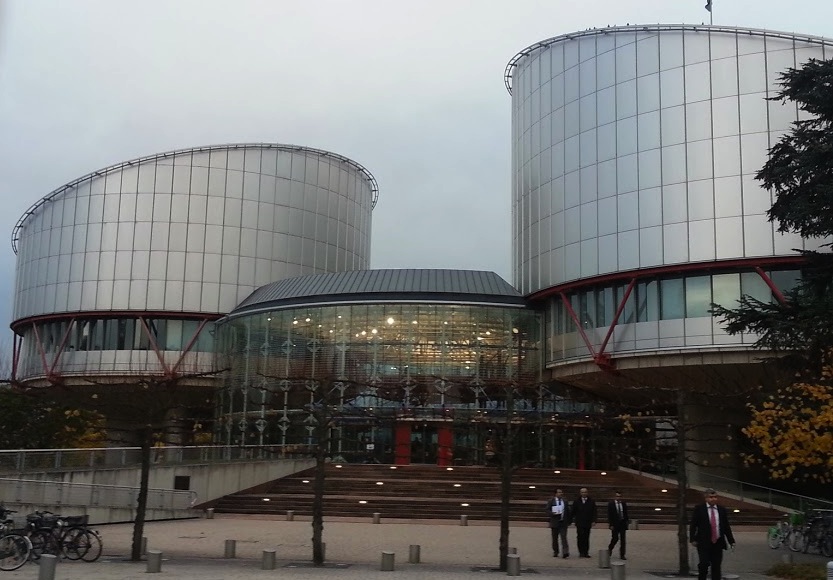
It raises concerns at several elements of the draft Declaration, including recommendations to the Court which could undermine its independence, and the lack of recognition of the role of civil society in the effective execution of judgments of the European Court of Human Rights (photo).
Europe-NGO Statement on Brussels Draft Declaration-Advocay-2015-ENG (full text in PDF)
Dec 2, 2014 | News
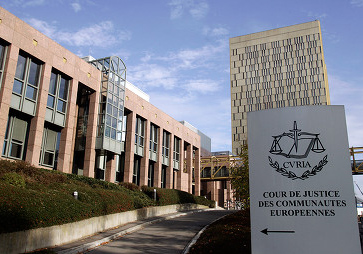
Today, the Court of Justice of the European Union (CJEU) delivered its judgment in the joint cases of A, B and C v. Staatssecretaris van Veiligheid en Justitie.
It affirms the need for national authorities to undertake individualized credibility assessments in asylum cases involving claims of persecution based on sexual orientation.
The ruling concerned a request for a preliminary ruling from the Netherlands, through its Council of State, to the CJEU.
The cases arose from three applications for asylum in the Netherlands by three men claiming a well-founded fear of persecution in their countries of origin based on their alleged same-sex sexual orientation.
The Dutch authorities rejected each asylum claim on the basis that each applicant had failed to prove his same-sex sexual orientation.
The Council of State asked the CJEU what limits the EU Qualification Directive and the Charter of Fundamental Rights, and in particular article 3 (right to the integrity of the person) and article 7 (respect for private and family life), impose on the method of assessing the credibility of a declared sexual orientation, and whether these limits are different from those applying to the assessment of credibility in asylum claims based on other grounds.
Interpreting the Qualification Directive in light of articles 3 and 7 of the Charter, as well as article 1, i.e. human dignity, the Court held that EU law does impose certain requirements on refugee status determination authorities.
The ICJ welcomes the Court’s determination that the competent domestic authorities must ensure that any credibility assessment method must allow for an individualized consideration of each applicant’s claim, having regard to its specific features, and that it is the duty of the State to cooperate with the applicant in the context of the assessment of all the relevant elements of her or his claim.
The ICJ welcomes a number of other aspects of the ruling, including:
- The emphasis on the Netherland’s need to comply with the Charter of Fundamental Rights;
- The fact that the Court firmly came down against seemingly intrusive and lewd questioning of an applicant’s sexual practices and proclivities, which it held to be contrary to respect for private and family life; and,
- The Court’s awareness of the particular challenges relating to the disclosure of one’s sexuality. The court noted that an applicant may be understandably reticent in revealing intimate aspects of his or her life and that therefore late disclosure of same-sex sexual orientation should not necessarily undermine the applicant’s credibility.
See also the ICJ’s commentary on the CJEU judgment in X, Y and Z v. Minister voor Immigratie en Asiel.