Nov 18, 2014 | Advocacy, Cases, Legal submissions
On 17 November 2014, the ICJ and ILGA-Europe filed their joint written submissions with the European Court of Human Rights in the case of Milica Đorđević and others v. Serbia (Application Nos. 5591/10, 17802/12, 23138/13 and 25474/14).
The case concerns the authorities’ decision in 2009 to relocate the applicants’ “Pride Parade” to promote the equality and visibility of lesbian, gay, bisexual and transgender people away from central Belgrade, Serbia, and the authorities’ repeated banning of Pride Parades in central Belgrade in 2011, 2012 and 2013.
The ICJ and the European Region of the International Lesbian, Gay, Bisexual, Trans and Intersex Association (ILGA-Europe)’s submissions to the Court focus on:
- the essential role of the right to freedom of peaceful assembly in a democratic society, and the scope of discretion afforded to States in determining measures required to prevent disorder at an assembly where counter-demonstrators threaten violence against groups most at risk; and
- the nature and scope of the State’s obligation in relation to the right to freedom of peaceful assembly under the European Convention on Human Rights and the International Covenant on Civil and Political Rights, focusing in particular on States’ duty to adopt legislative and administrative measures in order to fulfil their legal obligations.
SERBIA-ECHR amicus Dordevic-Advocacy-Legal Submission-2014-ENG (full text in PDF)
Oct 10, 2014 | Advocacy, Cases, Legal submissions
Today, the AIRE Centre (Advice on Individual Rights in Europe), the European Council on Refugees and Exiles (ECRE) and the ICJ presented joint written observations to the Grand Chamber of the European Court of Human Rights in the case of F.G. v. Sweden (Application No. 43611/11).
The case arises from the Swedish authorities’ dismissal of an asylum application. The submissions focus on:
- the obligation for Parties to the ECHR to ensure that the risk upon removal is addressed in such a way as to guarantee that the Convention’s protection is practical and effective;
- whether requiring coerced, self-enforced suppression of a fundamental aspect of one’s identity, which enforced concealment of one’s religion entails, is compatible with Convention obligations;
- the relevance and significance of the EU asylum acquis and Court of Justice of the EU’s jurisprudence on these matters; and
- the relevance and significance of the 1951 Geneva Refugee Convention.
SWEDEN-ECHR amicus FG vs Sweden-Advocacy-Legal Submission-2014-ENG (full text in PDF)
Jun 26, 2014 | Advocacy, Cases, Legal submissions, News
The ICJ expresses its disappointment today at the judgment of the European Court of Human Rights in the case of M.E. v. Sweden (Application No. 71398/12).
Jun 3, 2014 | Advocacy, Analysis briefs
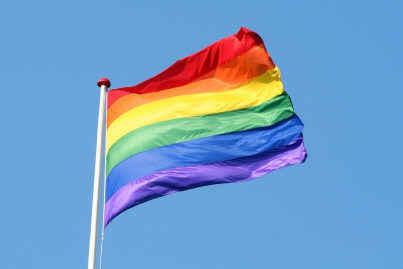
The ICJ’s commentary analyses in detail the 7 November 2013 judgment of the Court of Justice of the EU (CJEU) in joined cases arising from three asylum claims asserting a well-founded fear of persecution based on same-sex sexual orientation.
Positively, in X, Y and Z v. Minister voor Immigratie en Asiel, the Court found that asylum applicants who have a same-sex sexual orientation and come from countries where consensual homosexual conduct is criminalized, form a particular social group for the purposes of EU refugee law.
Further, the Court’s recognition that sexual orientation is a characteristic so fundamental to one’s identity that one cannot be expected to renounce or conceal it, or to exercise greater restraint in its expression than heterosexuals, is welcome.
Likewise, the Court’s finding that the enforcement of a term of imprisonment that sanctions consensual homosexual acts must be regarded as a disproportionate or discriminatory punishment, and is thus persecutory, is a step forward, particularly given that in some EU countries this was hitherto not the case.
However, in some important respects this judgment represents a missed opportunity. The Court failed to clarify the inconsistency between secondary EU refugee law and the UNHCR’s authoritative interpretation of “a particular social group” in the Refugee Convention’s definition of a refugee.
Further, in choosing to maintain the narrow scope of the questions referred to it, the Court ended up with an unwarrantedly restrictive reading of EU refugee law, which ignores the numerous persecutory effects of criminalizing consensual same-sex sexual orientation or gender identity.
The Court missed a chance to state that these laws, even when they are not enforced in the sense that there exists a recent record of enforcement through the actual imposition of terms of imprisonment, have a persecutory effect, as they criminalize an essential characteristic of one’s identity.
Background
The ICJ decided to publish this commentary for a number of reasons.
First, the CJEU plays an important role in shaping international refugee law jurisprudence.
Further, asylum applications based on a well-founded fear of persecution for reason of real or imputed sexual orientation and/or gender identity or expression are unfortunately likely to increase, both within the EU and beyond.
Moreover, the CJEU’s judgment in this case is likely to have a bearing on the determination of asylum claims premised on membership of other particular social groups.
Lastly, the implementation by the EU and its Member States of the recently “recast” Common European Asylum System will likely give rise to several new referrals to the Court, whose interpretation of the recast instruments will also depend on its asylum case law precedents, including the CJEU’s judgment in this case.
CommentaryXYZ-Advocacy-2014
May 14, 2014 | Advocacy, Cases, Legal submissions
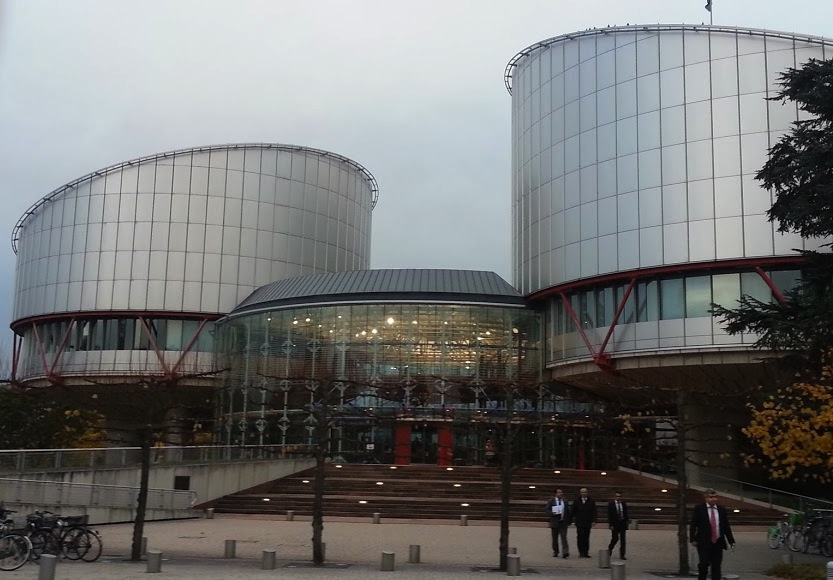
The European Court of Human Rights granted permission to the AIRE Centre, ILGA-Europe and the ICJ for a third-party intervention in the case of Pavla Sabalić v. Croatia (Application No. 50231/13).