Sep 13, 2018 | Advocacy, Non-legal submissions
The ICJ prepared an oral statement on procedural safeguards and civil society’s action to prevent arbitrary detention and enforced disappearance, for the interactive dialogue with the UN Working Groups on Arbitrary Detention and on Enforced and Involuntary Disappearances.
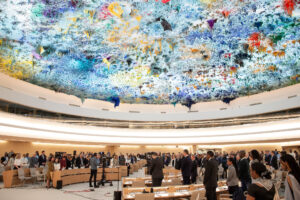
Although the statement could not ultimately be read out due to the limited time for civil society statements at the Human Rights Council, the text can found here:
“Mr President, Chairpersons of the Working Groups,
The International Commission of Jurists (ICJ) welcomes the focus of the report of the Working Group on Arbitrary Detention on “Linkages between arbitrary detention and instances of torture and ill- treatment”.
The ICJ shares the view of the Working Group that “safeguards … to prevent” torture and ill-treatment minimize and prevent “instances of arbitrary detention” (A/HRC/39/45, para. 59, and the view that “Judicial oversight of detention is a fundamental safeguard of personal liberty ” (A/HRC/39/45, para. 60).
The ICJ further welcomes the interim report of the Working Group on Enforced and Involuntary Disappearances on effective investigations (A/HRC/39/46), including the finding that “relatives of the disappeared have proven to be essential in the context of investigations and should have the right to know the truth … .” (para. 65)
The ICJ however stresses that these standards are not always upheld by States in their policies and actions.
For example, in Turkey, judicial review of detention is carried out by Judgeships of the Peace whose independence is highly questionable.
Finally, with regard to enforced disappearances, the ICJ is very concerned by the actions of Turkish authorities prohibiting the Saturday Mothers to hold their weekly protests in Galatasaray Square (Istanbul) in memory of their disappeared, in breach of their right to freedom of assembly.
Events of this kind seriously weaken the procedural safeguards and the action of civil society to protect and promote the prohibition of arbitrary detention and ensure accountability against enforced disappearances.
The ICJ urges the Council to address these worrying developments.
I thank you.”
HRC39-OralStatement-WGADWGEID-2018-draft-ENG (download the statement)
Sep 11, 2018 | Advocacy, Non-legal submissions
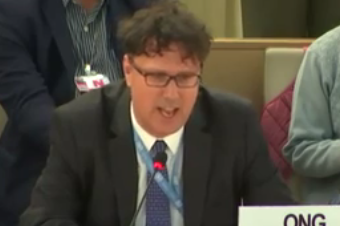
The ICJ today addressed the new UN High Commissioner for Human Rights, Michelle Bachelet, highlighting the role of her office in countering global threats to the rule of law and human rights.
The statement was made at the UN Human Rights Council, during general debate on the High Commissioner’s oral update. It read as follows:
“Madam High Commissioner,
The International Commission of Jurists (ICJ) warmly welcomes you to your new mandate – a mandate that the ICJ has, since 1964, fought to create and support.
A multitude of issues and situations urgently call for your attention. However, a dark cloud looms over them all, and casts its shadow across the globe, including in this chamber. From different directions, various political actors driven by authoritarian ideologies and impulses, thirst for power and fraudulent populisms, grow in strength and are joining forces to mount a concerted attack on the rule of law.
They openly scorn the stated aims of the UN Charter, including “faith in fundamental human rights” and the maintenance of “justice and respect for … international law.” They seek to undermine, defame, and destroy global, regional and national institutions built over decades as bulwarks to protect human rights and human dignity. They thrive on silence or passivity by global leaders and populations, as they assault independent judiciaries, media, and civil society.
Madam High Commissioner, you can make a unique impact by speaking forcefully and publicly in defense of human rights and the rule of law, in defense of victims, and against governments and individuals who demonstrate their hostility or indifference to these aims. The ICJ stands ready to support you and your office in the challenges that lie ahead.
Thank you.”
Sep 10, 2018 | Advocacy, News
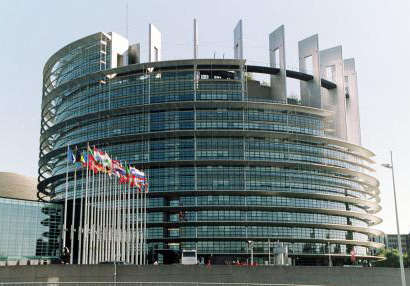
The ICJ today called on all MEPs to vote in favour of the draft resolution and report by rapporteur Judith Sargentini MEP, before the European Parliament, which would activate Article 7 of the Treaty of the European Union in respect of Hungary.
A vote for the resolution would mean that, under Article 7.1, the Council would determine whether there is a clear risk of serious breach by Hungary of the founding values of the EU.
Ultimately, if the situation persists, this would allow the Council to take more robust measures, including suspension of voting rights, to address the situation.
The vote, scheduled for 12 September, is crucial for the rule of law in Hungary and throughout the European Union.
The Parliament will vote on whether to activate the process under Article 7, by calling on the Council to identify a risk of serious breach by Hungary of the EU’s founding values, including the rule of law and respect for human rights.
The ICJ considers that the measures put in place by the Hungarian government since 2011 have led to a severe deterioration of the rule of law and human rights, by weakening Constitutional rights protection, limiting judicial independence, suppressing independent media, civil society and academic institutions, and imposing arbitrary laws that violate the human rights of marginalized sections of society.
Cumulatively, these measures pose a grave, systemic threat to the protection of the human rights of all people in Hungary.
“The European Parliament should respond to the critical situation in Hungary by using the powers available to it under Article 7 TEU to defend human rights and the rule of law. Not to do so would be to abandon Hungary to an increasingly dangerous path, and would set a damaging precedent for all of Europe,” said Róisín Pillay, Director of the ICJ Europe Programme.
Read the full statement and key concerns here: Hungary-triggering Art 7-Advocacy-2018-ENG (in PDF)

Aug 31, 2018 | Advocacy, Non-legal submissions
Today, the ICJ made a submission to the Committee on Economic, Social and Cultural Rights in advance of Committee’s examination of South Africa’s initial periodic report under the International Covenant on Economic, Social and Cultural Rights. South Africa ratified the Covenant in 2015.
When CESCR convenes to consider South Africa’s report on 2-3 October 2018, it will therefore be the first time that the Committee has the opportunity to review a report from South Africa on the implementation of its Covenant obligations.
In its submission, supplementing submissions made by a range of South African civil society organizations, the ICJ drew the Committee’s attention to:
a) South Africa’s incomplete discharge of its obligations in terms of the Covenant;
b) The South African Government’s need for guidance from the Committee on the discharge of its obligations in terms of the right to work;
c) The South African Government’s need for guidance from the Committee on the discharge of its obligations in terms of the right to an adequate standard of living;
d) The South African Government’s failure to report effectively and accurately on its efforts to realize the ESC rights of persons with disabilities;
e) The uncertain status of the South African Government’s commitment to the enactment of legislation to ensure the implementation of the Covenant;
f) The uncertain status of the South African Government’s intention to ratify the Optional Protocol to the Covenant; and
g) The uncertain status of the South African Government’s declaration with regard to the right to education.
The ICJ’s submission invites CESCR to make various specific recommendations to the Government of South Africa in its Concluding Observations on each of these issues. Broadly, the ICJ also invites CESCR to recommend to the Government of South Africa time-bound commitments to processes leading to:
1. The full domestication of Covenant in South African law;
2. A comprehensive review of South Africa’s domestic laws and policies on ESC rights to ensure that they are implemented consistently with South Africa’s obligations in terms of the Covenant; and
2. The ratification of Optional Protocol to the International Covenant on Economic, Social and Cultural Rights.
The ICJ’s submission also supports submissions by civil society organizations and the South African Human Rights Commission inviting CESCR to recommend that South Africa withdraw its declaration relating to its “immediate” obligations in terms of the Covenant right to education.
Finally, the ICJ considers it critical that the South African Government reflect on the ways in which the Covenant to increases, alters and nuances the nature and content of its human rights commitments and obligations in terms of the realization of economic, social and cultural rights.
This the ICJ submits is particularly crucial in regard to rights which are entrenched in the Covenant but not the South African Constitution such as the right to work (Articles 6-8) and the right an adequate standard of living (Article 11).
In undertaking this process, the ICJ submits that due regard should be had the standards set out in the Covenant as interpreted by the Committee in its general comments.
SouthAfrica-ICJSubmissionCESCR-Advocacy-Non-legal submission-2018-ENG (full text, PDF)
Jul 24, 2018 | Advocacy, Open letters
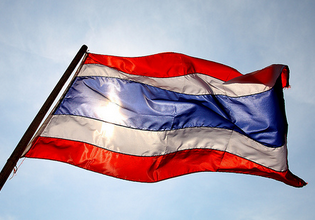
The ICJ has submitted recommendations to Thailand’s Criminal Justice Reform Committee concerning the Draft Amending Criminal Procedure Code Act and the Draft Act On Judicial Process Timeframe, which were scheduled for public consultation today.
The ICJ welcomed the Criminal Justice Reform Committee’s efforts to enhance the effectiveness and fairness of the criminal justice system in Thailand, through proposed amendments to Thailand’s Criminal Procedure Code B.E. 2551 (2008) and the Judicial Process Timeframe Act.
The ICJ noted, however, that modifications would be necessary to some of these amendments to ensure they optimally served the ends of justice and were in conformity with international standards.
In particular, the ICJ commended the Committee’s inclusion within the Draft Amending Criminal Procedure Code Act of the following provisions and made recommendations as to how these provisions could be further strengthened:
- Section 13/1. Video and audio recordings of arrests and/or searches
- Section 13/2. Prohibitions against violation of the presumption of innocence
- Sections 121/2, 123 and 124/2. Lodging of criminal complaint with the public prosecutor, at any location and through email or other online medium
- Section 136. Video and audio recordings of inquiry or interrogation
- Section 161/1. Right of the court to dismiss a case where it is filed in bad faith or with misrepresentation of facts in order to harass or take advantage of a defendant
- Section 165/1. Allowing the defendant to submit a defence plea and produce supporting evidence in court
- Section 179/1. Trial in absentia
Contact
Kingsley Abbott, ICJ Senior Legal Adviser, e: kingsley.abbott(a)icj.org
Full letter in English (PDF): Thailand-CPC-Amendments-Advocacy-Open-letters-2018-ENG
Full letter in Thai (PDF): Thailand-CPC-Amendments-Advocacy-Open-letters-2018-THA.pdf