Oct 20, 2019 | Advocacy, News
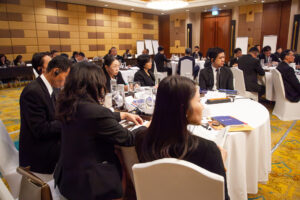
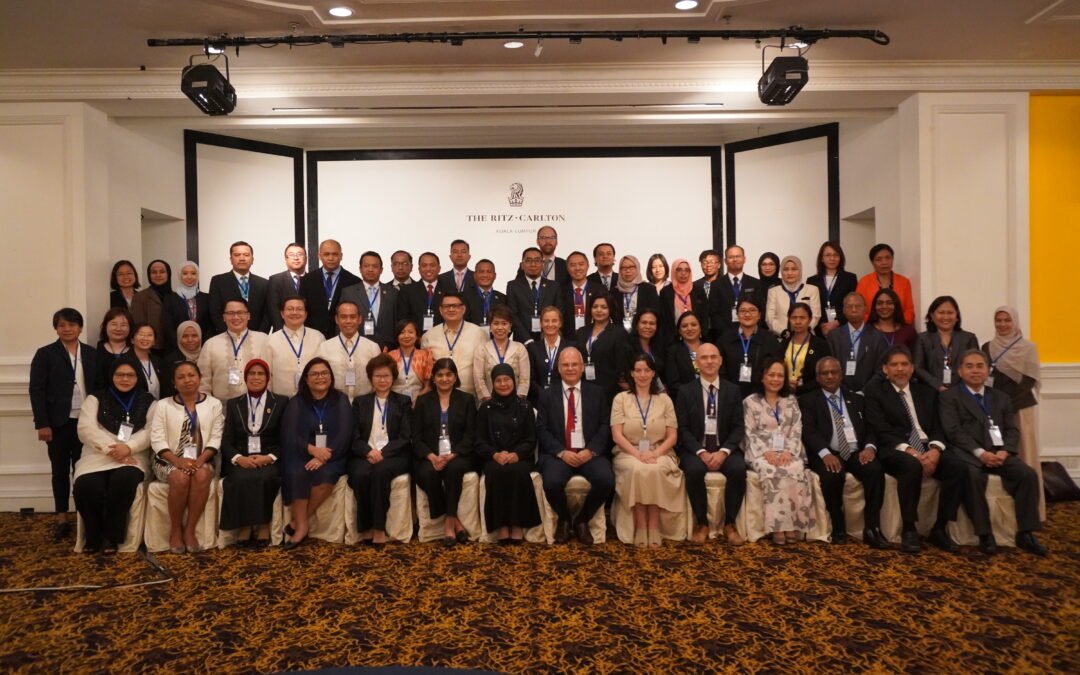
From 18 and 19 October 2019, the ICJ, in collaboration with UN Women and the Federal Court of Malaysia, convened the 2019 Southeast Asia Regional Judicial Dialogue in Kuala Lumpur, Malaysia.
The judges from Malaysia, Philippines, Indonesia, and Timor-Leste discussed how to apply the Convention on the Elimination of All Forms of Discrimination against Women (CEDAW) and other international legal instruments in their work at the domestic level to eliminate the negative impact of stereotyping and gender bias in the judiciary.
“We need to ensure that CEDAW and international human rights obligations are fully applied by national authorities, and not just taken as aspiration or long-term goal,” said Frederick Rawski, ICJ Regional Director for Asia and the Pacific.
“These standards need to have the force of law and made real, in workplace and in domestic settings, to ensure that women are free from violence and that there is access to justice when violence does occur.”
The judicial dialogue was opened by Malaysia’s first female Chief Justice, The Right Honourable Tan Sri Tengku Maimun binti Tuan Mat. The Chief Justice emphasized during her keynote speech the need for regular capacity strengthening initiatives for judges to be aware of gender-related issues. She emphasized further that “Judicial stereotyping can undermine the ability of women to exercise and enforce other rights guaranteed by law.”
This message was echoed by Carla Silbert of UN Women who said: “We see that women are often impacted disproportionately and thus judges should uphold women’s rights as human rights. It is a crucial role for the court to deliver justice with gender sensitivity.”
ICJ Commissioner Dato Ambiga Sreenavasan and the Ambassador of Sweden to Malaysia, Dag Juhlin-Dannfelt addressed the ongoing reforms in Malaysia and gender equality.
“Malaysia has its first female Chief Justice and has shown a remarkable growth of female leaders in influential positions. However, the participation of women in the labor workforce is still very low and it remains a challenge for us,” said Dato Ambiga Sreenavasan, Commissioner of the ICJ.
“The drive for democracy is to support and strengthen gender equality and the rule of law,” said Ambassador Dag Juhlin-Dannfelt. “ICJ’s Bangkok General Guidance for Judges on Applying a Gender Perspective in Southeast Asia is an important tool to address gender equality in judiciary.”
The dialogue included discussion on the topics of equality & non-discrimination, access to justice under international human rights law, gender stereotyping and gender discriminatory practices in cases involving women who are victims of trafficking.
Many participating judges said that they would be applying in their judicial work the tools introduced to them in the dialogue, including the Bangkok General Guidance. These could be used in decision-making, assessing evidence presented before them, and handling witnesses in their courts. Some also said that they plan to disseminate the information and tools to their colleagues in the judiciary.
Contact
Boram Jang, International Legal Adviser, Asia & the Pacific Programme, e: boram.jang(a)icj.org
Resources:
To access pictures from the event, click here.
Oct 14, 2019 | Advocacy, Non-legal submissions
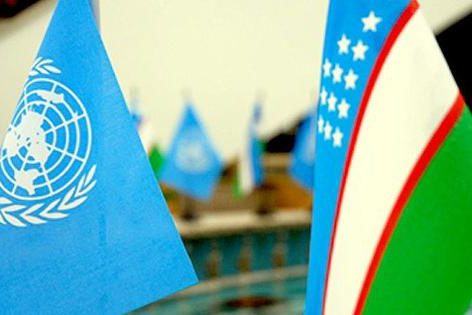
The ICJ has presented information to the UN Committee against Torture in preparation for the Committee’s examination of the fifth periodic report of Uzbekistan under the International Covenant on Civil and Political Rights (ICCPR).
In its submission, the ICJ addresses Uzbekistan’s legislation on extradition, its potential discrepancies with international law.
The ICJ welcomes the recent ratification of the Commonwealth of Independent States (hereafter, “CIS”) Convention on Legal Assistance and Legal Relations in Civil, Family and Criminal Matters 2002, known as the Chisinau Convention, as a positive step towards the compliance of the country’s extradition system with international standards
In it report, the ICJ formulates the following recommendations to Uzbekistan:
- Fully implement human rights and procedural safeguards and guarantees in extradition proceedings or in connection with other types of transfers, and interpret and apply such safeguards in accordance with Uzbekistan’s international human rights law obligations. In particular, Uzbekistan should take all necessary measures to fully implement the human rights guarantees featured in the Chisinau Convention into its domestic legislation.
- Implement the necessary reforms to give judicial authorities the central decision-making role in extradition proceedings, and ensure their full independence both at an institutional and personal level, in law and in practice. Extradition decisions should be taken by prosecutors only if they enjoy the same level of independence as judges, in law and in practice.
- Ensure that individuals extradited to face trial in Uzbekistan courts are awarded the full protection of the Convention.
- Take effective measures to prevent torture and other forms of ill-treatment, including by ensuring compliance with the non-refoulement principle in extradition proceedings.
- Carry out effective, independent and impartial investigations with a view to identifying persons directly and indirectly responsible for rendition operations and abduction practices, as they violate human rights and involve crimes under international law. Those responsible should be prosecuted, tried and, if convicted, sentenced to punishments commensurate with the gravity of their crimes, and to appropriate administrative sanctions to ensure non-repetition.
Uzbekistan-CAT-Advocacy-non legal submission-2019-ENG (download the submission in English)
Oct 10, 2019 | Advocacy, News
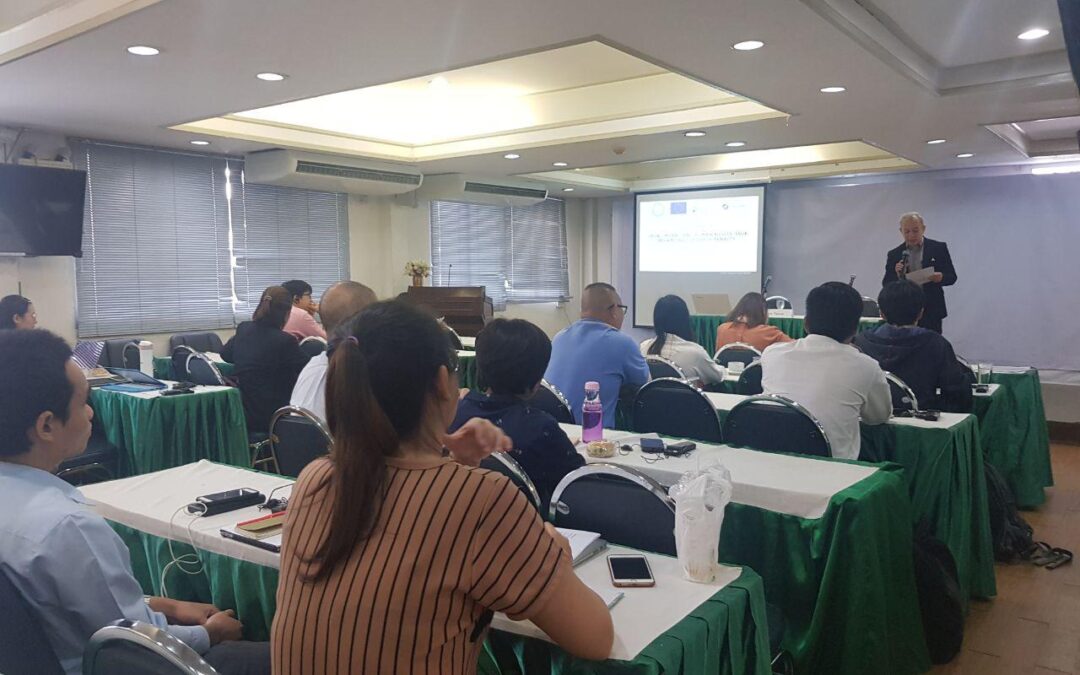
On 9 October 2019, in commemoration of the World Day against the Death Penalty (10 October), the ICJ, Thai Journalists Association (TJA), Internews, and the Delegation of the European Union in Thailand held a workshop on “Legal, Moral and Human Rights Issues in Death Penalty” at the Thai Journalists’ Association.
The participants included 35 journalists from various news agencies in Thailand and journalism and human rights students.
The course aimed to help strengthen the capacity of journalists to write informatively and critically about death penalty issues in Thailand. Through this course, journalists learned about the abolition of death penalty in other regions of the world and reviewed cases which have transformed public opinion on capital punishment around the world.
Sanhawan Srisod, the ICJ’s Legal Adviser, held a session to discuss capital punishment in Thailand’s criminal justice system. She underscored that there is no perfect justice system and as the risk of miscarriage of justice is always present, the death penalty should not be retained. She further encouraged journalists to help strengthen calls for an effective criminal justice response to serious crimes, as an alternative to the death penalty. She further pointed out current domestic investigation and prosecution practices which risk breaching international law and standards. These, she noted, may hamper the legality and efficiency of investigations and prosecutions, and pose a risk of rendering an innocent person eligible for capital punishment.
Other speakers at the Workshop included:
- E. Mr Pirkka Tapiola, Ambassador of the European Union to Thailand
- E. Mr Emilio de Miguel Calabia, Ambassador of Spain to Thailand
- Judge Hanne Sophie Greve, Commissioner, the International Commission against the Death Penalty (ICDP)
- Representative from Thailand’s Ministry of Justice
- Toshi Kazama, Photographer and anti-death penalty advocate
- Orasom Suthisakorn, Author and prison writing course instructor
Background
The ICJ categorically opposes the death penalty in all situations and considers it a violation of the right to life and a form of cruel, inhuman or degrading punishment.
Thailand has repeated commitments on the international stage to work towards abolition and has committed to becoming an abolitionist state in its master plan for human rights.
In June 2018, however, 26-year-old Teerasak Longji was executed by lethal injection for aggravated murder. It was Thailand’s first execution in nine years. The last previous execution occurred in 2009 when two men were executed for drug-related crimes.
The UN General Assembly, has repeatedly adopted Resolutions supported by very wide majorities, calling on all retentionist states to observe a moratorium on the death penalty with a view to full abolition.
Thailand is a State party to the International Covenant on Civil and Political Rights (ICCPR). Thailand has not become party to the Second Optional Protocol to the ICCPR, aiming at the abolition of the death penalty in law and practice.
In March 2017, the UN Human Rights Committee, the body mandated to interpret and monitor compliance with respect to the ICCPR, issued Concluding Observations after reviewing Thailand’s 2nd country report on the implementation of its obligations under the ICCPR. The Human Rights Committee recommended that Thailand “consider abolishing the death penalty and acceding to the Second Optional Protocol to the ICCPR”, and if the death penalty is maintained, to “take all measures necessary… to ensure that it is limited to the most serious crimes, such as acts carried out with the intention of killing.”
There are reportedly 55 crimes punishable by death in Thailand, including crimes relating to corruption, bribery and drugs, which do not meet the threshold of the “most serious crimes” within the meaning of the ICCPR.

Oct 4, 2019 | Advocacy, News
Reform of the 1959 Defence Services Act is a necessary step to address ongoing military impunity. The case of Ko Par Gyi’s killing should be reopened to satisfy the State’s international law obligations and deter repetition of serious crimes by soldiers.
Five years after the death of journalist Ko Par Gyi, the ICJ calls on the Government of Myanmar to reform the 1959 Defence Services Act, which was used to shield soldiers from accountability for involvement in his killing.
“The case is emblematic of the 1959 Defence Services Act being used to enable impunity for human rights violations by soldiers throughout Myanmar, by transferring to military courts the authority to investigate and prosecute serious crimes against civilians,” said Frederick Rawski, Asia Pacific Region Director for the ICJ.
“Impunity for Ko Par Gyi’s death is another example of this law being used to shield soldiers from accountability for serious crimes,” added Rawski. “Legislators should reform the 1959 law to enable the public criminal prosecution of soldiers for serious crimes in all circumstances, and take other steps to address the accountability gap.”
After being detained by police in Mon State and transferred into military detention on 30 September 2014, Ko Par Gyi died four days later in the custody of Tatmadaw soldiers. Unceremoniously buried in a shallow grave, Ko Par Gyi’s death was hidden from his family and the public for weeks. Nobody has been held accountable for his death and his family lacks access to redress, including their right to know the truth.
A deeply flawed inquiry carried out secretly in military courts, pursuant to the 1959 Act, resulted in the acquittal of the soldiers allegedly involved. This effectively ended other efforts to hold the perpetrators accountable, including through an inquest at the Kyaikmaraw Township Court in Mon State. It also flouted the Myanmar National Human Rights Commission’s recommendation for a police investigation and public criminal trial to be undertaken by civilian authorities.
“Five years on, Myanmar authorities must finally initiate a thorough, independent and impartial investigation into the killing of journalist Ko Par Gyi,” said Sean Bain, legal adviser for the ICJ. “The truth must be established and recognized, and those responsible for his apparently unlawful killing need to be brought to justice in fair trials,” he added.
Several provisions of the 1959 Act are used to facilitate a transfer of cases involving military personnel from civilian to military courts, including for serious crimes against civilians. This has been used as a tool to avoid accountability in cases throughout Myanmar, such as its use to justify the early release of soldiers who were convicted by a military court in the killing of ten Rohingya civilians in Rakhine State in 2017.
International legal standards prohibit the use of military courts to try military personnel for gross human rights violations and crimes under international law. The detention and prosecution of journalists, based solely on their lawful activities undertaken while doing their job, violates the right to freedom of expression, and the rights to seek, receive and impart information and to participate in public affairs.
Myanmar authorities have an obligation to reopen the case of Ko Par Gyi with a view to establishing the circumstances of his death, as with any potentially unlawful killing by either State or non-State actors.
“By empowering civilian courts to oversee such cases, the NLD Government would send a powerful message to all justice sector institutions, including police, prosecutors and judges, that they can and should review potential crimes involving the military with independence and impartiality, in line with the rule of law,” added Bain.
The National League for Democracy (NLD)-led Government has the legislative authority to immediately reform the 1959 Act to align it with international standards. The ICJ has called for reform of this law, including by allowing the prosecution of soldiers for serious crimes to be undertaken under the jurisdiction of civilian courts.
See also:
ICJ, “The investigation and prosecution of potentially unlawful death: ICJ Practitioners’ Guide no. 14,” 14 September 2019, available here.
ICJ, “Achieving Justice for Gross Human Rights Violations in Myanmar – a baseline study,” 16 January 2018, available here.
Contact
Sean Bain, ICJ legal adviser, e: sean.bain(a)icj.org
Full statement with additional information, in English: Myanmar-Ko Par Gyi killing-Press-Releases-2019-ENG (PDF)
Full statement, in Burmese: Myanmar-Ko Par Gyi killing-Press-Releases-2019-BUR (PDF)
Oct 3, 2019 | Advocacy, Non-legal submissions
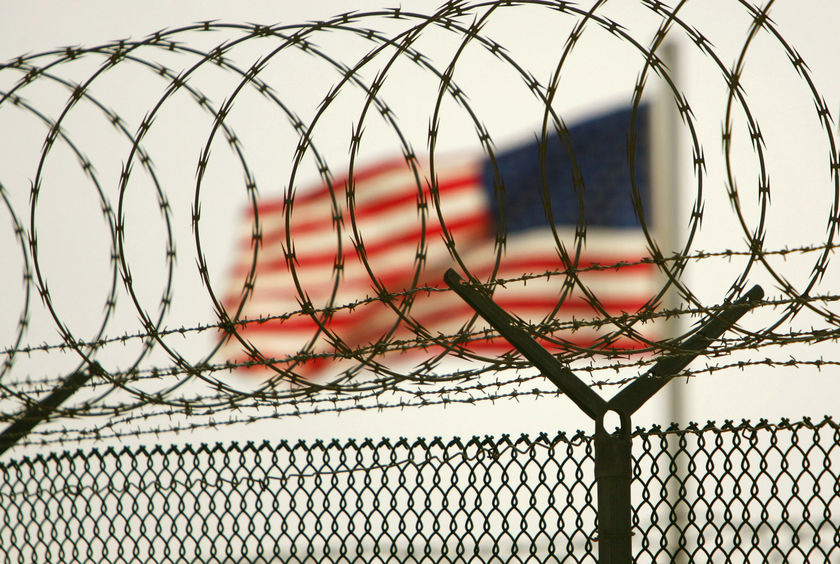
Today, the ICJ, jointly with the World Organisation against Torture (OMCT) and REDRESS, made a submission to the UN Universal Periodic Review (UPR) of the United States of America.
The joint submission focusses on the United States’ longstanding failure to:
(1) provide effective remedy and redress, including medical care, and
(2) guarantee fair trials to the “High Value Detainees” who are still held in Guantánamo, including Mr. Mustafa al Hawsawi.
Through a system of classifications, isolation, detention and counter-terrorism related policies the United States’ government is preventing a category of victims of torture and other ill-treatment from obtaining redress, fair trials and is securing impunity for perpetrators, contrary to recommendations in the previous UPR cycles.
For 18 years, the United States government has been violating numerous international human rights treaties it has ratified, first and foremost the Convention against Torture and Other Cruel, Inhuman or Degrading Treatment or Punishment and the International Covenant on Civil and Political Rights. Such violations deserve serious attention in the upcoming UPR review.”
USA-UPR Review-Advocacy-non-legal submissions-2019-ENG (submission in PDF)