Jul 3, 2019 | Advocacy, Non-legal submissions
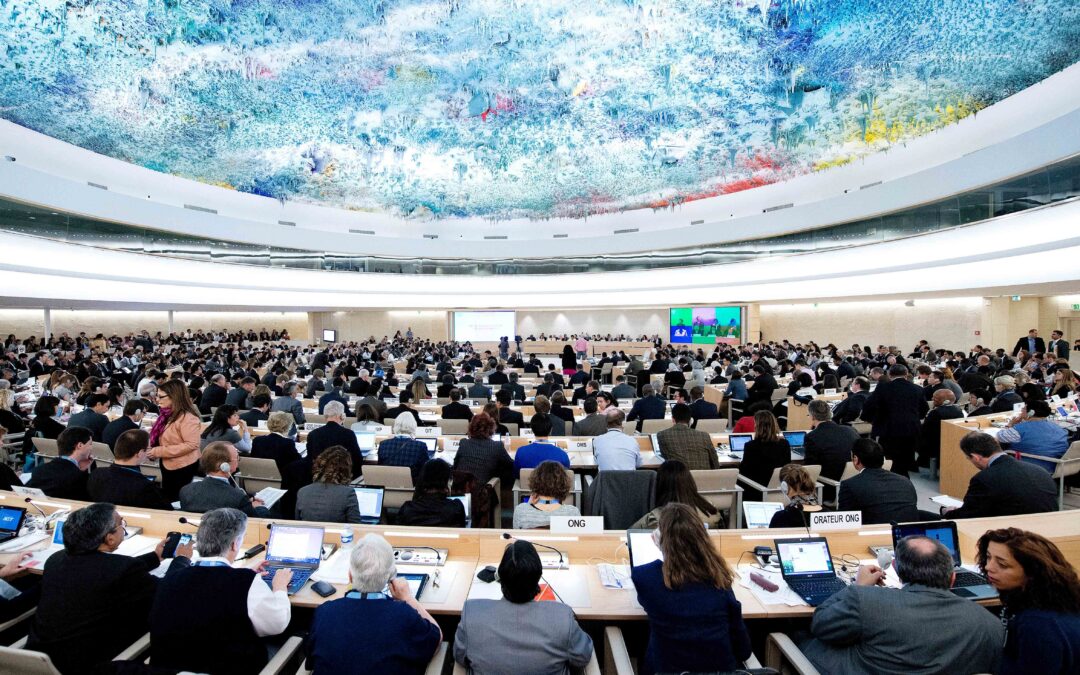
The ICJ today highlighted rising threats to the rule of law in Europe, specifically mentioning Poland, Hungary, Turkey, and Kazakhstan in a statement to the UN Human Rights Council in Geneva.
The statement read as follows:
“The International Commission of Jurists (ICJ) adopted a Declaration on Reinforcing the Rule of Law last March at its 19th World Congress in Tunis.
The Tunis Declaration (link) stresses that not only are human rights and the Rule of Law indispensable to the betterment of the human condition, but to address such contemporary challenges as catastrophic climate change and the effects of digital technology.
Against these standards, however, the ICJ is concerned at the increasing and serious threats to the Rule of Law and those who defend it around the world, including across Europe.
In Poland, the attacks on the judiciary continue under the guise of disciplinary proceedings against judges who took recourse to EU institutions to defend the Rule of Law.
Hungarian authorities, while pausing their reforms of administrative courts, have not abandoned unjustified restrictions on the judiciary’s independence and on civil society.
Finally, in Turkey, the judiciary continues to have no guarantees in law to guarantee its independent functioning.
Across Central Asia, lawyers may face disciplinary or criminal persecution for discharging their profession independently. For example, in Kazakhstan, Sergey Sizintsev was disbarred on arbitrary grounds for criticizing a problematic reform of the legal profession.
The ICJ urges the Council to give attention to these developments of extreme concern.
Jul 3, 2019 | Advocacy, Non-legal submissions
The ICJ today joined other NGOs in drawing the attention of the UN Human Rights Council to extra-judicial killings and enforced disappearances in Kashmir.
The statement, delivered by International Federation for Human Rights Leagues (FIDH) on behalf of Asian Forum for Human Rights and Development (FORUM-ASIA), Human Rights Watch, International Commission of Jurists, and World Organisation Against Torture (OMCT), read as follows:
“We look forward to the publication of the High Commissioner for Human Rights’ second-ever report on the grave human rights violations and abuses committed in Kashmir.
In Indian Administered Kashmir, government forces have been responsible for serious violations, including unlawful killings, enforced disappearances, torture, and rape and other sexual violence. These grave violations by security forces in Kashmir are met with chronic impunity, as alleged perpetrators are rarely properly prosecuted for human rights violations, leading to near-total immunity for the crimes committed. Non-state armed groups have also been responsible for serious abuses, including attacks against journalists.
In Pakistani Administered Kashmir, there have been reports of unlawful restrictions on freedom of expression and association, as well as the misuse of anti-terrorism legislation against protesters.
We are gravely concerned by the increasing threats faced by, and reprisals against, human rights defenders and others who have cooperated with UN human rights mechanisms in recent years, particularly in the elaboration of the OHCHR’s reports. We urge the Government of India to ensure that human rights defenders and journalists are allowed to carry out their work without threats or reprisals, and take adequate steps to protect them from non-state groups.
We also remain concerned that the Governments of India and Pakistan continue to deny access to OHCHR and other human rights mechanisms to Kashmir. We call on them to grant unconditional access to these mechanisms, as well as to human rights organizations and the media.
We also call on the Council to act on the call to establish a commission of inquiry.”
Jul 1, 2019 | Advocacy, Non-legal submissions
The ICJ today highlighted the negative impacts of criminalisation of HIV non-disclosure, exposure and transmission, on human rights, as well as an ongoing initiative to develop a set of relevant principles, at the UN Human Rights Council.
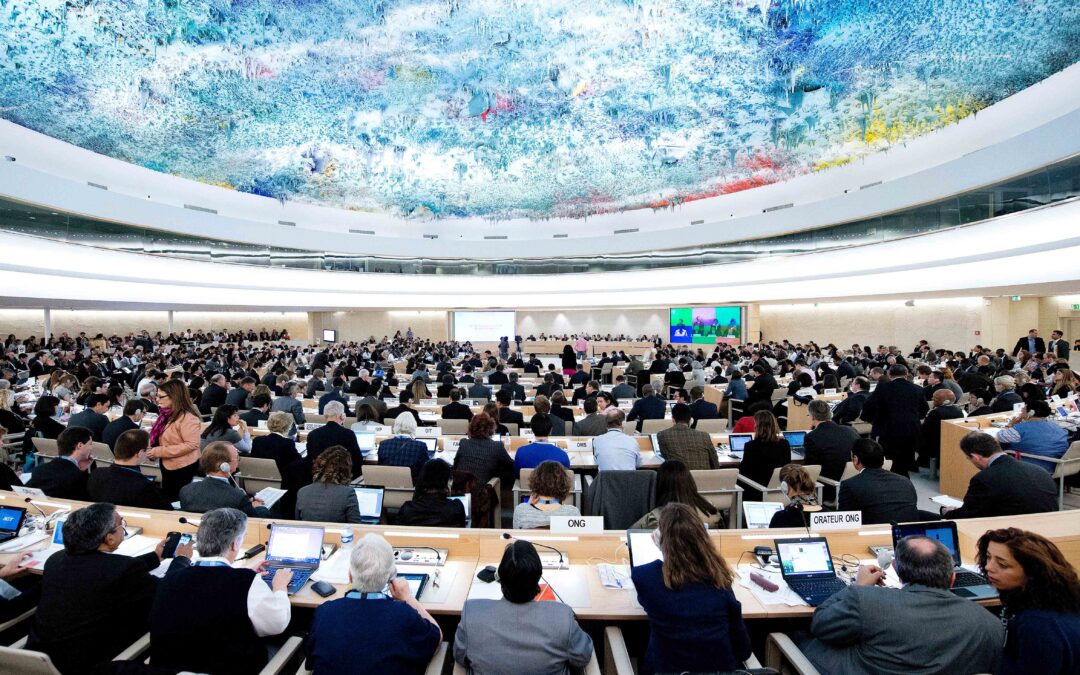
The oral statement, delivered during the General Debate under Agenda Item 3, was titled “Developing principles to address the detrimental impact on health, equality and human rights of criminalization with a focus on select conduct in the areas of sexuality, reproduction, drug use and HIV” and read as follows:
“The ICJ welcomes the High Commissioner’s report (A/HRC/41/27) on human rights in the response to HIV.
Unjust criminalization of HIV non-disclosure, exposure and transmission is a barrier to the realization of human rights – fostering stigma, discrimination, violence and abuse.
Last year, the ICJ – supported by UNAIDS, OHCHR and UNDP – convened a meeting of jurists to address the harmful effects of misuse of criminal law in relation to HIV and other issues.
The meeting endorsed civil society’s call for jurists to elaborate a set of principles to assist legislatures, the courts, administrative and prosecutorial authorities, and advocates address the deleterious impact on health, equality, and human rights of criminalization in a range of areas. In addition to HIV, jurists concluded the principles should address criminalization of sexual and reproductive healthcare services, including abortion; criminalization of consensual sexual conduct, including sex work, sex outside marriage, same-sex relations, and adolescent sexual activity; and criminalization of drug use and of possession of drugs for personal use.
To ensure the jurists’ principles are effective and protect the most at-risk individuals, the process for developing them is as important as the content of the principles themselves. Thus, broad consultation with a wide range of stakeholders, including national and international civil society organizations, UN human rights mandate holders and UN agencies, is ongoing.”
Jul 1, 2019 | Advocacy, Non-legal submissions
The ICJ today joined other NGOs in calling on States to do more to save lives and uphold human rights of migrants, including by recognising the role of civil society and creating an environment for its work.
The statement to the UN Human Rights Council, delivered on behalf of the group of NGOs by the International Catholic Migration Commission, read as follows:
“We are deeply concerned by widespread and growing violations of the human rights of migrants and an environment where those who seek to protect them are increasingly criminalized.
The Global Compact for Migration provides technical guidance and a cooperative framework for the implementation of existing legal commitments. It is mobilizing resources to support States in this.
We are asking you to do more and to do better to save lives and uphold human rights. The Compact can help you do this.
Civil Society is already using the Compact at regional and national level, often in partnership with States, for example:
- Civil society in Central America are developing a pilot programme to identify missing migrants to support States’ implementation of Objectives 8 and 9.
- Migrant Forum in Asia has led consultations with governments and other stakeholders throughout Asia.
- Cross-Regional Center for Refugees and Migrants has developed a baseline assessment on the GCM for the MENA region.
- The International Detention Coalition is working with States to develop a cross regional platform on alternatives to child immigration detention in line with Objective 13(h)
We believe these activities can inspire similar measures, but we need all States to create an environment that enables us to do so and we need all States to take leadership on implementation.
The human rights of migrants deserve the acknowledgement, respect, and urgent action of all of us.”
Delivered by the International Catholic Migration Commission, the statement was co-sponsored by the following ECOSOC accredited NGOs:
- ACT Alliance
- Alianza Americas
- Asylum Access
- Caritas Internationalis
- Congregation of Our Lady of Charity of the Good Shepherd
- Congregations of St. Joseph
- Defence for Children International
- International Catholic Migration Commission
- International Commission of Jurists
- International Council of Voluntary Associations (ICVA)
- International Detention Coalition
- International Movement Against All Forms of Discrimination and Racism (IMADR)
- Migrant Forum in Asia
- Save the Children
- Terre des Hommes International Federation
- Translators without Borders
- Vivat International
- World Organization for Early Childhood Education (OMEP)
The statement was also supported by the following NGOs and networks who do not have ECOSOC accreditation:
- Action Secours Ambulance (ASA)
- Asia Pacific Refugee Rights Network (APRRN)
- Asociación Rumiñahui
- Bloque latinamericano y el Caribe sobre Migración
- Casa Monarca ayuda humanitaria al migrante
- Center for Migrant Advocacy, Philippines (CMA-Phils)
- Centro de Atención y Desarrollo Integral Migrante (CADIM Oxnard)
- Centro de Recursos Centroamericanos Del Norte California (CARECEN)
- Centro de Atención a la Familia Migrante e Indígena (CAFAMI)
- Civil Society Action Committee
- Comision de Accion Social Menonita (CASM)
- Destination Unknown Network
- Estancia del Migrante González y Martínez
- FM4 – Paso Libre
- Fundación para la Justicia y el Estado Democrático de Derecho
- Global Coalition on Migration
- Institution para las Mujeres en la Migración (IMUMI)
- Instituto de Estudios y Divulgación sobre Migración (INEDIM)
- International Presentation Association
- NGO Coalition on Migration
- Organismo Cristiano de Desarrollo Intergral de Honduras (OCDIH)
- Pacific Islands Association of Non-Government Organisation (PIANGO)
- Plateforme des Organisations Nationales et Territoriales (Pont-Sch)
- Red de Mujeres del Bajío
- Red Internacional de Migración y Desarrollo
- Red Jesuita con Migrantes de América Latina y Caribe (RJM-LAC)
- Religious of the Sacred Heart of Mary
- Solidarity Centre
- The Mixed Migration Centre
- Women in Migration Network
Jun 27, 2019 | Advocacy, Non-legal submissions
The ICJ highlighted the role of women in ensuring respect for human rights in relation to businesses, in a statement to the UN Human Rights Council today.
In an oral statement made during an interactive dialogue with the Working Group on Discrimination Against Women and the Working Group on the issue of human rights and transnational corporations and other business enterprises, the ICJ stated as follows (check against delivery):
The International Commission of Jurists (ICJ) welcomes the report of the Working Group on the issue of human rights and transnational corporations and other business enterprises, and agrees that despite years of progress, women continue to experience multiple forms of discrimination. Women’s voices continue to be unheard and they face insurmountable challenges as they use these voices to access justice on behalf of their communities.
We have seen numerous cases where women lead their communities in protesting abuses committed by business enterprises. Many of these communities are located in remote areas, far from courts or other mechanisms that could be used by them to seek justice. The women who lead these communities often do not identify as women human rights defenders. They see themselves as mothers protecting the health of their families or the land from which they grow their food and earn their living. Because of where these communities are located, local government authorities play a significant role on whether or not these women are heard or are able to access justice.
The women farmers of Kendeng in Indonesia, for instance, have been protesting the operation of a cement factory in their area, which contaminate their water and land. In 2016, the Supreme Court of Indonesia had already ruled in favor of these women farmers and their community, and ordered the revocation of the cement factory’s permit. To this day, however, the cement factory continues to operate, ignoring the final order of the Supreme Court. The Kendeng women farmers have raised the non-implementation of the Supreme Court’s order with the Governor of Central Java and the Indonesian government, but their voices remain unheard.
In the Philippines, the women community leaders of Pio V. Corpus, Masbate, have been protesting plans to establish a cement factory and a coal-fired power plant in their town. They allege that their local government leaders approved plans for this factory and power plant without consultation and in blatant disregard of the disastrous impact these would have on the environment and people’s health.
Mr. President, we join the Working Group in urging States and business enterprises to ensure meaningful participation of potentially affected women in all stages of human rights due diligence. We also urge States to take measures to ensure that women – wherever they may be located – are able to access justice for abuses committed by business. Finally, we recommend that local government authorities be made aware of the Guiding Principles and able to integrate the gender framework and guidance in discharging their human rights responsibilities.
Thank you.