Mar 24, 2016 | Advocacy, News
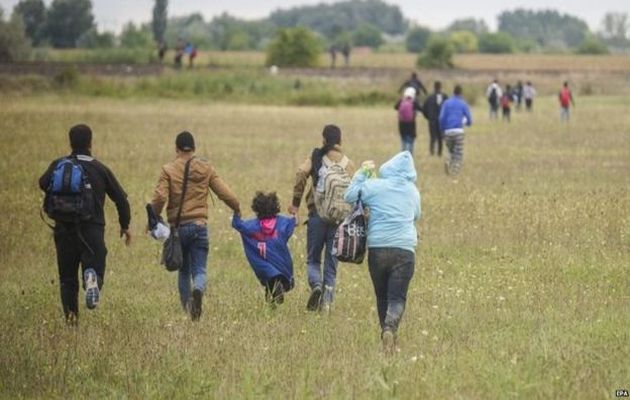
The ICJ and ECRE presented today a joint submission on the situation of the asylum and reception systems in Greece to the Committee of Ministers of the Council of Europe.
The submission was presented in view of a meeting of the Committee of Ministers of the Council of Europe on the implementation by Greece of the European Court of Human Rights’ judgment in the case of M.S.S. v Belgium and Greece that will take place next June.
The submission refers to the previous detailed joint submissions of ICJ and ECRE and provides recent information on the state of the asylum procedure, reception conditions and detention practices, which are likely to be of importance to the supervision of the execution of the M.S.S. v. Belgium and Greece ruling. It focuses on:
- ongoing obstacles to accessing the asylum procedure, namely concerning registration before the Asylum Service, the operation of appeals bodies, as well as the likely application of the “safe third country” concept regarding Turkey;
- the state of Greece’s reception system, with a view to properly assessing its capacity to accommodate asylum seekers and migrants on its territory; and
- updated information on the lawfulness and conditions of immigration detention, including new risks of detention stemming from nationality-profiling and the establishment of “hotspots” at points of arrival.
Greece-ICJECRE-MSS-CommitteeMinisters-5thsubmission-legal submission-2016-ENG (download the joint submission)
Mar 23, 2016 | Advocacy, Non-legal submissions
The ICJ today joined other NGOs in an oral statement to the UN Human Rights Council on the findings of the report of the OHCHR investigation mission on Libya.
It includes that violations of international law taking place throughout Libya “may amount to war crimes and other international crimes under international law.”
The statement continued as follows:
All sides to the conflict in Libya continue to perpetrate grave human rights violations and abuses. As highlighted by the UN High Commissioner for Human Rights, these violations continue to take place with “complete impunity” amid the collapse of the domestic justice system.
Unless genuine accountability is provided for these ongoing crimes the cycle of violence in Libya will continue, and the peace process will likely become no more than a well-intentioned piece of paper.
In this context, this Council has a duty to remain seized of the human rights situation in Libya, ensure continued monitoring of the situation and act to strengthen international accountability for crimes committed in Libya if the national system remains incapable of fulfilling this role. We are deeply concerned that the current resolution before this Council falls short of that standard.
Additionally, all UN member states should ensure that the International Criminal Court has the capacity to fulfill the mandate provided to it by the Security Council and begin fully fledged investigations into past and ongoing crimes committed in Libya.
As highlighted by civil society in a letter to this Council: “It is critical that all parties to the conflict are put on notice that their actions are being monitored and that accountability for serious crimes is a real prospect rather than an empty threat. Failure to do so will likely embolden those committing violations of international human rights and humanitarian law and will reinforce the endless cycle of impunity” in Libya.
The statement was on behalf of Cairo Institute for Human Rights Studies, CIVICUS, Human Rights Watch, International Commission of Jurists, FIDH, and OMCT.
Mar 23, 2016 | Advocacy, Non-legal submissions
Today, the ICJ made a submission to the Human Rights Council’s Working Group on the Universal Periodic Review in advance of the Human Rights Council’s review of Uganda in October/November 2016.
In its submission, the ICJ expressed concern about the detrimental impact of the adoption and enforcement of the Anti-Homosexuality Act, 2014; the effect of pre-existing and extant criminalization of consensual same-sex sexual conduct; and the introduction of the Prohibition of Promotion of Unnatural Sexual Practices Bill, on the respect for and the protection and realization of human rights in Uganda.
A copy of the submission can be found here:
Uganda-ICJ CESCR submission-Advocacy-non legal submission-2015-ENG (full text in PDF)
Mar 18, 2016 | Advocacy, Non-legal submissions
The ICJ today joined an oral statement on the role of judges, lawyers, and prosecutors, as well as the threats they face, and the Universal Periodic Review of the UN Human Rights Council.
The statement, delivered by the Director of the International Bar Association’s Human Rights Institute, Dr Phillip Tahmindjis, read as follows:
“The International Bar Association’s Human Rights Institute (IBAHRI) released this week its report on the ‘Role of the UPR in advancing human rights in the administration of justice’. The report assesses more than 38,000 recommendations made between 2008 and 2014 for references to the legal profession.
The report’s key findings include:
UPR recommendations still insufficiently address the role of judges, lawyers and prosecutors, or the threats they face, as extensively documented by the Special Rapporteur on the Independence of Judges and Lawyers. Significantly, these recommendations often make no reference to relevant UN standards.
Recommendations relating to the independence of judges are often too vague to be an effective response to the shortcomings of any given jurisdiction. Serious issues in the appointment and removal of judges are mostly ignored.
The independence of lawyers was considered in fewer than 100 of the 38,000 UPR recommendations.
Prosecutorial independence is addressed in less than 10 per cent of the recommendations calling upon States to effectively investigate or prosecute rights violations.
Guarantees for legal professionals’ rights to freedom of expression, assembly and association are barely addressed. This fails to reflect the key role that self-governing organisations of legal professionals should play in upholding human rights and the rule of law, the independence of the legal profession and law reform processes.
As international organisations of legal professionals, we foster the engagement of the legal profession in UN human rights mechanisms and in monitoring the implementation of UPR recommendations.
We call upon the Human Rights Council, as well as States, to ensure that in the third cycle of the UPR, the role of judges, lawyers, and prosecutors receives the heightened attention that it is due, as recognised by the UN Basic Principles on the independence of the judiciary, the UN Basic Principles on the role of lawyers and the UN Guidelines on the role of prosecutors.”
The following organisations endorsed the statement:
- Commonwealth Magistrates’ and Judges’ Association
- Commonwealth Lawyers Association
- International Bar Association’s Human Rights Institute
- International Commission of Jurists
- Judges for Judges
- Lawyers for Lawyers
- Southern Africa Litigation Centre
The statement can be downloaded in PDF format here: HRC31-JointOralStatement-UPRLegalProfessions-2016
The IBAHRI report on ‘The role of the UPR in advancing human rights in the administration of justice’ is available at : http://tinyurl.com/gr525sq
Mar 17, 2016 | Advocacy, Non-legal submissions
The ICJ today joined with the International Bar Association’s Human Rights Institute to make an oral statement on judges & lawyers in Myanmar, during the consideration of its Universal Periodic Review outcome by the UN Human Rights Council.
The statement:
“The International Bar Association’s Human Rights Institute (IBAHRI) and the International Commission of Jurists welcome Myanmar’s decision to accept recommendations made at the Universal Periodic Review relating to the administration of justice and the independence of the legal profession and call on the Government of Myanmar to implement the recommendations which it has accepted ‘in principle’ to reform the Bar Council Act to allow for the Bar Council to become a truly independent and self-governing association.
In order to ‘guarantee in law and practice that lawyers and judges can perform their professional functions without improper interference and legally form and join self-governing associations’, we call for the right to join such associations to be enshrined in law, and that the right of the first Independent Lawyers’ Association of Myanmar (ILAM) to register as an association be respected;
In order to ‘define professional legal standards and disciplinary procedures in conformity with the Basic Principles on the Role of Lawyers’, we call upon the government of Myanmar to engage in a consultation process with the legal profession and other stakeholders in relation to the revision of the Bar Council Act. The government should also commit sufficient funds to allow for the funding of the system created by the new Legal Aid Law.
We are encouraged by and support efforts by the Office of the Supreme Court of the Union to draft and implement a Code of Judicial Ethics.
Finally, we urge the Government to improve legal education and continue legal professional development including with regard to international human rights law and the UN human rights mechanisms.
We are glad to provide support in the realisation of these recommendations and will look for collaboration with the Government to that end.”