Mar 17, 2014 | Advocacy, Non-legal submissions
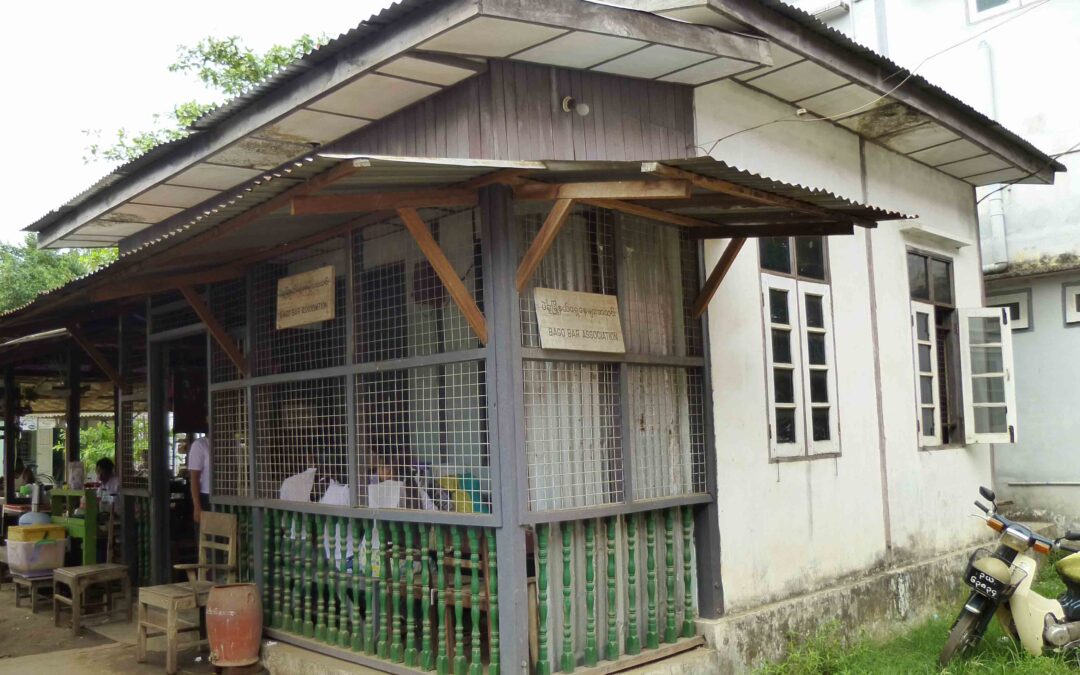
The ICJ made an oral statement at the UN Human Rights Council, on the need for fundamental reform of the legal system in Myanmar.
The oral statement was delivered during an interactive dialogue with the Special Rapporteur on human rights in Myanmar.
While noting some progress on legal reform to establish the rule of law during Myanmar’s economic and political transition, the ICJ noted that reforms are fragile and legal obstacles continue to block improvements to the extremely poor state of the rule of law and respect for human rights.
The ICJ considers that Myanmar’s judiciary is not yet independent. State authorities continue to exert improper influence on politically sensitive cases.
The ICJ was therefore deeply disappointed to hear the Representative of Myanmar state during the Council session that the Government rejected as “intrusive and prescriptive, infringing upon the national sovereignty” the Special Rapporteur’s basic recommendation that “the Government … Initiate fundamental reforms to establish a judiciary that is impartial and independent, including from the direct control of the Government and the military”.
Systemic problems affect the independence of lawyers, including the poor state of legal education and undue restrictions on licensing. Lawyers in Myanmar lack an independent Bar Council.
The ICJ stressed the need for Myanmar to ratify and implement all core human rights treaties, to cooperate with international human rights mechanisms, and to agree to the establishment of an OHCHR office in the country. At the same time, ICJ emphasised the continued need for a robust mandate for the UN Special Rapporteur on Myanmar.
The full statement may be downloaded in PDF: Advocacy-UN-HRC25-Myanmar-OralStatement-032014
The report of the Special Rapporteur is available here in Word format: SR Myanmar Report March 2014
For further information, please see the recent ICJ report Right to Counsel: The Independence of Lawyers in Myanmar (click to download PDF).
Mar 17, 2014 | Advocacy, Non-legal submissions
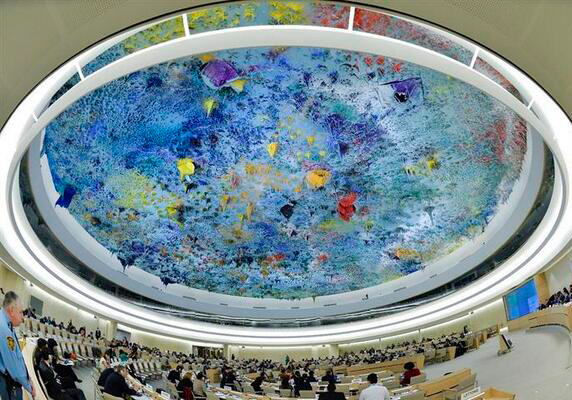
The ICJ made an oral statement at the UN Human Rights Council responding to the report of the Commission of Inquiry on the Democratic People’s Republic of Korea.
The statement called on the Council to take action on the findings and commending the Commission of Inquiry for overcoming the challenges to its work
The ICJ underlined the need, in view of the findings, for the Council to act with a view to ensuring accountability of perpetrators, including through means of international criminal responsibility.
The statement commended the innovative methodology adopted by the Commission of Inquiry and emphasised the need to protect victims and witnesses.
The full statement may be downloaded in PDF: Advocacy-UN-HRC25-DPRK-OralStatement-032014
Mar 12, 2014 | Advocacy, Non-legal submissions
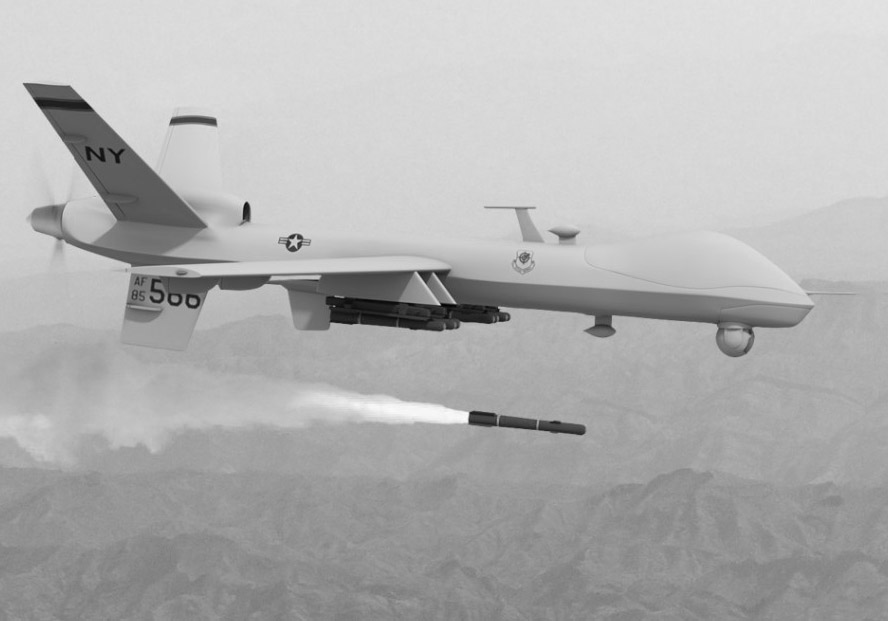
The ICJ prepared an oral statement to the UN Human Rights Council in response to a report on armed drones presented to the Council by the UN Special Rapporteur on human rights while countering terrorism, Ben Emmerson, on 11 March 2014.
The ICJ expressed appreciation at the focus of the report on the use of remotely piloted aircraft in counter-terrorism operations, and particularly with the Special Rapporteur’s assessment that the single greatest obstacle to an evaluation of the impact of drone strikes is lack of transparency. Lack of transparency creates an accountability vacuum and prevents effective access to justice.
In addition to sources of a legal obligation of transparency, the ICJ refers to the Tshwane Global Principles on National Security and the Right to Information.
The ICJ stressed that a number of attacks documented in the report occurred outside of the context of any armed conflict, and thus were fully subject to international human rights law with no role for the special and potentially more permissive rules of international human applicable in situations of armed conflict.
The ICJ agreed a number of points raised in the report of the Special Rapporteur were matters of controversy between states, but at the same time recalled that a lack of consensus did not necessarily mean that international law did not already provide definite answers to the issues.
The ICJ further suggested that principles and guidelines on the use of remotely piloted aircraft in counter-terrorism operations should be based on legal analysis, framed from the perspective of ensuring States’ compliance with international law; and justice and redress for victims of human rights violations and/or violations under international humanitarian law.
Due to the very limited time allocated to non-governmental organisations during the Interactive Dialogue on the Report, the ICJ was not able actually to read out its oral statement, but is making it public and has communicated its contents to the Special Rapporteur.
The oral statement can be downloaded in PDF here: ICJ-HRC25-SRCT-OralStatement-Drones.
The Report by the Special Rapporteur is available here.
For further information please contact: Mr Alex Conte (alex.conte(a)icj.org), ICJ International Law and Protection Programmes
Mar 5, 2014 | Advocacy
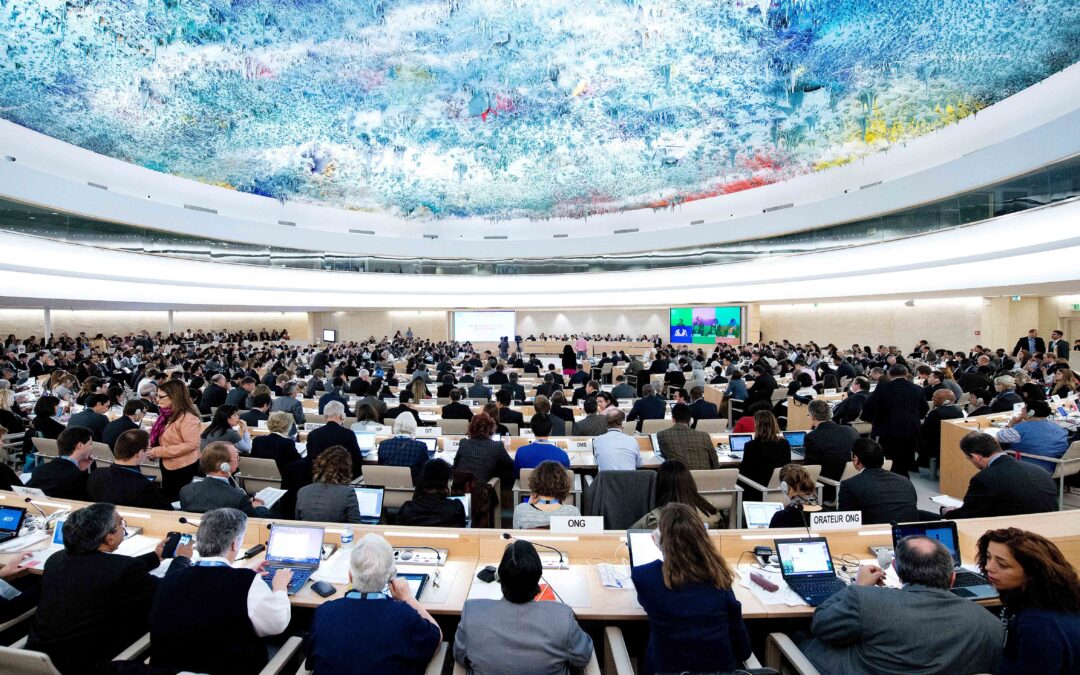
The ICJ has submitted a written statement to the Human Rights Council, on lack of progress in Nepal to end impunity.
The written statement, published by the United Nations today, notes that in 2012 the Government of Nepal adopted a plan to implement the recommendations made during its 2011 Universal Periodic Review (UPR) by the Human Rights Council.
However, Nepal has failed to take necessary measures to implement recommendations on ending impunity.
Key concerns include:
- the failure to implement recommendations for strengthening the National Human Rights Commission (NHRC),
- failure to draft constitutional provisions consistent with international legal principles on the protection of human rights, rule of law and the right to effective remedy,
- failure to establishment of credible transitional justice measures,
- failure to take the necessary practical steps in relation to individual cases, towards ending impunity
Nepal-WrittenStatement-HRC25-Advocacy-2014 (download PDF)

Feb 21, 2014 | Advocacy, News, Non-legal submissions
The ICJ and other human rights organizations issued a public statement calling on Spanish lawmakers not to pass draft legislation that, if approved, would seriously limit Spanish courts’ ability to investigate and prosecute serious crimes under international law.
The draft legislation, tabled in Parliament by the Popular Party (PP), provides that, for cases involving allegations of genocide, crimes against humanity and war crimes not occurring on Spanish territory to be investigated and prosecuted in Spain, the suspect must either be a Spanish national or a foreigner habitually resident in Spain or a foreigner who is in Spain, whose extradition has been denied by Spanish authorities.
For case of torture and enforced disappearance, the proposed legislation requires that the suspect be a Spanish national or, alternatively, that the victim be a Spanish national at the time when the crime was committed and that the suspect be present in Spain when jurisdiction is assumed.
Where these conditions are not met, the proposal would allow Spanish courts to hear cases for those crimes for which prosecution is required by international treaties where the suspect is a foreigner on Spanish soil, so long as Spain has received and denied an extradition request.
The ICJ and other organizations stressed in their statement that if enacted, this legislation would close the doors of Spanish courts to certain victims of gross human rights violations who are unlikely otherwise to be able to obtain justice, particularly within their own jurisdictions.
Spain-Universaljurisdiction-NGOsJointStatement-2014-eng (download the joint statement in English)
Spain-Universaljurisdiction-NGOsJointStatement-2014-SPA (download the joint statement in Spanish)